Mori Atlas logo
Protected landscapePřírodní park Džbány-Žebrák

Exploring the forested summits, spring-fed meadows, and mapped wetlands of central Bohemia

Přírodní park Džbány-Žebrák: A Regional Protected Landscape within the Benešov District

Přírodní park Džbány-Žebrák serves as a core protected area within the Benešov District, characterized by the twin summits of Džbány and Žebrák. This landscape encompasses a near-submontane environment where dense woodland ridges transition into intricate networks of stream-fed meadows and rural ponds. Understanding its geographic boundaries reveals a delicate balance of ecological habitats, including orchid-rich bogs and vital amphibian breeding sites, defining the unique character of this central Bohemian terrain.

nature parkcentral Bohemiaforested hillswet meadowsponds and wetlandsspring-fed landscape
A flat-style digital illustration depicting a rolling green landscape with a waterfall cascading from high cliffs into a valley containing a small village and scattered trees.

Přírodní park Džbány-Žebrák

Protected landscape

Park overview

Structured park overview, official facts, and landscape profile for Džbány-Žebrák Nature Park

Džbány-Žebrák Nature Park park facts, protected area profile, and essential visitor context

Review the core facts for Džbány-Žebrák Nature Park, including designation, size, terrain, visitor scale, habitats, and operating context in one park-focused overview.

About Džbány-Žebrák Nature Park

Džbány-Žebrák Nature Park occupies part of the rolling countryside south of Prague, in the Benešov District of central Bohemia. The park stretches across the landscape between the small towns of Votice, Jankov, Líšno, and Tomice, covering an area of roughly 53 square kilometers. Rather than focusing on a single dramatic landform, the park protects an interconnected mosaic of forested hills, springs, ponds, meadows, and small rural hamlets that together express the traditional rural character of the region.

A defining feature of the park is its near-submontane atmosphere. Although it sits within the Bohemian upland transition zone rather than a true mountain range, the terrain is shaped by the hills of Džbány, reaching 688 meters, and Žebrák, at 585 meters. These two elevations anchor the landscape and lend the protected area both its identity and its name. Between and around them, dense woodland alternates with open meadows studded by shrubs and shelterbelts, giving the area a layered visual character that changes noticeably with the seasons.

Water is another key element of the park. A series of headwater streams originate within its territory, feeding meadows and small water bodies such as Slavníč, Podhrázský rybník, Vinduška, Pilský rybník, and Královna. These wetlands and ponds, combined with the spring zones, sustain a biologically rich environment where moisture-loving plants and a wide range of animals thrive.

The park's ecological profile is unusually varied for a protected area of this size. Wet meadows harbor orchids such as the marsh orchid, while boggy microhabitats support carnivorous plants including round-leaved sundew and southern bladderwort. Birdlife includes species tied to both forest and open wetland, and mammals such as the Eurasian otter remain part of the fauna in the area's quiet waterways. This combination of habitats has positioned Džbány-Žebrák as a regionally significant example of a balanced Bohemian protected landscape.

Quick facts and research context for Džbány-Žebrák Nature Park

Džbány-Žebrák Nature Park lies in the Benešov District of the Central Bohemian Region in the Czech Republic, positioned between Votice, Jankov, Líšno, and Tomice. It covers approximately 53 square kilometers and was officially designated on 10 September 1996 by the Benešov municipal office.

The park protects a landscape of near-submontane character, dominated by the hills of Džbány (688 m) and Žebrák (585 m), and includes extensive forests, meadows with shelterbelts, headwater zones, and a series of small ponds such as Slavníč, Podhrázský rybník, Vinduška, Pilský rybník, and Královna. Its habitats support notable flora, including orchids and carnivorous plants, alongside bird, amphibian, and mammal species of conservation interest.

Park context

Deeper park guide and search-rich context for Džbány-Žebrák Nature Park

Džbány-Žebrák Nature Park history, landscape, wildlife, and travel context

Explore Džbány-Žebrák Nature Park through its history, landscape character, ecosystems, wildlife, conservation priorities, cultural context, and seasonal travel timing in a structured park guide built for atlas discovery and search intent.

Why Džbány-Žebrák Nature Park stands out

The park is best known for preserving a near-submontane Bohemian landscape centered on the twin summits of Džbány and Žebrák, surrounded by large tracts of forest, spring-fed meadows, and a chain of small ponds. Its combination of headwater streams, wet meadows, and traditional rural land use creates a transitional landscape between lowland and upland Bohemia. It is also recognized for its ecological diversity within a relatively compact area, including orchid-rich meadows, populations of sundews and bladderworts, and breeding bird and mammal species such as the corncrake, common snipe, European honey buzzard, Eurasian eagle-owl, and Eurasian otter.
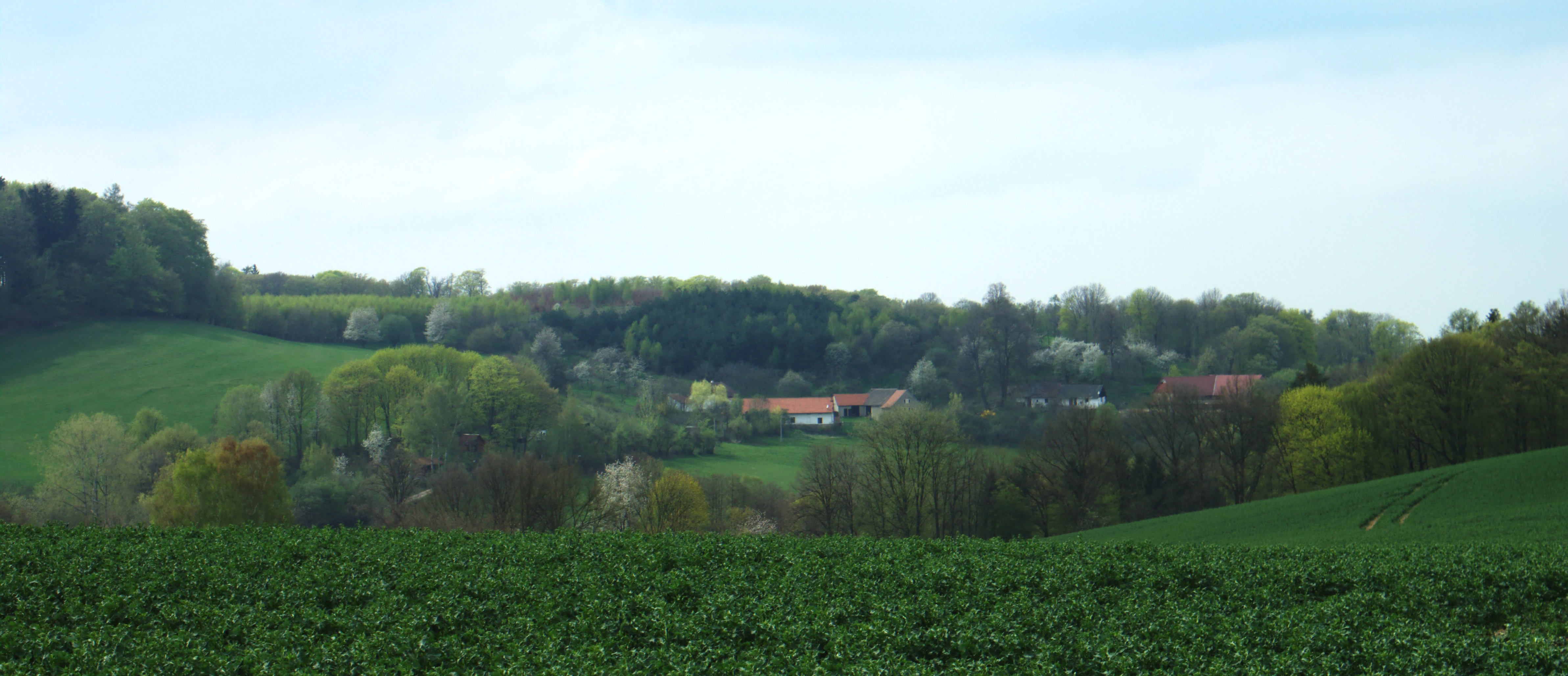
Wide shot of a rolling Czech landscape featuring green agricultural fields in the foreground, small clusters of village buildings in the middle distance, and dense forest covering the low hills in the background under a bright, overcast sky.
A rural landscape view showing fields and wooded hills near Pozov, looking toward the Jezviny settlement.

Džbány-Žebrák Nature Park history and protected-area timeline

Džbány-Žebrák Nature Park was established on 10 September 1996, following a designation by the municipal office of Benešov. Its creation reflected a regional recognition that the countryside between Votice, Jankov, Líšno, and Tomice retained a near-submontane character and an unusually rich network of forests, springs, meadows, and ponds that warranted formal landscape-level protection.

The 1996 designation placed the area within the broader Czech framework of přírodní parky, or nature parks, a category used to protect larger landscapes of regional ecological, scenic, or cultural value rather than narrowly defined nature reserves. By bringing roughly 53 square kilometers under this designation, local authorities aimed to preserve the area's traditional land-use patterns, hydrological systems, and habitat diversity against the kind of landscape transformation seen elsewhere in central Bohemia.

Džbány-Žebrák Nature Park landscape and geographic character

The landscape of Džbány-Žebrák Nature Park is defined by gentle to moderately steep hills shaped by the twin summits of Džbány and Žebrák. The terrain is varied without being rugged: forested ridges rise above open valleys, where small streams emerge from spring areas and feed scattered ponds and meadows. The result is a visually layered countryside with alternating dense woodland, sunlit clearings, and water features that punctuate the scenery.

Around the hills, the lower terrain flattens into a network of meadows broken by hedgerows, scattered trees, and small patches of woodland. These open areas provide long views across rolling land, while the forests higher up create a more enclosed, near-submontane atmosphere. The transition between upland forest and lowland meadow gives the park a particularly varied sense of place, especially along its ridge-to-valley transitions.

Small water bodies play an important visual and ecological role. Ponds such as Slavníč, Podhrázský rybník, Vinduška, Pilský rybník, and Královna are scattered throughout the protected area, contributing to a landscape rhythm where water, meadow, and woodland regularly succeed one another.

Džbány-Žebrák Nature Park ecosystems, habitats, and plant life

Ecologically, Džbány-Žebrák Nature Park functions as an unusually compact transitional zone between lowland and upland environments in central Bohemia. Its mix of forests, wet meadows, springs, and ponds creates overlapping habitats that support a broad range of plant and animal life within a relatively small footprint of about 53 square kilometers.

The park's vegetation ranges from closed-canopy forest stands on the hills to open meadows and wetland margins in the valleys. Spring zones and boggy microhabitats favor moisture-loving plant communities, while meadow areas host flowering species of conservation interest. The presence of both wetland and woodland habitats, often side by side, gives the park an ecological richness that would be unusual in a strictly forest or strictly wetland reserve.

Hydrology is central to this ecological character. A network of headwater streams fed by springs within the park sustains both meadow moisture regimes and pond systems, supporting aquatic and semi-aquatic species and acting as ecological corridors through the wider agricultural countryside.

Džbány-Žebrák Nature Park wildlife and species highlights

The wildlife of Džbány-Žebrák reflects the diversity of its habitats. Open wet meadows support grassland birds such as the corncrake and the common snipe, while surrounding woodland provides nesting and foraging habitat for raptors and other forest-dependent species, including the European honey buzzard and the Eurasian eagle-owl. The park's ponds and streams host the common kingfisher and, notably, the Eurasian otter, which depends on clean, undisturbed waterways.

Amphibians are among the most distinctive animal groups in the park. The alpine newt and the European tree frog both occur here, relying on the combination of damp meadows, springs, and small standing-water bodies for breeding. Several bat species are also present, including the northern bat, which uses woodland and edge habitats for roosting and foraging.

Taken together, the variety of bird, mammal, amphibian, and invertebrate life supported by the park's forests, meadows, and waters gives it a strong faunal profile for a landscape-scale protected area.

Džbány-Žebrák Nature Park conservation status and protection priorities

As a designated přírodní park, Džbány-Žebrák is recognized primarily for its landscape-scale value rather than for a single rare species or geological feature. Its conservation importance lies in preserving a near-submontane Bohemian landscape in which forest, springs, meadows, and ponds continue to function as an interconnected ecological system rather than as isolated fragments.

The park plays a particularly important role in protecting headwater environments. By safeguarding spring zones and the upper reaches of local streams, it helps maintain downstream water quality and provides refuge for moisture-dependent species such as the Eurasian otter and various amphibians. The continued presence of carnivorous plants and orchids in its meadows also indicates that traditional, low-intensity land use has been maintained alongside formal protection.

At a regional level, the park contributes to a broader network of protected areas in central Bohemia, linking forest and meadow habitats that would otherwise be vulnerable to encroachment by more intensive land use or forestry conversion.

Džbány-Žebrák Nature Park cultural meaning and human context

The cultural context of Džbány-Žebrák is closely tied to its small rural settlements and traditional Bohemian land use. Scattered hamlets and isolated homesteads, such as the settlement of Jezviny on the park's eastern edge, are part of the protected landscape, and the patchwork of fields, meadows, and small woodlands reflects centuries of regional agricultural practice rather than modern industrial land management.

The park's meadows with scattered shelterbelts, pond systems, and village edges are characteristic of the historic Central Bohemian countryside, where small-scale farming, fishpond management, and forestry coexisted. Today, this cultural layering is considered part of the area's protected value, alongside its ecological features.

Top sights and standout views in Džbány-Žebrák Nature Park

Džbány-Žebrák's strongest points of distinction lie in the combination of its twin summit landscape of Džbány and Žebrák, its near-submontane forest atmosphere, and its interconnected network of springs, ponds, and meadows. The park offers a complete example of a central Bohemian landscape where woodland, wetland, and rural settlement coexist.

Particularly noteworthy is the park's ecological density: within a relatively compact area, it supports orchid-rich meadows, carnivorous plants in boggy microhabitats, amphibian breeding sites, a notably diverse breeding bird community, and clean-water species such as the Eurasian otter. This ecological richness, held within a traditional rural setting, makes the park a meaningful entry point into the protected landscapes of the Benešov region.

Best time to visit Džbány-Žebrák Nature Park

Spring and early summer are arguably the most rewarding periods to visit Džbány-Žebrák Nature Park, when meadow vegetation is at its most vibrant and breeding bird activity is at its peak. Wet meadows come alive with flowering orchids and other moisture-loving plants, while comcrakes and snipes are most easily detected in their grassy habitats.

Late summer and early autumn offer a quieter, warmer experience, with stable weather suitable for walking through the forested hills and around the park's ponds. Winter visits can also have a distinct appeal, when the near-submontane forest covering the Džbány and Žebrák hills takes on a more enclosed, atmospheric character, though visitors should expect typical central Bohemian winter conditions rather than reliable snow cover.
Monthly climate preview

Long-term monthly temperature and precipitation rhythm recorded at representative coordinates

Přírodní park Džbány-Žebrák Climate Normals and Average Temperature Patterns

Representative coordinates record measured monthly temperature swings from sub-zero winter minimums to warm summer peaks alongside steady precipitation levels. Examining the complete twelve-month record clarifies long-term climate normals across the protected landscape.
Annual mean8 °C
-3 °C19 °C
Jan-3°
Feb-1°
Mar
Apr
May13°
Jun17°
Jul19°
Aug19°
Sep14°
Oct
Nov
Dec-2°
Warmest month
July

18.9 °C

Coolest month
January

-2.7 °C

Wettest month
June

2.8 mm/day

Driest month
February

1.2 mm/day

Park location guide

Geography guide, regional context, and park location map for Džbány-Žebrák Nature Park

Džbány-Žebrák Nature Park park geography, regions, and map view in Czechia

Understand where Džbány-Žebrák Nature Park sits in Czechia through a broader geographic reading of the surrounding landscape, nearby location context, and its mapped position within the national park landscape.

How Džbány-Žebrák Nature Park fits into Czechia

Czech Republic is a landlocked Central European country with a population of approximately 10.9 million people. The nation was established as an independent state on January 1, 1993, following the dissolution of Czechoslovakia. Its capital and largest city is Prague, with other major urban centers including Brno, Ostrava, Plzeň, and Liberec.

Wider geography shaping Džbány-Žebrák Nature Park in Czechia

The Czech Republic is a landlocked country in Central Europe. It is bordered by Germany to the west, Austria to the south, Poland to the northeast, and Slovakia to the southeast. The landscape is predominantly hilly, with the territory covering 78,871 square kilometers.

Map view of Džbány-Žebrák Nature Park

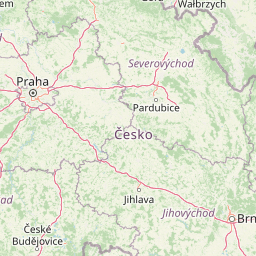
Use this park location map to pinpoint Džbány-Žebrák Nature Park in Czechia, understand its exact geographic position, and read its mapped placement within the surrounding landscape more clearly.

Pigeon | © OpenStreetMap contributors

Location context for Džbány-Žebrák Nature Park

Benešov District

Visual exploration of forested hills, spring-fed ponds, and protected Bohemian terrain

Přírodní park Džbány-Žebrák Photos and Landscape Scenery

Visual documentation reveals the forested ridges, wet meadows, and aquatic networks defining the protected landscape around the twin summits of Přírodní park Džbány-Žebrák. Photographic records provide clear spatial context for evaluating the varied habitats, rural shelterbelts, and near-submontane character of this Bohemian conservation area.

Wide shot of a rolling Czech landscape featuring green agricultural fields in the foreground, small clusters of village buildings in the middle distance, and dense forest covering the low hills in the background under a bright, overcast sky.

Park atlas

Compare nearby regional nature reserves, forested hills, and connected Bohemian habitats

Exploring Other Parks Near Přírodní park Džbány-Žebrák and Surrounding Protected Landscapes

Browsing other protected areas near Přírodní park Džbány-Žebrák reveals the wider ecological context of the Central Bohemian uplands. Comparing adjacent forested ridges and river basins helps map the shared natural features defining regional conservation.
Natural monumentJihočeský kraj
About 9.6 km away#1 closest

Southeast

Vlašimská Blanice Natural Monument: Mapped River Geography and Protected Valley Terrain

A vital riverine habitat in the South Bohemian Region

Vlašimská Blanice forms a protected natural monument around an unregulated, meandering section of the Blanice River. This landscape is defined by its continuous riparian woodland, gravel-rich riverbed structures, and a surrounding mosaic of floodplains and meadows, providing essential habitat continuity within the Jihočeský kraj terrain.

Area
0.304 km²
Established
2014
IUCN
III
Relief
Upland
Natural monumentStředočeský kraj
About 12 km away#2 closest

Southeast

Roudný Natural Monument: Mapping Protected Mining Habitats in Středočeský Kraj

Explore the geography of this rare sandy sanctuary for invertebrates and fungi.

Roudný is a specialized natural monument protecting the sandy, nutrient-poor substrate of a former gold mine. The site stands as a significant biological island in Středočeský kraj, supporting species dependent on open, eroded sandy slopes that are now rare in the wider regional landscape. Its compact geography highlights the intersection of industrial history and conservation in the Czech Republic.

Area
0.025 km²
Established
1994
IUCN
IV
Relief
Lowland
Watercolor painting of a peaceful wetland landscape with a pond, tall grasses, rolling hills, and a soft, muted color palette.
Natural monumentCentral Bohemia Region
About 16 km away#3 closest

Southeast

Rybník Louňov Natural Monument: Mapped Geography and Protected Wetland Ecosystems

Central Bohemia Region protected wetland and pond habitat

Rybník Louňov serves as a protected natural monument defined by its intimate mosaic of open water, emergent reed beds, and wet meadow patches. Located in the Central Bohemia Region, this site provides a critical refuge for rare flora and fauna, illustrating the role of small-scale landscape preservation in maintaining regional ecological health.

Area
0.019 km²
Established
2001
IUCN
IV
Relief
Lowland
Natural monumentStředočeský kraj
About 19 km away#4 closest

West

Vápenické jezero Natural Monument: Wetland Geography and Protected Landscape in Středočeský kraj

Mapping the ecological features of the Sedlčany Basin.

Located in the Sedlčany Basin, Vápenické jezero is a protected pond system serving as a vital sanctuary for the fire-bellied toad and diverse wetland bird species. This entry provides a detailed look at its spring-fed water body, bulrush-covered surface, and long-standing ecological role in the broader landscape of central Bohemia.

Area
0.084 km²
Established
2013
IUCN
III
Relief
Upland
Natural monumentStředočeský kraj
About 20 km away#5 closest

East

Na ostrově Natural Monument: Protected Juniper Habitats in Středočeský kraj, Czech Republic

Geographic landscape profile and ecological monument overview

Investigate the natural terrain and conservation value of Na ostrově, a protected site in the Benešov District. This area preserves a rare juniper-dominated hillside, offering insight into dry grassland and heath ecosystems maintained through traditional pastoral management.

Area
0.05 km²
Established
1972
IUCN
IV
Relief
Upland
A watercolor painting showing a soft, panoramic landscape with rolling hills, a line of trees, and a small pond or marshy area in the foreground.
Protected landscapeStředočeský kraj
About 24 km away#6 closest

North

Hornopožárský les Nature Park: Atlas of Protected Landscapes in Středočeský kraj

Granite Bedrock and Forested Terrains in Central Bohemia

Trace the undulating ridges and rocky outcrops of Hornopožárský les Nature Park, where central Bohemian geography meets historical quarrying heritage. This protected area offers a deep look into the regional forests and river valley ecosystems characteristic of the lower Posázaví landscape.

Area
25 km²
Established
2002
Relief
Upland
Climate
Temperate
Nature reserveStředočeský kraj
About 25 km away#7 closest

Northwest

Vlčí rokle Nature Reserve: Geological Ravines and Ancient Beech Forests in Středočeský kraj

Mapping protected natural monument boundaries and ancient woodland remnants

Explore the geological and botanical features of Vlčí rokle, an exceptional nature reserve set within the Středočeský kraj. This protected area safeguards a fragment of ancient beech forest and a granite-boulder-strewn ravine, representing a classic example of central Bohemian geological and ecological heritage.

Area
0.085 km²
Established
1990
IUCN
III
Relief
Upland
Natural monumentStředočeský kraj
About 25 km away#8 closest

Northeast

Na Stříbrné Natural Monument: A Geological and Forest Sanctuary in Central Bohemia

Protected woodland and historical mining terrain

Spanning less than five hectares, Na Stříbrné represents a dense mosaic of metamorphic geology and vibrant woodland habitat. This protected area in Středočeský kraj showcases the persistence of forest flora like mezereon amidst historic industrial relics, offering a clear window into the varied terrain of the Czech landscape.

Area
0.048 km²
Established
1972
IUCN
IV
Relief
Upland

Common questions about visiting, size, designation, and location context for Džbány-Žebrák Nature Park

Džbány-Žebrák Nature Park FAQs for park facts, access, geography, and protected area context

Find quick answers about Džbány-Žebrák Nature Park, including protected-area facts, park geography, trail and visitor context, and how the park fits into its surrounding country and regional landscape.
MoriAtlas Explorer

Continue Your Protected Areas Search Across the Global Atlas

Deepen your exploration by continuing the structured search for national parks and protected areas worldwide. Utilize the comprehensive filtering capabilities to compare different conservation landscapes and refine your understanding of global park geography. Discover more about the distribution and characteristics of protected natural areas.

Global natural geography