Why FFH-Gebiet Wälder an der Lecker Au stands out
The site is best known for housing some of the highest-quality deciduous woodland remaining on the Lecker Geest. Its three sub-areas together contain a small but well-characterised mosaic of EU-protected beech, oak and alluvial hardwood forest types, representing a fragment of ancient Geest woodland that has been recorded on maps since the late seventeenth century. The location is also notable in regional conservation planning because the area sits inside a main axis of the Schleswig-Holstein biotope network system. The combination of historical continuity, varied forest communities on a low and flat sandy substrate, and the presence of protected species such as the eagle owl and black woodpecker gives the site a clear identity within the Natura 2000 framework.
FFH-Gebiet Wälder an der Lecker Au history and protected-area timeline
The woodlands along the Lecker Au have been documented as a forest landscape for more than three centuries. They appear on the 1680 map of the Duchy of Schleswig made by Frederik de Wit, and again on the Danish General Staff map of 1858, showing that the core forest areas have persisted on the Lecker Geest since at least the late seventeenth century.
Modern protection began with the establishment of the Naturschutzgebiet Erlenbruch on 2 August 1968 in the Fresenhagen sub-area. The Natura 2000 standard data sheet for the larger FFH area was prepared by the Landesamt für Landwirtschaft, Umwelt und ländliche Räume of Schleswig-Holstein in May 2004. The site was proposed as an area of Community importance in September 2004, confirmed by the European Union in November 2007, and formally designated as a special area of conservation under Section 32 of the Federal Nature Conservation Act in conjunction with Section 23 of the Schleswig-Holstein State Nature Conservation Act in January 2010.
The standard data sheet was updated in March 2012, and the management plan for the FFH area was published on 19 March 2018. The follow-up monitoring results of 7 February 2011 form the basis of the site's ongoing six-year reporting cycle under the EU Habitats Directive. In January 2019, the association Runder Tisch Naturschutz Nordfriesland was founded as a coordination body for nature conservation interests in the district, and has identified the FFH-Gebiet Wälder an der Lecker Au as one of its priority sites.
FFH-Gebiet Wälder an der Lecker Au landscape and geographic character
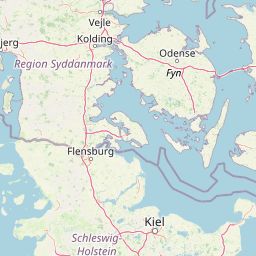
The landscape of the FFH-Gebiet Wälder an der Lecker Au is defined by the flat, low-lying character of the Schleswig-Holsteinische Geest. The terrain lies between about one and seven metres above sea level, with the highest point in the Hogelund sub-area near the estate of Hogelund and the lowest point along the Schwarzer Strom in the Fresenhagen sub-area. The site is divided into three separate patches by streams, drainage ditches and agricultural land.
The Hogelund sub-area occupies a gently sloping section between a paved farm track to the north, a drainage ditch to the west, and the embanked Lecker Au to the south. The land falls about four metres from northeast to southwest and drains through several ditches into the pumped Hogelunder Deichgraben. The Kuhholz and Eichenholz Gaarde sub-area lies about three hundred metres west of the Gaarde estate and consists of two adjoining woodland blocks, the Kuhholz to the north and the Eichenholz Gaarde to the south, separated by a farm track. Its elevated core reaches about 4.9 metres above sea level in the northeast.
The Fresenhagen sub-area sits in the valley of the Schwarzer Strom, a small stream running roughly parallel to the Lecker Au and separated from it by a low Geest ridge. Its low and flat valley floor contains wet woodland, introduced grassland, and a small inland dune of roughly 0.62 hectares west of the Hedwigsruh-Graben. The overall impression is of a gently undulating forested plain threaded by sluggish, embanked lowland streams.
FFH-Gebiet Wälder an der Lecker Au ecosystems, habitats, and plant life
Ecologically, the FFH-Gebiet Wälder an der Lecker Au is dominated by deciduous forest communities growing on sandy, often acidic Geest substrates. Nearly nine tenths of the site is woodland, and the forest mosaic includes mesotrophic beechwood on better-drained soils, wet and swampy woodland in depressions, acidophilous oak-birch forest on poorer sands, and alder-ash softwood floodplain forest along the streams.
The site is recognised under the EU Habitats Directive for five main forest habitat types: Hainsimsen beech forests, Waldmeister beech forests, Stellaria oak-hornbeam forests, old acidophilous oak forests on sand with pedunculate oak, and the priority habitat of alder-ash and softwood alluvial forests. Together these represent a compact transitional sequence between mesotrophic beech woodland on the higher ground and the wet alder swamp forest of the lowland streams.
The Fresenhagen sub-area adds further ecological variety through the presence of species-poor intensive grassland, fragments of bog and swamp forest, and a small forested inland dune. The entire site is intersected by a main axis of the Schleswig-Holstein biotope network system, which links forest fragments and protected areas across the regional landscape. The overall ecological picture is that of a small but ecologically rich forest archipelago within a heavily modified agricultural and drainage landscape.
FFH-Gebiet Wälder an der Lecker Au wildlife and species highlights
The wildlife interest of the FFH-Gebiet Wälder an der Lecker Au centres on the forest fauna typical of mixed deciduous woodland on the North European Geest. The standard data sheet lists the eagle owl, the black woodpecker and the hobby as Annex II or Birds Directive species recorded in the area. Sighting numbers are too low for a formal conservation assessment, but these species are characteristic of mature deciduous woodland with adequate deadwood and large cavity trees.
The woodland structure also provides habitat for typical forest birds, bats and invertebrates associated with old beech and oak stands. Old habitat trees and standing or fallen deadwood are recognised as important features for species conservation, though the management plan notes that current levels of habitat trees and deadwood are below the recommended density of at least three habitat trees per hectare.
In the freshwater context, the Lecker Au and the Schwarzer Strom themselves provide additional ecological value through their embanked and pumped channels, which link the forest fragments to the broader drainage network of the Lecker Geest. The Hedwigsruh-Graben and the Gaarder Deichgraben further shape habitat conditions for amphibians and aquatic invertebrates within and adjacent to the protected area.
FFH-Gebiet Wälder an der Lecker Au conservation status and protection priorities
The FFH-Gebiet Wälder an der Lecker Au plays a targeted but locally important conservation role within the Natura 2000 network of Schleswig-Holstein. It was formally designated to protect the longest-continuously documented deciduous forest fragments of the Lecker Geest and the small but high-quality mosaic of Habitats Directive forest types they support. The five Annex I habitat types it contains represent an unusually complete local sample of the Geest's natural forest heritage.
The 2018 management plan identified several challenges. Many trees grow in only one or two layers, limiting structural diversity. Standing and fallen deadwood is scarce, and habitat trees fall below the density needed for typical forest fauna. Privately owned forest makes enforcement of the strict habitat protection regime more difficult than in publicly owned reserves. As a result, all protected habitat types in the FFH area are rated as being in average to poor condition, with the oak forests faring better than the beech forest types.
The recommended conservation measures include ecologically oriented forest management based on the principles of the Schleswig-Holstein state forests, promotion of younger age classes, retention of habitat trees and deadwood, and, in the Fresenhagen sub-area, extensification of grassland use both inside and outside the FFH boundary. The follow-up monitoring occurs on the standard six-year cycle applied across Schleswig-Holstein, with the latest published monitoring from 7 February 2011.
FFH-Gebiet Wälder an der Lecker Au cultural meaning and human context
The cultural context of the site is closely bound to the historical estates of the Lecker Geest. All three sub-areas are owned by traditional manor estates: Hogelund, Gaarde and Fresenhagen, and have been part of the managed woodland landscape of these estates for centuries. Their documentation on the Frederik de Wit map of 1680 and the Danish General Staff map of 1858 underlines the long-running role of these estates in shaping the forest cover of northwestern Schleswig-Holstein.
The protected forest also forms part of a wider regional conservation community, exemplified by the 2019 establishment of the Runder Tisch Naturschutz Nordfriesland association in the district. This body brings together local stakeholders to coordinate nature conservation, including the specific concerns of the FFH-Gebiet Wälder an der Lecker Au, and reflects the ongoing dialogue between traditional landownership, forestry practice and European conservation objectives in this part of Germany.
Top sights and standout views in FFH-Gebiet Wälder an der Lecker Au
The site stands out for combining a compact, well-documented mosaic of five EU-protected deciduous forest habitat types on a very small area, anchored by the historically continuous woodlands of the Lecker Geest. It protects mesotrophic beech forest, Stellaria oak-hornbeam forest, ancient acidophilous oak forest and alder-ash alluvial forest alongside a small forested inland dune and the older Naturschutzgebiet Erlenbruch.
Its location along the Lecker Au and the Schwarzer Strom, with embanked streams and pumped drainage systems, makes it a representative example of how Natura 2000 forest conservation operates in a heavily engineered North German lowland. Despite its size, it provides habitat for eagle owl, black woodpecker and hobby, and functions as a key node in Schleswig-Holstein's regional biotope network.
Best time to visit FFH-Gebiet Wälder an der Lecker Au
Because the FFH-Gebiet Wälder an der Lecker Au is a small, low-elevation forest reserve on the Schleswig-Holstein Geest, its character shifts mainly with the seasonal state of the woodland rather than with dramatic landscape transformations. Spring and early summer are generally the best periods to observe the structure of the deciduous forest canopy, hear typical forest birds and appreciate the contrast between mesotrophic beech stands and the wet alder floodplain forest along the streams.
Late summer and early autumn draw attention to the oak and beech mast and to the edges of the wet woodland, while winter reveals the open horizontal structure of the Geest forest and offers the best chance to see woodpecker activity and large raptor or owl presence around old trees and habitat trees. Visitors should expect cool, windy North Sea coastal weather throughout much of the year and a generally flat, wetland-influenced forest atmosphere regardless of season.