

Why Guy Fawkes River National Park stands out
Guy Fawkes River National Park is best known for its spectacular wilderness gorges, particularly the deeply incised Guy Fawkes River Valley that follows an ancient fault line through the park. The dramatic Ebor Falls, where the Guy Fawkes River drops off the Northern Tablelands, represents one of the most visually striking waterfall landscapes in northern New South Wales. The park is also notable for its population of wild horses, direct descendants of Australian wartime cavalry horses known as Walers, which have been recognized as having significant historical, military and cultural heritage value. The park protects one of the most extensive old-growth forest areas in the state.
Guy Fawkes River National Park history and protected-area timeline
Guy Fawkes River National Park was established in 1972 as a protected wilderness area, recognizing the outstanding natural values of this rugged tableland and gorge landscape. The protection of this area came at a time when awareness of wilderness preservation was growing in Australia, and the park's designation as an IUCN Category Ib wilderness area reflected its exceptional unmodified character. Prior to formal protection, the landscape had been used for pastoral grazing, but the rugged terrain limited the intensity of development compared to surrounding areas. The establishment of the park also recognized the significance of the Guy Fawkes River system and its tributaries, which drain from the high country of the Northern Tablelands into the Clarence River system below. The history of wild horses in the park dates to the 1930s, when horses were introduced to the area. By 2000, the population had grown to approximately 600 animals, leading to a controversial culling program by the NSW National Parks and Wildlife Service. Public response to the cull prompted a heritage assessment, which in 2002 determined that these horses were direct descendants of Australia's wartime cavalry horses and possessed significant historical, military and cultural value. Since then, over 400 horses have been passively trapped and removed from the park, with around 200 finding new homes. A formal register and Stud Book has been established to preserve the unique genetics of this heritage horse population.
Guy Fawkes River National Park landscape and geographic character
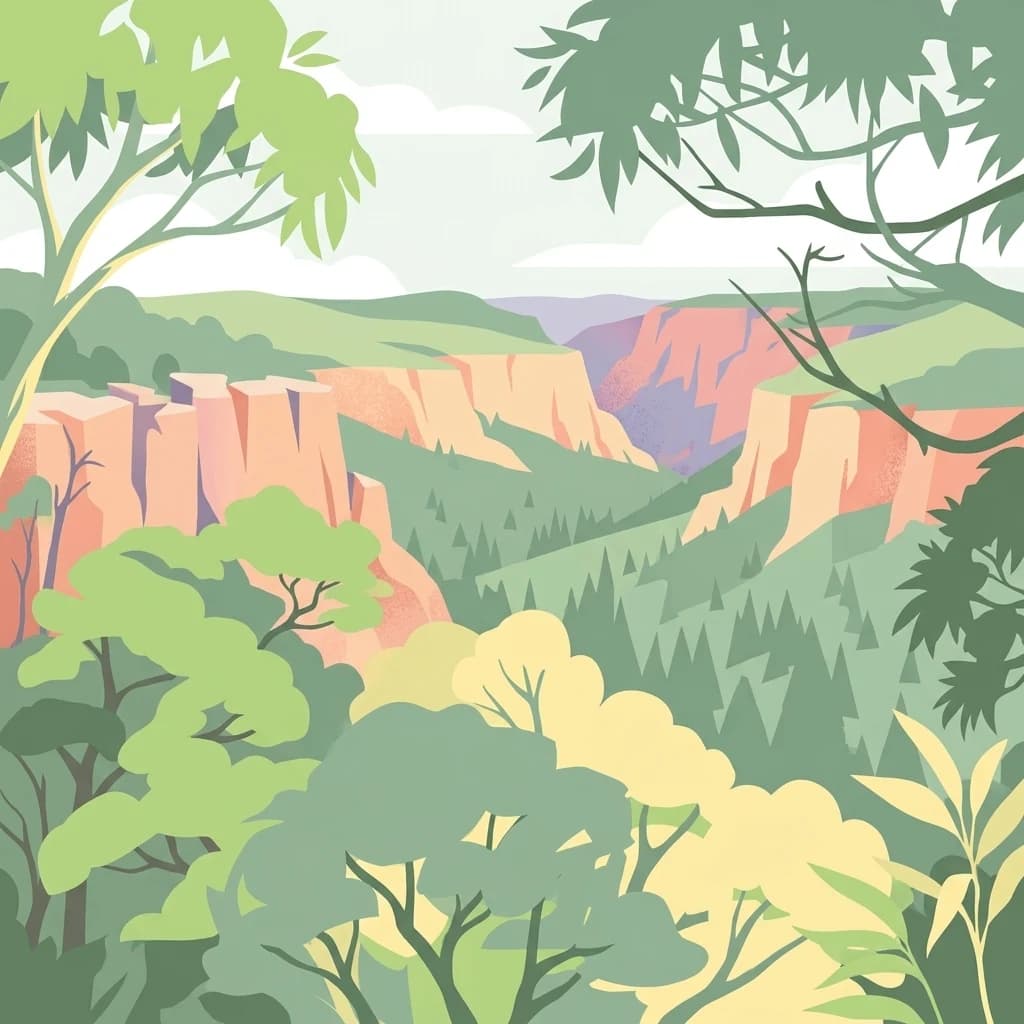
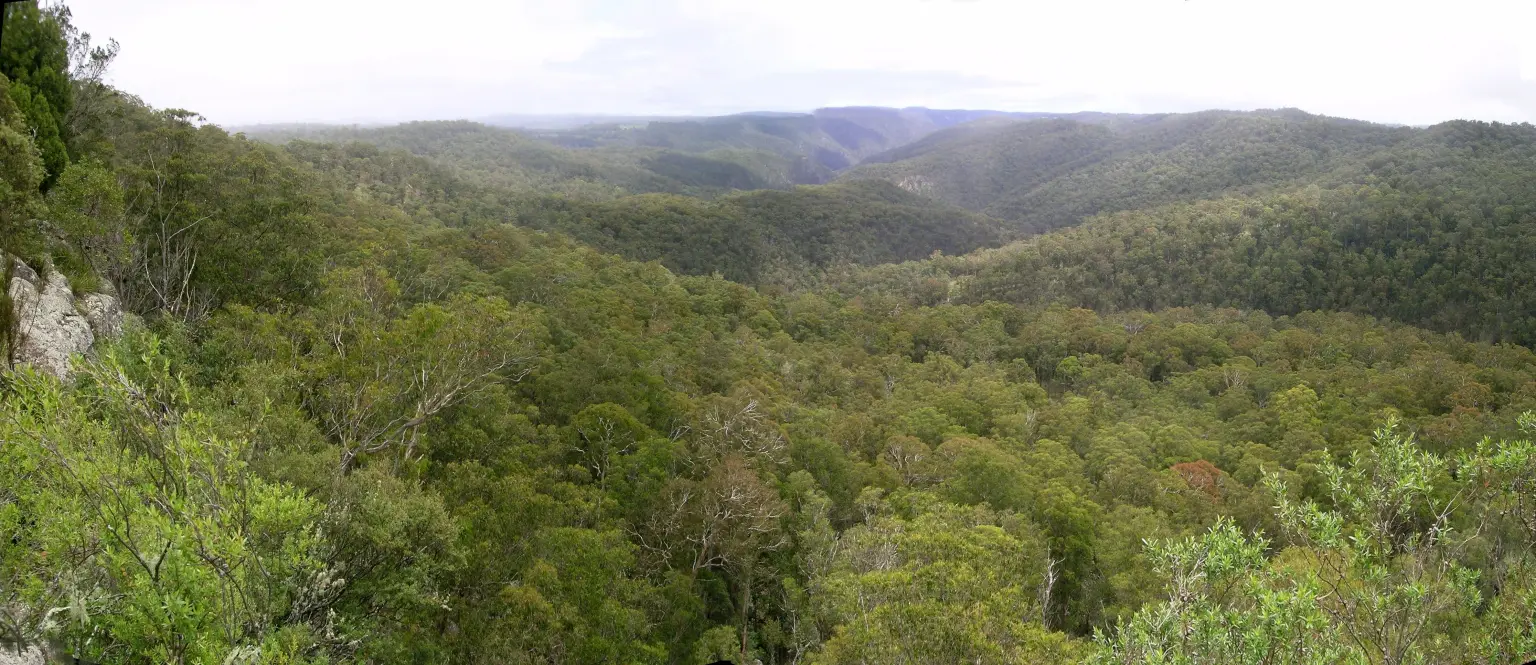
The landscape of Guy Fawkes River National Park is defined by a series of deeply incised river valleys that cut through the eastern edge of the New England Tablelands. The most prominent feature is the Guy Fawkes River Valley, which has been carved along the line of an ancient fault, creating a dramatic landscape of steep-sided gorges and rugged river corridors. The river plunges off the tablelands at Ebor Falls, where water drops dramatically over the edge of the plateau into the gorge below. Similar gorges are formed by the Aberfoyle River, Sara River, and Henry River, all of which flow through the park in deeply cut valleys. The terrain is characterized by steep gradients, rocky outcrops, and exposed cliff faces, particularly along the gorge walls where ancient sedimentary rocks are exposed. The high plateau country above the gorges presents a different character, with more open terrain and different vegetation communities suited to the higher elevation and more exposed conditions.
Guy Fawkes River National Park ecosystems, habitats, and plant life
The park supports an exceptional diversity of vegetation, with over 40 different vegetation communities identified within its boundaries. This remarkable botanical richness reflects the park's position at the transition between different bioregions and the variety of microclimates created by the complex topography of gorges, ridges, and plateaus. Significant areas of old-growth forest are protected within the park, representing some of the most intact forest remaining in northern New South Wales. These old-growth forests are characterized by large, mature trees and complex canopy structures that provide habitat for numerous species. The vegetation ranges from wet sclerophyll forests in the gorge environments to more open woodland and heath communities on the exposed ridge tops and plateau areas. The diversity of habitats supports the park's significant threatened species profile, with 28 plant species and 24 animal species listed as threatened under various conservation legislation.
Guy Fawkes River National Park wildlife and species highlights
Guy Fawkes River National Park supports 24 threatened fauna species, reflecting the ecological importance of this diverse landscape. The combination of old-growth forest, riparian corridors, and varied terrain creates habitat for numerous species adapted to wilderness environments. The park's position on the Northern Tablelands places it within a transition zone between different biogeographic regions, supporting species from both cooler highland environments and warmer lowland forests. The riparian zones along the Guy Fawkes River and its tributaries provide important habitat for aquatic species and wildlife that depends on water sources throughout the year. The extensive old-growth forests provide nesting and foraging habitat for forest-dependent birds and arboreal mammals, while the more open country supports different assemblages of ground-dwelling species.
Guy Fawkes River National Park conservation status and protection priorities
The park's designation as an IUCN Category Ib wilderness area reflects its highest level of protection within the international protected area system, recognizing its unmodified character and outstanding natural values. The protection of significant old-growth forest represents a key conservation priority, as these forests are increasingly rare in the cleared and modified landscapes of eastern Australia. The presence of 28 threatened plant species and 24 threatened fauna species underscores the park's role as a critical refuge for species that have declined across much of their former range. The wilderness designation provides strong legal protection for the park's natural values, limiting development and ensuring that the landscape remains in a wild state for future generations. The management of the wild horse population has also become a conservation issue, as while these animals have heritage significance, they also pose threats to sensitive vegetation communities and riparian areas through overgrazing and soil disturbance.
Guy Fawkes River National Park cultural meaning and human context
The cultural context of Guy Fawkes River National Park includes the heritage value of its wild horse population, which has been formally recognized as significant by government heritage assessment. These horses, known as Guy Fawkes Heritage Horses, are direct descendants of Australian cavalry horses (Walers) that served in World War I and World War II. The heritage study completed in 2002 found these horses had significant historical, military and cultural value, representing the only group of Australian wild horses with proven heritage significance. The Bicentennial National Trail, established in the 1970s, was plotted to run along the western side of the Guy Fawkes River on what was historically a travelling stock route, connecting the park to the broader heritage of pastoral movement through the Australian landscape.
Top sights and standout views in Guy Fawkes River National Park
The spectacular Ebor Falls, where the Guy Fawkes River drops dramatically from the Northern Tablelands, represents one of the park's most iconic landscapes. The deeply incised Guy Fawkes River Valley, following an ancient fault line through the park, offers dramatic gorge scenery that remains largely inaccessible and truly wild. The extensive old-growth forests, some of the most intact remaining in northern New South Wales, provide a glimpse of what much of the region's pre-colonial landscape would have resembled. The park's wilderness classification ensures that large areas remain in a natural state, offering remote backcountry experiences for those seeking truly unmodified landscapes.
Best time to visit Guy Fawkes River National Park
The park can be visited throughout the year, with the cooler months of autumn and winter offering pleasant conditions for exploring the tableland areas. Summer and early autumn can bring thunderstorm activity to the Northern Tablelands, with dramatic cloud formation and rainfall contributing to the water flow at Ebor Falls. The higher elevation of the park means that winter temperatures can be cold, particularly in the gorge bottoms where cold air pools. Spring offers the opportunity to see wildflowers in bloom across the plateau areas and a good time to observe the park's birdlife as breeding activity increases.