Why Im Rußland und in der Kuhweide bei Lindheim stands out
The reserve is especially renowned as one of the last breeding strongholds of the Eurasian Curlew (Großer Brachvogel) in all of Hesse, as well as for its restored meadow landscape along the middle Nidder. It is equally valued for its importance to the White Stork and Greylag Goose, whose populations increased significantly thanks to recent habitat management, and for its near-natural ponds and pools that sustain amphibians like the European Tree Frog. Beyond these flagship species, the area is recognized for its species-rich, well-managed hay meadows and for hosting one of the last recorded successful breeding attempts of the Black-tailed Godwit in Hesse. The combination of floodplain meadow, riverine habitat, and traditional open-land management defines its ecological character.
Im Rußland und in der Kuhweide bei Lindheim history and protected-area timeline
The reserve dates its formal protection status to 1984, when the area covering approximately 220 hectares was placed under nature protection under the designation 1440014 by the Hessian authorities. Its recognition at that time focused primarily on safeguarding the grassland habitats and floodplain features of the middle Nidder valley between Lindheim and Hainchen.
In May 2023, a new ordinance for the reserve was issued, updating both the legal framework and the geographic boundaries. Under this revised designation, the protected area was enlarged to approximately 249.5 hectares. The renewed ordinance emphasizes the preservation, development, and restoration of the connected grassland areas and near-natural floodplain sections of the central Nidder valley, particularly with respect to their role as habitat for protected animal and plant species. Over time, the reserve has also been integrated into wider European networks, becoming a sub-area of the FFH area 'Grünlandgebiete in der Wetterau' and the 'Vogelschutzgebiet Wetterau' under the European Union's Natura 2000 framework.
Im Rußland und in der Kuhweide bei Lindheim landscape and geographic character
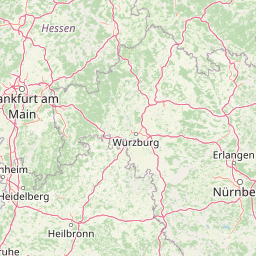
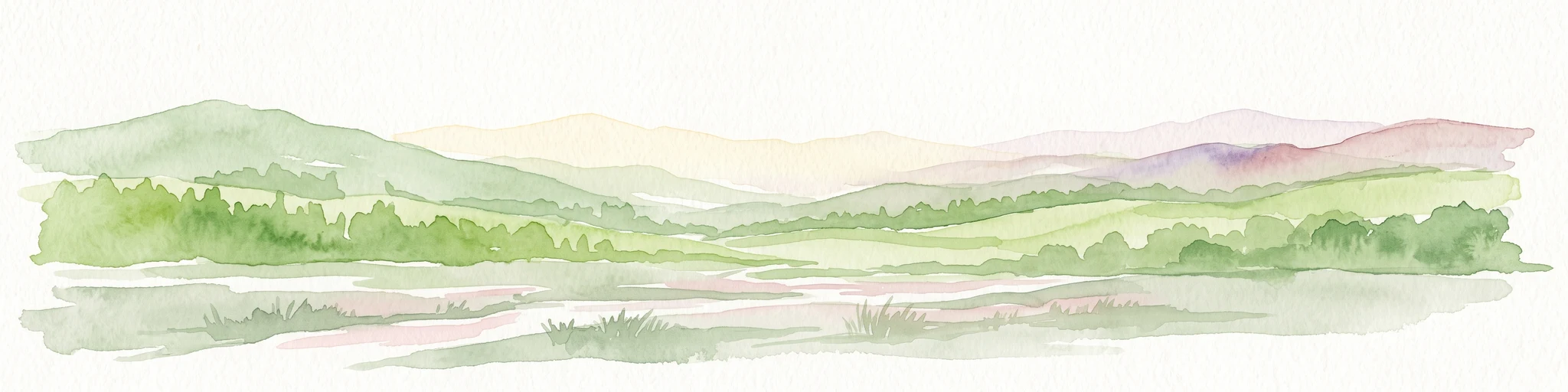
The protected area lies within the broad floodplain of the Nidder river, in the gently undulating lowland setting characteristic of the Wetterau region. The terrain is dominated by expansive open meadows interrupted by small waterbodies, shallow pools, and riparian features. The Nidder flows along the northwestern edge of the reserve, while the smaller Seemenbach crosses the area and joins the Nidder within or near the protected boundaries. Together these waterways create a dynamic floodplain mosaic shaped by seasonal flooding and traditional water management.
Open land is the defining visual character. Rather than closed forest, the landscape is built from large, visually uninterrupted tracts of grassland that vary from drier, species-rich hay meadows to permanently moist floodplain meadows. Scattered ponds and near-natural pools, often sun-exposed due to the open surroundings, provide additional habitat structure. Although the area is bordered by transport infrastructure including the A 45 motorway to the west and the B 521 to the northwest, the interior experience remains that of an extended, open meadowland flanked by riverine corridors and modest riparian vegetation.
Im Rußland und in der Kuhweide bei Lindheim ecosystems, habitats, and plant life
Ecologically, the reserve centers on a semi-natural, traditionally managed grassland matrix. The dominant habitat type is species-rich nutrient-poor lowland hay meadow, supplemented by wet floodplain meadows along the Seemenbach and Nidder corridors. Near-natural ponds and pools punctuate the landscape, and the combined effect is an unusually well connected mosaic of open habitats with high botanical and structural diversity.
Botanically, the protected grasslands host a range of meadow and wetland plants including marsh willowherb, narrow-leaved bird's-foot trefoil, large water dropwort, greater water parsnip, bog stitchwort, marsh fleabane, and the broad-leaved marsh orchid. These species underline the area's importance as a refuge for moisture-loving plants of semi-natural meadows. Much of the reserve falls under formal Habitat Directive habitats of community interest, supporting a cultural landscape maintained through grazing and mowing rather than through natural succession or cultivation.
Im Rußland und in der Kuhweide bei Lindheim wildlife and species highlights
The reserve's avifauna is its most distinctive ecological asset. It is one of the last known breeding areas in Hesse for the Eurasian Curlew and has hosted one of the last confirmed successful nestings of the Black-tailed Godwit in the state. Regular breeding species include White Stork, Greylag Goose, Stonechat, Yellow Wagtail, Savi's Warbler, and Common Kingfisher. Corncrake records occur regularly, while Corn Bunting, Northern Lapwing, and Common Quail appear irregularly as breeders. Populations of Common Snipe and Grey Partridge, once present, have since disappeared from the reserve, while Whinchat does not breed there but passes through regularly as a migrant.
Beyond the breeding season, the meadows and seasonally flooded grasslands serve as important resting areas for migrating Common Cranes and wintering waterfowl such as Northern Shoveler, Common Teal, and Eurasian Wigeon. Wading birds including Jack Snipe, Green Sandpiper, and Common Greenshank also use the area as temporary habitat. The amphibian fauna is similarly significant: the European Tree Frog has naturally recolonized the reserve since the early 2000s following the establishment of numerous small waterbodies in nearby Wetterau focus areas, and the open pool network broadly supports habitat-protective amphibian species. The area also supports the threatened butterfly Dunkler Wiesenknopf-Ameisenbläuling, which lives in close association with the Great Burnet plant and the red ant Myrmica rubra. A small population of Eurasian Beaver inhabits the Seemenbach section within or near the reserve.
Im Rußland und in der Kuhweide bei Lindheim conservation status and protection priorities
Im Rußland und in der Kuhweide bei Lindheim holds considerable regional and European conservation importance. As a designated Naturschutzgebiet, it is part of the Natura 2000 network through its inclusion in the FFH site 'Grünlandgebiete in der Wetterau' and the larger 'Vogelschutzgebiet Wetterau'. Its conservation value rests on the unusually well preserved, contiguous mosaic of grassland habitats and floodplain features, which support several EU Habitat Directive habitat types and a high concentration of meadowbird, waterbird, and amphibian species.
Conservation management is led by the Forstamt Nidda in cooperation with other authorities and conservation organizations. Practical measures have included the creation, restoration, and maintenance of numerous small waterbodies to improve amphibian habitat, hay transfer from species-rich donor meadows to restore Pfeifengras wiesen (Molinia meadows), and deliberate establishment of uncut grass strips near Limeshain specifically to support breeding Meadow Pipits. These actions have measurably improved local populations of White Stork and Greylag Goose and have secured the area's role as one of the most important wet-grassland reserves in central Hesse.
Im Rußland und in der Kuhweide bei Lindheim cultural meaning and human context
The reserve reflects the traditional cultural landscape of the Wetterau region, where extensive grazing and haymaking have shaped farmland for centuries. Its designation as a Naturschutzgebiet explicitly recognizes the area as a culturally influenced semi-natural landscape; the very mix of meadow types and their ecological richness depends on maintaining small-scale, varied human use such as grazing at different intensities and differing mowing regimes. Names such as 'Kuhweide' in the reserve's title reflect this pastoral heritage, pointing to historical use as common grazing land. The protected meadows thus embody an ongoing relationship between local land management and biological diversity, rather than an untouched wilderness.
Top sights and standout views in Im Rußland und in der Kuhweide bei Lindheim
A flagship grassland reserve in the middle Nidder floodplain, Im Rußland und in der Kuhweide bei Lindheim combines one of Hesse's last Eurasian Curlew breeding sites with a strong meadowbird community, restored amphibian habitat, and a notable recolonization by the European Tree Frog. Its combination of extensive nutrient-poor hay meadows, dynamic river corridors along the Nidder and Seemenbach, and near-natural small waterbodies creates an unusually coherent wet-grassland landscape. The reserve's integration into the Natura 2000 network and its active management history make it both a regional biodiversity anchor and a demonstration site for the conservation of semi-natural meadowlands in central Germany.
Best time to visit Im Rußland und in der Kuhweide bei Lindheim
The reserve offers the most striking ecological character in spring and early summer, when meadow breeding birds such as Eurasian Curlew, Common Snipe relatives, White Stork, and lapwing-like species are active and hay meadows are in full bloom. Migratory and resting waterfowl, including cranes and wintering ducks, make the seasonally flooded meadows interesting during the cooler months from autumn through early spring. Amphibian activity around the ponds is highest in mild spring evenings following rain. Visitors seeking quiet observation and the sense of open floodplain landscape generally find late spring to early summer the most rewarding window, while winter offers an entirely different, waterbird-focused atmosphere on the wet meadows.