
Mori Atlas logo
Nature reserveRezerwat przyrody Jezioro Piaseczno

A preserved mosaic of clean-water lake ecology and ancient pine forests in Poland.

Rezerwat przyrody Jezioro Piaseczno: Protected Post-Glacial Lake and Forest Landscape Context

Rezerwat przyrody Jezioro Piaseczno serves as a critical nature reserve within the Bory Tucholskie mesoregion of Poland. This protected landscape safeguards an exceptionally transparent post-glacial lake and its surrounding buffer of swampy pine forests, peatlands, and reedbeds. By maintaining strict environmental isolation, the area preserves unique aquatic and bog-based plant communities that represent the highest water purity class within the Kuyavian-Pomeranian Voivodeship.

nature reservepost-glacial lakeBory TucholskieKuyavian-Pomeranian VoivodeshipWda Landscape Parkprotected forests
A stylized, flat-design illustration of a mountainous valley with a waterfall cascading into a lake, surrounded by pine trees, set against a soft, pastel-colored sky.

Rezerwat przyrody Jezioro Piaseczno

Nature reserve

Park overview

Structured park overview, official facts, and landscape profile for Jezioro Piaseczno Nature Reserve

Jezioro Piaseczno Nature Reserve park facts, protected area profile, and essential visitor context

Review the core facts for Jezioro Piaseczno Nature Reserve, including designation, size, terrain, visitor scale, habitats, and operating context in one park-focused overview.

About Jezioro Piaseczno Nature Reserve

Jezioro Piaseczno Nature Reserve is a compact but ecologically rich protected area in northern Poland, situated between the villages of Stara Rzeka, Łążek, and Zazdrość in Gmina Osie. It lies within the Wda Landscape Park and forms part of the broader Tuchola Forest (Bory Tucholskie) region, an extensive lowland area shaped by glacial processes and blanketed by sandy, podzolized soils that support a characteristic mosaic of pine forest, peatland, and freshwater systems.

The reserve centers on Lake Piaseczno, a small post-glacial lake whose outstanding water clarity has made it one of only three lakes in the entire Kuyavian-Pomeranian region holding the highest purity classification under Polish water quality standards. According to the founding documentation, the reserve was created to preserve the scientific, natural, and landscape values of this lake ecosystem, recognizing that its combination of clean water and intact shoreline habitats is regionally exceptional.

Surrounding the lake is a wide belt of coniferous forest dominated by Scots pine, with smaller contributions from birch, rowan, and alder-ash riparian stands. This forest acts as a natural filter, sheltering the lake from the agricultural and settlement pressures that affect nearby water bodies. Within the mire, swamp, reed, and aquatic vegetation zones, the reserve supports protected and rare plant species along with communities typically associated with undisturbed Northern European lake districts. Its identity is therefore that of a small, well-buffered, ecologically sensitive water body preserved within a working continental forest landscape.

Quick facts and research context for Jezioro Piaseczno Nature Reserve

Located in Gmina Osie in Kuyavian-Pomeranian Voivodeship, Jezioro Piaseczno Nature Reserve is part of the broader Wda Landscape Park network. It covers roughly 159 hectares, of which about 119 hectares are forested land managed by the Trzebciny Forest District. The reserve was designated as a landscape-type nature reserve on 2 October 2001 by order of the Kuyavian-Pomeranian Voivodeship Governor. Its core feature, Lake Piaseczno, holds waters of the highest purity class recognized in Poland. The reserve is subject to active conservation management aimed at preserving the ecological character of the lake and its surrounding habitats.

Protection and recognition

Documented protection scope and official recognition details for this protected area.

Rezerwat przyrody Jezioro Piaseczno Protection Status and Terrestrial Conservation Data

Rezerwat przyrody Jezioro Piaseczno maintains a documented terrestrial protection scope without imported international recognition sources or transboundary status. Structured conservation records provide clear administrative context regarding the official designation framework of the reserve.

Protection details

Protection scope
Terrestrial
Transboundary protection
No
Park context

Deeper park guide and search-rich context for Jezioro Piaseczno Nature Reserve

Jezioro Piaseczno Nature Reserve history, landscape, wildlife, and travel context

Explore Jezioro Piaseczno Nature Reserve through its history, landscape character, ecosystems, wildlife, conservation priorities, cultural context, and seasonal travel timing in a structured park guide built for atlas discovery and search intent.

Why Jezioro Piaseczno Nature Reserve stands out

The reserve is best known for protecting one of the purest lakes in northern Poland, embedded in ancient pine-dominated forest of the Tuchola Forest region. The combination of exceptionally clear lake water, surrounding boggy coniferous woodland, and intact peatland, reedbed, and aquatic plant communities makes it a benchmark site for clean-water lake ecology in the Bory Tucholskie. Its isolation from pollution, achieved through a wide forest buffer, is as significant as the species it shelters.
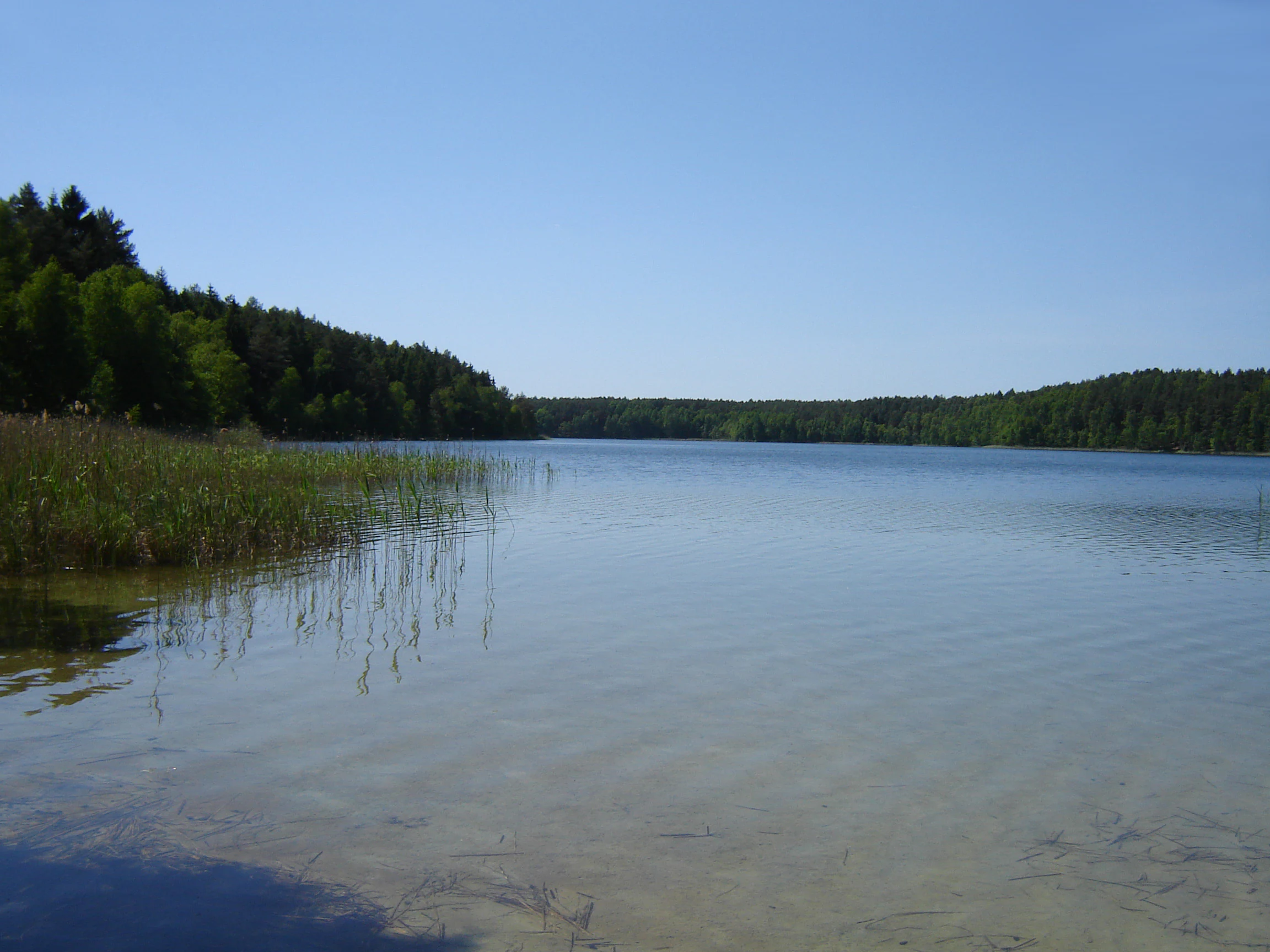
A calm lake under a clear blue sky, with pine trees lining the distant shore and reeds in the foreground.
A view of the clear waters of Lake Piaseczno, surrounded by dense pine forests.

Jezioro Piaseczno Nature Reserve history and protected-area timeline

Jezioro Piaseczno Nature Reserve was created by regulation of the Kuyavian-Pomeranian Voivodeship Governor, specifically Regulation No. 279/01 issued on 2 October 2001. The official founding instrument set the protected area at 159.78 hectares, a figure that has since been recertified at 158.99 hectares in current documentation. The reserve was classified from the outset as a landscape-type nature reserve and placed under active conservation management, reflecting the need to actively maintain the ecological balance of the lake and its surrounding forest and peatland communities rather than rely on passive protection alone.

Jezioro Piaseczno Nature Reserve landscape and geographic character

The reserve sits within the Bory Tucholskie mesoregion, a broad, low-lying post-glacial plain characterized by sandy outwash plains, kettle-like depressions, and shallow lake basins. The defining landscape feature is Lake Piaseczno itself, a small glacial lake with notably transparent water, encircled by relatively flat terrain clothed in coniferous forest. Wet depressions around the lake give way to boggy pine forest and alder-ash riparian woodland, while raised areas support drier pine stands on sandy soils. The interplay of open water, mire, reedbed, boggy forest, and dry pine woodland produces a layered and visually distinct landscape typical of the southern Baltic lake district of Poland.

Jezioro Piaseczno Nature Reserve ecosystems, habitats, and plant life

Ecologically, the reserve is structured around the lake and its immediate hydrological surroundings. The forest cover is dominated by Scots pine, accompanied by smaller amounts of birch and rowan, and the understory includes juniper, alder buckthorn, and the protected spurge-laurel (Daphne mezereum). The ground flora features typical boreal woodland species such as lingonberry, bilberry, wavy hair-grass, wood small-reed, and sheep's fescue. Several distinct forest habitat types are documented within the reserve, including boggy pine forest, boggy birch forest, and alder-ash ripian forest.

Along the shoreline and within the wetland zones the reserve preserves a sequence of rare plant communities, including a Cladium mariscus reedbed, a white water-lily aquatic association, and a Sphagnum bog featuring white beak-sedge. These communities host protected species such as European white water-lily, round-leaved sundew, marsh sedge, sweet gale, and Baltic bog sedge, as well as rare species including small spike-rush, Andromeda, white beak-sedge, straight wood small-reed, and small cranberry. The richness of protected and rare taxa within such a compact area reflects the reserve's strong habitat continuity and the effectiveness of its forest buffer against external disturbance.

Jezioro Piaseczno Nature Reserve wildlife and species highlights

The source documentation focuses primarily on the reserve's botanical and aquatic ecological values rather than its vertebrate fauna. Wildlife-specific content beyond the lake's botanical richness is not substantially described, and so the field is best handled by acknowledging that the reserve is fundamentally a botanical and limnological sanctuary. Its clear water, intact reedbeds, peatland hummocks, and undisturbed forest mosaic nonetheless create excellent habitat conditions for typical forest and wetland fauna of the Bory Tucholskie region, including amphibians, wetland birds, and invertebrates tied to bog and clean-water habitats.

Jezioro Piaseczno Nature Reserve conservation status and protection priorities

The reserve's conservation value lies in the combination of an exceptionally clean lake with a robust surrounding forest buffer. By isolating Lake Piaseczno from anthropogenic pollution sources, the reserve preserves not only the lake but also the closely associated bog, mire, reedbed, and aquatic plant communities that depend on those unpolluted waters. The designation of active protection, rather than passive protection, signals ongoing management to maintain the integrity of the lake ecosystem and to prevent degradation of its hydrology and vegetation. Within the wider Wda Landscape Park, the reserve functions as a key reference site for understanding how northern Polish lake-and-forest systems can be safeguarded at a relatively small spatial scale when surrounded by compatible land use.

Jezioro Piaseczno Nature Reserve cultural meaning and human context

The reserve lies within the traditional cultural landscape of the Bory Tucholskie, a region historically associated with forestry, small-scale agriculture, and dispersed rural settlements. Within Gmina Osie, villages such as Stara Rzeka, Łążek, and Zazdrość frame the protected area, linking the reserve to a broader pattern of human habitation that has long coexisted with extensive forest estates managed by the state forest service, in this case the Trzebciny Forest District. The lake and its surroundings are embedded in the cultural and recreational identity of the Wda Landscape Park, which the regional park administration promotes through interpretive trails and guides.

Top sights and standout views in Jezioro Piaseczno Nature Reserve

Jezioro Piaseczno Nature Reserve protects an unusually transparent lake within the ancient pine forests of the Bory Tucholskie, offering a compact but complete picture of post-glacial lake ecology. Its mosaic of boggy pine forest, swamp woodland, peatland, reedbed, and clean-water aquatic communities gives the site unusually high botanical density for its size, including several protected and relict plant species. The reserve is one of only a few protected sites in the region built specifically around a lake holding the highest Polish water purity class.

Best time to visit Jezioro Piaseczno Nature Reserve

The reserve's character changes meaningfully with season. Late spring and summer bring the most active vegetation, with aquatic flowering plants, reedbeds, and bog communities at their most developed and the lake most used for landscape observation. Early autumn offers typically drier forest trails and a quieter atmosphere within the Bory Tucholskie forest. Winter can provide a stark, calm tableau of snow-covered pine forest around the open water, though conditions for walking trails depend on seasonal accessibility rather than any single fixed visitation period.
Monthly climate preview

Trace long-term monthly temperature and precipitation data across representative coordinates.

Rezerwat przyrody Jezioro Piaseczno Climate Normals and Average Temperature Rhythms

Representative coordinate records reveal monthly temperature swings and precipitation rates spanning consecutive multiyear observation cycles for Rezerwat przyrody Jezioro Piaseczno. Examining complete twelve-month weather patterns provides deep analytical clarity on annual thermal variations.
Annual mean8 °C
-3 °C19 °C
Jan-3°
Feb-2°
Mar
Apr
May13°
Jun17°
Jul19°
Aug19°
Sep14°
Oct
Nov
Dec-1°
Warmest month
July

19.4 °C

Coolest month
January

-3 °C

Wettest month
July

2.6 mm/day

Driest month
April

1.2 mm/day

Park location guide

Geography guide, regional context, and park location map for Jezioro Piaseczno Nature Reserve

Jezioro Piaseczno Nature Reserve park geography, regions, and map view in Poland

Understand where Jezioro Piaseczno Nature Reserve sits in Poland through a broader geographic reading of the surrounding landscape, nearby location context, and its mapped position within the national park landscape.

How Jezioro Piaseczno Nature Reserve fits into Poland

Poland, officially the Republic of Poland, is a Central European country spanning from the Baltic Sea in the north to the Carpathian Mountains in the south. It borders Germany, Czech Republic, Slovakia, Ukraine, Belarus, Lithuania, and Kaliningrad Oblast. The country has a temperate climate, diverse landscapes, and is known for its rich history, cultural heritage, and strong economic position within the EU.

Wider geography shaping Jezioro Piaseczno Nature Reserve in Poland

Poland occupies 312,696 km2 in Central Europe, extending from the Baltic Sea coast in the north to the Sudetes and Carpathian Mountains in the south. It borders Germany to the west, Czech Republic and Slovakia to the south, Ukraine and Belarus to the east, and Lithuania and Kaliningrad Oblast to the northeast. The landscape includes lowland plains, uplands, and mountain ranges.

Map view of Jezioro Piaseczno Nature Reserve

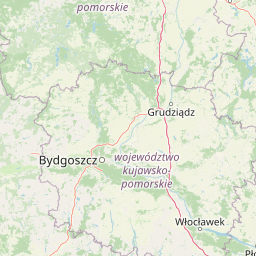
Use this park location map to pinpoint Jezioro Piaseczno Nature Reserve in Poland, understand its exact geographic position, and read its mapped placement within the surrounding landscape more clearly.

Pigeon | © OpenStreetMap contributors

Location context for Jezioro Piaseczno Nature Reserve

Kuyavian-Pomeranian Voivodeship

Visual reference collection for post-glacial lake terrain, shoreline habitats, and pine forest ecosystems

Rezerwat przyrody Jezioro Piaseczno Landscape, Scenery, and Protected Area Photos

Visual records capture the exceptional transparency of Lake Piaseczno and the surrounding coniferous woodland mosaic of the Bory Tucholskie region. Photographic documentation reveals vital post-glacial topography, wetland mires, and protected shoreline habitats that define the landscape character of the reserve.

A calm lake under a clear blue sky, with pine trees lining the distant shore and reeds in the foreground.

Park atlas

Compare adjacent post-glacial lakes and forest reserves across the regional landscape

Parks Near Rezerwat przyrody Jezioro Piaseczno and Surrounding Protected Landscapes

Browsing other protected areas near Rezerwat przyrody Jezioro Piaseczno reveals broader ecological patterns across the sandy outwash plains and ancient pine forests of northern Poland. Examining adjacent conservation zones provides valuable context for understanding regional post-glacial lake habitats and watershed purity.
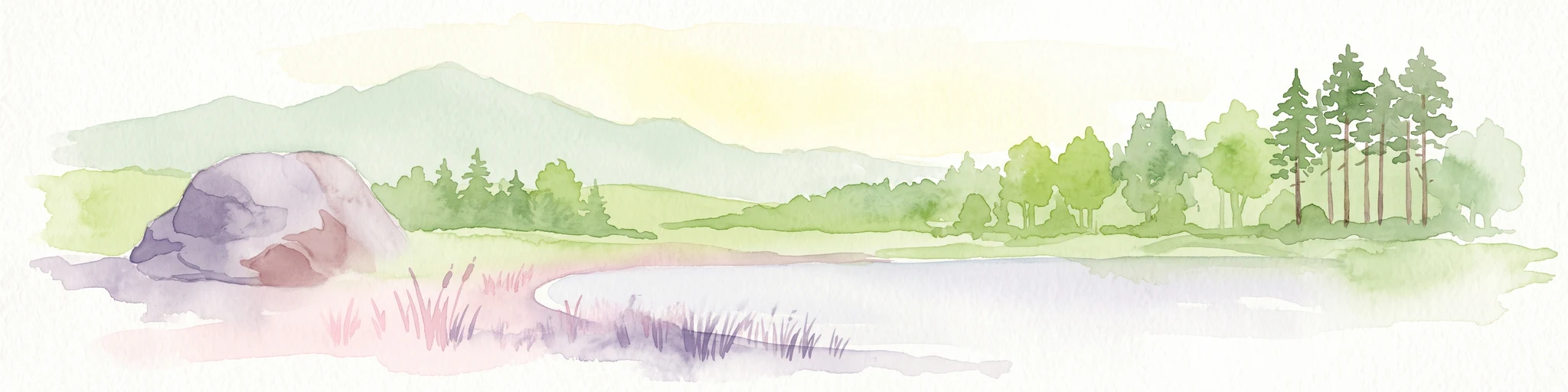
A minimalist watercolor painting showing a calm lake or wetland surrounded by soft green trees and gentle hills under a light sky.
Protected areaKuyavian-Pomeranian Voivodeship
Mapped location lies within the park boundary#1 closest

Southeast

Sandr Wdy Protected Area: Glacial Geography and Wetland Habitats in Northern Poland

An essential reference area for Bory Tucholskie forest ecology.

Sandr Wdy is a distinctive Natura 2000 protected area shaped by post-glacial processes. The landscape features a flat outwash plain punctuated by lake basins, river valleys, and diverse mire systems. With multiple strict nature reserves integrated into its boundaries, the site provides a comprehensive view of how hydrological and soil conditions influence habitat distribution within the broader forest landscape of Poland.

Area
63.21 km²
Established
2011
Relief
Lowland
Climate
Temperate
Protected landscapeKuyavian-Pomeranian Voivodeship
Mapped location lies within the park boundary#2 closest

Southeast

Wdecki Park Krajobrazowy: Protected Landscape Atlas and Regional Geography

Forest and river basin terrain in Poland

Examine the geographic foundation of Wdecki Park Krajobrazowy, a protected landscape characterized by the Wda River drainage, glacial erratics, and extensive pine forests. The area supports a rich variety of wetland flora, mires, and managed reservoirs such as the Żur, making it a significant conservation landmark within the wider Bory Tucholskie region of northern Poland.

Area
191.77 km²
Established
1993
Relief
Lowland
Climate
Temperate
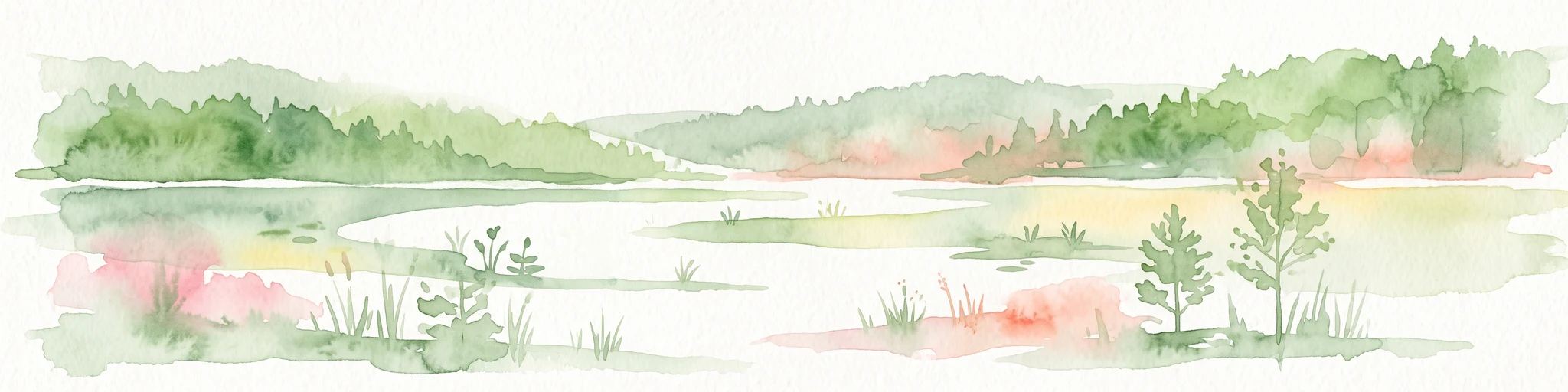
A watercolor painting showing a soft, atmospheric landscape with a winding body of water, green treelines, and patches of pinkish bog vegetation against a pale, warm sky.
Nature reserveKuyavian-Pomeranian Voivodeship
About 7.4 km away#3 closest

East

Dury Nature Reserve: Protected Wetland and Peatland Geography in Kuyavian-Pomeranian Voivodeship

Strictly protected dystrophic lake and bog habitats

Dury Nature Reserve is a specialized botanical and hydrological site in the Tuchola Forest. It preserves a distinct mosaic of four dystrophic lakes surrounded by peat bogs. The reserve is a core component of local wetland conservation, protecting rare bog species and maintaining the integrity of northern Polish forest ecosystems.

Area
0.13 km²
Established
1975
Relief
Lowland
Climate
Temperate
Protected landscapeKuyavian-Pomeranian Voivodeship
About 10 km away#4 closest

West

Tuchola Landscape Park: Mapped Protected Area and Riverine Geography in Poland

Pine-covered outwash plains and the meandering Brda River corridor

Covering a significant portion of northern Poland, Tuchola Landscape Park protects a distinctive postglacial landscape of sandy plains and dense pine forests. The park geography is anchored by the Brda River, which flows through a series of rapids and breakthroughs before reaching deep into the surrounding pine-clad outwash plain. Detailed map data provides insight into the park's eight nature reserves, which preserve critical wetland, bog, and riverine habitats.

Area
369.83 km²
Established
1985
Relief
Lowland
Climate
Temperate
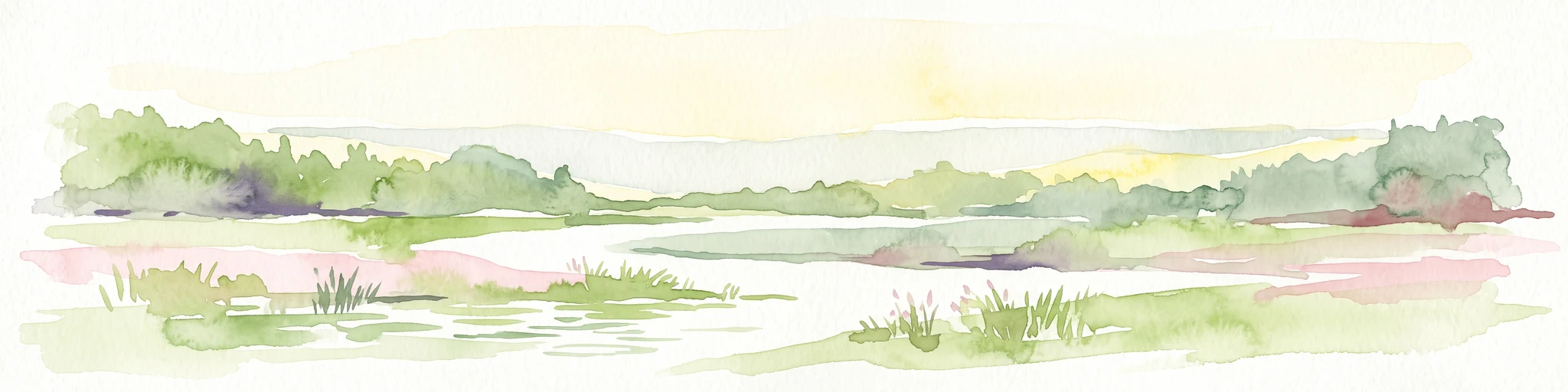
A panoramic watercolor illustration showing a calm lake bordered by pine trees and patches of pink shrubs under a pale sky.
Nature reservePoland
About 10 km away#5 closest

East

Rezerwat przyrody Miedzno: Wetland and Peatland Protected Area in Northern Poland

Geographic atlas of the Miedzno nature reserve and its glacial valley.

Rezerwat przyrody Miedzno represents a vital ecological corridor in Poland, defined by its flow-through lake, alder-birch swamp forests, and rare marshland flora. This nature reserve, situated within the Wdecki Landscape Park, provides a detailed view into the post-glacial topography and avian conservation landscapes of the Bory Tucholskie mesoregion.

Area
0.885 km²
Established
1968
Relief
Lowland
Climate
Temperate
Nature reserveKuyavian-Pomeranian Voivodeship
About 12 km away#6 closest

East

Rezerwat przyrody Jezioro Łyse: Protected Peatland and Bog Lake Geography in Poland

Wetland ecosystems of the Tuchola Forest region

Rezerwat przyrody Jezioro Łyse represents a preserved 20.55 hectare peatland basin in the Kuyavian-Pomeranian Voivodeship. This nature reserve highlights the intersection of open water, bog pine forests, and sphagnum-dominated peatlands, providing a critical study of lowland wetland terrain and protected plant communities in northern Poland.

Area
0.206 km²
Established
2006
Relief
Lowland
Climate
Temperate
Nature reservePomeranian Voivodeship
About 20 km away#7 closest

East

Rezerwat przyrody Jezioro Udzierz Nature Reserve Geographic and Ecological Overview

Wetland habitat mosaic in the Pomeranian Voivodeship

Rezerwat przyrody Jezioro Udzierz protects a compact yet biodiverse wetland mosaic centered on Lake Udzierz. Located in the heart of the Bory Tucholskie forest, the reserve integrates open water, reedbeds, peatlands, and wet meadows into a single, cohesive ecological unit. This detailed view examines the reserve's protected status, landscape composition, and its vital role as a refuge for bird species within the wider geography of northern Poland.

Area
2.299 km²
Established
2000
Relief
Lowland
Climate
Temperate
Watercolor painting of a river flowing through a lush green valley with distant hills.
Nature reserveKuyavian-Pomeranian Voivodeship
About 21 km away#8 closest

West

Dolina Rzeki Brdy Nature Reserve: Geomorphology and Protected Landscapes in Poland

Mapped river valley and riparian corridor

The Dolina Rzeki Brdy Nature Reserve encompasses a long, terrace-flanked stretch of the Brda River. Its protected boundaries contain a rugged mix of active meanders, boulder-strewn slopes, and shifting sandbars, creating a distinct lowland landscape of great geomorphological significance within the Tuchola Forest region.

Area
16.917 km²
Established
1994
Relief
Upland
Climate
Temperate

Common questions about visiting, size, designation, and location context for Jezioro Piaseczno Nature Reserve

Jezioro Piaseczno Nature Reserve FAQs for park facts, access, geography, and protected area context

Find quick answers about Jezioro Piaseczno Nature Reserve, including protected-area facts, park geography, trail and visitor context, and how the park fits into its surrounding country and regional landscape.
MoriAtlas Explorer

Continue Your Protected Areas Search Across the Global Atlas

Deepen your exploration by continuing the structured search for national parks and protected areas worldwide. Utilize the comprehensive filtering capabilities to compare different conservation landscapes and refine your understanding of global park geography. Discover more about the distribution and characteristics of protected natural areas.

Global natural geography