Why Rezerwat przyrody Jezioro Wiejki stands out
The reserve is best known for its small mesotrophic lake and surrounding peatland that preserve a textbook example of zoned wetland vegetation. From the open water outward, the lake is encircled by successive bands of marsh horsetail, broadleaf cattail, and floating bog communities dominated by slender sedge and beaked sedge. It is also distinguished by the presence of low birch, a rare relict species listed in the Polish Red Book of Plants as endangered within the country, and by a relatively rich breeding bird community of roughly twenty-six to twenty-nine species.
Rezerwat przyrody Jezioro Wiejki history and protected-area timeline
Human influence on the hydrology of the Wiejki area goes back to the late nineteenth century, when the so-called Tartaczny Ditch was dug, significantly altering the water balance of the Gródek-Michałowo Basin. In the 1950s, large-scale drainage and peat cutting took place between 1956 and 1957 to supply peat for industrial uses, and visible traces of these former peat workings can still be found within and around the reserve today.
Further drainage and land improvement in the 1970s and 1980s deepened the regional water table decline and pushed the surviving wetland fragments into a still more fragile state. In response, between 1997 and 2005 the lake and surrounding peatland were given the lighter protection status of an ecological utility, a designation that limited damaging activity but did not allow active restoration.
The decisive moment came on 29 December 2005, when the reserve was formally created by regulation of the Podlaskie Voivodeship governor. The new legal framework allowed a substantial programme of active protection to begin, including mowing, clearance of invading trees and shrubs, infilling of drainage ditches near the lake margin, and the construction of a small weir structure to re-establish appropriate water conditions. The protection plan adopted in 2016 has since divided the reserve into an active protection zone of about 19.22 hectares and a landscape protection zone of about 3.23 hectares, giving the site a clearly defined long-term management framework.
Rezerwat przyrody Jezioro Wiejki landscape and geographic character
The reserve occupies a gentle depression within the Białystok Highlands, a mesoregion shaped during the Middle Poland glaciation. Its defining landform is a small natural lake basin, part of the older glacial lake and kettle system that once covered much of the Gródek-Michałowo Basin, of which only scattered wetlands survive today.
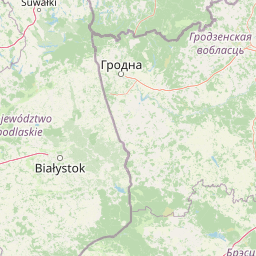
Around the lake, the terrain transitions into low-lying peatland, formerly more extensive but now reduced to fragments separated from drier ground by ditches, embankments, and former peat-cut basins. The surrounding catchment includes wet meadows on slightly raised ground and, beyond them, mixed forest on the slopes of the surrounding upland, giving the reserve a recognisable concentric pattern from open water through mire to woodland.
Despite the small total area, the topographic contrast between basin, peatland margin, and adjacent higher ground makes the reserve unusually illustrative of glacial landscape evolution in north-eastern Poland.
Rezerwat przyrody Jezioro Wiejki ecosystems, habitats, and plant life
From the central open water outward, the lake shows a textbook zonation of plant communities: submerged and floating plants in the lake proper, then reeds of marsh horsetail and broadleaf cattail, followed by a floating bog (pło) dominated by slender sedge and beaked sedge, and ringed by willow scrub and a peripheral zone of buckthorn alder and birch-willow forest.
Among the most ecologically significant elements is the population of low birch, a relict species confined to scattered peatland sites in Poland and listed as endangered in the Polish Red Book of Plants. Several orchid species, including early purple orchid and spotted orchid, occur in transitional habitats around the peatland, while round-leaved sundew is present in more open, nutrient-poor mire vegetation.
The surrounding meadows are dominated by red fescue and related grasses, creating a low-intensity grassland mosaic that complements the wetland core. Together, lake, peatland, willow scrub, and meadows form a compact but unusually complete gradient of wetland and wet-grassland habitats within a very small area.
Rezerwat przyrody Jezioro Wiejki wildlife and species highlights
The reserve is an important refuge in the Gródek-Michałowo Basin for wildlife associated with wetland and peatland habitats, including several protected mammal species. Eurasian lynx, grey wolf, and Eurasian beaver have all been recorded here, with the wetland structure and surrounding forest providing cover and forage for all three.
The lake and surrounding meadows and scrub form breeding and stopover habitat for a diverse bird community, with roughly twenty-six to twenty-nine breeding bird species recorded in the reserve. The combination of open water, emergent vegetation, floating mats, willow scrub, and surrounding grassland supports both wetland specialists and more generalist species that use the area during migration.
Although the site's small area precludes very large populations, the integrity and zonation of its habitats make it disproportionately valuable for wildlife conservation at the regional scale.
Rezerwat przyrody Jezioro Wiejki conservation status and protection priorities
Jezioro Wiejki is protected first and foremost as a representative example of a mesotrophic lake combined with peatland, a habitat combination that has become increasingly scarce in the Polish lowlands due to drainage, peat extraction, and land improvement. Because the site preserves the complete zonation of such a system, from open water through mire to woodland, it has high reference value for conservation science and for monitoring long-term changes in wetland condition.
The reserve's regulatory framework reflects this priority. The 2016 protection plan divides it into an active protection zone, where management interventions such as mowing, scrub control, and water-level restoration are actively carried out, and a landscape protection zone, where natural processes are allowed to prevail with minimal interference. This split approach is intended to maintain the open wetland character around the lake while protecting the integrity of the surrounding forest.
In a wider regional perspective, the reserve also serves as a refuge for species such as low birch, slender sedge, several orchids, and large mammals including lynx and wolf, whose populations in the heavily modified landscape of eastern Poland increasingly depend on the survival of small but well-managed protected sites like this one.
Top sights and standout views in Rezerwat przyrody Jezioro Wiejki
The main attractions of Jezioro Wiejki are ecological rather than scenic and centre on the unusually well-preserved zonation of the lake's wetland vegetation, the presence of the rare low birch, and the diversity of breeding bird life supported by the lake, peatland, and meadows within a very small area.
The site also stands out because active restoration works, including weir construction and the infilling of drainage ditches, have visibly improved water conditions and offer a useful case study in wetland recovery in a heavily drained agricultural landscape.
Best time to visit Rezerwat przyrody Jezioro Wiejki
The reserve can be visited throughout the year, but late spring and early summer are generally the most rewarding times to observe wetland vegetation and breeding birds, when the zonation of reeds, floating mats, and meadows is at its most visible and when orchids and other peatland flowers are in bloom.
Late summer and early autumn, when hay meadows around the reserve are traditionally managed, also offer good conditions for appreciating the cultural landscape and the contrast between open wetland and surrounding woodland. Winter visits can provide a clearer view of the lake's outline and the surrounding landforms, though access may be more limited by seasonal ground conditions.