Why Kalevalsky National Park stands out
Kalevalsky is best known for hosting one of the last large, intact old-growth pine forests of Northern Europe, a landscape that has largely disappeared elsewhere across Fennoscandia. The park stands out as a benchmark for understanding how European taiga ecosystems function in their near-natural state, and it serves as a refuge and source area for the native fauna and flora of northern forests. It is equally valued as a genetic reserve for the tree species that shape the boreal forest, offering a continuous, undisturbed forest cover that allows natural ecological processes to continue over very long timescales. This combination of ecological integrity, biological richness, and ongoing scientific importance gives the park a clear and distinctive identity among Russia's protected natural areas.
Kalevalsky National Park history and protected-area timeline
Kalevalsky National Park was formally established as a federal institution on 3 July 2007. Its creation responded to the recognition that the surrounding region still harbored one of Europe's last major blocks of old-growth, predominantly pine, taiga, along with the entire ecological community that such forests sustain. The park was deliberately positioned to protect this landscape from the kind of large-scale forestry and land-use transformation that had already reshaped much of Fennoscandia.
In 2015 the park was reorganized administratively. By order of the Russian Ministry of Natural Resources, Kalevalsky became part of the federal institution that also manages the Kostomuksha State Nature Reserve, integrating the two neighboring protected areas under a single management structure. The reform was followed by an updated founding charter in September 2015, formalizing the joint operation that continues today.
Beyond these formal milestones, the history of the territory itself extends much further back. Long before the park existed, the landscape supported generations of Saami and Karelian communities whose traditional livelihoods were closely tied to the taiga; their presence is recorded in archaeological sites and in the cultural memory of the region. The park's establishment can therefore be read both as a modern conservation decision and as an effort to safeguard a landscape with deep, layered human history.
Kalevalsky National Park landscape and geographic character
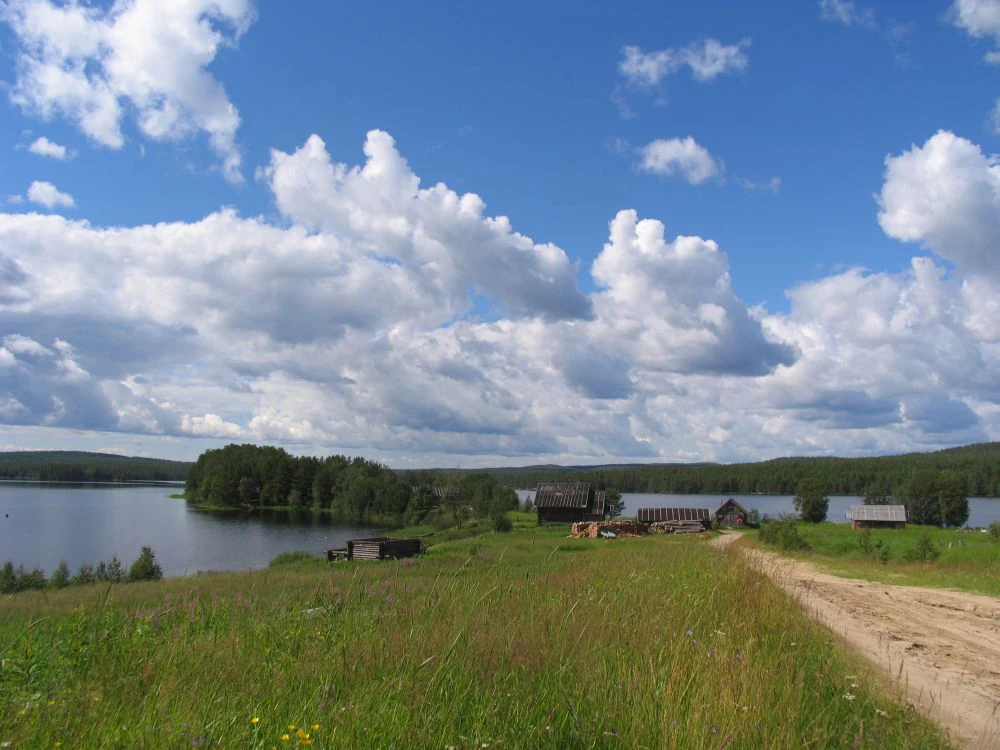
Kalevalsky occupies a classic North European taiga landscape, dominated by extensive, gently rolling tracts of coniferous forest. Pine stands form the visual and ecological backbone of the park, with spruce communities, mixed forests, and peatland mires filling the spaces between. The terrain reflects the legacy of glacial shaping, with broad lowland expanses interrupted by countless lakes, streams, and boggy depressions typical of eastern Fennoscandia.
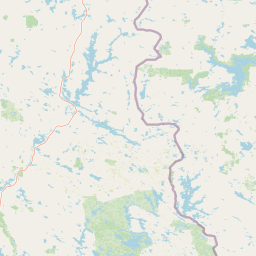
The park's drainage network is rich, fed by numerous small rivers, brooks, and lake chains that carve through the forested lowlands. These waterways often run over rocky, rapid-strewn sections that have remained largely undisturbed, supporting sensitive freshwater species and giving the landscape an additional layer of natural character. The western boundary of the park follows the Finnish border, anchoring the otherwise continuous forest mosaic within an international framework of transboundary conservation.
Seasonally, the landscape transforms dramatically. Long winters with persistent snow cover give the taiga a quiet, monochrome character, while the brief boreal summer brings a flush of green, abundant surface water, and intense biological activity. The combination of extensive old-growth forest, water abundance, and minimal infrastructure produces the sense of a landscape that, in ecological terms, has remained largely intact.
Kalevalsky National Park ecosystems, habitats, and plant life
The park's natural character is defined by its huge, contiguous old-growth pine forests, which support the ecological processes typical of mature and ancient taiga, including the presence of large decaying trees, dead wood, and undisturbed forest soils. These features create the structural complexity that many specialized species of northern forests need to persist. Spruce forests and mixed communities add further habitat diversity, while mires and lakes extend the range of ecological conditions across the territory.
Botanically, the park is rich and includes roughly 529 recorded species of vascular plants, 160 species of leafy mosses, and 167 species of lichens. Notable among the flora are protected aquatic plants such as lake quillwort, the slender quillwort, and Dortmann's lobelia, along with a range of orchids and sedges, some of them listed in the Red Data books of Russia and Karelia. The forest communities themselves act as a genetic reservoir for the tree species that define the northern taiga, giving the park lasting scientific and conservation significance.
Alongside its terrestrial ecosystems, the park contains an extensive and relatively undisturbed freshwater system. Rivers, streams, and lakes throughout the territory maintain clean, often oxygen-rich water, which supports sensitive aquatic communities and rare species that cannot survive in polluted or heavily modified watercourses. Together, these forest, mire, and freshwater habitats form an interconnected ecological network that underpins the park's overall biodiversity.
Kalevalsky National Park wildlife and species highlights
The fauna of Kalevalsky reflects the typical richness of undisturbed boreal taiga. Thirty-eight species of mammals have been recorded, including the core assemblage of large and medium-sized boreal mammals such as brown bear, wolverine, lynx, moose, and the forest-dwelling form of wild reindeer. Smaller mammals, including red squirrel and pine marten, are also part of the resident community, and the overall pattern of species is characteristic of mature northern forests rather than of altered or fragmented landscapes.
The park supports a diverse and internationally significant bird community, with 143 recorded species. Among them, 26 species nesting in the park are considered rare and are included in various Red Data books, including national lists for Russia and regional lists for Karelia, Finland, and Eastern Fennoscandia. Examples include the white-tailed eagle, osprey, golden eagle, and peregrine falcon among the raptors, and a range of wetland, wetland-edge, and forest birds that add up to a rich seasonal chorus across the taiga landscape.
The rivers and lakes of Kalevalsky are home to seventeen fish species, including brown trout, freshwater salmon, whitefish, vendace, grayling, minnow, perch, ruffe, roach, and pike. The waters also sustain one particularly notable invertebrate: the freshwater pearl mussel, a highly sensitive mollusk that survives only in clean, rapid-flowing stretches of river and stream, and whose presence here is a strong indicator of long-term water quality. Together, these fauna and the habitats they depend on give the park a wildlife profile of considerable regional and European significance.
Kalevalsky National Park conservation status and protection priorities
Kalevalsky National Park was created specifically to protect one of Europe's remaining large old-growth pine forests, a habitat type that has been almost entirely lost elsewhere in Fennoscandia. Its conservation significance rests on the combination of an unusually large, ecologically intact forested area, a high diversity of native plant and animal species, and the role of the territory as a reservoir of genetic material for the principal tree species of northern forests.
The park also functions as a benchmark for scientific study and environmental monitoring. Its near-natural state allows researchers to observe ecological processes under essentially undisturbed conditions, providing a baseline against which the more heavily transformed landscapes of surrounding regions can be compared. This reference role is increasingly important as boreal forests elsewhere face intensified use and climate-driven change.
Conservation management in Kalevalsky combines strict protection of core natural values with carefully regulated public use. The park is also linked through its administration to the neighboring Kostomuksha State Nature Reserve, expanding the effective scale of protection across the border landscape. The presence of multiple Red Data book species among its plants, birds, fish, and invertebrates, including the highly sensitive freshwater pearl mussel, reinforces the park's standing as a key conservation site at both national and Fennoscandian levels.
Kalevalsky National Park cultural meaning and human context
The territory of Kalevalsky has been inhabited for centuries by communities whose traditional way of life was closely intertwined with the surrounding taiga. The cultural landscape reflects the convergence of Saami and Karelian traditions, producing a distinctive blend of language, oral heritage, and practical knowledge of northern forests. Although the traditional way of life has weakened over time, the park region remains an important locus of this layered heritage.
Forty-three archaeological and historical sites have been identified within the park, ranging from traces of ancient settlement to features connected with later periods of taiga land use. These sites are valued not only as historical records but as part of the broader cultural identity of the Russian Karelian north.
Recognizing this depth of cultural presence, the park's official objectives include the preservation and partial restoration of places associated with traditional taiga-based livelihoods, alongside ecological protection, research, environmental education, and regulated tourism. The aim is to maintain an integrated relationship between natural heritage and the cultural memory of the region, supported by cooperation with local communities in Kalevala, Voknavolok, and Kostomuksha.
Top sights and standout views in Kalevalsky National Park
The unifying highlight of Kalevalsky is the sheer scale and continuity of its old-growth pine taiga, a forest type that has become exceedingly rare across Europe. This vast unbroken woodland, complemented by extensive spruce stands, mires, lakes, and rapid-strewn rivers, provides one of the closest remaining approximations of pristine Fennoscandian nature.
Equally distinctive is the park's role as a refuge for species that depend on long ecological continuity, from large mammals such as brown bear, wolverine, lynx, and forest reindeer to rare birds and the highly sensitive freshwater pearl mussel. Layered over this natural richness is a quietly significant cultural dimension, expressed in numerous archaeological sites and in the enduring Saami and Karelian traditions of life in the northern taiga.
Best time to visit Kalevalsky National Park
Kalevalsky's climate shapes a strongly seasonal experience. Winters are long, cold, and snowy, with snow cover typically persisting for more than half the year, transforming the taiga into a quiet, monochromatic landscape and emphasizing the scale of the forested terrain. Summers, by contrast, are brief but vivid, with warmer temperatures, abundant surface water in lakes and streams, and a surge of biological activity across the forests, wetlands, and waterways.
For visitors drawn to lush greenery, long daylight hours, and active wildlife, the short boreal summer offers the most varied conditions. Those interested in the stark, contemplative character of the taiga, in winter tracking opportunities, or in experiencing the park under deep snow will instead find the long winter season defining. Shoulder seasons bring transitional conditions, with thawing or freezing landscapes and changing bird presence, and they can also offer rewarding but more demanding experiences of this remote northern park.