Why Kalevalsky National Park stands out
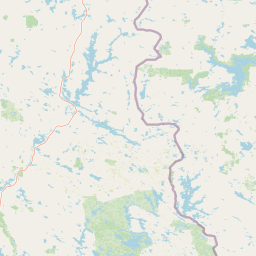
Kalevalsky National Park is best known for protecting one of the last extensive old-growth boreal pine forests remaining in Europe, a increasingly rare ecosystem type that has been largely lost to logging and development across the continent. The park is also renowned for its deep connection to the Kalevala, the Karelian-Finnish epic poem that drew its stories from this very landscape and became a cornerstone of Finnish national literature. The park's position on the Russian-Finnish border places it at the intersection of two distinct cultural traditions, the Sami and the Karelians, while its location on the Baltic Shield provides a window into ancient geological history dating back three billion years.
Kalevalsky National Park history and protected-area timeline
Kalevalsky National Park was established in 2007 as part of Russia's expanding network of protected areas designed to preserve representative samples of the country's diverse natural heritage. The park's creation reflected growing recognition that Europe's boreal forests were among the continent's most threatened ecosystems, with industrial logging having removed the vast majority of old-growth forest across Scandinavia and European Russia.
The selection of this particular area for protection acknowledged both its ecological significance—containing some of the last remaining unmodified pine forests in the region—and its cultural importance as the landscape associated with the Kalevala. The park's name directly references this literary heritage, drawing a connection between the natural landscape and the mythological world described in Finland's national epic. The establishment also followed broader trends in Russian environmental policy during the 2000s, which saw the creation of numerous new national parks and zapovedniks across the country.
Prior to formal protection, the region experienced centuries of traditional use by Karelians and, earlier, by Sami peoples, whose seasonal migrations and resource use patterns shaped the landscape without fundamentally altering its wild character. The modern park management works to balance conservation of these natural and cultural values while allowing for sustainable use and public enjoyment of the area.
Kalevalsky National Park landscape and geographic character
The landscape of Kalevalsky National Park reflects its position on the southeastern edge of the Baltic Shield, one of Europe's most ancient geological formations. The underlying bedrock consists of Precambrian crystalline granites and gneisses approximately three billion years old, among the oldest rocks on the continent. These ancient rocks are overlain by a relatively thin layer of glacial deposits, typically 20 to 30 meters thick, deposited during the retreat of Pleistocene ice sheets that scoured and shaped the region.
The park's topography exhibits a clear west-east gradient, with the western portion characterized by flat, often waterlogged terrain typical of glacial lake basins, while the eastern sections contain more pronounced hills and ridges. Elevation within the park ranges from 105 meters in low-lying wetland areas to 278 meters at higher points. The combination of flat terrain, abundant precipitation, and limited drainage has created extensive wetland systems, with peat deposits in some bogs reaching depths of six meters.
Water defines much of the park's character, with approximately 6% of the territory covered by lakes and rivers and an additional 9% by marshland. Over 400 lakes dot the landscape, though only about 100 exceed 10 hectares in area. The lakes and their connecting streams form a complex drainage network that feeds into larger river systems flowing toward the Barents Sea. The remaining 85% of the park is forested, predominantly by pine with scattered spruce, and small birch and aspen stands where historical farming created openings in the forest.
Kalevalsky National Park ecosystems, habitats, and plant life
Kalevalsky National Park lies within the Scandinavian and Russian taiga ecoregion, a vast belt of coniferous forest stretching across northern Europe and Russia. This ecoregion represents one of Earth's largest terrestrial biomes, characterized by cold winters, short growing seasons, and forests dominated by species adapted to these harsh conditions. The park's old-growth character distinguishes it from the vast majority of the ecoregion, which has been extensively logged and converted to managed forest plantation.
The forest ecosystem within the park is dominated by pine, with spruce comprising approximately 10% of tree cover. The old-growth nature of these forests means they contain complex structures—standing dead trees, fallen logs, multiple canopy layers, and varied tree ages—that support specialized ecological communities. The park's extensive wetland systems add ecological diversity, with marshlands, peat bogs, and lake margins providing habitat for different plant and animal communities adapted to waterlogged conditions.
The freshwater ecosystems fall within the Barents Sea Drainages ecoregion, characterized by fish communities derived from both Atlantic and Siberian origins, creating what scientists describe as a mixed fish fauna. The park's streams and lakes support species that have migrated from different evolutionary pathways, reflecting the complex geological and ecological history of the region.
Kalevalsky National Park wildlife and species highlights
The wildlife of Kalevalsky National Park reflects the park's position within the boreal taiga ecosystem, home to species adapted to cold climates and extensive forest cover. Large mammals including elk (moose), brown bear, and lynx roam the forest, though sighting these animals requires patience and luck given their secretive nature and the vastness of the territory. The old-growth forest structure provides critical habitat for species dependent on deadwood, including various woodpeckers, beetles, and fungi that require decaying timber for their life cycles.
The park's numerous lakes and wetlands support important bird populations, particularly waterfowl and marsh birds during breeding season. The wetland complexes serve as staging and breeding areas for migratory birds traveling along the East Atlantic Flyway, connecting the Arctic breeding grounds with wintering areas in western Europe and beyond. Bird species associated with the park include various ducks, geese, swans, and the enigmatic whooper swan, whose haunting calls echo across the lake systems during summer months.
The fish communities in the park's streams and lakes include species typical of northern European waters, with the mixed Atlantic-Siberian origin of the fauna reflecting the region's position at the crossroads of different biogeographic influences. While specific species lists vary, the aquatic ecosystems support populations important both ecologically and for traditional fishing by local communities.
Kalevalsky National Park conservation status and protection priorities
Kalevalsky National Park serves as a critical refuge for one of Europe's most threatened ecosystems—the old-growth boreal pine forest. Across continental Europe, the vast majority of ancient forests have been cleared for agriculture, timber extraction, or development, leaving only scattered remnants of the primeval taiga that once covered northern latitudes. The park's protection ensures the survival of ecological processes and species communities that cannot persist in managed forests, including the deadwood-dependent organisms, cavity-nesting birds, and complex forest structures that develop over centuries.
The park's designation as an IUCN Category II protected area reflects its dual function of protecting natural values while allowing for sustainable public use and environmental education. This classification recognizes the area as a national park with outstanding scenic and ecological values, where ecosystem integrity is maintained while providing opportunities for compatible recreation and research. The park contributes to broader conservation networks, connecting with Finnish protected areas across the border to form a transnational conservation landscape.
The protection of Kalevalsky also carries cultural conservation dimensions, as the landscape being preserved is inseparable from the stories, traditions, and identity rooted in the Kalevala. The preservation of the physical environment protects the mythological landscape where the epic's heroes walked, the rivers they crossed, and the forests where the epic's stories were originally performed and recorded.
Kalevalsky National Park cultural meaning and human context
The cultural landscape of Kalevalsky National Park is inseparable from the Kalevala, the epic poem of Finnish and Karelian oral folklore that stands as one of the great works of world literature. Compiled in the 1830s by Elias Lönnrot from oral performances by traditional singers in Karelia, the Kalevala drew upon legends and mythological narratives that had been passed down through generations in this very region. The poem tells of the creation of the world from the fragments of a duck's egg, the long quest for the magical sampo (a mystical artifact bringing prosperity), and the hero Väinämöinen's search for a wife—stories that became foundational to Finnish national identity.
The traditional peoples of the region include the Karelians, a Finno-Ugric people with a distinct language and cultural traditions, and the Sami, the indigenous peoples of northern Scandinavia whose ancestral territories extend into this corner of Russia. Both groups have maintained connections to the land, waters, and forests of what is now the park, their livelihoods intertwined with the rhythms of the boreal environment. The park's name itself derives from the Kalevala, directly linking the protected landscape to Finland's literary heritage.
This cultural dimension adds layers of meaning to the park beyond its ecological values. Visitors exploring the forests and lakes of Kalevalsky walk through the same landscapes that inspired the mythological narratives still celebrated in Finnish culture, where place names, traditions, and artistic expressions trace connections to this Karelian heartland.
Top sights and standout views in Kalevalsky National Park
Kalevalsky National Park offers visitors access to one of Europe's last great wilderness areas—an extensive tract of old-growth boreal pine forest that represents a vanishing ecosystem across the continent. The park's network of over 400 lakes and 250 streams provides exceptional opportunities for paddling, fishing, and wildlife observation in a pristine setting. The geological setting on the Baltic Shield exposes ancient Precambrian bedrock among the oldest in Europe, providing a window into deep geological time.
The park's cultural significance as the birthplace of the Kalevala distinguishes it from other protected areas, offering a unique opportunity to experience the landscape that inspired Finland's national epic. The combination of natural wilderness and cultural heritage makes Kalevalsky a destination of exceptional depth—a place where the ecological and the mythological intertwine, where ancient rocks underlie primeval forests, and where the oral traditions of Karelian singers were collected to become a cornerstone of Finnish literature.
Best time to visit Kalevalsky National Park
The best time to visit Kalevalsky National Park depends on what visitors hope to experience, with each season offering distinctly different characters. Summer months bring the warmest conditions, though even the warmest period sees only one to three months with temperatures above 10°C, offering relatively short but pleasant conditions for hiking, paddling, and wildlife observation. The midnight sun period provides extended daylight for exploring the park's extensive trail systems and lake networks.
Winter transforms the park into a true boreal wilderness, with cold temperatures and deep snow creating entirely different conditions. The winter landscape offers opportunities for cross-country skiing and snowmobile travel on frozen lakes and trails, though the cold—averaging well below freezing—requires proper preparation. The park receives approximately 170 to 180 days of snow cover annually, making winter a significant and enduring season in the park's annual cycle.
The shoulder seasons of spring and autumn each have their own character, with spring bringing the thaw, flooding of wetlands, and the return of migratory birds, while autumn paints the birch and aspen in golden hues against the evergreen pine. The limited frost-free period of 80 to 95 days means that the optimal window for most visitor activities concentrates in the relatively brief summer season.