
Why Kockot stands out
Kockot is best known for its near-natural stands of pedunculate oak and hornbeam forest, growing together with alder and ash on waterlogged lowland soils. These forests sit at the intersection of the Spree river floodplain system and the broader peat-rich Spreewald basin, making the reserve a textbook example of central European lowland hardwood floodplain woodland. The reserve is also notable for being formally designated as a core zone of the Spreewald Biosphere Reserve, meaning the forest is deliberately withdrawn from direct human influence and left to develop through its own ecological dynamics. This combination of characteristic Spreewald forest types and a strict non-intervention management approach defines the site's identity.
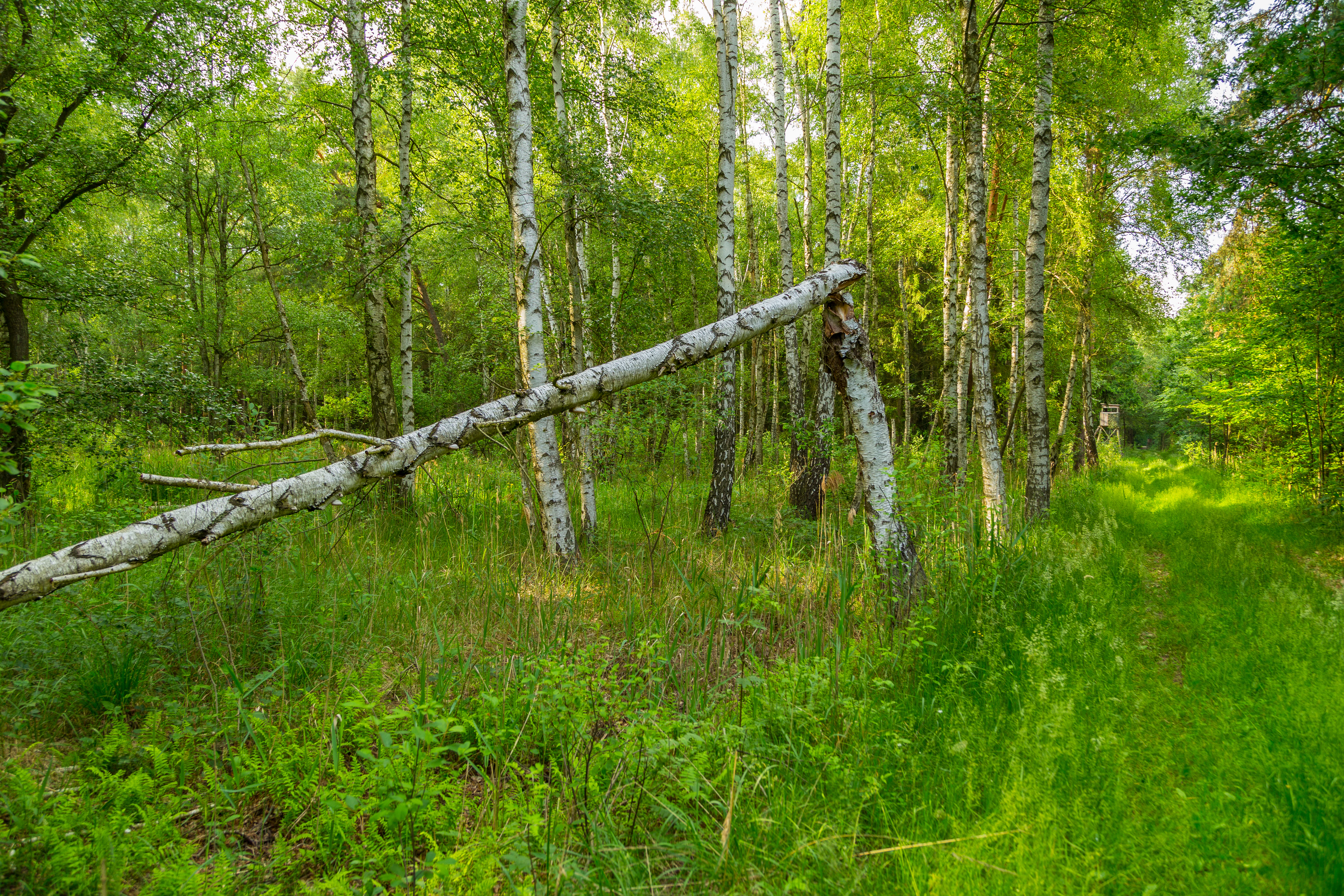
Kockot history and protected-area timeline
Kockot was formally placed under nature protection by decree on 1 October 1990, at a moment of profound political change in eastern Germany following reunification. The establishment came shortly after the creation of the modern Brandenburg state and reflects the early post-reunification effort to build a structured network of protected areas in the former GDR landscape.
In its founding purpose, Kockot was designated specifically to function as a core zone within the Spreewald Biosphere Reserve. The intention was to remove these near-natural forests from active forestry and other direct human intervention, and to entrust them to long-term natural development instead.
In 2014, the management framework around the area was updated through a renewed decree, referred to in official Brandenburg sources as the regulation on the 'Naturentwicklungsgebiet Kockot' (natural development area of Kockot), reaffirming the reserve's role as a non-intervention forest core within the biosphere reserve system.
Kockot landscape and geographic character
The landscape of Kockot is shaped almost entirely by the Spree river system and the underlying hydrology of the eastern Brandenburg lowlands. The terrain is flat to gently undulating, characteristic of the glacial and post-glacial landscape that defines the wider Spreewald region.
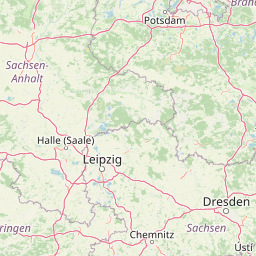
The main Spree river runs along the western edge of the reserve, its broader floodplain visible as a low corridor through the surrounding countryside. A smaller side arm, the Pretschener Spree, threads through the interior of the reserve, adding a finer-grained network of slow, meandering channels and waterlogged depressions that influence soil and vegetation.
The soils reflect this water-dominated setting. Niedermoor (fen peat) soils dominate in the lowest, most persistently wet areas, while Gley and Anmoor substrates appear in slightly higher or more variable positions. The result is a substrate mosaic that strongly determines where oak, hornbeam, alder, and ash can thrive, producing a forest pattern closely tied to micro-topography rather than to dramatic landform variation.
The overall impression of the reserve's landscape is one of stillness and subtlety: a lowland forest scene shaped more by water, soil, and the long history of river dynamics than by relief. The roads that frame the area on its edges, the B 179 to the north and the L 42 to the southwest, have little impact on the interior landscape itself.
Kockot ecosystems, habitats, and plant life
The ecological character of Kockot is defined by its near-natural hardwood and riparian forest communities, developed on waterlogged soils under the influence of the Spree and its branches. The reserve is essentially a working laboratory of central European lowland floodplain woodland, protected from active forestry.
The dominant forest types include pedunculate oak-hornbeam stands (Stieleichen-Hainbuchen-Wälder), which occupy the better-drained positions, and alder-ash forests (Erlen-Eschen-Wälder), which occupy the wetter, more groundwater-dependent sites. Together, these communities represent the characteristic forest cover of the Spreewald lowlands in unusually intact form.
Because the reserve is managed as a core zone, the forests are allowed to undergo natural dynamics including gap formation, regeneration, and gradual shifts in species composition. Deadwood accumulation, age-class diversity, and structural complexity develop without direct silvicultural intervention, contributing to habitat quality for fungi, invertebrates, and birdlife.
At the broader landscape scale, Kockot functions as part of the Spreewald Biosphere Reserve, an area internationally recognized for its mixture of lowland rivers, meadows, fens, and forests. Within that mosaic, Kockot contributes a specifically forest-based habitat block, complementing open wetland and meadow reserves elsewhere in the biosphere.
Kockot wildlife and species highlights
Although the source material does not enumerate specific species, the ecological setting strongly suggests a reserve that supports the typical wildlife of near-natural Spreewald lowland forests. The mosaic of oak-hornbeam and alder-ash woodland, combined with standing and fallen deadwood and permanently wet soils, creates habitat conditions for many forest-dwelling species.
Such habitats in the Spreewald region are known to support breeding bird communities typical of mature deciduous and riparian forest, including woodpeckers, owls, and songbirds of the woodland interior. The wet soils and side channels of the Pretschener Spree also contribute amphibian and aquatic invertebrate habitat value.
Deadwood-rich stands that develop under non-intervention management typically support rich saproxylic beetle, fungi, and moss communities, even if these are not individually listed in the source material. The reserve's contribution to biodiversity lies less in charismatic single species and more in the structural and ecological integrity of the forest as a whole.
Kockot conservation status and protection priorities
Kockot's principal conservation significance lies in its designation as a core zone of the Spreewald Biosphere Reserve, a recognition that places the area within an internationally acknowledged framework for landscape protection. Biosphere reserve core zones are intended to serve as reference areas where natural processes can proceed without significant human interference.
The reserve contributes to the conservation of central European lowland hardwood floodplain forests, a habitat type that has been heavily reduced across much of its former range and remains a priority for protection in Germany and the European Union. By maintaining stands of pedunculate oak-hornbeam and alder-ash forest on peat, gley, and anmoor soils, Kockot helps preserve the natural composition and structure of these forests.
Through its non-intervention approach, Kockot also functions as a long-term ecological reference site. Forested core zones such as Kockot allow researchers and conservation managers to observe how lowland Spreewald-type forests develop in the absence of active management, providing a baseline against which other, more managed forests in the biosphere reserve can be evaluated.
At the regional level, the reserve is one component of a dense network of Naturschutzgebiete in Landkreis Dahme-Spreewald, and its strict protection level complements the broader, multi-use management approach of the surrounding biosphere reserve.
Kockot cultural meaning and human context
The cultural context of Kockot is closely bound to the cultural landscape of the Spreewald itself. The Spreewald is home to a distinct regional identity centered on Sorbian (Wendish) heritage, traditional lowland agriculture, and a centuries-long relationship between local communities and the river system that defines the region.
The reserve lies within the municipality of Märkische Heide, near the village of Kuschkow, an area historically shaped by small-scale farming, forestry, and the management of floodplain meadows. Roads such as the B 179 and L 42 reflect this long history of rural settlement and movement through the Spreewald lowlands.
By withdrawing these forests from active use, the reserve represents a deliberate cultural choice: a recognition that some parts of this long-inhabited landscape are now reserved primarily for ecological rather than productive purposes, and that the natural development of forests has value in its own right.
Top sights and standout views in Kockot
Kockot stands out as one of the few strictly protected forest core zones of the Spreewald Biosphere Reserve, where oaks, hornbeams, alders, and ash grow in near-natural stands shaped by the Spree river system rather than by forestry. Its designation as a Naturentwicklungsgebiet makes it an important reference site for natural forest dynamics in lowland Brandenburg.
The reserve's small scale, combined with its setting within one of Germany's most distinctive wetland landscapes, gives it a focused ecological role: preserving an intact, water-influenced hardwood forest mosaic on peat and gley soils as part of an internationally recognized biosphere reserve.
Best time to visit Kockot
Spring and early summer are generally the most rewarding seasons to experience forest landscapes like Kockot, when fresh foliage brightens the canopy and water levels in the Spree and Pretschener Spree are typically high, enhancing the wetland character of the area. These seasons also bring active birdlife and the most vivid green tones in the deciduous forest.
Autumn offers a different atmosphere, with mature oak and hornbeam stands turning color against the flat Spreewald backdrop, while winter reveals the structural complexity of the leafless forest and the influence of water, frost, and open sky on the lowland landscape. Visitors should generally expect quiet, low-relief woodland scenery across all seasons rather than dramatic seasonal contrasts.