
Why La Primavera Biosphere Reserve stands out
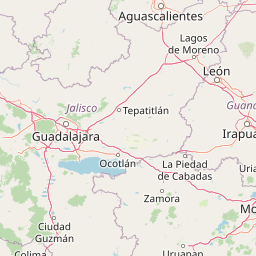
La Primavera is best known for being a young volcanic landscape cloaked in pine-oak forest, perched on the edge of a major Mexican metropolis. Its central feature, the Sierra la Primavera, is a relatively recent volcanic complex formed in eruptions between roughly 120,000 and 20,000 years ago, and its terrain rises from about 1,400 to 2,200 meters in elevation. The reserve is also recognized for its ecological service to Guadalajara: it captures an estimated 240 million cubic meters of rainwater annually, recharges surrounding aquifers, moderates the city's climate, and absorbs air pollutants. Together, these qualities have earned it a reputation as the green lung of the Guadalajara metropolitan area and a textbook example of an urban-adjacent biosphere reserve.
La Primavera Biosphere Reserve history and protected-area timeline
The conservation history of La Primavera stretches back to the early twentieth century, and includes periods of protection, threat, and recovery. The first formal protection came in 1934, when President Lázaro Cárdenas declared a forest protection zone covering about 10,000 square kilometers around Guadalajara, an area that encompassed the Sierra la Primavera.
In the early 1960s, the Jalisco Forestry Commission, then under Governor Juan Gil Preciado, began coordinating the creation of a state park in La Primavera, a project that received federal support by 1964. However, in 1971 the State of Jalisco reclassified the forest as land of public utility and tourist use, opening the door to real estate development. Urbanization permits followed, with developments such as Pinar de la Venta, El Palomar, and Ciudad Bugambilias encroaching on the protected landscape.
A turning point came on 6 March 1980, when President José López Portillo issued a federal decree establishing the area as a Forest Protection Zone and Wildlife Refuge, restoring protection over roughly 30,500 hectares. Later that year, the state government moved to repeal earlier reclassifications that had designated parts of the forest for tourism or urban reserves, and acquired additional land to support environmental education and forestry research, including a 672-hectare transfer to the University of Guadalajara.
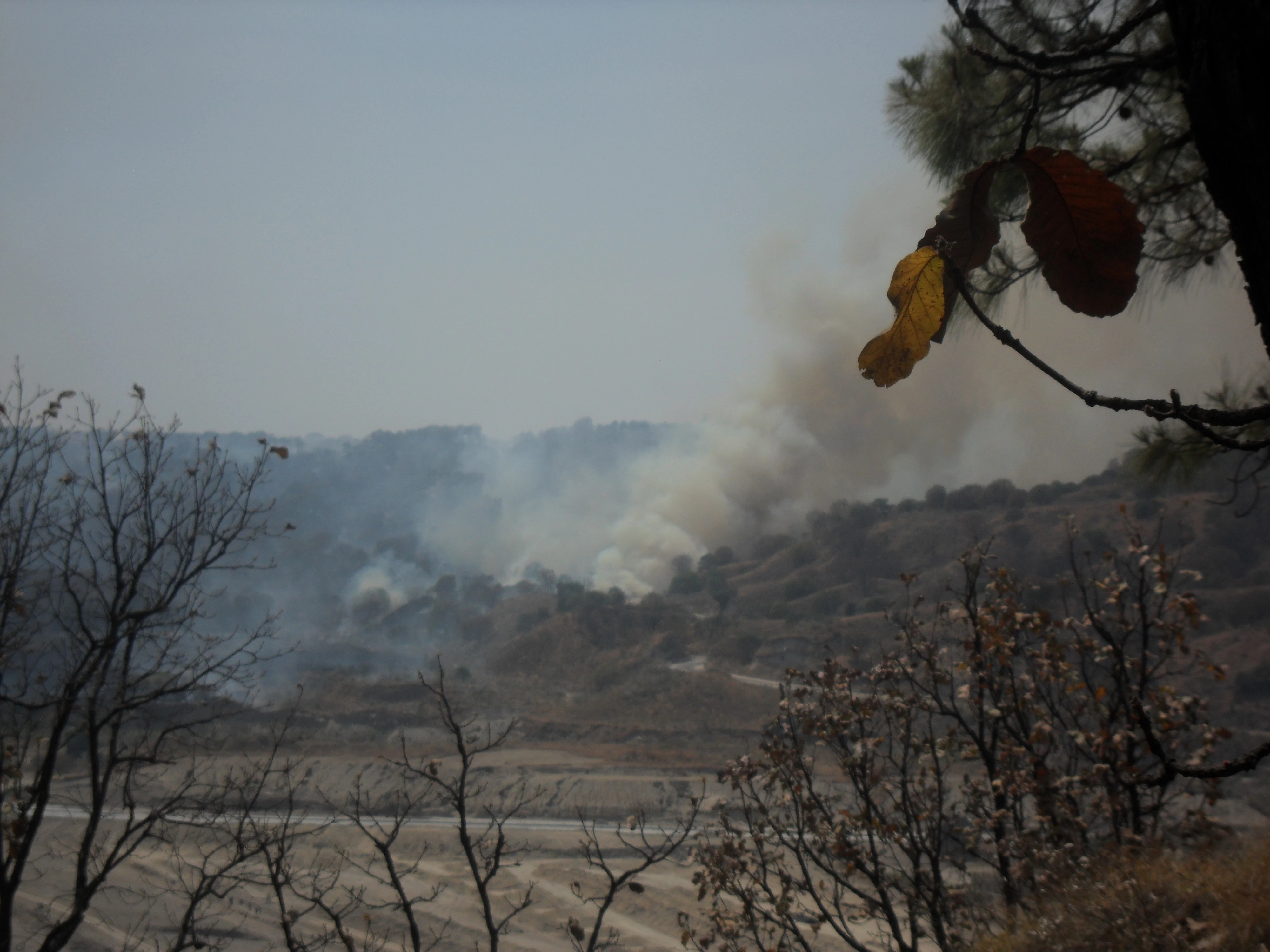
In 2000, the Mexican government redesignated La Primavera as a flora and fauna protection area, and in 2006 UNESCO added it to the World Network of Biosphere Reserves. These designations have not ended pressures on the reserve; a long-running geothermal installation by the national power company and recurrent wildfires in dry years have repeatedly tested the resilience of the forest and shaped ongoing conservation work.
La Primavera Biosphere Reserve landscape and geographic character
The landscape of La Primavera is shaped by the Sierra la Primavera, an inactive volcanic complex that forms the reserve's backbone. The Sierra is geologically young, built up by eruptions occurring between roughly 120,000 and 20,000 years ago, and contains within it a volcanic caldera of notable size. Its terrain is rugged and well dissected, with elevations that climb from about 1,400 meters to over 2,200 meters, producing sharp changes in forest composition along elevation gradients.
The reserve's volcanic origin has left a varied topography of ridges, ravines, and slopes, cut by streams and punctuated by small valleys. Approximately 20 permanent streams rise within the area, and numerous springs emerge from the volcanic substrate. Some drain north or east into the Río Grande de Santiago, while others flow west to form the headwaters of the Ameca River, making the reserve a critical water source for surrounding valleys and aquifers.
Climate conditions are tropical and subhumid, with warm temperatures year-round, an annual mean of about 21 degrees Celsius, and roughly 980 millimeters of rainfall each year. This combination of volcanic terrain, varied elevation, and reliable moisture supports a complex mosaic of vegetation types, from oak and pine forests on the higher slopes to tropical deciduous forest and gallery vegetation in the lower valleys.
La Primavera Biosphere Reserve ecosystems, habitats, and plant life
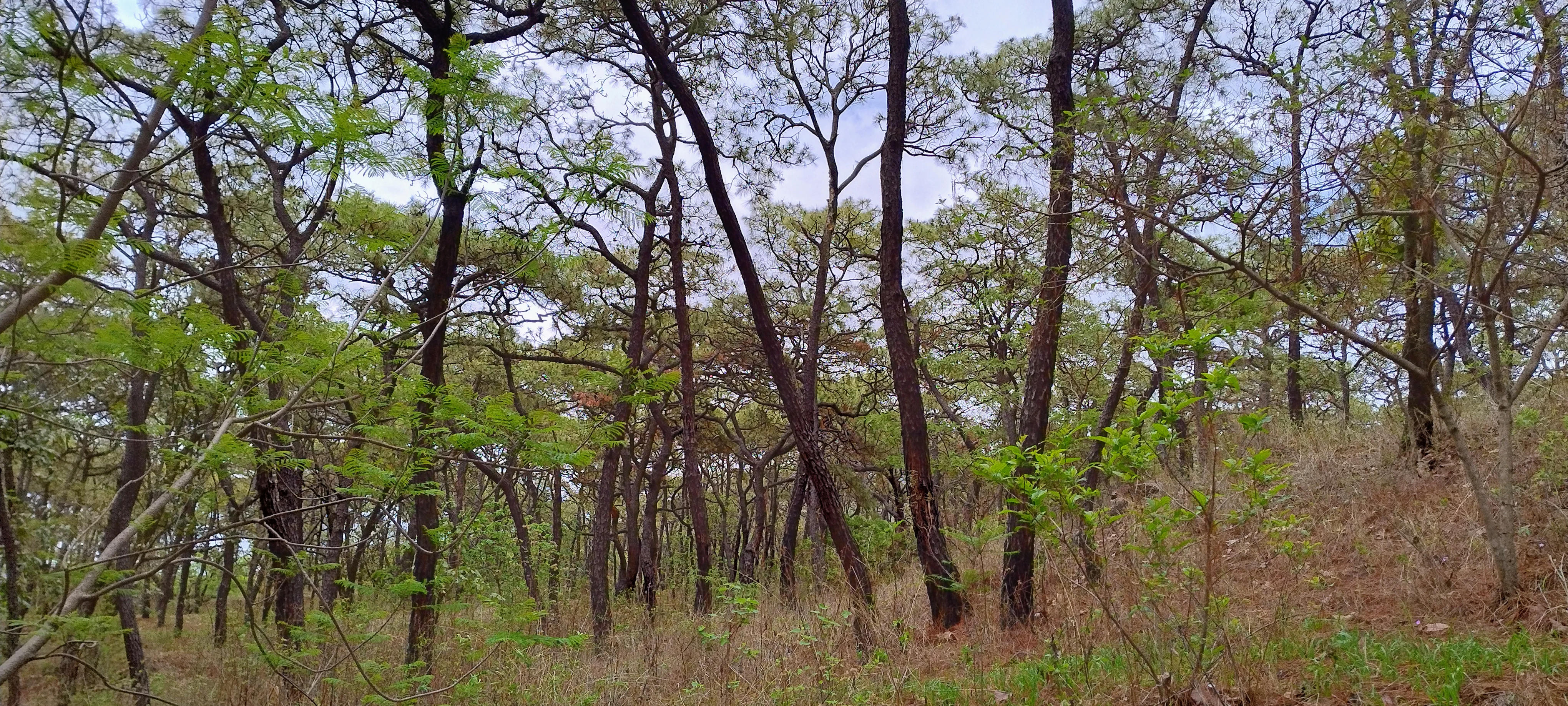
Vegetation in La Primavera is organized into distinct communities that reflect altitude, slope, and moisture. The dominant forest is pine-oak woodland, which contains pure oak forest, pine forest, and several pine-oak and oak-pine mixtures. Tropical deciduous forest occupies lower and drier sites, while riparian, rupicolous, and ruderal communities grow along streams, on rocky outcrops, and in disturbed areas. With more than 740 plant species recorded in some inventories and over 1,000 according to national biodiversity data, the reserve has unusually high botanical richness for an area of its size.
A distinctive ecological feature is the presence of small patches of relict cloud forest in the wetter stream valleys of the western portion of the reserve, particularly along the headwaters of the Ameca River. These humid micro-refuges shelter trees such as Clethra rosei, Ficus insipida, Ilex dugesii, Morella cerifera, Persea hintonii, Prunus serotina subsp. capuli, Quercus magnoliifolia, Quercus confertifolia, and Salix taxifolia, and have even produced newly described endemic species, including a local poplar, Populus primaveralepensis.
The reserve lies at the overlap of two biogeographic regions, the Nearctic and Neotropical, and two floristic provinces, giving it a transitional ecological character shared by relatively few sites in Mexico. This dual identity is reinforced by the altitudinal zonation of its vegetation, with lowland oak associations giving way to higher pine-oak and pine forests on Cerro San Miguel and Cerro Planillas, the tallest peaks within the reserve.
La Primavera Biosphere Reserve wildlife and species highlights
La Primavera supports a remarkably diverse fauna for an area so close to a major urban center. Birdlife is particularly rich, with around 200 resident and migratory bird species recorded, representing roughly 135 species in some national counts. Characteristic species include lesser roadrunner, berylline hummingbird, russet-crowned motmot, black-throated magpie-jay, spotted wren, brown-backed solitaire, blue mockingbird, collared towhee, blue bunting, black-vented oriole, and rusty-crowned ground sparrow, many of which are emblematic of western Mexico's transitional forests.
The mammal community counts at least 29 species across roughly 25 genera and 14 families, with puma considered an indicator of habitat quality because of its wide-ranging needs. White-tailed deer, coyote, gray fox, bobcat, ringtail, common opossum, hooded skunk, long-tailed weasel, and jaguarundi are among the notable mammals documented, along with armadillo species. The jaguarundi is of particular conservation interest because of its threatened status under Mexican environmental standards.
Reptiles and amphibians also contribute to the reserve's biodiversity, with around 49 species recorded. Reptiles present include the Mexican black iguana, the Mexican rattlesnake Crotalus basiliscus, and the turtle Kinosternon integrum, while tarantulas in the genus Brachypelma represent some of the more charismatic invertebrate inhabitants of the forest.
La Primavera Biosphere Reserve conservation status and protection priorities
La Primavera's conservation role is closely tied to its position as an ecological buffer for the Guadalajara metropolitan area. Federal and state authorities have layered protections over the area across nearly a century, culminating in its 2000 designation as a flora and fauna protection area and its 2006 recognition as a UNESCO Biosphere Reserve. Its status under IUCN Category VI reflects an approach that allows controlled, sustainable use of natural resources alongside strict conservation objectives.
Beyond biodiversity, the reserve performs critical ecosystem services for urban Jalisco. Its forests capture an estimated 240 million cubic meters of rainwater per year, recharge aquifers in the Atemajac-Tesistán, Toluquilla, and Etzatlán-Ahualulco valleys, and indirectly support the Ameca Valley. They moderate Guadalajara's microclimate, improve air quality by absorbing carbon dioxide and other pollutants, reduce downstream flood risk, and safeguard water quality in regional rivers, a function that has become more important as the city continues to grow.
Despite this multi-tiered protection, the reserve faces persistent threats. Land tenure is fragmented between private owners, ejido communities, and state-held land, which complicates integrated management. Past and ongoing pressures include real estate development, geothermal drilling by the national power company, illegal logging, gravel extraction, contamination of streams such as Arroyo las Tortugas, overgrazing, and recurrent wildfires, including major events that have burned thousands of hectares and triggered environmental emergencies in the metropolitan area. Conservation planning thus combines biodiversity protection, fire prevention, water resource management, and careful regulation of public use.
La Primavera Biosphere Reserve cultural meaning and human context
La Primavera sits within a landscape that has supported human activity for at least a millennium and a half, with documented settlement in and around the forest dating back to around 350 CE. The arrival of Spanish settlers in the sixteenth century led to the founding of nearby Guadalajara and Tlajomulco, both of which relied on the forest's timber for construction and trade, beginning a long history of resource extraction that has shaped the region ever since.
In the late nineteenth and early twentieth centuries, the area was redefined by the Hacienda La Primavera, a tequila and resin-producing estate built by the Lancaster Jones family that gave the modern forest its name. By the 1960s, the hacienda's name had become commonly extended to the surrounding woodland and to the small community that grew around it, now part of the municipality of Zapopan. This blend of pre-Hispanic, colonial, hacienda, and modern urban history gives La Primavera a layered cultural geography that extends well beyond its ecological identity.
Top sights and standout views in La Primavera Biosphere Reserve
La Primavera stands out for combining volcanic geomorphology, transitional forest ecosystems, and proximity to one of Mexico's largest cities. Its youngest features, the slopes and caldera of Sierra la Primavera, give the reserve a distinctive profile of rugged ridges, deep ravines, and a mosaic of pine, oak, and tropical deciduous forest that changes quickly with altitude.
The reserve's biodiversity, with over 1,000 plant species, more than 130 bird species, and a mammal community that includes puma and jaguarundi, makes it a significant refuge within Jalisco. At the same time, its role in recharging aquifers and moderating Guadalajara's climate and air quality makes it a model of how a biosphere reserve can serve both conservation and urban sustainability at the same time.
Best time to visit La Primavera Biosphere Reserve
Because La Primavera has a warm subhumid tropical climate, conditions are broadly favorable throughout the year, but the dry season, roughly from late autumn through spring, brings the most stable weather and clearer skies. Dry months are also the best time for hiking and mountain biking on the reserve's network of trails, though they coincide with the period of greatest wildfire risk, so visitors should check current conditions before going.
The rainy season, generally running from late spring through early autumn, transforms the forest with greener vegetation, flowing streams, and more active birdlife, including migratory species. Cloud cover in higher elevations enhances the atmosphere of the relict cloud forest patches in the western stream valleys, but trails can become muddy and recreational cycling more challenging. For visitors interested in seeing the forest at its most lush, the rainy season offers the most dramatic landscapes, while those prioritizing accessibility often prefer the drier months.