Why Lac de la Kompienga stands out
Lac de la Kompienga is best known as Burkina Faso's first large hydroelectric reservoir and as a designated Ramsar wetland in a predominantly dry West African setting. The lake combines engineered functions, including power generation and irrigation support, with ecological functions tied to its open water, fringing wetlands, and the dry savanna landscapes that surround it. The reservoir also stands out for its role in reshaping human geography in eastern Burkina Faso. The creation of the lake opened up an area that was previously relatively isolated, attracting fishers, traders, and new settlements from across the country and the wider region. The combination of energy infrastructure, a Ramsar-recognized wetland, and a newly created lake ecosystem in a Sudano-Sahelian environment gives the site a distinctive and layered identity.
Lac de la Kompienga history and protected-area timeline
The history of Lac de la Kompienga begins with the Kompienga Dam project, which represented Burkina Faso's first major move into large-scale hydroelectric infrastructure on its own territory. The dam was constructed across the Kompienga River in the Est Region, and the reservoir began filling when the structure was closed in 1988, just under a decade before many of the country's later water projects came online.
The associated 14 MW power station was commissioned in 1989, and within a few years the site was already being studied for its wider development potential. Sectoral reviews at the time highlighted the project's multipurpose character, combining electricity generation with downstream irrigation along the Kompienga and the Oti, freshwater fisheries in the new reservoir, and pastoral uses including livestock watering and transhumance corridors through a livestock-dependent region.
By the early 2000s, the lake had become a focal point for riparian settlements and a more cosmopolitan fishery economy, drawing participants from several regions of Burkina Faso and neighboring countries. This human transformation was recognized in technical literature as both an opportunity for local development and a challenge for resource management. The site's growing ecological profile led to its inscription on the Ramsar List of Wetlands of International Importance on 7 October 2009, formalizing the reservoir's status as a wetland of international concern and providing a framework for its long-term conservation alongside its continuing role in energy, irrigation, and livelihoods.
Lac de la Kompienga landscape and geographic character
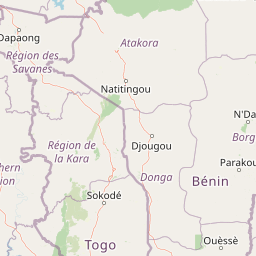
The physical landscape of Lac de la Kompienga is shaped by the contrast between a large artificial body of water and the surrounding dry savanna of southeastern Burkina Faso. The reservoir lies in the Est Region, mainly within Kompienga Province, along a road corridor that connects Fada N'Gourma with Pama and continues toward the borders with Togo and Benin. In elevation, the lake sits at around 176 meters above sea level, occupying a relatively low position within a region dominated by gently rolling Sudano-Sahelian terrain.
The shoreline is irregular and strongly influenced by the pre-existing valley system of the Kompienga River, a tributary linked to the Oti sub-basin of the Volta. As water levels fluctuate, the lake exposes broad muddy flats and shallow marginal zones, while other stretches of the shoreline form steeper banks where the reservoir meets the wooded slopes and rocky outcrops typical of the regional geology.
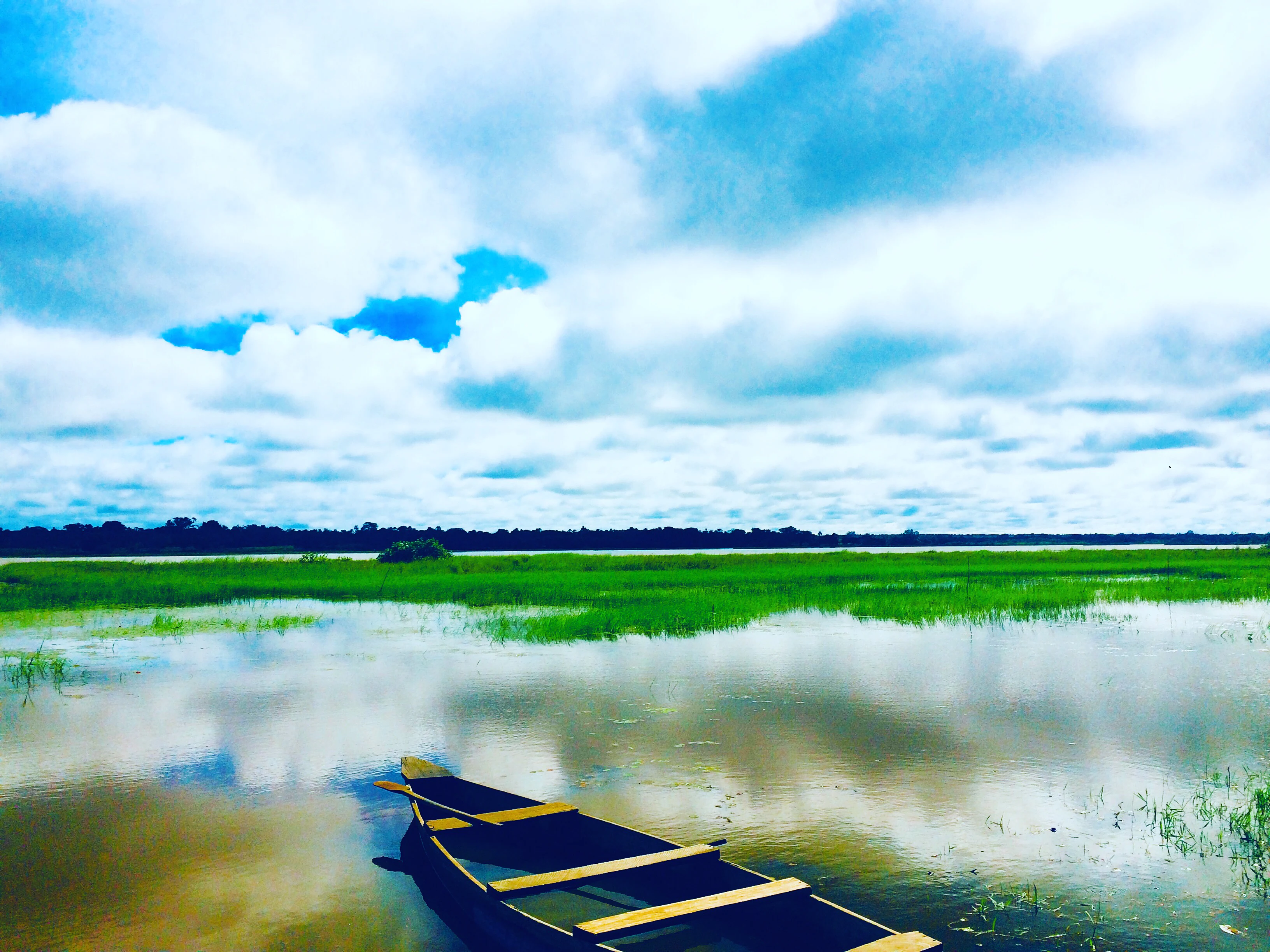
Surrounding the reservoir, the terrestrial landscape is characterized by dry woodland and savanna, with seasonal watercourses feeding the main basin. The combination of open water, fringing wetlands, rocky inselbergs, and dry forest gives the area a varied character for visitors and an important ecological gradient for wildlife accentuating the reservoir's importance as a habitat mosaic rather than a simple engineered lake.
Lac de la Kompienga ecosystems, habitats, and plant life
Ecologically, Lac de la Kompienga functions as a significant wetland node within a predominantly dry regional landscape. The reservoir creates a standing body of water in an area where natural permanent lakes are scarce, generating a mosaic of open water, seasonally flooded margins, and fringing marshland embedded within a matrix of Sudano-Sahelian savanna.
This habitat diversity supports a range of ecological functions. The open water and shallows provide habitat for fish populations that form the basis of the local fishery, while the flooded margins and surrounding wet soils are important for waterbirds, including migratory species that rely on a network of Sahelian wetlands. The mosaic of dry woodland, rocky outcrops, and wetter shoreline vegetation gives the area a layered ecological profile that extends well beyond the lake itself.
The site's ecological value was formally recognized through its designation as a Ramsar Wetland of International Importance in 2009, placing it within a global framework for wetland conservation. This international status reflects the lake's contribution to regional hydrology in the Volta Basin, its role as a refuge for waterbirds, and the importance of the surrounding habitats for maintaining ecological connectivity in eastern Burkina Faso.
Lac de la Kompienga wildlife and species highlights
The wildlife profile of Lac de la Kompienga is closely tied to its wetland character. While the surrounding savanna supports the typical fauna of the Est Region, the lake and its margins are particularly important for birdlife. The combination of open water, shallow margins, and seasonally flooded areas attracts resident and migratory waterbirds, including species that depend on the chain of Sahelian wetlands for survival.
Fish are another central component of the reserve's wildlife value. The reservoir hosts a developing freshwater fish community that supports one of the major human uses of the lake, with documented studies from the early 2000s anticipating several hundred to over a thousand tonnes of annual freshwater catch. This aquatic resource is not only economically important but also ecologically significant, as it structures predator-prey relationships in the open water and influences the food supply for waterbirds.
In the terrestrial surroundings, the dry savanna vegetation supports small and medium-sized mammals typical of the region, along with reptiles and a varied insect community that benefits from the wetter microclimates along the shoreline. Overall, the wildlife of Lac de la Kompienga reflects the broader pattern of dam-associated lakes in West Africa, where artificial reservoirs become focal points for biodiversity in otherwise water-limited landscapes.
Lac de la Kompienga conservation status and protection priorities
Conservation at Lac de la Kompienga is anchored in its Ramsar designation, granted on 7 October 2009 under the Convention on Wetlands of International Importance. This status formally recognizes the reservoir's ecological value at an international level and places it within a wider network of Sahelian and West African wetlands that share conservation commitments.
The conservation importance of the site goes beyond the open water itself. The Ramsar designation covers the lake and its associated marshy fringes, recognizing their role in supporting waterbird populations, fish habitats, and broader hydrological functions within the Volta Basin. In a regional context where many wetlands are under pressure from climate variability, land use change, and growing water demand, the site represents a notable example of a lake whose ecological value has been deliberately protected alongside its energy and resource uses.
At the national level, the reservoir is part of Burkina Faso's broader water and energy infrastructure, and its conservation is closely linked to the management of the Kompienga Dam and the surrounding riparian zone. Continued recognition of its Ramsar status reinforces the need to balance hydroelectric production, fisheries, livestock use, and emerging tourism with the long-term ecological integrity of the wetland complex.
Lac de la Kompienga cultural meaning and human context
The cultural context of Lac de la Kompienga is shaped by its location in the Est Region, an area historically characterized by transhumant pastoralism, cross-border trade, and the movement of peoples between Burkina Faso, Togo, and Benin. The creation of the reservoir transformed an already dynamic cultural landscape by creating new livelihood opportunities around fishing, settlement, and trade.
The lake has drawn fishers, traders, and service providers from multiple regions of Burkina Faso and neighboring countries, contributing to a more diverse and cosmopolitan riparian population. This was already noted in early-2000s studies, which described new forms of social organization around the reservoir, including structured fishing units and supply chains linking the lake to urban centers such as Ouagadougou.
The presence of a major hydroelectric dam in a previously less-connected area has also influenced the region's sense of modernity and development. For local communities, Lac de la Kompienga is both a working landscape, where livestock routes, fishing grounds, and downstream irrigation fields intersect, and a symbol of the country's investment in national infrastructure in the late twentieth century.
Top sights and standout views in Lac de la Kompienga
Lac de la Kompienga combines a distinctive set of features within a single site. It is Burkina Faso's first large hydroelectric reservoir, it holds Ramsar Wetland of International Importance status since 2009, and it sits within the broader Volta Basin system through its connection to the Oti sub-basin via the Kompienga River. The lake has also reshaped the human geography of the eastern part of the country, attracting new settlements, fisheries, and economic activities around what was once a relatively isolated stretch of savanna.
For visitors and researchers, the lake offers a layered experience: an engineered landscape with industrial heritage, a wetland habitat of recognized international value, and a meeting point of dry savanna and open water that produces striking scenery in a region where large permanent lakes are uncommon.
Best time to visit Lac de la Kompienga
Lake and wetland sites in the Sudano-Sahelian climate of eastern Burkina Faso are typically most rewarding to visit during the cooler dry season, when temperatures are milder, landscapes are less obscured by dust haze, and water levels tend to remain relatively stable after the rainy season has filled the reservoir and its surrounding wetlands. Birdwatching is often productive as migratory waterbirds make use of the open water and the fringing marshes, while local fishing activity continues year-round but tends to peak during cooler periods.
Visiting during the rainy season can be logistically more demanding due to road conditions and the seasonal flooding of low-lying areas around the reservoir, though it also represents the period when water levels and habitat diversity are at their highest. As with many sites in the region, individual visitors should plan around broader conditions of access rather than narrowly defined peak seasons.