Why Limeburners Creek National Park stands out
Limeburners Creek National Park is best known for its exceptional coastal wetland system centered on Saltwater Lake, which experiences tidal influences from the Hastings River and transitions between saline and freshwater states depending on rainfall. The park protects significant remnants of littoral rainforest, an endangered ecological community found along the NSW coast, as well as critical populations of threatened marsupials including the spotted quoll and koala. The area is distinguished by its archaeological significance, containing evidence of 5,000 to 6,000 years of continuous Aboriginal occupation including stone quarries, tool-sharpening grooves, shell middens, and burial sites. The park also represents one of the few remaining coastal refuges in New South Wales where wild dingoes and quolls have not been displaced by human development.
Limeburners Creek National Park history and protected-area timeline
The history of Limeburners Creek National Park reflects the broader pattern of European settlement and resource exploitation that shaped much of the NSW coast. During the early colonial period when Port Macquarie was established as a penal settlement, the area now within the park was extensively exploited for lime production. Early settlers gathered enormous quantities of oyster shells from throughout the region and burned them in kilns to produce quicklime, which was essential for making mortar used in constructing buildings throughout the settlement. This industrial activity, centered on the burning of shell deposits, gave the creek and subsequently the park its distinctive name.
Following the lime production era, the land experienced additional phases of commercial activity. In 1881, the area was incorporated into the Orara Gold Field, leading to a short period of gold mining operations. Later, during the 1960s, the sand mining industry expanded along the NSW North Coast in pursuit of minerals such as zircon and rutile. While official reports excluded the future nature reserve area from sand mining proposals, operations did occur in sections that now fall within the national park, particularly near Point Plomer.
The formal protection of the area began in 1971 when it was declared a nature reserve covering approximately 6,879 hectares. This initial reservation reflected growing recognition of the area's ecological and cultural values. In 2010, the reserve was upgraded to national park status, expanding the protected area to its current extent of 9,123 hectares. The upgrade acknowledged the significant biodiversity values, cultural heritage significance, and the need for enhanced protection of the coastal wetland and rainforest communities.
Limeburners Creek National Park landscape and geographic character
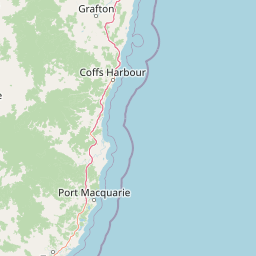
The physical landscape of Limeburners Creek National Park is fundamentally shaped by its coastal setting and its position within the lower catchment of the Hastings River. The park consists predominantly of low-lying dunal and swampy terrain that rarely exceeds ten metres above sea level. The soils throughout the park are primarily sandy, silty, and clay-based, representing alluvial sediments deposited by the ancestral Hastings River as the river mouth migrated between Port Macquarie and Crescent Head over geological time.
The park contains eight distinct wetlands that drain primarily from the coastal dune systems, with additional water inputs from the headlands of Point Plomer, Big Hill, and Queens Head, as well as several small inland hills. The principal drainage line is Limeburners Creek, which carries water westward to the Hastings River. Saltwater Lake, located in the centre of the park, represents a major landscape feature. This lake system and its associated wetlands are subject to tidal influence from the Hastings River, maintaining saline conditions during normal tide cycles. However, following periods of heavy rainfall, the wetlands rapidly fill with fresh water, creating dynamic fluctuations in salinity.
The park's headlands, particularly at Point Plomer, Big Hill, and Queens Head, expose bedrock belonging to the Touchwood Formation, which originated during the Devonian period. Extending inland from these headlands, the landscape transitions to Quaternary sand dunes and ridges, with ongoing sand deposition occurring along the coast. This recent deposition overlies an older degraded barrier system dating to the Pleistocene. The highly sandy nature of coastal soils makes them particularly vulnerable to erosion when vegetation is removed, a key management concern for park authorities.
Limeburners Creek National Park ecosystems, habitats, and plant life
The ecological character of Limeburners Creek National Park is defined by its location within the North Coast Bioregion and the diversity of habitats it contains. The park sustains several ecological communities that are classified as critically endangered under the Environment Protection and Biodiversity Act 1999, including coastal saltmarsh, swamp oak floodplain forest, and littoral rainforests. These communities represent some of the most threatened habitats in coastal New South Wales and their presence within the park underscores the area's conservation significance.
The park's vegetation patterns vary across its extent in response to soil conditions and moisture regimes. The western fringe is dominated by eucalyptus species adapted to the drier soils found there. Moving eastward, the landscape transitions through sclerophyll woodlands, wet heath, and swamp shrublands that characterize the park's central and eastern portions. The most distinctive vegetation community occurs behind Queen's Head Beach and on the northern and southern slopes of Big Hill, where remnants of littoral rainforest persist. These littoral rainforests represent a critically endangered ecological community, and twelve plant species within the park are at the limits of their geographical range or are listed under the Threatened Species Conservation Act 1995.
Dominant plant species include heath banksia in swampy shrublands, swamp oak and broad-leaved tea tree in sclerophyll forest pockets, with grass trees, fern-leaved banksia, and various tea tree species dominating wet heath communities. The biodiversity value of these plant communities is enhanced by their role as habitat for numerous threatened animal species.
Limeburners Creek National Park wildlife and species highlights
Limeburners Creek National Park supports a remarkable array of wildlife, including several species that are rare or threatened throughout their range. The park holds particular significance as one of the few coastal areas in New South Wales where wild dingoes and quolls have persisted despite extensive human development and habitat fragmentation. The spotted quoll, also known as the tiger quoll, is a small elusive carnivorous marsupial that remains established within the park, preying on small mammals and birds.
The wetland systems and islands in the park's southern section provide critical habitat for seabirds and waterfowl, while the diverse terrestrial environments support numerous marsupial species. The swamp wallaby and red-necked wallaby are commonly encountered throughout the park, while the feathertail glider and sugar glider occupy the arboreal niche. The park also supports the endangered eastern ground parrot, which shelters in the forested wetlands and heathlands, and the brush-tailed phascogale, another threatened marsupial species.
Reptile fauna include the lace monitor, which is frequently observed around campgrounds feeding on discarded food. Koalas are present in the eucalyptus forests along the park's western boundary. The park is also notable for supporting unique invertebrate species, including the critically endangered laced fritillary butterfly, which reaches its southern range limit within the park, and the sword grass brown butterfly, which is found solely in the Port Macquarie area and depends on gahnia swamps in the park's western sections.
Limeburners Creek National Park conservation status and protection priorities
The conservation significance of Limeburners Creek National Park is underpinned by its role in protecting multiple critically endangered ecological communities and habitat for numerous threatened species. The park's coastal saltmarsh, swamp oak floodplain forest, and littoral rainforest communities are all protected under federal law, reflecting their rarity and the pressures they face from development and invasive species. The protection of these communities within a national park framework ensures that their ecological processes can continue without the land-use changes that have eliminated much of these habitat types from the NSW coast.
The park faces significant conservation challenges from invasive species. Noxious weeds including lantana and bitou bush have extensively colonised the park, outcompeting native flora and degrading threatened communities. Bitou bush is particularly problematic in dune environments adjacent to littoral rainforest, where it threatens to displace these sensitive communities. Introduced animals including foxes, feral cats, feral dogs, and escaped domestic cattle also pose threats to native wildlife through predation and habitat modification. Park managers conduct ongoing control programs for both weeds and pest animals, using methods including baiting, trapping, and bush regeneration techniques.
Fire management represents another critical conservation challenge. While Australian ecosystems have historically adapted to fire, the frequency and intensity of wildfires has increased since European occupation. Park managers carefully balance the fire needs of different ecological communities, which have varying fire regime requirements, against the risks to biodiversity posed by more frequent and intense fires. Controlled burning is conducted according to a Fire Management Strategy that aims to maintain the natural fire regime appropriate for each community while protecting life and property.
Limeburners Creek National Park cultural meaning and human context
Limeburners Creek National Park holds deep cultural significance for the local Birpai and Dunghutti Aboriginal peoples, whose traditional lands the park occupies. Archaeological evidence obtained through excavation of sites within the park has revealed artefacts and features dating back 5,000 to 6,000 years, demonstrating continuous Aboriginal occupation of this coastal landscape. These archaeological remains include a stone quarry, grooves in sandstone used for grinding and sharpening tools, extensive shell middens, and burial sites.
The traditional owners sourced food from both the land and sea, with the coastal environment providing abundant resources including shellfish, mussels, and pipis that are still found throughout the park. The local Aboriginal communities maintain strong connections to this landscape, and the NSW National Parks and Wildlife Service has been working since 2006 with local Aboriginal elders and Land Councils to establish a Cultural Camp within the park. This facility is intended to support cultural and educational programs, as well as approved camping opportunities, with the aim of strengthening understandings of Indigenous connections to the land.
The preservation of cultural heritage sites faces challenges from visitor activity, particularly improper use of 4WD tracks that have caused damage to sensitive archaeological areas. Park management prioritises protection of these sites while also facilitating meaningful engagement between Aboriginal communities and their traditional lands.
Top sights and standout views in Limeburners Creek National Park
Limeburners Creek National Park offers visitors access to diverse coastal environments including beach campgrounds at Point Plomer and Melaleuca, the latter adjacent to Big Hill with its notable rainforest walking track. The 1.4-kilometre Big Hill Rainforest walking track traverses heathland, littoral rainforest, and headland landscapes, providing visitors with views of one of the park's most significant ecological communities. The park's wetland system, centred on Saltwater Lake, provides outstanding birdwatching opportunities, with pied oystercatchers and ospreys among the species recorded in these environments.
The park's archaeological significance offers cultural learning opportunities, while the presence of wild dingoes and quolls distinguishes this as one of the few remaining coastal areas in NSW where these apex predators persist. The Plomer Beach House provides accommodation for groups of up to ten visitors, offering another way to experience this coastal wilderness. The combination of beach access, wetland exploration, rainforest walks, and wildlife observation makes the park a destination of considerable diversity.
Best time to visit Limeburners Creek National Park
Limeburners Creek National Park can be visited throughout the year, though the subtropical climate influences the character of different seasons. Summer months bring warmer temperatures averaging around 26 degrees Celsius, making this the peak period for beach activities and camping. The wet summer months, with February typically the wettest, bring freshwater flows to the wetland system, transforming Saltwater Lake and associated wetlands into freshwater-dominated systems following rain.
Winter offers milder temperatures averaging around 19 degrees Celsius, with August typically the driest month providing optimal conditions for bushwalking and wildlife observation. The reduced vegetation density during drier periods can improve visibility of wildlife, while the lower visitor numbers compared to summer create a more tranquil experience. The park's coastal setting means that conditions can change rapidly, and visitors should be prepared for variable weather regardless of the season chosen for their visit.