Mori Atlas logo
Protected areaŁysa Góra

Geographic analysis of the ridgeline terrain, beech forest ecosystems, and mountain habitat boundaries

Łysa Góra Natura 2000 Site: Mapping Protected Mountain Landscapes in the Polish Carpathians

Łysa Góra represents a critical protected landscape within the Low Beskids of southeastern Poland, defined by its continuous Carpathian beech forests and complex mountain ridgeline. Spanning summits from Grzywacka Góra to Dania, this protected area features dense woodland terrain and serves as a vital corridor for large European carnivores. The site overlaps with a dedicated Magurski National Park enclave and the local nature reserve, providing a layered conservation zone that preserves the ecological integrity of this unique Carpathian mountain block.

low beskidscarpathian beech foresthabitats directivenatura 2000 sitemagura national parkprotected forest

Łysa Góra

Protected area

Park overview

Structured park overview, official facts, and landscape profile for Łysa Góra (Natura 2000)

Łysa Góra (Natura 2000) park facts, protected area profile, and essential visitor context

Review the core facts for Łysa Góra (Natura 2000), including designation, size, terrain, visitor scale, habitats, and operating context in one park-focused overview.

About Łysa Góra (Natura 2000)

Łysa Góra is a forest-dominated Natura 2000 site in the Dukla Beskids, one of the more easterly portions of the Polish Carpathians. The protection area was proposed in 2009 under the EU Habitats Directive and carries the official site code PLH180015. Although it is formally designated as a Site of Community Importance pending full Special Area of Conservation status, it is already managed with the full Natura 2000 framework in mind, recognizing the site's importance to habitat and species conservation at a European scale.

Geographically, the site follows the ridgeline and adjacent slopes of several summits in the Low Beskids: Grzywacka Góra at about 567 meters above sea level, Łysa Góra at approximately 641 meters, Polana at roughly 651 meters, and Dania, the highest of the four, at about 696 meters. Together these peaks form a continuous massif of forested mountain terrain that gives the area its character.

Ecologically, the site is notable for the dominance of Carpathian fertile beech forest, which on its own covers around forty percent of the area and gives the landscape a strong Central European beech identity. Beyond this core habitat, the site supports oak-hornbeam forests, sycamore-maple forests including rare types with hart's tongue fern and perennial honesty, riparian alder woodlands, and small areas of fresh meadows. This habitat richness, combined with the presence of large mammals such as wolf, lynx, brown bear, and European beaver, makes Łysa Góra a representative Carpathian forest ecosystem under Natura 2000 protection.

Administratively the site falls within the Dukla, Krempna, and Nowy Żmigród communes in the Podkarpackie Voivodeship. Nearly the entire area is enclosed by the broader Beskid Niski Protected Landscape Area, providing an additional layer of regional protection. Within its borders sit an enclave of Magurski National Park and the Łysa Góra nature reserve, further concentrating conservation management in the area.

Quick facts and research context for Łysa Góra (Natura 2000)

Łysa Góra (PLH180015) is a designated Special Area of Conservation candidate, currently listed as a Site of Community Importance, located in the Podkarpackie Voivodeship of southeastern Poland. It spans roughly 2,744 hectares across parts of the gminas of Dukla, Krempna, and Nowy Żmigród. The site occupies the Dukla Beskid portion of the Low Beskids and lies almost entirely within the Beskid Niski Protected Landscape Area. Carpathian beech forest dominates about forty percent of its area, and an enclave of Magurski National Park together with the Łysa Góra nature reserve sit within its boundaries. The site was formally proposed in 2009.

Protection and recognition

Documented Natura 2000 protected area designations and conservation frameworks.

Łysa Góra Protection Status and International Recognition Data

Conservation records for Łysa Góra detail official Natura 2000 protected area recognition sources and administrative boundaries. Structured facts outline documented ecological frameworks without assuming management effectiveness or legal outcomes.

International recognition

Protection details

Transboundary protection
No
Park context

Deeper park guide and search-rich context for Łysa Góra (Natura 2000)

Łysa Góra (Natura 2000) history, landscape, wildlife, and travel context

Explore Łysa Góra (Natura 2000) through its history, landscape character, ecosystems, wildlife, conservation priorities, cultural context, and seasonal travel timing in a structured park guide built for atlas discovery and search intent.

Why Łysa Góra (Natura 2000) stands out

Łysa Góra is best known for its extensive stands of Carpathian beech forest, which make up roughly forty percent of its area. It also stands out as a habitat complex supporting large European carnivores such as wolf, lynx, and brown bear, as well as a wider suite of Habitats Directive species. The overlap of a Natura 2000 site with a national park enclave and a nature reserve further strengthens its identity as a heavily protected forest landscape in the Low Beskids.

Łysa Góra (Natura 2000) history and protected-area timeline

The Łysa Góra Natura 2000 site was formally proposed in 2009 as a candidate Special Area of Conservation under the European Union Habitats Directive. It is currently listed in the Natura 2000 network as a Site of Community Importance, reflecting its acknowledged value for habitat and species protection even before full conservation status is conferred. The site's conservation framework builds on a longer history of regional protection in the Low Beskids, including the Beskid Niski Protected Landscape Area and the Magurski National Park enclave that lies within its boundaries, as well as the older Łysa Góra nature reserve. Scholarly coverage of the site appears in published catalogs of the Podkarpackie Natura 2000 network, helping document its ecological role within the wider Polish Carpathians.

Łysa Góra (Natura 2000) landscape and geographic character

The terrain of Łysa Góra is shaped by the Low Beskid mountain landscape typical of the Polish Carpathians: a long, forested ridge with broad slopes and relatively gentle relief. The area is built around four linked summits: Grzywacka Góra, Łysa Góra, Polana, and Dania, which together create a coherent mountain block. Elevation rises from the surrounding valleys to a maximum of about 696 meters at Dania, with the other summits ranging between roughly 560 and 650 meters above sea level.

The slopes are densely covered with forest, reinforcing a quiet, mountainous, heavily wooded scenery rather than open ridge panoramas. Stream valleys cut into the flanks support small pockets of wetter terrain, while small clearings and meadows punctuate the otherwise continuous tree cover. Within this mass of woodland lies an enclave of Magurski National Park, signaling that parts of the area are preserved to a particularly high standard.

Łysa Góra (Natura 2000) ecosystems, habitats, and plant life

Beech forest is the ecological signature of Łysa Góra. Fertile Carpathian beech forest of the Dentario glandulosae-Fagetum type occupies roughly forty percent of the site and provides a continuous canopy across much of the ridgeline and slopes. This dominant habitat is complemented by a layered mosaic of other woodland types, including oak-hornbeam forest (Tilio-Carpinetum), sycamore-maple forests with rare elements such as hart's tongue fern and perennial honesty, and alder forests along streams and wet hollows. The combination gives the area a representative profile of Carpathian forest habitats.

Fresh meadows also occur within the site, adding small open elements to a predominantly forested landscape. The varied topography, with ridges, slopes, and valleys, supports a vertical gradient from higher-elevation beech stands down to valley-bottom wet forest. This combination of forest habitats and modest open patches underwrites the site's status as a complex Carpathian forest landscape under EU protection.

Łysa Góra (Natura 2000) wildlife and species highlights

Łysa Góra supports an unusually rich complement of large mammals for a Polish protected area. Three of Europe's most emblematic forest carnivores are present: the Eurasian wolf, the Eurasian lynx, and the brown bear. The presence of all three within a single Natura 2000 site underlines the site's importance as a forested refuge representative of the wild Carpathian fauna.

Beyond the large carnivores, the area is inhabited by the European beaver and the European otter, both tied to the streams and wet habitats running through the site. Aquatic habitats also support fish of conservation interest, including the Danube barbel and the bullhead, while forest and stream margins host invertebrates such as the Rosalia longhorn beetle, the Alcon Blue butterfly, and the Carabus variolosus ground beetle.

Amphibians are represented by the yellow-bellied toad and the great crested newt, while smaller forest mammals and broader bird communities typical of the Carpathian beech belt add further wildlife depth. Together, these species reflect the wide ecological range of the area, from stream-side wetlands to mature beech stands, and provide the basis for the site's protection under EU nature law.

Łysa Góra (Natura 2000) conservation status and protection priorities

Łysa Góra is significant from a conservation perspective as a large, contiguous block of Carpathian beech forest under the European Natura 2000 framework. Roughly forty percent of the area is covered by a single priority habitat type, Dentario glandulosae-Fagetum beech forest, giving the site substantial habitat coherence. The presence of a full suite of Annex II Habitats Directive species, including wolf, lynx, and brown bear, places the area among the more ecologically complete Natura 2000 sites in southeastern Poland.

Protection here is layered. In addition to its Natura 2000 designation, nearly the entire site sits within the Beskid Niski Protected Landscape Area, providing regional landscape-level protection. Within its borders lie an enclave of Magurski National Park and the Łysa Góra nature reserve, which add concentrated, stricter protection to core parts of the terrain. Together these overlapping designations make the area a heavily protected forest landscape in the Polish Carpathians, with conservation management aimed at preserving habitats, large mammal populations, and the integrity of the wider Low Beskid forest system.

Łysa Góra (Natura 2000) cultural meaning and human context

The area covered by the Łysa Góra Natura 2000 site lies within a long-settled portion of the eastern Low Beskids, where small mountain villages and rural forest communities have historically shaped the character of the landscape. The site crosses the communes of Dukla, Krempna, and Nowy Żmigród, all of which have traditional ties to Carpathian forest culture and to the broader heritage of the Beskid Niski region. The presence of the national park enclave and nature reserve reflects a regional tradition of formal protection layered upon these longstanding rural landscapes.

Top sights and standout views in Łysa Góra (Natura 2000)

Roughly forty percent of Łysa Góra is covered by Carpathian fertile beech forest, providing one of the defining features of the site. The area hosts the full trio of large European forest carnivores: wolf, lynx, and brown bear, alongside a broader panel of Habitats Directive species from otters and beavers to rare amphibians and invertebrates. Its ridgeline peaks include Dania at almost 700 meters, shaping a forested Low Beskids landscape that is also protected through the Beskid Niski Protected Landscape Area, Magurski National Park enclave, and the Łysa Góra nature reserve.

Best time to visit Łysa Góra (Natura 2000)

Łysa Góra is a forested mountain landscape in the Low Beskids, and its seasonal character follows typical Central European Carpathian patterns. Late spring and early summer bring fresh green canopy and active birdlife, while midsummer allows access to the full forest interior under long daylight hours. Autumn highlights the beech forest in warm colors and coincides with the rut and wildlife activity that can make large mammals more visible to careful observers. Winter typically cloaks the ridges in snow, with quieter trails and a stark forest atmosphere, though heavier snow conditions, especially in higher and more remote zones, can make walking more demanding and limit access to less maintained routes. Because the area is primarily a conservation and forest landscape rather than a developed visitor destination, the choice of season is more about scenery, wildlife interest, and personal comfort than about formal opening schedules.
Monthly climate preview

Long-term representative point measurements for monthly weather patterns at Łysa Góra

Łysa Góra Climate Normals, Annual Temperature and Precipitation Rhythm

Historical data spanning from 1991 to 2020 documents the measured monthly temperature and precipitation rhythm across Łysa Góra at a representative elevation of 444.85 meters. Examining the complete twelve-month statistical profile provides detailed insight into long-term climate normals and seasonal variations.
Annual mean7 °C
-5 °C19 °C
Jan-5°
Feb-3°
Mar
Apr
May13°
Jun17°
Jul19°
Aug19°
Sep13°
Oct
Nov
Dec-3°
Warmest month
July

18.7 °C

Coolest month
January

-4.9 °C

Wettest month
July

3.3 mm/day

Driest month
January

1.4 mm/day

Park location guide

Geography guide, regional context, and park location map for Łysa Góra (Natura 2000)

Łysa Góra (Natura 2000) park geography, regions, and map view in Poland

Understand where Łysa Góra (Natura 2000) sits in Poland through a broader geographic reading of the surrounding landscape, nearby location context, and its mapped position within the national park landscape.

How Łysa Góra (Natura 2000) fits into Poland

Poland, officially the Republic of Poland, is a Central European country spanning from the Baltic Sea in the north to the Carpathian Mountains in the south. It borders Germany, Czech Republic, Slovakia, Ukraine, Belarus, Lithuania, and Kaliningrad Oblast. The country has a temperate climate, diverse landscapes, and is known for its rich history, cultural heritage, and strong economic position within the EU.

Wider geography shaping Łysa Góra (Natura 2000) in Poland

Poland occupies 312,696 km2 in Central Europe, extending from the Baltic Sea coast in the north to the Sudetes and Carpathian Mountains in the south. It borders Germany to the west, Czech Republic and Slovakia to the south, Ukraine and Belarus to the east, and Lithuania and Kaliningrad Oblast to the northeast. The landscape includes lowland plains, uplands, and mountain ranges.

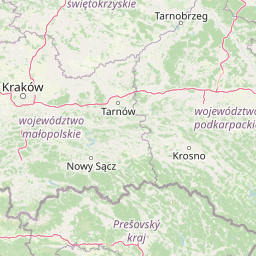
Map view of Łysa Góra (Natura 2000)

Use this park location map to pinpoint Łysa Góra (Natura 2000) in Poland, understand its exact geographic position, and read its mapped placement within the surrounding landscape more clearly.

Pigeon | © OpenStreetMap contributors

Location context for Łysa Góra (Natura 2000)

Podkarpackie Voivodeship
Recorded earthquake history

Examine Historical Earthquake Records and Seismic Data for Łysa Góra

Review the recorded history of seismic activity in the vicinity of Łysa Góra. This catalogue provides indexed event data for the region, allowing for the study of past earthquake patterns across the Low Beskids through the MoriAtlas geographical dataset.

Łysa Góra Earthquake History

Catalogued events

4 events

Strongest magnitude

Magnitude 5

Most recent event

Oct 9, 2023

This history includes earthquakes recorded inside the park or within 50 km of its borders

Park atlas

Compare adjacent mountain reserves and regional forest landscapes across the Low Beskids

Explore Parks Near Łysa Góra and Surrounding Carpathian Protected Areas

Discover related national parks and protected areas situated close to the forested ridges of Łysa Góra. Extending your geographic comparison across the surrounding region reveals connected conservation landscapes and similar mountain habitats.
A horizontal watercolor painting depicting a soft, rolling landscape with green fields, patches of trees, and distant lavender-toned mountains under a pale sky.
National parkPodkarpackie Voivodeship
Park boundaries overlap#1 closest

West

Magurski Park Narodowy: Geographic Overview and Protected Carpathian Forest Atlas

Transitional mountain landscapes in Podkarpackie Voivodeship

Magurski Park Narodowy encompasses a distinct Carpathian forest landscape within the Beskid Niski range. The terrain is defined by rounded mountain ridges, the upper Wisłoka river basin, and strict forest reserves that maintain the ecological integrity of this transitional zone. As a major protected area in Poland, the park provides an essential look at biodiversity-rich beech woodlands, rocky outcrops, and traditional cultural landscapes.

Area
194.39 km²
Established
1995
Visitors
40K annual
Relief
Mountain
Watercolor illustration showing a landscape with rolling hills, green trees, and distant mountains under a light sky
National parkSubcarpathian Voivodeship
Park boundaries overlap#2 closest

Southwest

Magura National Park: Mapped Protected Landscape & Carpathian Geography Atlas

Explore unique sandstone formations and mapped natural terrain.

Magura National Park, located in the Subcarpathian Voivodeship of Poland, offers a rich focus for protected-area exploration and geographic discovery. This national park is distinguished by its dramatic sandstone rock formations, forested Carpathian ridges, and its ecological importance as a transitional zone. Users engaging with Magura National Park can examine its mapped boundaries, understand its specific landscape context, and appreciate its role within the broader regional geography.

Area
194.39 km²
Established
1995
IUCN
II
Visitors
40K annual
Protected areaPodkarpackie Voivodeship
Park boundaries overlap#3 closest

Southeast

Ostoja Jaśliska Protected Area: Carpathian Forest Landscapes and Ecological Geography

Exploring Natura 2000 boundaries in Podkarpackie Voivodeship

The Ostoja Jaśliska protected area sits within the Beskid Niski range, offering a deep look into Carpathian beech forest communities and rare peatland habitats. The region holds nine distinct nature reserves and provides essential connectivity for apex predator populations. This geographic profile details the terrain and environmental importance of this expansive protected polygon in southeastern Poland.

Area
292.521 km²
Established
2009
Relief
Mountain
Climate
Temperate
Protected areaPodkarpackie Voivodeship
0 km away#4 closest

Northwest

Wisłoka z dopływami Protected Area: River Valley Landscape and Carpathian Foothills Atlas

Freshwater habitat mapping in southern Poland

Wisłoka z dopływami covers a long, ecologically rich segment of the Wisłoka river valley in the Carpathian foothills. This protected area connects diverse riparian, floodplain, and alluvial forests, serving as a critical habitat for six Annex II fish species and sixteen distinct riparian woodland types.

Area
26.51 km²
Established
2011
Relief
Mixed relief
Scope
Terrestrial
Protected areaPodkarpackie Voivodeship
0.2 km away#5 closest

Southeast

Trzciana Protected Area: A Geographic Atlas of the Low Beskids Forest Terrain

Ecological mapping of Carpathian ridge habitats in Podkarpackie.

Trzciana functions as an essential forest corridor within the Beskid Dukielski, offering a detailed look at Annex I habitat types including beech forests and undisturbed cave systems. The site provides a concentrated view of the natural mountain geography found in southern Poland, emphasizing the importance of protected woodland matrices and the specific ridge formations of the broader Low Beskids mesoregion.

Area
22.855 km²
Established
2009
Relief
Mountain
Climate
Temperate
Nature reservePodkarpackie Voivodeship
About 8.2 km away#6 closest

Southeast

Rezerwat przyrody Modrzyna: Geography and Protected Forest Landscapes in Podkarpackie

A vital Carpathian nature reserve preserving rare Polish larch and old-growth mountain forest habitats

Rezerwat przyrody Modrzyna is a specialized floristic nature reserve nestled in the Beskid Niski range of Poland. Enclosed within the Jaśliska Landscape Park, it safeguards rare old-growth Polish larch and mixed fir forest. This protected area provides a unique window into the lower mountain forest ecosystems of the Western Carpathians, offering a clear view of the structural composition and biological importance of regional submontane landscapes.

Area
0.173 km²
Established
1953
Relief
Mountain
Climate
Temperate
Protected areaPodkarpackie Voivodeship
12 km away#7 closest

East

Rymanów Protected Area: Map and Landscape Overview in Podkarpackie Voivodeship

Forested foothill geography and Natura 2000 site boundaries

Located in the Podkarpackie Voivodeship, Rymanów is a 52-square-kilometer protected area defined by its rolling Bukowskie Foothills terrain. This site highlights the intersection of traditional architecture and subcarpathian forest, providing critical habitat within the larger Beskid Niski Protected Landscape Area. Examine the spatial relationship between its protected roosts and surrounding foraging zones.

Area
52.41 km²
Established
2009
Relief
Upland
Scope
Terrestrial
Protected areaPoland
15 km away#8 closest

Southwest

Źródliska Wisłoki Protected Area: Geography and Landscape Mapping in the Polish Carpathians

A detailed atlas exploration of spring mires and mountain meadows

Located in the Low Beskids of southern Poland, Źródliska Wisłoki preserves a rare ecological mosaic of spring-fed mires and semi-natural hay meadows. This protected area serves as a vital site for the headwaters of the Wisłoka river, offering deep insights into the structure and distribution of Carpathian mountain wetland habitats within the Sękowa commune.

Area
1.818 km²
Established
2011
Relief
Mountain
Scope
Terrestrial

Common questions about visiting, size, designation, and location context for Łysa Góra (Natura 2000)

Łysa Góra (Natura 2000) FAQs for park facts, access, geography, and protected area context

Find quick answers about Łysa Góra (Natura 2000), including protected-area facts, park geography, trail and visitor context, and how the park fits into its surrounding country and regional landscape.
MoriAtlas Explorer

Continue Your Protected Areas Search Across the Global Atlas

Deepen your exploration by continuing the structured search for national parks and protected areas worldwide. Utilize the comprehensive filtering capabilities to compare different conservation landscapes and refine your understanding of global park geography. Discover more about the distribution and characteristics of protected natural areas.

Global natural geography