Mori Atlas logo
Protected areaMausohr-Wochenstube bei Barsinghausen

Understanding the ecological role of this Natura 2000 site within the Region Hannover landscape

Mausohr-Wochenstube bei Barsinghausen: Protected Area and Regional Habitat Geography

(FFH-Gebiet Mausohr-Wochenstube bei Barsinghausen)

Mausohr-Wochenstube bei Barsinghausen represents a distinct protected area where cultural architecture and natural habitat converge. This site acts as a maternity colony for the greater mouse-eared bat, linking the historic St. Michaelis Church to the wider forage corridors of the Südaue river valley. Discover the geographic integration of this small but vital protected landscape, which illustrates how local village structures support complex European conservation networks.

bat conservationFFH siteNatura 2000protected areaGreater mouse-eared batmaternity roost

Mausohr-Wochenstube bei Barsinghausen

Protected area

Park overview

Structured park overview, official facts, and landscape profile for Mausohr-Wochenstube bei Barsinghausen

Mausohr-Wochenstube bei Barsinghausen park facts, protected area profile, and essential visitor context

Review the core facts for Mausohr-Wochenstube bei Barsinghausen, including designation, size, terrain, visitor scale, habitats, and operating context in one park-focused overview.

About Mausohr-Wochenstube bei Barsinghausen

Mausohr-Wochenstube bei Barsinghausen is a small but ecologically specific protected area in the German state of Lower Saxony. It belongs to the European Natura 2000 network as an FFH site and was formally registered in 2004 to conserve the summer maternity roost of the greater mouse-eared bat (Myotis myotis), a species whose populations have declined across much of central Europe due to changes in building use, agricultural intensification, and loss of suitable foraging habitats.

The site is anchored in the village of Groß Munzel, part of the town of Barsinghausen within the Region Hannover. The practical heart of the protection is the 1804-built St. Michaelis Church, whose tower and attic provide warm, dark, and undisturbed conditions ideal for a bat maternity colony, also known in German as a Wochenstube. During summer, the colony uses the structure to give birth and rear young before dispersing again later in the year.

Although the formally protected zone itself is highly compact, conservation management takes into account a wider surroundings. Bats from the roost forage in the open, lightly wooded landscape around Groß Munzel and along the course of the Südaue river, where insect-rich habitats in tree stands, field edges, and watercourse corridors provide essential feeding grounds. Protecting the roost alone would not secure the colony, which is why the site is interpreted in the context of both the historic building and the surrounding rural landscape.

The inclusion of the site in the Natura 2000 network reflects a broader European recognition that small, species-specific sites can be critical for bat conservation. Mausohr-Wochenstube bei Barsinghausen sits alongside a string of similarly small FFH sites in the Region Hannover that together protect scattered but valuable habitats ranging from moors and floodplain forests to cave systems and individual roosting structures.

Quick facts and research context for Mausohr-Wochenstube bei Barsinghausen

The Mausohr-Wochenstube bei Barsinghausen is an FFH (Fauna-Flora-Habitat) site in the Region Hannover in Lower Saxony, Germany. It is located in Groß Munzel, a district of the town of Barsinghausen, and is centered on the 1804-built St. Michaelis Church, where the tower and attic serve as the summer roost of a greater mouse-eared bat colony. The site was established in 2004 as part of the Natura 2000 network. Although the protected area itself is only about 0.06 hectares, the associated foraging grounds extend into the surrounding open woodland and along the nearby Südaue valley, connecting the maternity roost with the wider rural landscape of the region.

Protection and recognition

Terrestrial protected area designation and official international recognition records

Mausohr-Wochenstube bei Barsinghausen Protection Status and Natura 2000 Recognition

Mausohr-Wochenstube bei Barsinghausen maintains a documented terrestrial protection scope supported by official Natura 2000 network designations. Records outline international recognition sources and management frameworks tied to the protected area registry.

International recognition

Protection details

Protection scope
Terrestrial
Transboundary protection
No
WDPA ID
555518959
Park context

Deeper park guide and search-rich context for Mausohr-Wochenstube bei Barsinghausen

Mausohr-Wochenstube bei Barsinghausen history, landscape, wildlife, and travel context

Explore Mausohr-Wochenstube bei Barsinghausen through its history, landscape character, ecosystems, wildlife, conservation priorities, cultural context, and seasonal travel timing in a structured park guide built for atlas discovery and search intent.

Why Mausohr-Wochenstube bei Barsinghausen stands out

Mausohr-Wochenstube bei Barsinghausen is best known as a protected maternity colony of the greater mouse-eared bat, one of Europe's larger and more recognizable bat species. The site is essentially defined by the relationship between a centuries-old church building and the bat colony that has adopted its roof space for raising young each summer. The locality also stands out for being an unusually compact FFH site, where residential, religious, and ecological values converge. The use of infrared cameras to display the colony on a public monitor since 2013 has made it a small but visible example of citizen-friendly bat conservation in Lower Saxony.

Mausohr-Wochenstube bei Barsinghausen history and protected-area timeline

The protected area Mausohr-Wochenstube bei Barsinghausen was formally registered as an FFH site in 2004, as part of Lower Saxony's contribution to the European Natura 2000 network established under the EU Habitats Directive. The designation was driven by the long-term ecological importance of the greater mouse-eared bat colony that uses the St. Michaelis Church in Groß Munzel, a church originally built in 1804 whose tower and attic have hosted the colony for many years.

The site was created at a time when European bat populations were increasingly recognized as dependent on specific protected measures rather than on incidental tolerance. By giving the church roost and its surrounding foraging area formal legal protection, regional authorities ensured that changes to the building's use or to the nearby landscape could no longer take place without ecological assessment.

A notable development in the public profile of the site occurred in 2013, when infrared cameras and lighting were installed to transmit images of the bats from the church tower to a public monitor in the adjacent parish hall during summer afternoons and evenings. This made the otherwise hidden colony visible to residents and visitors and turned a small protected building site into a local point of interest for bat conservation awareness.

Mausohr-Wochenstube bei Barsinghausen landscape and geographic character

The protected object defined by the designation lies within the built environment of Groß Munzel, a small village in the region of Hannover, but its ecological function depends heavily on the surrounding Lower Saxony countryside. The landscape immediately around the site consists of open or lightly wooded terrain typical of the transition between the northern German plain and the lower hill ranges, with broad agricultural fields, small woodland patches, and linear vegetation along field margins and watercourses.

The principal natural corridor associated with the site is the valley of the Südaue, a small river that passes near the village. The river's floodplain provides a network of habitats, including tree-lined banks, wet meadows, and varied edge structures, that are ecologically attractive to insects and therefore central to the foraging behavior of the greater mouse-eared bat colony based in the church tower. The result is a small but tightly integrated landscape mosaic of village, woodland, and river valley.

Mausohr-Wochenstube bei Barsinghausen ecosystems, habitats, and plant life

Ecologically, the site is defined less by a classic natural habitat type and more by the specific functionality the location provides for a single protected species. The combination of an undisturbed dark roost above a village church and a richly structured foraging landscape around it is what gives the site its conservation value.

In the wider surroundings, the natural environment includes open deciduous and mixed tree stands near the village, hedge- and field-edge habitats along agricultural land, and the corridor of the Südaue with its associated waterside vegetation and wet meadows. These habitat elements together support the insect communities on which the colony depends, and their spatial arrangement around the roost is what allows the bats to commute efficiently between safe daytime shelter and productive night-time feeding grounds.

Such compact, roost-centered protected areas reflect the idea, common in European bat conservation, that preserving a single critical location can meaningfully protect a population if the surrounding landscape matrix remains ecologically usable.

Mausohr-Wochenstube bei Barsinghausen wildlife and species highlights

The defining wildlife value of the site is the summer maternity colony of the greater mouse-eared bat (Myotis myotis), which uses the tower and attic of St. Michaelis Church during the warmer months. Colony size has been documented at up to around 250 animals, a sizeable aggregation for this species in northern Germany and the core reason the site is designated as protected.

Greater mouse-eared bats are ground- and leaf-gleaning hunters that feed largely on larger insects collected from the surface of the ground and from low vegetation. The surrounding open woodland and the wet-ground habitats along the Südaue are particularly important for this feeding strategy, which is why the protection of the site extends beyond the church itself.

Outside the bat season, the broader local fauna includes the typical mix of small mammals, breeding and wintering birds of farmland and field-edge habitats, and invertebrates supported by the river corridor, but the bat colony is the species and ecological phenomenon around which the entire designation is built.

Mausohr-Wochenstube bei Barsinghausen conservation status and protection priorities

The conservation significance of Mausohr-Wochenstube bei Barsinghausen lies in its role within the European Natura 2000 network. It is registered both in the World Database on Protected Areas with WDPA-ID 555518959 and as the Natura 2000 site 3622-331, classifying it as an FFH area under the EU Habitats Directive. The qualifying feature is the greater mouse-eared bat, a strictly protected European species whose maternity colonies are considered particularly vulnerable to disturbance, building renovation, and loss of foraging habitat.

By treating the church tower as part of an officially protected site, regional conservation authorities can require that any changes to the building, lighting near the roost, or land use in the surroundings take the colony into account. This extends protection from a paper designation to practical management of a real building and its immediate environment.

The site also contributes to the broader coherence of Natura 2000 in the Region Hannover, where it sits among a mosaic of small FFH sites, including other bat-relevant areas, fens, forests, and watercourse valleys. Together these small sites form a network whose combined value for species protection is much greater than that of any individual location.

Mausohr-Wochenstube bei Barsinghausen cultural meaning and human context

The cultural setting of the site is woven directly into its ecological identity. The roost structure is not a natural cave or forest hollow but the tower and attic of an early 19th-century Lutheran church, the St. Michaelis Church in Groß Munzel, which has been part of village life since 1804. The presence of a sizable bat colony within an active place of worship illustrates how religious and ecological heritage can coexist.

The decision in 2013 to install infrared cameras that transmit bat activity to a monitor in the neighboring parish hall reflects a community effort to integrate bat conservation into local public life, transforming the protected area into a small but visible element of village identity rather than a hidden administrative designation.

Top sights and standout views in Mausohr-Wochenstube bei Barsinghausen

A protected bat colony inside a 19th-century church tower, formally recognized since 2004 as part of the European Natura 2000 network. The protected object is exceptionally small, but it represents an unusually clear example of cultural architecture functioning as critical wildlife habitat, an arrangement that is at the heart of European bat conservation. The site also illustrates a successful local model for public engagement, with infrared cameras linking the hidden world of the roost to visitors in the village since 2013.

Best time to visit Mausohr-Wochenstube bei Barsinghausen

The most ecologically meaningful period for the site is the summer months, when the greater mouse-eared bat colony is active in the church tower and the transmitted infrared images of the bats are available on the public monitor in the parish hall. Outside of summer, the roost is largely quiet and the colony is absent, so the site's most distinctive characteristic, the maternity roost itself, is best experienced during this warmer half of the year, when foraging activity along the Südaue and around Groß Munzel is also at its peak.

Monthly climate preview

Long-term temperature ranges and precipitation patterns measured at representative coordinates

Mausohr-Wochenstube bei Barsinghausen Climate Normals and Monthly Weather Records

Representative baseline coordinates for Mausohr-Wochenstube bei Barsinghausen document a measured annual temperature range spanning sub-zero winter minimums to warm summer maximums alongside consistent daily precipitation rates. Opening the complete monthly dataset provides thorough numerical breakdowns for comparing long-term temperature averages and precipitation distributions across the entire year.
Annual mean9 °C
1 °C18 °C
Jan
Feb
Mar
Apr
May13°
Jun16°
Jul18°
Aug18°
Sep14°
Oct10°
Nov
Dec
Warmest month
July

18.4 °C

Coolest month
January

0.6 °C

Wettest month
July

2.4 mm/day

Driest month
April

1.4 mm/day

Park location guide

Geography guide, regional context, and park location map for Mausohr-Wochenstube bei Barsinghausen

Mausohr-Wochenstube bei Barsinghausen park geography, regions, and map view in Germany

Understand where Mausohr-Wochenstube bei Barsinghausen sits in Germany through a broader geographic reading of the surrounding landscape, nearby location context, and its mapped position within the national park landscape.

How Mausohr-Wochenstube bei Barsinghausen fits into Germany

Germany is a federal republic in Western and Central Europe with a population of over 83 million across sixteen constituent states. It is Europe's largest economy by nominal GDP and a major global exporter and importer. The capital is Berlin, and the country borders Denmark, Poland, Czech Republic, Austria, Switzerland, France, Luxembourg, Belgium, and the Netherlands.

Wider geography shaping Mausohr-Wochenstube bei Barsinghausen in Germany

Germany is located in Western and Central Europe, spanning 357,022 km². It borders Denmark to the north, Poland and the Czech Republic to the east, Austria and Switzerland to the south, and France, Luxembourg, Belgium, and the Netherlands to the west. The country has coastlines on the Baltic Sea and North Sea to the north, with the Alps located in the southern region.

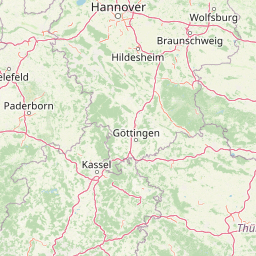
Map view of Mausohr-Wochenstube bei Barsinghausen

Use this park location map to pinpoint Mausohr-Wochenstube bei Barsinghausen in Germany, understand its exact geographic position, and read its mapped placement within the surrounding landscape more clearly.

Pigeon | © OpenStreetMap contributors

Location context for Mausohr-Wochenstube bei Barsinghausen

Region Hannover
Park atlas

Compare nearby protected landscapes, river valleys, and regional habitats.

Other Parks and Protected Areas Near Mausohr-Wochenstube bei Barsinghausen

Browse nearby national parks and protected areas sharing the surrounding geographical and ecological context of the Hannover region. Compare adjacent lowland reserves and river corridors to expand your understanding of local conservation landscapes.
A wide panoramic watercolor illustration showing a winding river or stream flowing through a landscape of green pine trees and pink flowering bushes under a pale sky.
Nature reserveRegion Hannover
About 8.1 km away#1 closest

North

Wadebruch Nature Reserve: Geographic Analysis of a Lower Leine Floodplain Protected Area

A dense mosaic of alder swamps, oxbow channels, and sandy terrace forest in Germany.

Wadebruch serves as a compact, ecologically rich example of a lower Leine floodplain environment. Located in the Hannover Region, this protected site preserves a historic river meander, including an aging oxbow and alder swamp forest, contrasted against steep sandy banks. The site provides essential insights into the natural river patterns that once characterized this part of Lower Saxony.

Area
0.16 km²
Established
1985
IUCN
IV
Relief
Lowland
Nature reserveLower Saxony
12 km away#2 closest

Northwest

Steinhuder Meer mit Randbereichen: Protected Nature Reserve and Wetland Geography

Lowland lake, fen meadows, and bog ecosystems in Lower Saxony

Steinhuder Meer mit Randbereichen stands as a primary conservation site in northwestern Germany. The protected landscape combines a vast, shallow lowland lake with extensive reed belts and peatland remnants, creating a complex wetland gradient that defines the regional geography of the Weser-Aller lowlands.

Area
53.71 km²
Established
2004
Watercolor illustration depicting a landscape with soft green hills, forest edges, and distant purple-hued mountains.
Protected areaRegion Hannover
13 km away#3 closest

Southeast

Binnensalzstelle am Kaliwerk Ronnenberg: Mapped Protected Area and Industrial Landscape Context

A rare inland saline ecosystem in Region Hannover

Investigate the Binnensalzstelle am Kaliwerk Ronnenberg, a protected area in Region Hannover defined by its unusual saline conditions. This site presents a concentrated intersection of industrial history and ecological rarity, showcasing how potash mine tailings foster salt-dependent habitats in a inland landscape.

Area
0.017 km²
Established
2004
Relief
Lowland
Climate
Temperate
Nature reserveGermany
About 13 km away#4 closest

South

Walterbachtal Nature Reserve: A Detailed Geographic Atlas of the Deister Stream Valley

Mapping protected meadow and forest landscapes in Germany

Walterbachtal offers a unique look at small-scale conservation in the Weserbergland. This nature reserve protects a dynamic stream, traditional wet meadows, and oak-hornbeam forests that thrive on the slopes of the Deister. The reserve provides a distinct transition between aquatic and terrestrial zones, serving as a critical corridor for biodiversity in the regional landscape between Hannover and Hameln.

Area
0.32 km²
Established
1987
IUCN
IV
Relief
Upland
Nature reserveLower Saxony
About 17 km away#5 closest

Northwest

Westufer Steinhuder Meer Nature Reserve: Geographic Profile and Wetland Boundaries

Protected mosaic of swamp forest and bog in Lower Saxony

Westufer Steinhuder Meer represents a significant wetland complex within the Natura 2000 network of Lower Saxony. The protected area features a unique concentric gradient ranging from lakeshore reedbeds to inland fen and bog forest. By mapping these interconnected peat habitats, the reserve highlights its role as a key stopover for migratory waterfowl and a sanctuary for rare breeding species on the North German Plain.

Area
6.63 km²
Established
2020
Nature reserveRegion Hannover
About 19 km away#6 closest

East

Sundern Nature Reserve and Floodplain Forest Landscapes of Region Hannover

Historic river meander and alluvial habitat preservation

Sundern represents a critical fragment of the historic Leine river floodplain in the Region Hannover. This nature reserve features a complex mosaic of moist backwaters and dry deciduous woodlands, including old-growth oak-hornbeam stands. The area is defined by its glacial valley setting, where centuries of sediment accumulation have shaped a distinct, slightly elevated landscape mosaic that remains vital for regional conservation.

Area
0.504 km²
Established
1931
IUCN
IV
Relief
Lowland
A soft watercolor illustration of a river winding through a green floodplain with rolling hills in the background.
Nature reserveRegion Hannover
20 km away#7 closest

East

Leineaue zwischen Hannover und Ruthe: Protected Floodplain and River Geography

Nature reserve geography and alluvial habitat mapping.

Examine the topographic and hydrological features of the Leineaue zwischen Hannover und Ruthe nature reserve. This atlas entry provides insights into the site's dual-channel river structure, calcareous tufa springs, and fragmented alluvial woodlands that define this significant conservation area near Hannover.

Area
9.678 km²
Established
2007
Relief
Lowland
Scope
Terrestrial
Nature reserveLower Saxony
About 24 km away#8 closest

Southeast

Zigeunerwäldchen Nature Reserve: A Detailed Geographic Atlas of the Haller River Floodplain

Protected riparian forest boundaries in Lower Saxony

Zigeunerwäldchen is a protected nature reserve in Lower Saxony that preserves a vital fragment of the Haller river floodplain. The landscape is defined by willow-dominated alluvial forest, marshy clearings, and thick stands of sedge. By maintaining these natural water-influenced terrains, the reserve provides a rare glimpse into the historical floodplain architecture of the Calenberger Land region.

Area
0.15 km²
Established
1986

Common questions about visiting, size, designation, and location context for Mausohr-Wochenstube bei Barsinghausen

Mausohr-Wochenstube bei Barsinghausen FAQs for park facts, access, geography, and protected area context

Find quick answers about Mausohr-Wochenstube bei Barsinghausen, including protected-area facts, park geography, trail and visitor context, and how the park fits into its surrounding country and regional landscape.
MoriAtlas Explorer

Continue Your Protected Areas Search Across the Global Atlas

Deepen your exploration by continuing the structured search for national parks and protected areas worldwide. Utilize the comprehensive filtering capabilities to compare different conservation landscapes and refine your understanding of global park geography. Discover more about the distribution and characteristics of protected natural areas.

Global natural geography