Why Akami−Uapishkᵘ−KakKasuak−Mealy Mountains National Park Reserve stands out
The Mealy Mountains National Park Reserve is best known for protecting one of the largest intact boreal forest ecosystems in eastern North America. The reserve encompasses the Mealy Mountains, a range that dominates the Labrador landscape and represents the highest terrain in the region. It is also notable for its significant populations of threatened woodland caribou and healthy runs of Atlantic salmon. The park's establishment represents a landmark achievement in Canadian conservation as the largest protected area in eastern North America.
Akami−Uapishkᵘ−KakKasuak−Mealy Mountains National Park Reserve history and protected-area timeline
The establishment of Mealy Mountains National Park Reserve spans several decades of negotiation, study, and Indigenous partnership. Beginning in the 1970s, Parks Canada sought to represent the eastern boreal forest within the national park system, but early efforts were rejected by the Innu people who inhabited the region. A pivotal turning point came in 2001, following the conclusion of a framework for a land claim agreement, when the Innu Nation invited Parks Canada to conduct a feasibility study for a new park in Labrador. A steering committee was formed and held extensive consultations with local communities near Lake Melville, addressing concerns about traditional land uses including personal cabins, berry picking, fishing, and hunting. In May 2008, the committee concluded that a park was feasible, leading to the announcement of the park on February 5, 2010 by then Minister of the Environment Jim Prentice in Happy Valley-Goose Bay. The park began as a reserve due to unresolved land claims negotiations with the Innu, a status that maintains national park management under the National Parks Act while pending final land claim settlement. The federal government renewed its commitment in 2015, proposing the Indigenous name Akami−Uapishkᵘ−KakKasuak−Mealy Mountains, and the reserve was officially established on July 31, 2015 with the signing of a federal-provincial Land Transfer Memorandum of Agreement. The lands were officially transferred to the federal government by the province of Newfoundland and Labrador on July 10, 2017.
Akami−Uapishkᵘ−KakKasuak−Mealy Mountains National Park Reserve landscape and geographic character
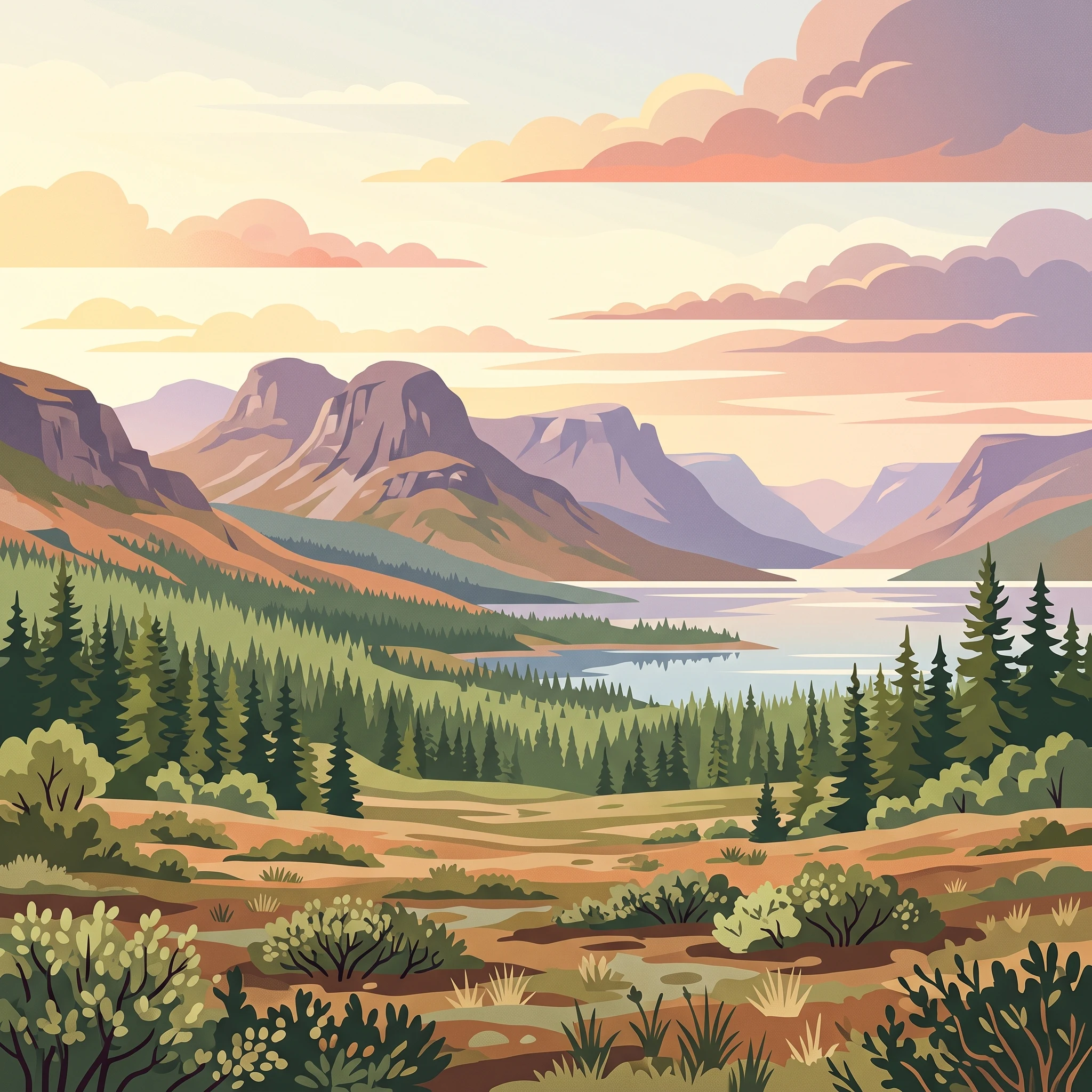
The Mealy Mountains National Park Reserve showcases a spectacular array of northern Canadian landscapes. The Mealy Mountains themselves form a prominent mountain range that rises dramatically from the surrounding boreal terrain, representing the highest elevations in all of Labrador. The lower elevations are dominated by the dense boreal forest, a vast ecosystem of coniferous and mixed forest species adapted to the subarctic climate. At higher elevations and in exposed coastal areas, the forest gives way to tundra, where hardy low-growing vegetation survives in the harsh northern environment. The park protects over 50 kilometres of shoreline along the Labrador Sea, where the boreal forest meets the cold Atlantic waters. Lake Melville, a large estuarine lake that connects to the sea, provides additional coastal habitat within the reserve. The landscape exhibits the characteristic beauty of the Labrador wilderness, with pristine rivers, remote terrain, and vast undeveloped spaces that remain largely untouched by human activity.
Akami−Uapishkᵘ−KakKasuak−Mealy Mountains National Park Reserve ecosystems, habitats, and plant life
The ecological diversity of Mealy Mountains National Park Reserve is remarkable for its representation of the eastern boreal forest natural region. The park protects extensive tracts of boreal forest, one of the largest intact forest ecosystems remaining in eastern North America. This forest type supports a complex web of life adapted to the subarctic conditions, including coniferous species that form the backbone of the ecosystem. The transition from forest to tundra at higher elevations creates a mosaic of habitats that supports species adapted to both environments. The coastal areas along the Labrador Sea and Lake Melville provide additional ecological diversity, with estuarine and marine-influenced habitats that differ significantly from the interior forests. The park's establishment was specifically intended to protect representative examples of the east coast boreal forest within Canada's national park system, filling a significant gap in the protection of this important biome.
Akami−Uapishkᵘ−KakKasuak−Mealy Mountains National Park Reserve wildlife and species highlights
Mealy Mountains National Park Reserve supports a diverse community of wildlife species characteristic of the boreal forest and tundra ecosystems. The park is home to the threatened Mealy Mountains woodland caribou herd, a population of boreal woodland caribou that represents a significant conservation priority. These iconic northern deer have experienced declines across much of their range, making the protected habitat within the reserve critically important for their survival. The reserve also supports healthy populations of wild Atlantic salmon, a species that has suffered declines throughout much of its global range, making this population particularly significant. Mammal populations include wolf packs, black bear, American marten, and two species of fox. The coastal waters and wetlands provide important habitat for migratory birds, with numerous species utilizing the area during seasonal migrations. The combination of forest, tundra, and coastal habitats creates a diverse environment that supports multiple wildlife communities.
Akami−Uapishkᵘ−KakKasuak−Mealy Mountains National Park Reserve conservation status and protection priorities
The establishment of Mealy Mountains National Park Reserve represents a landmark achievement in North American conservation. As the largest protected area in eastern North America, it safeguards vast tracts of intact boreal forest and tundra habitat that would otherwise face development pressure. The park protects critical habitat for threatened species including the boreal woodland caribou, whose survival depends on large tracts of contiguous forest territory. The protection of Atlantic salmon populations is particularly significant given the widespread declines this species has experienced across its range. The park's location along the Labrador Sea and its protection of river ecosystems provides benefits for aquatic biodiversity that extend beyond the park's boundaries. The reserve also plays an important role in maintaining ecological processes across a large landscape, allowing natural disturbance patterns such as fire to continue functioning across extensive areas. This ecological integrity at such a large scale is increasingly rare in the populated regions of eastern North America.
Akami−Uapishkᵘ−KakKasuak−Mealy Mountains National Park Reserve cultural meaning and human context
Mealy Mountains National Park Reserve is deeply intertwined with the Indigenous peoples and local communities of Labrador. The park's name, Akami−Uapishkᵘ−KakKasuak, reflects this connection, with Akami−Uapishkᵘ being the Innu name for the area meaning White Mountain across, and KakKasuak being the Labrador Inuit word for mountain. Three Indigenous groups have formal relationships with the reserve: the Innu, the Inuit, and the NunatuKavut. The establishment of the park required navigating complex relationships with these communities, including addressing concerns about traditional land uses that had been rejected in earlier attempts to create protected areas in the region. A significant innovation in this park's management is the continuation of traditional Aboriginal activities that are not permitted in most other Canadian national parks, including hunting, trapping, fishing, and cutting wood for personal use. Agreements with Indigenous peoples allow for the sharing of various management and planning responsibilities, and the continuation of Indigenous rights in the protected area. Local Labradorians have expressed concerns about maintaining access to traditional areas, personal cabins, and the various activities that connect them to this landscape.
Top sights and standout views in Akami−Uapishkᵘ−KakKasuak−Mealy Mountains National Park Reserve
Mealy Mountains National Park Reserve stands as Canada's 46th national park and the largest protected area in eastern North America. The reserve protects the Mealy Mountains, the highest terrain in Labrador, along with extensive boreal forest and tundra ecosystems. Over 50 kilometres of pristine shoreline along the Labrador Sea and Lake Melville fall within the park's boundaries. The park provides crucial habitat for threatened woodland caribou and significant populations of Atlantic salmon. A unique management framework allows for traditional Indigenous activities including hunting, trapping, and fishing, reflecting a new model for conservation that integrates Indigenous rights and local traditions. The park represents the eastern boreal forest natural region within Canada's national park system, filling a critical gap in the protection of this important biome.
Best time to visit Akami−Uapishkᵘ−KakKasuak−Mealy Mountains National Park Reserve
The optimal time to experience Mealy Mountains National Park Reserve reflects its subarctic location and the variety of landscapes it encompasses. Summer months offer the warmest conditions for exploring the boreal forest and coastal areas, with extended daylight hours providing ample opportunity for outdoor activities. The summer season also corresponds with the best wildlife viewing opportunities, as animals are more active in the warmer months. Autumn can bring spectacular fall colours to the boreal forest and may offer excellent conditions for viewing migratory birds as they head south. Winter provides access to a completely different character of the park, with snow-covered landscapes and opportunities for winter wilderness experiences, though access and infrastructure may be more limited. The shoulder seasons of late spring and early fall often provide a good balance of conditions and fewer visitors. Visitors should be aware that the remote nature of the park means that access and services are limited compared to more developed parks, and careful planning is essential regardless of the season.