Mori Atlas logo
Nature reserveMechelińskie Łąki Nature Reserve

A vital wetland and dune sanctuary mapped within the Pomeranian Voivodeship coastal corridor

Mechelińskie Łąki Nature Reserve: Coastal Protected Landscapes and Baltic Geographic Context

Mechelińskie Łąki Nature Reserve forms a critical faunistic protection zone along the Kashubian Coast of northern Poland. This landscape encompasses a rare convergence of Baltic coastal dunes, saline meadows, and reedbeds that support diverse shorebird breeding colonies and threatened amphibian populations. Situated within the broader Nadmorski Park Krajobrazowy and adjoining Puck Bay, this reserve provides a unique look at water-shaped coastal terrain and fragile halophytic plant ecosystems.

coastal reserveBaltic coastdune habitatswet meadowsreedbedshalophytic vegetation

Mechelińskie Łąki Nature Reserve

Nature reserve

Park overview

Structured park overview, official facts, and landscape profile for Mechelińskie Łąki Nature Reserve

Mechelińskie Łąki Nature Reserve park facts, protected area profile, and essential visitor context

Review the core facts for Mechelińskie Łąki Nature Reserve, including designation, size, terrain, visitor scale, habitats, and operating context in one park-focused overview.

About Mechelińskie Łąki Nature Reserve

Mechelińskie Łąki Nature Reserve occupies a narrow but ecologically rich coastal strip on the Polish Baltic shore. It lies on the Kashubian Coast mesoregion, in Gmina Kosakowo, adjoining the inner part of Puck Bay and fully enclosed within the broader Nadmorski Park Krajobrazowy. The reserve is a faunistic designation, meaning its primary legal purpose is the protection of animal life and the habitats on which those species depend.

The protected landscape includes dune sections near the beach, coastal wet meadows, reedbeds, and brackish patches that support halophytic plant communities. These distinct habitat zones sit close together, allowing animals to move between open sand, grassy meadows, and waterlogged marsh within a small geographic footprint. The protection of the specific hydrological regime of these saline habitats is an explicit objective of the reserve, alongside safeguarding breeding and refuge sites for wetland birds.

The reserve was created in 2000 by a decision of the Pomeranian Voivodeship Governor, and is flanked by a buffer zone that extends its effective protected footprint. The official protection rationale emphasizes the conservation of valuable waterbird and marsh bird nesting and foraging grounds, reed and meadow plant communities, and the characteristic halophytic habitats with their associated water conditions.

Quick facts and research context for Mechelińskie Łąki Nature Reserve

Mechelińskie Łąki is a faunistic nature reserve located in the Pomeranian Voivodeship, within the Kashubian Coast mesoregion and Gmina Kosakowo. It sits inside the Nadmorski Park Krajobrazowy and borders the Puck Bay.

The reserve was established in 2000 by decision of the Pomeranian Voivodeship Governor. It covers roughly 113 hectares and has an additional buffer zone of about 99 hectares that helps shield the sensitive coastal habitats around it.

Protection and recognition

Documented terrestrial protection scope, management framework, and conservation records

Mechelińskie Łąki Nature Reserve Protection Status and Designation Records

Mechelińskie Łąki Nature Reserve holds a terrestrial protection scope governed by documented conservation standards and official designation frameworks. Protected area records compile the verified management framework, regulatory status, and administrative recognition details available for the landscape.

Protection details

Protection scope
Terrestrial
Transboundary protection
No
Buffer area
1 km²
Park context

Deeper park guide and search-rich context for Mechelińskie Łąki Nature Reserve

Mechelińskie Łąki Nature Reserve history, landscape, wildlife, and travel context

Explore Mechelińskie Łąki Nature Reserve through its history, landscape character, ecosystems, wildlife, conservation priorities, cultural context, and seasonal travel timing in a structured park guide built for atlas discovery and search intent.

Why Mechelińskie Łąki Nature Reserve stands out

Mechelińskie Łąki is best known as a coastal refuge for waterbirds, breeding shorebirds, and amphibians along the Polish Baltic coast. The dune fringe historically hosted nesting colonies of little tern, common tern, Eurasian oystercatcher, common ringed plover, and little ringed plover, while one of Poland's last recorded breeding sites for the dunlin was located here. Beyond its avian importance, the reserve is recognized for protecting halophytic vegetation, including sea holly, and for sustaining a remarkably complete assemblage of tailless amphibians, including the nationally rare natterjack toad. The combination of dune, meadow, marsh, and saline plant communities in close proximity distinguishes the area from many other lowland Polish reserves.
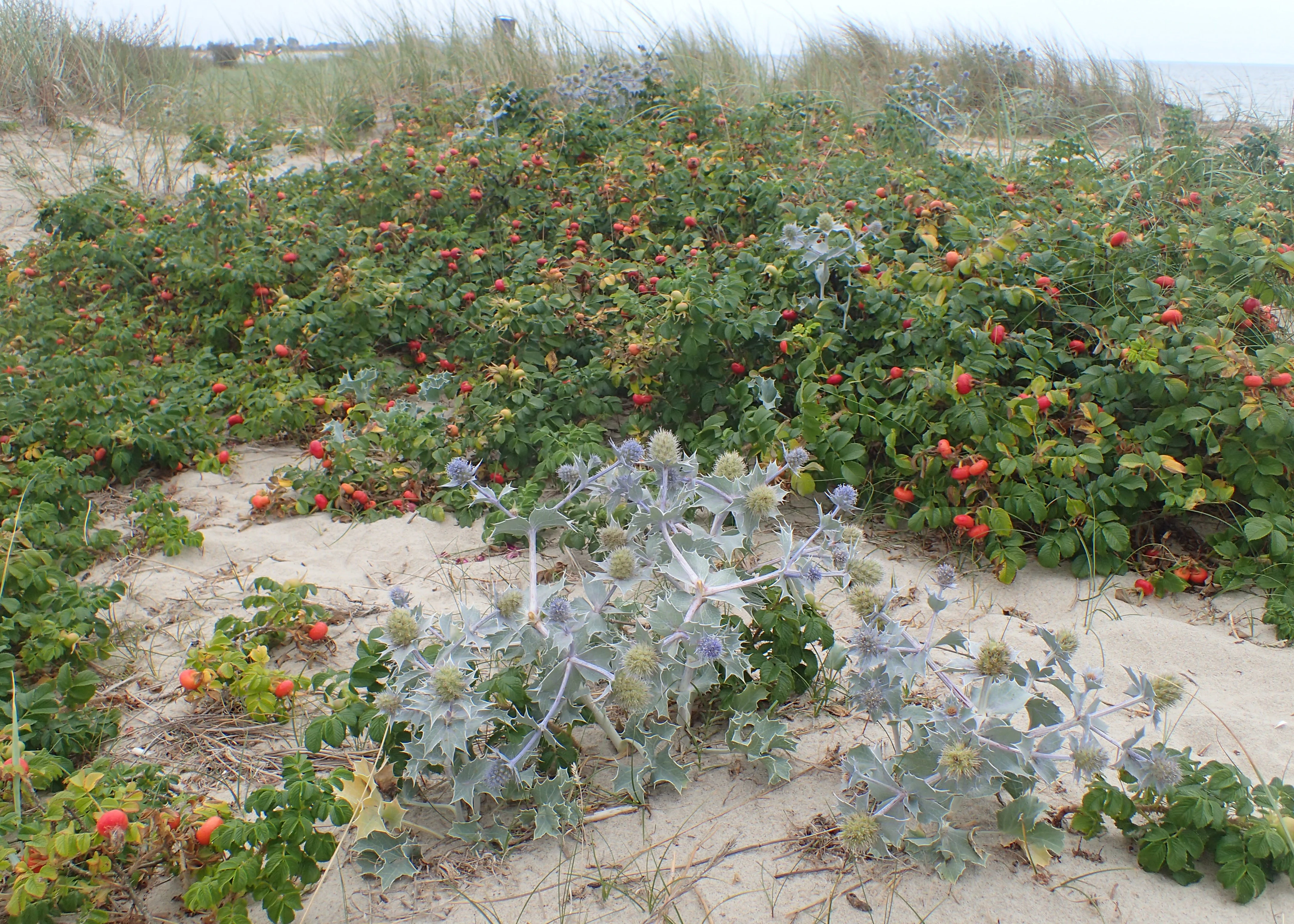
A cluster of bluish-green, spiky sea holly plants in the foreground, with a large patch of rose bushes bearing red hips behind them on sandy terrain.
Sea holly plants growing on the sandy dunes of Mechelińskie Łąki Nature Reserve.

Mechelińskie Łąki Nature Reserve history and protected-area timeline

Mechelińskie Łąki Nature Reserve was established in 2000 through a decision of the Pomeranian Voivodeship Governor, with the formal legal basis published in the official journal of the Pomeranian Voivodeship. The reserve was created on land that lies within the Nadmorski Park Krajobrazowy, a regional landscape park that already provided a broader framework of protection for the coastal zone around Puck Bay.

The reserve's protective purpose was shaped by the recognition that the dune, meadow, and marsh habitats around Mechelinki and Rewa supported a concentration of breeding birds and rare halophytic flora that required stronger, site-specific safeguarding. By setting aside a dedicated faunistic reserve with its own buffer zone, regional authorities aimed to maintain the local hydrological conditions and vegetation patterns essential for these species.

Over time, the reserve has experienced significant ecological strain. The cessation of traditional cattle grazing, unauthorized earthworks, and uncontrolled tourism have degraded dune nesting sites for shorebirds and trampled halophytic plants, and nesting activity on the dunes and beach is no longer recorded. Despite formal restrictions that limit pedestrian movement to the beach corridor between Rewa and Mechelinki, the pressures have continued, shaping the reserve's modern conservation challenges.

Mechelińskie Łąki Nature Reserve landscape and geographic character

The landscape of Mechelińskie Łąki is shaped by the meeting of three habitats: Baltic coastal dunes, low-lying wet meadows, and the fringing wetlands of Puck Bay. The dune edge runs close to the beach and historically provided open, sandy nesting terrain, while the inland side transitions into moist grasslands, reed communities, and brackish patches where saline-tolerant plants can thrive.

Small-scale elevation changes between the dune fringe, the meadows, and the marshy enclosures create a mosaic that is highly responsive to water levels and human use. Saline microhabitats along the coast support halophytic vegetation, while the freshwater-influenced meadows and reedbeds softens the boundary into a more continuous wetland matrix. The reserve lies inside the larger Nadmorski Park Krajobrazowy, sharing the broader region’s characteristically flat, water-shaped coastal topography.

Mechelińskie Łąki Nature Reserve ecosystems, habitats, and plant life

The protected ecological character of Mechelińskie Łąki rests on a tight mosaic of dune, meadow, reedbed, and halophytic habitats along the southern Baltic coast. Reed and meadow plant communities form a substantial portion of the reserve, framing the wetter zones, while the dune fringe adds open sand vegetation that historically connected to the beach.

Halophytic plant communities, sustained by specific saline and water conditions, are explicitly highlighted in the reserve's legal protection rationale. These habitats support sea holly, one of the reserve's most notable plant species, along with other salt-tolerant flora typical of the Polish Baltic coast. The combination of these sensitive plant communities with the hydrological regime that feeds them is considered a defining part of the reserve's value.

The mosaic supports a high diversity of breeding, foraging, and resting conditions for animal life as well, with reedbeds serving key breeding habitat for marsh birds and the wet meadows supporting amphibians. The reserve's ecology is closely tied to the dynamics of the inner Puck Bay and the adjoining Nadmorski Park Krajobrazowy.

Mechelińskie Łąki Nature Reserve wildlife and species highlights

The reserve's wildlife profile is defined by waterbirds and shorebirds using the coastal mosaic, and by an unusually rich amphibian community.

The dune fringe historically supported breeding colonies of protected and rare birds, including little tern, common tern, Eurasian oystercatcher, common ringed plover, and little ringed plover. One of the last known Polish breeding sites for the dunlin was located in this area. In the wetter inland sections, protected marsh birds continue to breed, including common crane, Eurasian bittern, bearded reedling, spotted crake, and western marsh harrier.

The reserve is also an important refuge for tailless amphibians. Most native Polish amphibian species have been recorded here, including all three native toads, with the nationally rare natterjack toad being a particularly notable inhabitant of the reserve's mosaic of dune and wetland habitats.

Mechelińskie Łąki Nature Reserve conservation status and protection priorities

Mechelińskie Łąki is a faunistic nature reserve, a designation indicating that the protection of animal life and its supporting habitats is the core legal goal. The reserve's formal protection objective is to preserve breeding and foraging sites for valuable waterbird and marsh bird species, together with reed, meadow, and halophytic plant communities and the hydrological conditions that sustain them.

The reserve is surrounded by a buffer zone that helps shield it from adjacent land uses, and it sits within the broader protective framework of the Nadmorski Park Krajobrazowy, layering landscape-level protection over the stricter site-specific reserve. This combination of designations reflects the recognition that the area's coastal habitats are of regional and national conservation significance.

Despite this layered protection, the reserve faces serious conservation pressure. The abandonment of traditional cattle grazing, unauthorized earthworks, and unregulated tourist traffic have degraded dune-breeding bird sites and trampled halophyte plants, and no nesting on the dunes or beach has been observed in recent years. Even though pedestrian movement between Rewa and Mechelinki is officially restricted to the beach, the impacts continue and form a central part of the reserve's modern conservation challenge.

Top sights and standout views in Mechelińskie Łąki Nature Reserve

Mechelińskie Łąki stands out for combining dune, meadow, marsh, and saline habitats in a compact Baltic coastal reserve. Its ornithological significance ranges from historically documented nesting colonies of terns, oystercatcher, and ringed plovers to one of the last Polish breeding records of the dunlin.

Equally distinctive is the reserve's amphibian richness, including all three native Polish toad species and the rare natterjack toad, set against a backdrop of legally protected halophytic plant communities featuring sea holly. The reserve's location inside the Nadmorski Park Krajobrazowy and on the shores of Puck Bay gives it additional regional context as part of a broader Polish coastal protection system.

Best time to visit Mechelińskie Łąki Nature Reserve

The reserve sits on the Polish Baltic coast, where the character of a visit varies strongly with the seasons. Late spring and early summer typically coincide with breeding activity for marsh and waterbird species in the reedbed and meadow zones, while damp weather conditions support amphibian presence. Autumn migration can shift the birdlife profile toward passage species along the bay shoreline.

Dune and beach habitats are most calmly experienced outside the peak summer tourist period, when visitor pressure on fragile halophytic vegetation is at its highest. Cooler months reduce crowding and provide a quieter view of the coastal landscape mosaic, though wildlife viewing opportunities differ from the breeding season.
Monthly climate preview

Long-term temperature ranges and precipitation patterns across twelve months

Mechelińskie Łąki Nature Reserve Climate Normals and Monthly Weather Records

Representative coordinate records show average monthly temperatures shifting from negative winter minimums to warm summer maximums alongside steady precipitation rates. Reviewing the full monthly breakdown reveals detailed baseline climatic conditions for this protected coastal terrain.
Annual mean8 °C
0 °C18 °C
Jan
Feb
Mar
Apr
May11°
Jun15°
Jul18°
Aug18°
Sep14°
Oct
Nov
Dec
Warmest month
August

18.3 °C

Coolest month
January

-0.5 °C

Wettest month
July

2.5 mm/day

Driest month
April

1.3 mm/day

Park location guide

Geography guide, regional context, and park location map for Mechelińskie Łąki Nature Reserve

Mechelińskie Łąki Nature Reserve park geography, regions, and map view in Poland

Understand where Mechelińskie Łąki Nature Reserve sits in Poland through a broader geographic reading of the surrounding landscape, nearby location context, and its mapped position within the national park landscape.

How Mechelińskie Łąki Nature Reserve fits into Poland

Poland, officially the Republic of Poland, is a Central European country spanning from the Baltic Sea in the north to the Carpathian Mountains in the south. It borders Germany, Czech Republic, Slovakia, Ukraine, Belarus, Lithuania, and Kaliningrad Oblast. The country has a temperate climate, diverse landscapes, and is known for its rich history, cultural heritage, and strong economic position within the EU.

Wider geography shaping Mechelińskie Łąki Nature Reserve in Poland

Poland occupies 312,696 km2 in Central Europe, extending from the Baltic Sea coast in the north to the Sudetes and Carpathian Mountains in the south. It borders Germany to the west, Czech Republic and Slovakia to the south, Ukraine and Belarus to the east, and Lithuania and Kaliningrad Oblast to the northeast. The landscape includes lowland plains, uplands, and mountain ranges.

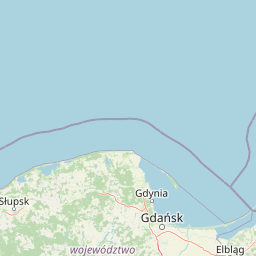
Map view of Mechelińskie Łąki Nature Reserve

Use this park location map to pinpoint Mechelińskie Łąki Nature Reserve in Poland, understand its exact geographic position, and read its mapped placement within the surrounding landscape more clearly.

Pigeon | © OpenStreetMap contributors

Location context for Mechelińskie Łąki Nature Reserve

Pomeranian Voivodeship

Visualizing Baltic dunes, wet meadows, and rare wetland habitats

Mechelińskie Łąki Nature Reserve Photos and Coastal Landscape Scenery

Visual documentation captures the distinctive terrain, coastal dunes, and saline marshes that characterize Mechelińskie Łąki Nature Reserve along Puck Bay. Detailed photography reveals the fragile plant communities and wetland environments that sustain protected shorebird populations.

A cluster of bluish-green, spiky sea holly plants in the foreground, with a large patch of rose bushes bearing red hips behind them on sandy terrain.

Park atlas

Compare adjacent coastal landscapes, wetland reserves, and regional protected terrain.

Exploring Parks Near Mechelińskie Łąki Nature Reserve and Surrounding Protected Areas

Compare adjacent coastal reserves and wetland protected areas situated across the surrounding Pomeranian region. Expanding the geographic scope reveals connected habitats and broader ecological patterns along the southern Baltic coast.
A horizontal watercolor illustration showing a gentle river landscape with soft green meadows, trees, and rolling hills in the background.
Nature reservePomeranian Voivodeship
About 15 km away#1 closest

South

Kacze Łęgi Nature Reserve: Mapped Protected Woodland and River Valley Geography

Riparian floodplain forest in the Pomeranian Voivodeship of Poland

Kacze Łęgi functions as a crucial nature reserve that maintains an unusually well-preserved fragment of elm and alder floodplain forest. Nestled along the Kacza River valley in Gdynia, this site offers a concentrated look at the original vegetation of Baltic river valleys. It remains a key component of the regional protected landscape, providing a deep study of moisture-loving woodland within the larger context of the Pomeranian coastal lowlands.

Area
0.09 km²
Established
1983
Relief
Lowland
Scope
Terrestrial
Protected landscapePomeranian Voivodeship
About 21 km away#2 closest

South

Trójmiejski Park Krajobrazowy: Protected Landscape and Glacial Geography in Pomerania

Exploring the forested moraine upland near the Baltic coast

Covering nearly 20,000 hectares, Trójmiejski Park Krajobrazowy forms an essential green belt along the Kashubian moraine. Its terrain is defined by dramatic erosion, including 80-meter deep ravines and extensive pine-beech forests that host rare relic plant species and protected peatland habitats.

Area
199.3 km²
Established
1979
Relief
Upland
Climate
Temperate
A wide panoramic watercolor illustration showing a pastoral landscape with green rolling hills, a winding river, scattered trees, and a soft sky with pink and yellow hues.
Protected areaPomeranian Voivodeship
About 28 km away#3 closest

Southeast

Twierdza Wisłoujście Protected Area: Coastal Geography and Historical Mapping in Gdańsk

A historic Baltic fortification and vital ecological site in Pomeranian Voivodeship.

Explore the layered masonry and water-influenced landscape of Twierdza Wisłoujście, a coastal fortress established on the delta of the Vistula River. This site bridges the history of maritime defense and modern ecological conservation as a designated Natura 2000 area. Examine how shifting river channels and centuries of construction define the current defensive perimeters and moated surroundings within the Pomeranian Voivodeship.

Established
1482
Relief
Lowland
Climate
Temperate
Access
Easy access
Nature reservePomeranian Voivodeship
About 29 km away#4 closest

South

Dolina Strzyży Nature Reserve Protected Forest and Stream Valley Geography

Natural riparian forest in Pomeranian Voivodeship

Explore the geographic profile of Dolina Strzyży Nature Reserve, a protected valley woodland in the Pomeranian Voivodeship of Poland. This reserve maintains dense oak-hornbeam habitats and stream-side ecosystems, functioning as a vital green connection between urban Gdańsk and the expansive Trójmiejski Park Krajobrazowy, preserving historic forest remnants.

Area
0.385 km²
Established
2007
Relief
Upland
Climate
Temperate
Nature reserveGdańsk
About 35 km away#5 closest

South

Zbiornik Wody Stara Orunia: A Protected Industrial Heritage Site and Nature Reserve in Gdańsk

Historic brick architecture meeting urban bat conservation zones

Built in 1869, this historic underground reservoir in the Orunia district of Gdańsk combines rare Prussian engineering with a vital role as a Natura 2000 protected habitat. The site serves as a key component of the regional water trail, offering a look into the complex relationship between industrial infrastructure, urban landscape development, and the protection of essential wildlife hibernation cycles.

Area
0.001 km²
Established
1869
Relief
Upland
Climate
Temperate
Nature reservePomeranian Voivodeship
About 36 km away#6 closest

Northwest

Długosz Królewski w Wierzchucinie: Mapping a Protected Floristic Peatland Reserve in Pomerania

Floristic nature reserve and bog ecosystem in northern Poland

This protected area in Gmina Krokowa preserves critical peatland habitats, including rare stands of royal fern and interrupted clubmoss. Its geography captures the history of the Wierzchucińska Forest, showcasing a complex environment of moist woodlands and bog mosaics characteristic of the Baltic coastal landscape in Poland.

Area
1.482 km²
Established
2003
Relief
Lowland
Climate
Temperate
Nature reservePomeranian Voivodeship
About 37 km away#7 closest

West

Rezerwat przyrody Długosz Królewski w Łęczynie: Botanical Protected Area in Pomerania

Floristic nature reserve focused on royal fern conservation

Located in the heart of the Puszcza Wierzchucińska, this nature reserve is a critical site for the study and conservation of Osmunda regalis. The surrounding terrain of damp, peat-influenced woodland defines the unique character of this small, specialized protected area in northern Poland.

Area
0.02 km²
Established
1977
Scope
Terrestrial
Water
Minor water
A soft watercolor painting of a marshy coastal landscape with tall grasses, calm water, and distant dunes under a bright, clear sky.
Nature reservePomeranian Voivodeship
About 42 km away#8 closest

Southeast

Rezerwat przyrody Mewia Łacha: Protected Coastal Geography and Vistula Estuary Map

Dynamic Baltic sandbars and migratory bird habitat in Pomerania

Rezerwat przyrody Mewia Łacha occupies a vital coastal strip where river discharge meets the Gulf of Gdańsk. This nature reserve serves as an essential site for migratory waterfowl and nesting terns, defined by its shifting sandbars, dune slacks, and brackish pools. It stands as a key example of the varied estuarine geography found within the Pomeranian Voivodeship.

Area
1.505 km²
Established
1991
Relief
Lowland
Climate
Temperate

Common questions about visiting, size, designation, and location context for Mechelińskie Łąki Nature Reserve

Mechelińskie Łąki Nature Reserve FAQs for park facts, access, geography, and protected area context

Find quick answers about Mechelińskie Łąki Nature Reserve, including protected-area facts, park geography, trail and visitor context, and how the park fits into its surrounding country and regional landscape.
MoriAtlas Explorer

Continue Your Protected Areas Search Across the Global Atlas

Deepen your exploration by continuing the structured search for national parks and protected areas worldwide. Utilize the comprehensive filtering capabilities to compare different conservation landscapes and refine your understanding of global park geography. Discover more about the distribution and characteristics of protected natural areas.

Global natural geography