Why Długosz Królewski w Wierzchucinie Nature Reserve stands out
The reserve is best known for hosting the largest population of royal fern (Osmunda regalis) in Gdańsk Pomerania, along with the regional stronghold of interrupted clubmoss (Lycopodium annotinum). It is also recognized for safeguarding a surviving mosaic of raised bog, transitional bog, and moist birch woodland habitats that were once widespread in northern Poland but have since retreated to scattered remnants.
Długosz Królewski w Wierzchucinie Nature Reserve history and protected-area timeline
The nature reserve was established in 2003 by Order No. 11/2003 of the Pomeranian Voivodeship Governor, dated 20 May 2003 and published in the official journal (Dz. U. Nr 71/2003, poz. 1133). The designation was driven by the recognition that the Wierzchucińskie Błota area still supported remarkable botanical treasures, including royal fern and interrupted clubmoss, and that without formal protection the remaining peatland habitats risked further degradation through drainage, forestry, or peat-extraction activities.
Earlier human impact on the landscape had been significant: peat cutting, water table changes, and forest management had altered large parts of Wierzchucińska Forest. The reserve creation therefore represents a deliberate effort to set aside a representative fragment of the post-peatland forest with its characteristic bog species, conserving it under the Choczewo Forest District administration and integrating it into the wider Baltic coastal protection framework.
Długosz Królewski w Wierzchucinie Nature Reserve landscape and geographic character
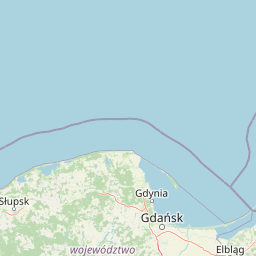
The reserve occupies a low-lying, flat post-peatland landscape characteristic of the Wybrzeże Słowińskie (Słowińskie Coast) mesoregion. Its terrain reflects the legacy of former peat extraction and gradual hydrological change, with most soils composed of peat derived from transitional and, to a lesser extent, raised bogs, with a limited share of low-bog peat. Across much of the surface these peat soils are undergoing murszenie, a process of decomposition and structural collapse that follows peatland drainage.
Długosz Królewski w Wierzchucinie Nature Reserve ecosystems, habitats, and plant life
Ecologically, the reserve is defined by a mosaic of peatland and wet forest habitats. Remnant fragments of raised bog and transitional bog survive alongside wet birch and mixed forest stands, with boggy pools and channels where aquatic and semi-aquatic vegetation persists. Characteristic plant communities include Sphagnum-dominated bog patches, stands of heather, sweet gale thickets, and waterlogged birch-alder transitions. The substrate and groundwater chemistry mirror the historical peatland continuum that once dominated much of the Wierzchucińska Forest.
Długosz Królewski w Wierzchucinie Nature Reserve wildlife and species highlights
The reserve supports nesting populations of several bird species of European concern, including European turtle dove (Streptopelia turtur), spotted flycatcher (Muscicapa striata), and red-backed shrike (Lanius collurio), with the locally uncommon green sandpiper (Tringa ochropus) also breeding in the wetland mosaic.
The mammal fauna is dominated by typical lowland forest and bog-edge species such as red deer, wild boar, European hare, and eastern hedgehog, alongside predators including red fox, raccoon dog, European badger, European otter, least weasel, and pine marten. Amphibians include common toad, green toad, edible frog, moor frog, and common frog, while reptiles are represented by sand lizard, slow worm, common European adder, and grass snake.
Długosz Królewski w Wierzchucinie Nature Reserve conservation status and protection priorities
The reserve plays an important role in conserving peatland biodiversity in the Baltic coast region, where centuries of peat cutting, drainage, and afforestation have reduced once-extensive raised and transitional bogs to small, isolated fragments. By protecting a coherent block of post-peatland forest with its associated bog vegetation and fauna, the area offers refuge for species that have become rare or locally extinct elsewhere in Gdańsk Pomerania, including royal fern, crested buckler fern, and several European-scale nesting birds.
Its conservation significance is reinforced by overlapping designations: the area lies within the buffer zone of the Nadmorski Landscape Park and the Nadmorski Protected Landscape Area, and overlaps with the Natura 2000 habitat site Piaśnickie Łąki (PLH220021), embedding the reserve in a multi-tiered regional and European protection framework.
Top sights and standout views in Długosz Królewski w Wierzchucinie Nature Reserve
A rare floristic stronghold for royal fern and interrupted clubmoss in the Pomeranian region, Długosz Królewski w Wierzchucinie combines small size with outsized botanical importance. Its surviving bog mosaics, peat-soil processes, and rich peatland-associated bird and amphibian fauna make it a quietly distinctive node within the Baltic coastal conservation network.