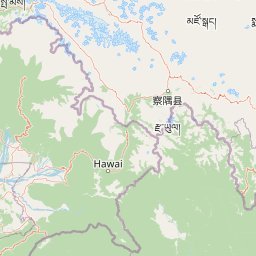
Why Mehao Wildlife Sanctuary stands out
Mehao Wildlife Sanctuary is best known for its role as the protected buffer around Mehao Lake and for the extraordinarily wide altitudinal range that allows tropical and temperate ecosystems to coexist within a single sanctuary. It is recognized as a stronghold for several rare eastern Himalayan species, including the Mishmi takin, red panda, clouded leopard, and hornbills. The sanctuary is also notable for its orchid-rich forests, its unusually rich lichen flora, and its layered forest types that transition from tropical evergreen to temperate coniferous forest. These features together give Mehao a strong reputation as one of Arunachal Pradesh's most biodiverse protected landscapes.
Mehao Wildlife Sanctuary history and protected-area timeline
Mehao Wildlife Sanctuary was formally declared in 1980 with the specific conservation objective of protecting the biodiversity around Mehao Lake. The sanctuary designation reflected growing recognition of the lake's ecological value, including its catchment forests and the wildlife populations they supported.
Over time, Mehao has come to be recognized as one of Arunachal Pradesh's most ecologically significant protected areas, particularly for threatened eastern Himalayan species and for the altitudinal diversity of its forests. Its management is administered through the Arunachal Pradesh Department of Environment and Forest, which oversees the sanctuary as part of the state's broader protected-area network.
Mehao Wildlife Sanctuary landscape and geographic character
The landscape of Mehao Wildlife Sanctuary is shaped by an exceptionally wide altitudinal gradient that climbs from lower subtropical valleys to high mountain ridges. Lower elevations carry the character of tropical evergreen forest, with dense canopy and high humidity, while mid-elevations shift toward sub-tropical and temperate broad-leaved forest. The highest zones give way to temperate coniferous forest, where the character of the vegetation becomes more open and the climate cooler.
The sanctuary's defining physical feature is Mehao Lake, which sits within a forested catchment and shapes the surrounding microclimate. Its waters and the moist environment they sustain support a richer concentration of species and contribute to the sanctuary's reputation as a high-value habitat. Steep forested slopes, densely vegetated valleys, and elevated ridges create a varied terrain that reinforces the sanctuary's strong sense of ecological layering. The scenic character of Mehao is one of closely packed green slopes, lake-fed mist, and the altemating textures of tropical and temperate forest stands.
Mehao Wildlife Sanctuary ecosystems, habitats, and plant life
Mehao Wildlife Sanctuary is characterized by a remarkable vertical stratification of ecosystems. In relatively short horizontal distances, it transitions from tropical evergreen forest at lower elevations to sub-tropical and temperate broad-leaved forests in the middle zones, and onward to temperate coniferous forest near the higher ridges. Each band supports distinct ecological communities, making the sanctuary an unusually compact representation of eastern Himalayan forest diversity.
The flora of Mehao is highly varied. The sanctuary supports valuable plant species including Coptis teeta, Taxus baccata, several Terminalia species, Altingia excelsa, Magnolia species, Castanopsis indica, Michelia champaca, and Dillenia indica, among many others. It is also recognized for its rare orchid varieties, which contribute to the sanctuary's reputation as a botanically rich protected landscape. Moisture-loving species dominate the lower and middle elevations, while cooler-adapted conifers and broad-leaves take over higher up.
The sanctuary's lichen flora is also notably diverse, with studies documenting hundreds of species across its altitudinal range. The mid-altitude band around fourteen hundred to sixteen hundred meters shows peak lichen diversity, and the central zone near Mehao Lake supports more lichen species than peripheral areas, likely reflecting reduced disturbance and favorable microclimatic conditions. This ecological richness extends to its butterflies, reptiles, and the broader food web that the forest mosaic supports.
Mehao Wildlife Sanctuary wildlife and species highlights
Mehao Wildlife Sanctuary supports a particularly rich community of eastern Himalayan fauna, owing to the diversity of habitats compressed within its altitudinal gradient. The sanctuary is home to several large and ecologically significant mammals, including the tiger, leopard, clouded leopard, Asian elephant, gaur, sloth bear, and Mishmi takin, an endemic and threatened ungulate of the eastern Himalaya.
A number of more elusive and forest-dependent species also inhabit the sanctuary, including the red panda, marbled cat, capped langur, slender loris, white-browed gibbon, musk deer, barking deer, and serow. The mix of predator, herbivore, and primate species reflects the structural complexity of the forest and the wider connectivity of habitats within the sanctuary.
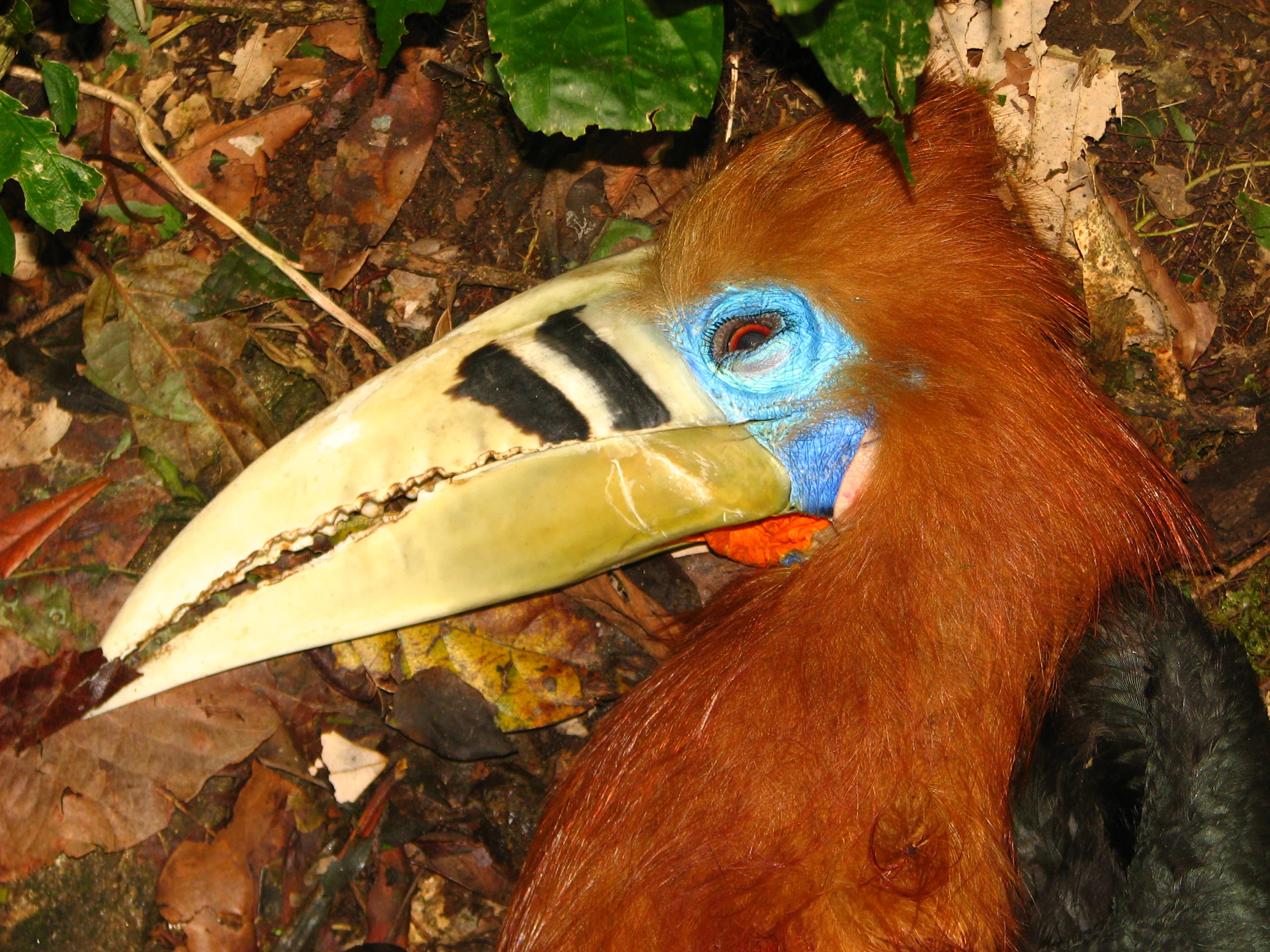
Mehao is also notable for its birdlife and reptiles. The Rufous-necked Hornbill has been documented in the sanctuary, and hornbills in general are considered a signature presence of these eastern Himalayan forests. Reptile records include the king cobra, python, and great whip snake, while the butterfly fauna includes species such as the common peacock and Paris peacock. Together, the sanctuary's wildlife profile highlights Mehao's importance as a refuge for both charismatic large mammals and a broader suite of forest-dependent species.
Mehao Wildlife Sanctuary conservation status and protection priorities
Mehao Wildlife Sanctuary's conservation significance lies in its role in protecting the catchment and biodiversity around Mehao Lake, an ecologically valuable high-altitude lake in Arunachal Pradesh. By safeguarding contiguous forest ranging from tropical evergreen to temperate coniferous types, the sanctuary preserves an unusually compact representation of eastern Himalayan biodiversity within a single protected boundary.
The sanctuary supports populations of threatened and flagship species such as the Mishmi takin, red panda, clouded leopard, and various hornbill species, making it an important refuge within the wider eastern Himalayan conservation landscape. It also contributes to the conservation of rare orchids and a notably rich lichen flora, the latter accounting for a meaningful proportion of India's documented lichen diversity. The mid-altitude moist forests and the lake-influenced microclimate appear to be especially important for biodiversity concentration, and lower human disturbance around the central zone is considered a key factor in sustaining these patterns.
Mehao's conservation importance extends beyond the sanctuary itself, contributing to habitat connectivity and ecological integrity in the broader Dibang Valley region, itself part of one of the world's most significant biodiversity hotspots.
Mehao Wildlife Sanctuary cultural meaning and human context
Mehao Wildlife Sanctuary lies within the broader Dibang Valley region, an area with deep local cultural roots tied to the forests, rivers, and lake landscapes of eastern Arunachal Pradesh. The surrounding communities have long interacted with the forests and the lake environment, and the designation of the sanctuary forms part of a broader regional relationship between human settlement and the eastern Himalayan landscape. The sanctuary can reasonably be understood as a reflection of both local ecological identity and wider recognition of the area's natural significance.
Top sights and standout views in Mehao Wildlife Sanctuary
A defining highlight of Mehao Wildlife Sanctuary is the altitudinal layering of ecosystems, with tropical evergreen, subtropical, temperate broad-leaved, and temperate coniferous forests all present within one protected area. Mehao Lake itself is a central highlight, shaping microclimate, supporting lichen and plant diversity, and anchoring the sanctuary's conservation purpose.
The sanctuary is also distinguished by its rare and emblematic wildlife, including the Mishmi takin, red panda, clouded leopard, sloth bear, white-browed gibbon, hornbills, and king cobra. Its orchid-rich forests and unusually rich lichen flora add another layer of botanical distinction, reinforcing Mehao's profile as one of Arunachal Pradesh's most ecologically significant protected landscapes.
Best time to visit Mehao Wildlife Sanctuary
The cooler and drier months between October and March are widely regarded as the most comfortable period for visiting Mehao Wildlife Sanctuary. Within this window, the forest is typically more accessible, the climate is milder, and wildlife viewing conditions are generally favorable. Summers can be substantially warmer at lower elevations, while higher elevations retain cooler conditions year-round. Because the sanctuary spans a significant altitudinal range, conditions can vary substantially across zones, making the cooler months the period that offers the most balanced experience across the landscape.