Mori Atlas logo
Nature reserveRezerwat przyrody Mszar Bogdaniec

Examining the unique bog and dune terrain within the Greater Poland Voivodeship geography.

Rezerwat przyrody Mszar Bogdaniec: An Atlas Overview of Protected Peatland Landscapes

Rezerwat przyrody Mszar Bogdaniec protects a significant transitional peatland nestled within the Wysoczyzna Kaliska mesoregion. This nature reserve, situated against a backdrop of inland dunes in the Greater Poland Voivodeship, provides a critical refuge for rare bog flora and specialized wetland fauna. The site illustrates the ecological interplay between waterlogged basins and sandy upland ridges, serving as a distinct geographic feature in the broader Wielkopolska landscape.

peat bogtransitional bograised bog elementswetland reserveSphagnum mossesprotected landscape
A graphic illustration showing a large waterfall cascading down a rocky mountain face, framed by birch trees in the foreground and a forest at the base.

Rezerwat przyrody Mszar Bogdaniec

Nature reserve

Park overview

Structured park overview, official facts, and landscape profile for Mszar Bogdaniec Nature Reserve

Mszar Bogdaniec Nature Reserve park facts, protected area profile, and essential visitor context

Review the core facts for Mszar Bogdaniec Nature Reserve, including designation, size, terrain, visitor scale, habitats, and operating context in one park-focused overview.

About Mszar Bogdaniec Nature Reserve

Mszar Bogdaniec is a compact yet ecologically valuable nature reserve situated in the agricultural landscape of central Wielkopolska. Although it spans only around 22 hectares, the reserve concentrates a remarkable amount of biodiversity into a very small footprint, making it an interesting example of peatland conservation in a heavily cultivated region. The site lies within the broader Dąbrowy Krotoszyńskie Protected Landscape Area, a wider network of protected countryside that includes oak-dominated forest complexes and inland dune systems.

The defining ecological feature is a transitional peat bog with patches of raised bog, occupying an elongated depression at the foot of a sand dune belt. This combination of bog and adjacent dunes creates a clear ecological gradient, with wet, acidic, nutrient-poor peatland in the depression and drier sandy habitats along the surrounding ridges. The reserve is actively conserved, which means that management actions are taken to preserve its open bog character and prevent encroachment by shrubs or trees.

Beyond its hydrology and soils, the reserve is significant for its flora. The bog supports specialized plant communities, including several species of cottongrass, club-rush, sedge, and cranberry-family shrubs, along with bog bean and other characteristic wetland plants. The bog surface is dominated by Sphagnum mosses, which form the living structure of the peatland and serve as a key indicator of its conservation status. The carnivorous round-leaved sundew is one of the most notable plant species recorded at the site, reflecting the nutrient-poor, acidic conditions of the peat.

Surrounding the bog are patches of pine and birch woodland on the sandy ridges, which contribute to habitat diversity. Typical trees in these transitional zones include Scots pine and silver birch, with alder buckthorn also present as a characteristic species of bog edge habitats. Together, the mosaic of open wetland, bog woodland, and adjacent dune vegetation gives the reserve a layered ecological structure, despite its modest size.

Quick facts and research context for Mszar Bogdaniec Nature Reserve

Mszar Bogdaniec is a peatland nature reserve in the Greater Poland Voivodeship, in west-central Poland. It lies in Krotoszyn County within the gmina of Zduny, between the villages of Baszków and Konarzew. Established in 1995, the reserve covers around 21.98 hectares and is classified as a peat bog reserve with active conservation management. It lies within the Dąbrowy Krotoszyńskie Protected Landscape Area and occupies a depression at the base of a dune belt on the Wysoczyzna Kaliska mesoregion.

Protection and recognition

Documented terrestrial protection scope and international recognition data

Rezerwat przyrody Mszar Bogdaniec Protection Status and Designation Records

Rezerwat przyrody Mszar Bogdaniec holds a registered terrestrial protection scope within the national protected area registry. Structured records compile documented designation history, management frameworks, and official recognition sources for the reserve.

Protection details

Protection scope
Terrestrial
Park context

Deeper park guide and search-rich context for Mszar Bogdaniec Nature Reserve

Mszar Bogdaniec Nature Reserve history, landscape, wildlife, and travel context

Explore Mszar Bogdaniec Nature Reserve through its history, landscape character, ecosystems, wildlife, conservation priorities, cultural context, and seasonal travel timing in a structured park guide built for atlas discovery and search intent.

Why Mszar Bogdaniec Nature Reserve stands out

The reserve is best known for its transitional peat bog (with raised bog elements), a habitat type that is increasingly rare in the intensively farmed Greater Poland lowlands. Botanically, it is notable for sundews, Sphagnum mosses, and other specialized bog flora. Zoologically, it is recognized for its birdlife, which includes cranes, teal, water rails, grebes, mallards, and an exceptionally rich amphibian and reptile fauna for such a small area.
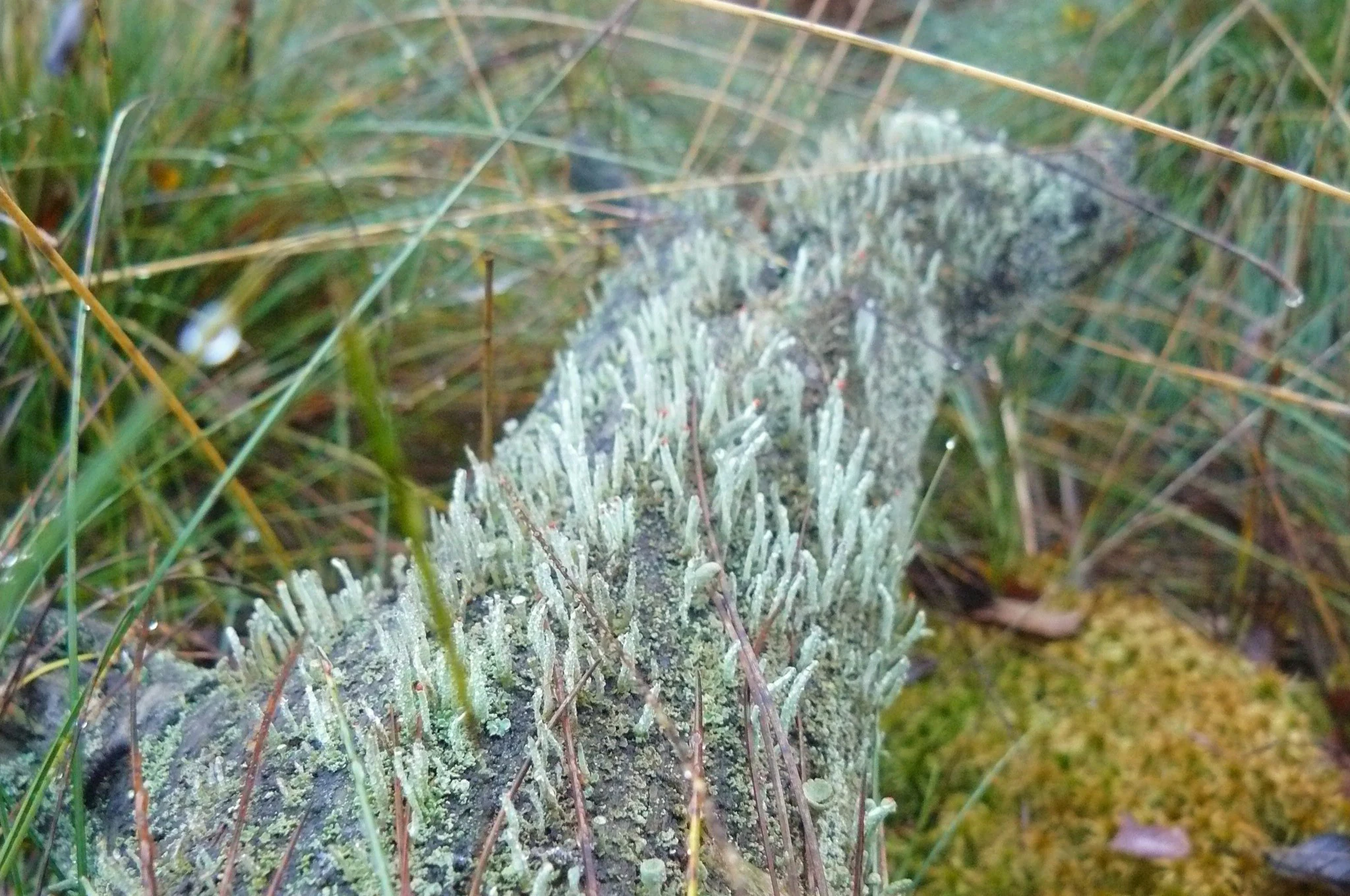
A close up view of a decaying log covered in pale, finger-like lichen surrounded by wetland grasses and moss.
Reindeer lichen growing on a fallen branch within Mszar Bogdaniec Nature Reserve.

Mszar Bogdaniec Nature Reserve history and protected-area timeline

The reserve was created on 11 December 1995 by regulation of the Minister of Environmental Protection, Natural Resources, and Forestry, and was formally announced in the Polish Monitor of 1996. Its establishment recognized the value of the existing peat bog complex, which had survived in a landscape that was otherwise largely converted to agriculture. The decision reflected a broader wave of small-area peatland protections across Poland during the mid-1990s, when many of the country's remaining transitional and raised bogs were given legal protection.

Since its designation, the site has been managed under active conservation measures, meaning that specific interventions are applied to maintain the open, waterlogged character of the bog. This approach is typical for peatland reserves in Poland, where natural hydrological disruptions from drainage in the surrounding farmland can otherwise accelerate vegetation succession and peat degradation.

Mszar Bogdaniec Nature Reserve landscape and geographic character

The reserve occupies a shallow, elongated depression set against a low belt of inland dunes, characteristic of the Wysoczyzna Kaliska mesoregion. The dune ridges enclose the peatland on the southern side, framing a flat, waterlogged basin filled with Sphagnum mosses and other bog vegetation. This classic bog-and-dune juxtaposition creates a compact but visually distinct micro-landscape within the otherwise flat agricultural surroundings of Wielkopolska.

The bog itself shows a clear zonation typical of transitional peatlands, with wetter central zones and slightly drier margins where bog vegetation grades into bog woodland and sandy heath. The surrounding dunes support dry pine-birch woodland and acidic sandy soils. The overall impression is of a small, enclosed ecological pocket shaped by glacial and post-glacial sand deposition combined with later peat accumulation.
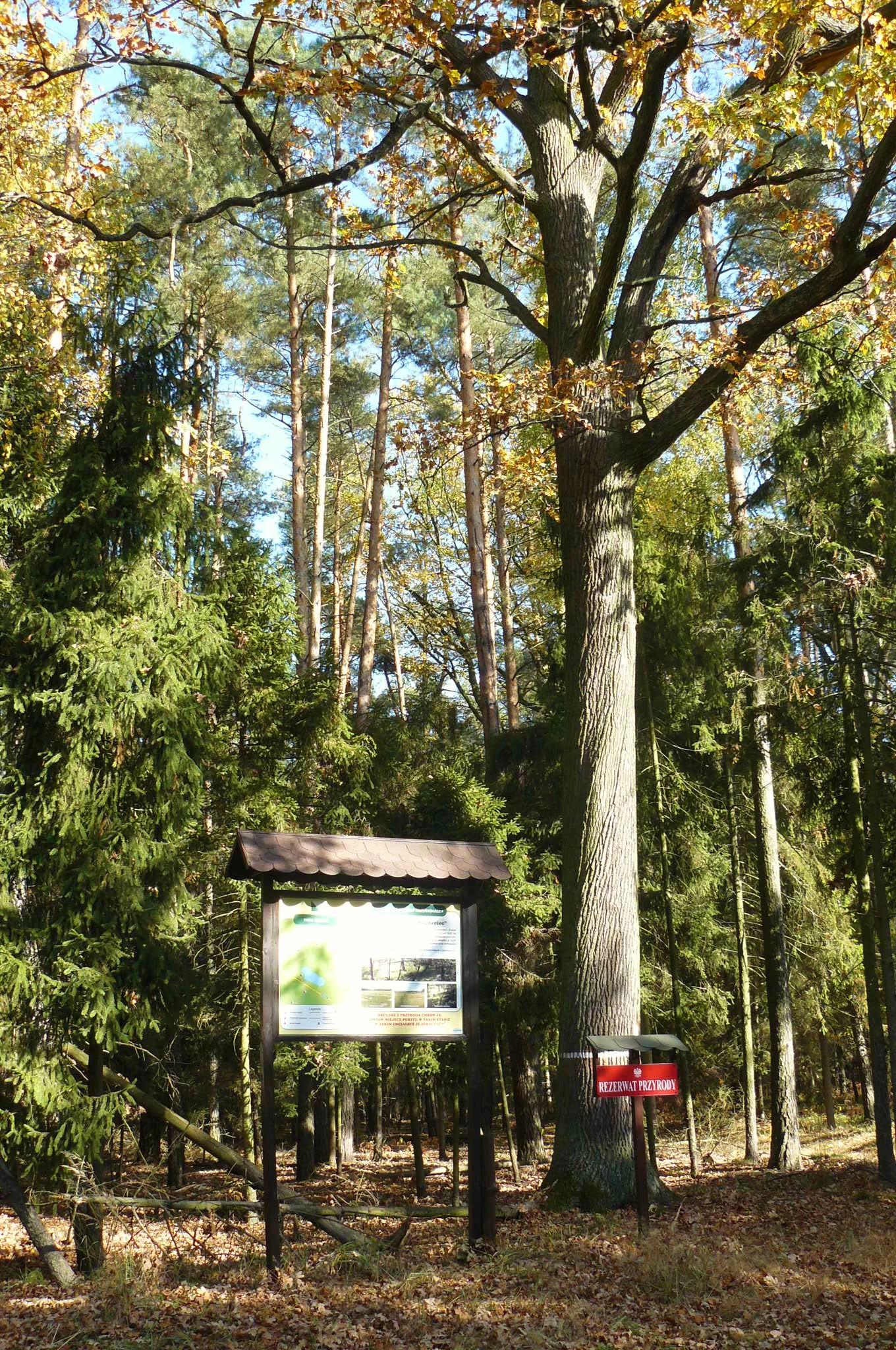
A forest clearing with an information board under a brown roof and a small red sign labeled REZERWAT PRZYRODY, set against a background of tall pine and deciduous trees in autumn.
Information board and red nature reserve sign at the entrance of Mszar Bogdaniec.

Mszar Bogdaniec Nature Reserve ecosystems, habitats, and plant life

The ecological core of the reserve is its transitional peat bog, a habitat that in Poland supports a specialized and often threatened suite of species. The bog is built on a base of Sphagnum mosses, which dominate the wet surface and create the conditions for peat formation. Embedded in the moss layer are insectivorous plants such as round-leaved sundew, alongside cottongrasses, sedges, bogbean, and several club-rush species.

Around the open bog, the vegetation transitions into wet woodland and bog scrub, including Scots pine, silver birch, and alder buckthorn. These wooded edges are an important habitat in their own right, supporting lichens, mosses, and bog-specific invertebrates. The combination of permanently waterlogged peat, Sphagnum-dominated surfaces, sandy ridges, and bog woodland gives the reserve a layered habitat mosaic that supports a far higher species diversity than its small size would suggest.

Mszar Bogdaniec Nature Reserve wildlife and species highlights

The reserve supports an unusually rich fauna for a peatland of its size, with 44 bird species documented, including species of conservation interest such as cranes, common teal, solitary snipes, water rails, grebes, and mallard. The mix of open water, wet bog margins, and surrounding bog woodland creates feeding and nesting habitats for a wide range of wetland and woodland bird species.

Amphibians are particularly well represented, with smooth newts, common toads, green toads, pool frogs, water frogs, common frogs, moor frogs, and European tree frogs recorded in the reserve's wet habitats. Reptiles include grass snakes, slow worms, viviparous lizards, and sand lizards, reflecting the diversity of both wet and dry microhabitats within the small area. The reserve's bog fauna, combined with its surrounding dune ridges, makes it a useful reference site for understanding how peatland ecosystems function even at a small spatial scale.

Mszar Bogdaniec Nature Reserve conservation status and protection priorities

Mszar Bogdaniec is protected primarily for the conservation of its transitional peat bog habitat, which is among the most threatened ecosystems in lowland Poland. The reserve falls within the Dąbrowy Krotoszyńskie Protected Landscape Area, embedding the site within a wider landscape protection framework that helps regulate land use around the bog.

Active conservation management is applied to counteract the effects of historical drainage and surrounding agricultural pressure. By maintaining hydrological conditions and preventing the bog from being overgrown by woody vegetation, the reserve preserves the ecological processes that sustain Sphagnum growth, peat accumulation, and the specialized flora and fauna that depend on these conditions. The reserve also helps maintain a refuge for bog-specific bryophytes, lichens, sundews, amphibians, and wetland birds in an otherwise intensively cultivated region.

Mszar Bogdaniec Nature Reserve cultural meaning and human context

The reserve lies in a rural part of Greater Poland, between the villages of Baszków and Konarzew, in a region historically shaped by agriculture and forestry. The Dąbrowy Krotoszyńskie Protected Landscape Area name refers to the oak forests (dąbrowy) historically associated with this part of Wielkopolska, indicating that the area has long been valued for its woodlands and natural features alongside its farmland. The Polish term 'mszar', from which the reserve takes its name, refers to a mire or quaking bog and reflects the local botanical vocabulary for peatland landforms.

Top sights and standout views in Mszar Bogdaniec Nature Reserve

Among the reserve's standout qualities are its Sphagnum-dominated transitional peat bog, its well-preserved bog-and-dune micro-landscape, the presence of round-leaved sundew as a flagship bog species, and an unusually rich bird and amphibian fauna for such a small protected area. Its location within the broader Dąbrowy Krotoszyńskie landscape protection network adds a wider environmental context, situating the bog within a recognized Polish protected landscape.

Best time to visit Mszar Bogdaniec Nature Reserve

The reserve's character shifts subtly with the seasons, reflecting typical Polish peatland ecology. Spring and early summer are the most active periods for amphibians and many wetland birds, when calling frogs, displaying cranes, and breeding waterfowl are most conspicuous. Summer brings full development of the bog vegetation, including cottongrass and other characteristic plants. Autumn atmospheric conditions highlight the moss-dominated surfaces and the contrast between bog and dune habitats. Winter conditions, with snow, can make the flat bog and surrounding sand dunes easier to read visually, although winter visits require appropriate preparation in this part of Poland.
Monthly climate preview

Long-term representative point measurements for temperature and precipitation patterns

Rezerwat przyrody Mszar Bogdaniec Climate Normals and Annual Temperature Rhythm

Historical climatology records outline measured monthly temperature swings and precipitation averages across the protected area coordinate. Reviewing the complete twelve-month profile provides deeper insight into long-term climate normals and seasonal variations.
Annual mean9 °C
-2 °C21 °C
Jan-2°
Feb-1°
Mar
Apr
May14°
Jun18°
Jul21°
Aug20°
Sep15°
Oct
Nov
Dec-1°
Warmest month
July

20.6 °C

Coolest month
January

-2.3 °C

Wettest month
July

2.6 mm/day

Driest month
April

1.1 mm/day

Park location guide

Geography guide, regional context, and park location map for Mszar Bogdaniec Nature Reserve

Mszar Bogdaniec Nature Reserve park geography, regions, and map view in Poland

Understand where Mszar Bogdaniec Nature Reserve sits in Poland through a broader geographic reading of the surrounding landscape, nearby location context, and its mapped position within the national park landscape.

How Mszar Bogdaniec Nature Reserve fits into Poland

Poland, officially the Republic of Poland, is a Central European country spanning from the Baltic Sea in the north to the Carpathian Mountains in the south. It borders Germany, Czech Republic, Slovakia, Ukraine, Belarus, Lithuania, and Kaliningrad Oblast. The country has a temperate climate, diverse landscapes, and is known for its rich history, cultural heritage, and strong economic position within the EU.

Wider geography shaping Mszar Bogdaniec Nature Reserve in Poland

Poland occupies 312,696 km2 in Central Europe, extending from the Baltic Sea coast in the north to the Sudetes and Carpathian Mountains in the south. It borders Germany to the west, Czech Republic and Slovakia to the south, Ukraine and Belarus to the east, and Lithuania and Kaliningrad Oblast to the northeast. The landscape includes lowland plains, uplands, and mountain ranges.

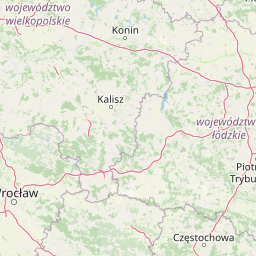
Map view of Mszar Bogdaniec Nature Reserve

Use this park location map to pinpoint Mszar Bogdaniec Nature Reserve in Poland, understand its exact geographic position, and read its mapped placement within the surrounding landscape more clearly.

Pigeon | © OpenStreetMap contributors

Location context for Mszar Bogdaniec Nature Reserve

Greater Poland Voivodeship

Visual reference collection showcasing rare peatland habitats and dune terrain

Rezerwat przyrody Mszar Bogdaniec Landscape and Scenery Photography

Browse detailed imagery documenting the distinctive transitional peat bog and surrounding dune micro-landscape of Rezerwat przyrody Mszar Bogdaniec. Visual documentation reveals the protected terrain, specialized bog flora, and wetland habitats characteristic of the Greater Poland lowlands.

A close up view of a decaying log covered in pale, finger-like lichen surrounded by wetland grasses and moss.

A view through dense foreground branches of white-barked birch trees into a sunlit marshy area with golden-brown vegetation and background pine trees.

A forest clearing with an information board under a brown roof and a small red sign labeled REZERWAT PRZYRODY, set against a background of tall pine and deciduous trees in autumn.

Park atlas

Compare nearby regional reserves and connected wetland landscapes across the surrounding terrain.

Parks Near Rezerwat przyrody Mszar Bogdaniec and Surrounding Protected Areas

Browsing other protected areas near Rezerwat przyrody Mszar Bogdaniec reveals a wider network of regional wetland habitats and lowland reserves. Extending the geographic review helps place local peatland ecosystems into a broader regional conservation context.
A watercolor painting showing a soft, bright, and airy landscape with a lush forest, grassy meadow, and a winding river against a light, pale sky.
Nature reserveGreater Poland Voivodeship
About 6.9 km away#1 closest

East

Miejski Bór Nature Reserve: Mapped Protected Landscapes in the Greater Poland Voivodeship

A detailed look at lowland forest geography and botanical conservation boundaries

Miejski Bór Nature Reserve represents an essential fragment of the Wysoczyzna Kaliska, protecting a distinctive pine and broadleaf woodland mosaic. This site is valued for its protected understory plant populations and ancient burial mounds, grounding its ecological importance within the regional forest matrix of the Greater Poland Voivodeship.

Area
0.244 km²
Established
1987
Relief
Lowland
Scope
Terrestrial
A soft, painterly watercolor illustration showing a landscape with distant rolling hills, a green meadow, and a winding path in the foreground against a white background.
Nature reserveGreater Poland Voivodeship
About 11 km away#2 closest

East

Dąbrowa Smoszew Nature Reserve: Mapped Geography and Protected Forest Landscapes

A key ecological node in the Greater Poland Voivodeship landscape

Dąbrowa Smoszew protects a compact fragment of mature oak forest, providing a natural refuge with 120 to 150 year old tree stands. Positioned within the Wysoczyzna Kaliska, the area maintains a complex mosaic of woodland flora and forest communities that function as a critical part of the regional conservation network, bridging local habitat history with contemporary Natura 2000 protected status.

Area
0.139 km²
Established
1963
Relief
Lowland
Scope
Terrestrial
A watercolor painting showing a soft, stylized forest landscape with gentle rolling hills in the background, leafy trees in the midground, and ferns and grasses in the foreground.
Nature reserveGreater Poland Voivodeship
About 39 km away#3 closest

West

Rezerwat przyrody Dębno: A Key Protected Nature Reserve in Greater Poland, Poland

Mapping lowland forest ecosystems and ancient oak habitats

Rezerwat przyrody Dębno provides a look into the lowland ecology of Greater Poland through its protected status and renaturation initiatives. This nature reserve, characterized by its ancient oaks and Magnocaricetum communities, highlights the importance of small-scale forest conservation and provides valuable insight into the regional geography of the Kotlina Żmigrodzka.

Area
0.08 km²
Established
1961
Relief
Lowland
Scope
Terrestrial
Watercolor painting of a calm pond with green trees on the banks, reeds in the foreground, and distant rolling hills.
Nature reservePoland
About 41 km away#4 closest

Northwest

Rezerwat przyrody Miranowo: Protected Peatland Ecosystem and Botanical Nature Reserve

A preserved wetland landscape in the Polish lake country

Located near the shores of Lake Dolskie Wielkie, Rezerwat przyrody Miranowo represents a significant protected area focused on the conservation of rare calcareous peatland habitats. The reserve sustains a dense collection of over 230 vascular plant species, offering a unique opportunity to study relict vegetation in a managed wetland environment within Poland.

Area
0.099 km²
Established
1972
Relief
Lowland
Climate
Temperate
Nature reserveWielkopolska Voivodeship
About 47 km away#5 closest

East

Rezerwat przyrody Majówka: Protected Nature Reserve and Woodland Geography

Geographic landscape mapping in Wielkopolska Voivodeship

Rezerwat przyrody Majówka offers a focused look at small-scale forest conservation in central-western Poland. Protecting approximately eight hectares of uneven-aged mixed woodland, the reserve serves as a vital ecological sentinel for silver fir and spruce populations, providing valuable data on lowland forest structure and regional biodiversity within the Kotlina Grabowska lowland mesoregion.

Area
0.08 km²
Established
1958
Relief
Lowland
Climate
Temperate
A soft watercolor painting of a serene wetland landscape with scattered deciduous trees, low grassy banks, and calm water, rendered in light green and muted earth tones against a white background.
Nature reserveGreater Poland Voivodeship
About 47 km away#6 closest

North

Dębno nad Wartą Nature Reserve: Geographic Profile and Protected Landscape Boundaries

Riparian forest sanctuary in the Warta river valley.

Located in the heart of the Greater Poland Voivodeship, this faunistic nature reserve protects a vital fragment of lowland floodplain forest. The site is defined by its complex oak, ash, and elm canopy, which supports rare invertebrate populations rarely found in the broader surrounding region. This atlas entry provides a detailed look at its protected boundaries, hydrologic landscape, and integral role within the Warta river corridor.

Area
0.217 km²
Established
1974
Relief
Lowland
Climate
Temperate
A horizontal watercolor painting depicting a wide river flowing through a lush landscape with distant rolling hills and a soft pink sky.
Nature reserveWielkopolska Voivodeship
About 47 km away#7 closest

Northwest

Ostoja Rogalińska: Protected Nature Reserve and Glacial Terrain in Wielkopolska Voivodeship

Mapped riparian corridors, moraine ridges, and bird habitats.

Ostoja Rogalińska offers a detailed look at lowland glacial morphology, featuring twelve mapped lakes, wandering inland dunes, and the extensive Warta River floodplain. This protected area within Wielkopolska Voivodeship preserves ancient pedunculate oaks alongside diverse wetland and forest ecosystems, providing a clear geographic view of one of the region's most important Natura 2000 bird sanctuaries.

Area
217.63 km²
Established
2007
Relief
Lowland
Climate
Temperate
Protected landscapeGreater Poland Voivodeship
About 51 km away#8 closest

North

Żerkowsko-Czeszewski Park Krajobrazowy Protected Landscape: Map and Geographic Overview

Glacial river valleys and moraine hills in Greater Poland

The Żerkowsko-Czeszewski Park Krajobrazowy protects a diverse range of lowland terrains, from the broad Warta River floodplain to the elevated moraine ridges known locally as the Swiss Żerków. This protected area serves as a vital corridor for riparian forests and avian habitats, framed by historic cultural sites across the Greater Poland Voivodeship landscape. Access detailed geographic insights into the riverine networks, forest reserves, and moraine formations that define this notable Polish protected area.

Area
157.95 km²
Established
1994
Relief
Upland
Climate
Temperate

Common questions about visiting, size, designation, and location context for Mszar Bogdaniec Nature Reserve

Mszar Bogdaniec Nature Reserve FAQs for park facts, access, geography, and protected area context

Find quick answers about Mszar Bogdaniec Nature Reserve, including protected-area facts, park geography, trail and visitor context, and how the park fits into its surrounding country and regional landscape.
MoriAtlas Explorer

Continue Your Protected Areas Search Across the Global Atlas

Deepen your exploration by continuing the structured search for national parks and protected areas worldwide. Utilize the comprehensive filtering capabilities to compare different conservation landscapes and refine your understanding of global park geography. Discover more about the distribution and characteristics of protected natural areas.

Global natural geography