Why Schatthangwald Egge stands out
The reserve is best known for its old, structurally rich oak-beech forest on a steep, shaded north slope, and especially for its conspicuous deadwood component. Standing and lying deadwood in all stages of decay are explicitly highlighted as a defining feature of the site in the landscape plan, and the reserve's protection regime specifically requires that this deadwood be preserved through full natural decomposition. This focus on undisturbed near-natural deciduous woodland, combined with the presence of a small silting waterbody between forest slope and rail corridor, gives the reserve a distinct profile as a compact refugium for forest interior conditions and deadwood-dependent ecological processes in the Arnsberg area.
Schatthangwald Egge history and protected-area timeline
The area that today forms Schatthangwald Egge was first placed under a lighter level of protection in 1998, when it was included as part of the Arnsberg landscape protection area under the original Arnsberg landscape plan issued by the Hochsauerland district's lower landscape authority. For more than two decades it functioned as part of this broader protection zone, which covered a wide range of countryside around Arnsberg.
In 2021, the Hochsauerland district council adopted a comprehensively revised Arnsberg landscape plan. As part of this process, the steep oak-beech forest slope northeast of Oeventrop was reclassified as a dedicated Naturschutzgebiet and given the name Schatthangwald Egge. This change raised the level of legal protection on the site and brought in specific binding conservation objectives, including the prominent requirement to leave all deadwood standing or lying in the forest until it reaches full natural decomposition. Only safety-related measures on the slope itself are exempt from this duty.
The 2021 designation formalized a recognition that had grown over the previous decades: that the old, structurally diverse deciduous woodland, with its unusually high deadwood component and its small silting waterbody, merited protection beyond the scope of a general landscape protection area. The reserve is now administered within the framework of North Rhine-Westphalian nature conservation law and is one of more than three dozen Naturschutzgebiete within the city of Arnsberg.
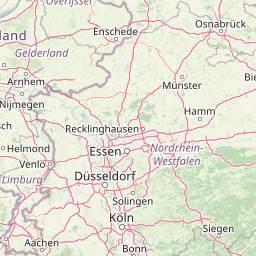
Schatthangwald Egge landscape and geographic character
The reserve's landscape is defined by the geometry of the Ruhr valley at this point of the northern Sauerland. The valley wall rises steeply behind Oeventrop, and the protected area occupies a north-facing portion of that wall. North-facing slopes in this region receive little direct sunlight, remain cooler and moister than surrounding terrain, and are traditionally associated with denser, more shade-tolerant forests. The name Schatthangwald itself refers to this shady-slope forest character.
At the foot of the slope, the reserve meets the artificial but ecologically significant line of the Obere Ruhrtalbahn railway. Between the wooded slope and the railway embankment lies a fragment of standing water that is gradually filling with sediment and organic material, representing a small wetland margin within an otherwise steep dry forest setting. Above this transition zone, the slope rises sharply, with mature oak and beech closing over almost the entire surface.
Schatthangwald Egge ecosystems, habitats, and plant life
Ecologically, the site is characterized by a near-natural, structurally diverse broadleaf woodland dominated by oak and beech. The canopy is dense and continuous, and as a result the shrub and herb layers underneath remain thin and patchy, densifying only in spots and along the lower slope where slightly more light and moisture are available. This internal pattern, uniform canopy with sparse understory, is typical of well-developed forest interior conditions on shaded slopes.
A defining ecological theme is deadwood. Standing and lying deadwood are present across the entire decay sequence, providing habitat structures for fungi, invertebrates, cavity-nesting species, and other organisms tied to wood decomposition. The reserve also encompasses a partially silted-up waterbody between slope and rail line, adding a stillwater and wetland element that complements the dry, steep forest above.
Beyond its internal character, the site functions as a local refugium for habitat types and species associated with mature broadleaf forest. The 2021 landscape plan explicitly cites its role in conserving FFH habitat types outside formally designated FFH sites and in protecting occurrences of rare animal species, connecting the reserve to the broader European conservation framework of the Arnsberg region.
Schatthangwald Egge wildlife and species highlights
Wildlife information specific to Schatthangwald Egge is limited in the public sources, and the reserve itself does not list species inventories directly. What can be drawn from the official landscape plan is a framing emphasis on rare animal species and the conservation value of the woodland complex for fauna more generally, particularly species associated with old deciduous forests and deadwood-rich habitats.
The high load of standing and fallen deadwood in all decay stages creates conditions favorable to saproxylic invertebrates, fungi, and cavity-using species, and the shaded, humid microclimate on the north-facing slope supports the kind of cool, dark forest interior conditions many woodland-dependent species require. The adjacent silting waterbody likely supports amphibians and aquatic invertebrates, although specific species records are not provided in the available documentation.
Because the reserve is small and embedded in a more heavily used regional landscape, its role for wildlife is best understood as a compact but persistent core of forest-interior habitat within the broader Arnsberg protected-area network, rather than as a site defined by large mammal sightings or conspicuous bird colonies.
Schatthangwald Egge conservation status and protection priorities
Schatthangwald Egge was elevated to nature reserve status in 2021 specifically because the Hochsauerland district's revised Arnsberg landscape plan recognized the site as a near-natural, structure- and species-rich deciduous forest complex of regional conservation value. The plan's stated purposes for designating the area are to protect and maintain such a woodland complex together with its stillwater habitat, and to contribute to the sustained conservation of FFH habitat types outside designated FFH sites as well as occurrences of rare animal species.
The protection regime is unusually concrete for a small reserve. The landscape plan includes a binding requirement that all deadwood in the forest be preserved through its full natural decomposition. The only exception covers safety measures along the slope itself, where falling trees or branches might pose a hazard. This stipulation effectively enshrines undisturbed forest dynamics as the central management goal of the reserve.
In the wider context of the Hochsauerland district, the reserve forms part of a dense network of Naturschutzgebiete in and around Arnsberg, complementing other forest, wetland, heath, and valley-bottom sites. As one of more than three dozen such areas in the municipality alone, it contributes to a landscape-scale conservation fabric in which small, ecologically focused reserves like Schatthangwald Egge maintain forest interior habitats along the slopes of the Ruhr and its tributaries.
Top sights and standout views in Schatthangwald Egge
Schatthangwald Egge is a compact but sharply defined old oak-beech forest reserve on a steep north-facing slope of the Ruhr valley near Oeventrop, in Arnsberg.
Its defining features are an unusually dense canopy, a sparse understory, and an abundance of standing and fallen deadwood in every stage of decay, together with a small, silting waterbody at the foot of the slope where the forest meets the upper Ruhr valley railway. The 2021 landscape plan binds the reserve to preserving this deadwood through full natural decomposition, making undisturbed forest turnover a central part of the site's identity and conservation purpose.
Best time to visit Schatthangwald Egge
The reserve is valued primarily for its ecological character rather than seasonal scenery, and most visitors are likely to be interested in forest structure, deadwood, and woodland ecology rather than seasonal display. Spring and early summer offer the most accessible conditions for walking and observation, with longer daylight, milder temperatures, and herbage that is easier to read before full summer leaf-out. Late autumn exposes more bare stems and deadwood patterns as foliage drops, which can also be rewarding for structurally focused visitors. As a steep, shaded slope with limited direct sunlight year-round, the site remains cool and damp through much of the year, and visitors should expect sheltered, dimly lit forest conditions in any season.