
Mori Atlas logo
Wildlife reserveNeely Lake Migratory Bird Sanctuary

Analyzing the ecological boundaries and terrain of a significant boreal waterfowl staging area

Neely Lake Migratory Bird Sanctuary: A Protected Wetland Landscape in Eastern Saskatchewan

Neely Lake Migratory Bird Sanctuary occupies a distinct position within the Mid-Boreal Upland ecoregion of eastern Saskatchewan. Spanning five square kilometers, the protected area centers on a shallow freshwater basin surrounded by a complex mosaic of mixed boreal forest and peatland. This sanctuary serves as a critical fall stopover and feeding ground for diverse migratory waterfowl, reflecting the importance of small lake ecosystems within the broader Canadian boreal fringe.

migratory bird sanctuarywaterfowl conservationboreal lakewetland habitatducks and geesestopover habitat

Neely Lake Migratory Bird Sanctuary

Wildlife reserve

Park overview

Structured park overview, official facts, and landscape profile for Neely Lake Migratory Bird Sanctuary

Neely Lake Migratory Bird Sanctuary park facts, protected area profile, and essential visitor context

Review the core facts for Neely Lake Migratory Bird Sanctuary, including designation, size, terrain, visitor scale, habitats, and operating context in one park-focused overview.

About Neely Lake Migratory Bird Sanctuary

Neely Lake Migratory Bird Sanctuary is a federally designated bird sanctuary in eastern Saskatchewan, Canada, focused on the protection and conservation of wetland habitat used by migratory waterfowl. The sanctuary takes its name from the shallow lake at its center and was created as part of a broader Canadian effort in the mid-twentieth century to safeguard key wetland sites along major migratory flyways.

The protected area covers about 5.02 square kilometers and is dominated by the lake itself and its sediment-covered shoreline. Small islands within the lake and surrounding wet meadows make up a comparatively small share of the total area but contribute meaningfully to the habitat mosaic, providing nesting cover, safe resting spots, and sheltered feeding edges for waterbirds. The surrounding region is characterized by mixed boreal forest and peatlands within the Mid-Boreal Upland ecoregion, giving the sanctuary a transitional character between the true boreal forest to the north and the aspen parkland and prairie landscapes further south.

Neely Lake has no major rivers feeding into or draining out of it, and its water levels fluctuate naturally through the seasons. This hydrological simplicity, combined with the lake's shallow depth, helps create the kind of calm, productive wetland conditions that waterfowl favor during migration. Although it is a relatively small sanctuary by national standards, it plays a focused role in the network of Canadian Migratory Bird Sanctuaries, particularly for species that rely on small to medium-sized boreal lakes during their annual cycle.

The sanctuary falls within Saskatchewan, a province with a long tradition of waterfowl conservation due to its position along important flyways and its abundance of wetland habitats, including large saline and freshwater lakes further west.

Quick facts and research context for Neely Lake Migratory Bird Sanctuary

Neely Lake Migratory Bird Sanctuary lies in eastern Saskatchewan, roughly 30 kilometers west-southwest of the town of Hudson Bay. The protected area covers approximately 5.02 square kilometers and is classified as an IUCN Category IV Habitat and Species Management Area. About 95 percent of its surface is open water or sediment-fringed shoreline, with wet meadows and small islands making up the remainder.

The sanctuary was established in 1952 and is administered by the Canadian Wildlife Service. It lies within the Mid-Boreal Upland ecoregion, where mixed boreal forest and peatland surround a shallow lake with no significant inflows or outflows. Its main ecological role is as a fall staging and feeding site for migratory waterfowl.

Protection and recognition

Documented conservation records and official protected area designations

Neely Lake Migratory Bird Sanctuary Protection Status and Recognition

Neely Lake Migratory Bird Sanctuary maintains documented protection status details compiled within global environmental databases. Verified registry records outline the official protected area designation history and administrative management context.

Protection details

WDPA ID
66908
Park context

Deeper park guide and search-rich context for Neely Lake Migratory Bird Sanctuary

Neely Lake Migratory Bird Sanctuary history, landscape, wildlife, and travel context

Explore Neely Lake Migratory Bird Sanctuary through its history, landscape character, ecosystems, wildlife, conservation priorities, cultural context, and seasonal travel timing in a structured park guide built for atlas discovery and search intent.

Why Neely Lake Migratory Bird Sanctuary stands out

Neely Lake is best known as an autumn staging area for migratory ducks, geese, and swans in eastern Saskatchewan. The shallow lake and its fringe of wet meadows provide reliable feeding habitat during a critical period of the fall migration. The sanctuary is also known for supporting a small but regular breeding population of Canada Geese and a diverse community of nesting ducks typical of the boreal-prairie transition, including species such as Bufflehead, Lesser Scaup, and Common Goldeneye.

Neely Lake Migratory Bird Sanctuary history and protected-area timeline

Neely Lake Migratory Bird Sanctuary was established in 1952 as one of two replacement sanctuaries created alongside the Opuntia Lake Migratory Bird Sanctuary. Both were set up to take over the protection role previously held by the Quill Lakes Migratory Bird Sanctuary, which was dissolved earlier in the same year.

The sanctuary was created under the framework of Canadian federal wildlife protection legislation and has been administered since its establishment by the Canadian Wildlife Service. Its creation reflected the mid-twentieth century Canadian approach to waterfowl conservation, which emphasized protecting representative wetland habitats across the country to secure stopover and breeding sites for migratory species.

Since its designation, Neely Lake has continued to function as a relatively quiet, low-profile sanctuary focused on its core ecological purpose rather than public visitation infrastructure.

Neely Lake Migratory Bird Sanctuary landscape and geographic character

Neely Lake sits within a landscape shaped by the boreal-prairie transition in eastern Saskatchewan. The terrain around the lake is a mosaic of mixed forest, dominated by boreal species, interspersed with peatlands and open wetland margins. This setting places the sanctuary firmly within the Mid-Boreal Upland ecoregion, where glacial landforms, shallow basins, and peat accumulation have produced a patchwork of lakes, wetlands, and woodlands.

The lake itself is shallow and broadly dish-shaped, lacking significant river inflows or outflows. Its water levels shift naturally through the year, which contributes to the fluctuating extent of shoreline and emergent vegetation. Sediment-covered shore fringes and small islands break up the open water, while wet meadows occur at its margins. Together these features create the calm, structurally varied wetland environment favored by waterfowl.

The broader surroundings are typical of the eastern Saskatchewan boreal fringe: low rolling terrain, mixed conifer and deciduous stands, muskeg, and a network of similar shallow lakes scattered across the countryside.

Neely Lake Migratory Bird Sanctuary ecosystems, habitats, and plant life

The ecological identity of Neely Lake Migratory Bird Sanctuary is centered on a shallow boreal lake and its associated wetland communities. Open water, sediment-fringed muddy and sandy shorelines, wet meadows, and small wooded or emergent islands together form the core habitat mosaic of the protected area.

The surrounding landscape supports mixed boreal woodland and peatland ecosystems typical of the Mid-Boreal Upland ecoregion. These forests are dominated by conifers such as spruce and pine, with deciduous species like aspen and birch mixed throughout, and the peatlands contribute to the moisture conditions that sustain the lake and its fringing wetlands.

Because the lake has limited hydrological connectivity, its water chemistry and nutrient dynamics are largely governed by internal processes and seasonal variation, giving it the character of a relatively self-contained boreal wetland system.

Neely Lake Migratory Bird Sanctuary wildlife and species highlights

Neely Lake's wildlife value is closely tied to its role as a migratory waterfowl habitat. In autumn, the sanctuary functions as an important staging and feeding area for ducks, geese, and swans that pause here during their southward migration. Canada Geese are among the most conspicuous users, and the lake also hosts other migratory species including Greater White-fronted Geese and Tundra Swans, alongside a variety of duck species.

Beyond migration, the lake supports a small but established breeding population of Canada Geese that return to the site in successive years. A number of duck species also nest at Neely Lake, among them Common Goldeneye, Lesser Scaup, Bufflehead, Common Merganser, Canvasback, Mallard, and Blue-winged Teal. The combination of open water, sheltered bays, and vegetated islands and shoreline provides the structural diversity these species need for nesting, brood-rearing, and feeding.

The wider boreal landscape around the lake contributes additional habitat for boreal songbirds, mammals, and other wildlife typical of eastern Saskatchewan, though the sanctuary designation itself primarily targets waterfowl conservation.

Neely Lake Migratory Bird Sanctuary conservation status and protection priorities

Neely Lake Migratory Bird Sanctuary is recognized within the Canadian protected-area framework under IUCN Category IV, classifying it as a Habitat and Species Management Area. Its conservation purpose is the long-term protection of wetland habitat for migratory waterfowl, a goal shared across the larger network of Canadian Migratory Bird Sanctuaries.

By safeguarding a representative boreal lake and its associated marsh and meadow habitats, the sanctuary contributes to maintaining stopover and breeding habitat along migration routes that cross Saskatchewan. Its establishment alongside Opuntia Lake in 1952 ensured continuity of federal protection in the region after the dissolution of the earlier Quill Lakes sanctuary.

Protection at Neely Lake limits activities that could degrade water quality, disturb nesting and staging waterfowl, or alter the wetland habitat on which the site's value depends. Administratively, the Canadian Wildlife Service oversees the sanctuary as part of its broader mandate to conserve migratory birds and their habitats in Canada.

Neely Lake Migratory Bird Sanctuary cultural meaning and human context

Saskatchewan has a strong cultural relationship with wetlands and waterfowl, rooted in generations of Indigenous knowledge of migratory bird cycles and in the more recent history of settler hunting, conservation, and stewardship. Lakes like Neely are part of the broader boreal-prairie landscape that has supported traditional land uses and local livelihoods across the region.

While the sanctuary itself is primarily a wildlife conservation site rather than a cultural heritage site, its presence reflects the broader recognition, shared by Indigenous communities and conservation authorities alike, of the importance of small boreal lakes to migratory bird populations.

Top sights and standout views in Neely Lake Migratory Bird Sanctuary

A compact, ecologically focused waterfowl sanctuary on a shallow boreal lake.

Key highlights include its location in the Mid-Boreal Upland ecoregion of eastern Saskatchewan, its role as a fall staging area for ducks, geese, and swans, and its small but consistent breeding population of Canada Geese and boreal-nesting ducks such as Bufflehead and Common Goldeneye. The sanctuary's mosaic of open water, sediment-fringed shore, islands, and wet meadows exemplifies the kind of small lake-based wetland system on which Canadian waterfowl conservation has long depended.

Best time to visit Neely Lake Migratory Bird Sanctuary

For birdwatching and general nature-oriented interest, the late summer and autumn months are the most ecologically significant period at Neely Lake, when the sanctuary becomes a staging and feeding area for migratory waterfowl. Conditions during this time can be cool, changeable, and increasingly wet as the boreal season shifts toward fall.

Summer offers a quieter experience with breeding birds and the surrounding boreal forest at its most lush, though access and infrastructure around remote sanctuaries like Neely Lake are limited and visitors should treat such sites as primarily conservation areas rather than developed destinations.

Monthly climate preview

Long-term representative temperature and monthly precipitation baseline measurements

Neely Lake Migratory Bird Sanctuary Annual Climate Normals and Weather Patterns

Representative coordinates record long-term temperature swings from deep sub-zero minimums to warm summer maximums alongside measured monthly precipitation variations. Examining the complete twelve-month climatology dataset reveals deeper temporal patterns across the protected landscape.
Annual mean1 °C
-18 °C19 °C
Jan-18°
Feb-15°
Mar-7°
Apr
May10°
Jun16°
Jul19°
Aug18°
Sep11°
Oct
Nov-6°
Dec-15°
Warmest month
July

18.6 °C

Coolest month
January

-18.1 °C

Wettest month
June

2.9 mm/day

Driest month
February

0.5 mm/day

Park location guide

Geography guide, regional context, and park location map for Neely Lake Migratory Bird Sanctuary

Neely Lake Migratory Bird Sanctuary park geography, regions, and map view in Canada

Understand where Neely Lake Migratory Bird Sanctuary sits in Canada through a broader geographic reading of the surrounding landscape, nearby location context, and its mapped position within the national park landscape.

How Neely Lake Migratory Bird Sanctuary fits into Canada

Canada is a federal parliamentary constitutional monarchy spanning North America from the Atlantic to the Pacific and Arctic Oceans. With a population of over 41 million, it is officially bilingual in English and French at the federal level. The country gained independence from the United Kingdom through a gradual process culminating in 1982.

Wider geography shaping Neely Lake Migratory Bird Sanctuary in Canada

Canada occupies the northern portion of North America, sharing its longest international border with the United States. The country extends from the Atlantic Ocean to the Pacific Ocean and northward into the Arctic Ocean, giving it the longest coastline of any nation.

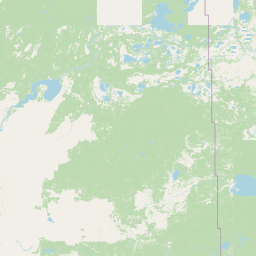
Map view of Neely Lake Migratory Bird Sanctuary

Use this park location map to pinpoint Neely Lake Migratory Bird Sanctuary in Canada, understand its exact geographic position, and read its mapped placement within the surrounding landscape more clearly.

Pigeon | © OpenStreetMap contributors

Location context for Neely Lake Migratory Bird Sanctuary

Saskatchewan
Park atlas

Compare surrounding regional wetland habitats and boreal sanctuaries

Explore Protected Areas and Parks Near Neely Lake Migratory Bird Sanctuary

Browse adjacent protected landscapes and wetland reserves located across the eastern Saskatchewan boreal fringe. Comparing these neighboring conservation areas reveals broader patterns in regional waterfowl flyways and shallow lake ecosystems.
Wildlife reserveSaskatchewan
About 151 km away#1 closest

West

Raven Island National Wildlife Area: Geographic Overview and Protected Island Landscape

Essential conservation geography within Saskatchewan

Located in the saline prairie basins of central Saskatchewan, Raven Island National Wildlife Area is a 112-hectare protected habitat. This site plays a strategic role in the Lenore Lake migratory bird complex, preserving crucial island breeding grounds within a gentle prairie landscape. Explore the physical boundaries and ecological context of this Canadian wildlife reserve.

Area
1.12 km²
Established
1982
IUCN
IV
Scope
Terrestrial
Protected areaEstonia
About 170 km away#2 closest

South

Zugvogelschutzgebiet Upper Rousay Lake Protected Area: Regional Map and Geography

Examining the protected landscapes and territorial extent in Estonia.

This resource provides a comprehensive view of the Zugvogelschutzgebiet Upper Rousay Lake protected area in Estonia. Focus on the defined boundaries, mapped terrain, and regional geographic context that identify this site. We provide a structured overview for researchers and geography enthusiasts to understand the spatial distribution and protected land status of this specific wetland environment.

Area
5.73 km²
Established
1948
Relief
Lowland
Climate
Temperate
National parkManitoba
223 km away#3 closest

Southeast

Riding Mountain National Park: Manitoba National Park Protected Landscape and Geography

Discover mapped boundaries and regional context for this national park.

Delve into the geography of Riding Mountain National Park, a protected national park located in Manitoba. This page provides detailed insights into its mapped boundaries and its significance as a protected landscape within the region. Understand its place within the broader natural terrain and atlas context of Manitoba, offering a focused view for geographic exploration and conservation landscape study.

Area
2,969 km²
Established
1933
IUCN
II
Visitors
336.6K annual
Wildlife reserveSaskatchewan
About 230 km away#4 closest

West

St. Denis National Wildlife Area: Geographic Profile and Protected Prairie Landscape

A research-focused wildlife reserve in central Saskatchewan.

St. Denis National Wildlife Area represents a critical nexus for prairie ecology, defined by its dense network of shallow ponds and native grassland communities. As a dual-designated National Wildlife and Research Area, this site offers a clear window into the delicate balance of wetland habitats, saline soil conditions, and agricultural landscape integration across Saskatchewan.

Area
3.6 km²
Established
1967
IUCN
IV
National parkSaskatchewan
233 km away#5 closest

Northwest

Prince Albert National Park: Saskatchewan National Park and Protected Area Geography

Mapped Landscape Boundaries and Regional Natural Terrain Context

Prince Albert National Park represents a distinct national park entity within Saskatchewan, vital for understanding regional geography and protected landscapes. This page offers detailed insights into its mapped boundaries and the surrounding natural terrain. It is designed to help users comprehend the park's specific protected area identity and its contribution to the broader geographic atlas of Canada's natural spaces.

Area
3,874 km²
Established
1927
IUCN
II
Visitors
287.4K annual
Wildlife reserveSaskatchewan
About 252 km away#6 closest

South

Zugvogelschutzgebiet Indian Head: A Wildlife Reserve in Saskatchewan Prairie Landscapes

Examining mapped boundaries and protected wetland terrain

Zugvogelschutzgebiet Indian Head represents a significant conservation footprint within the Saskatchewan prairie region. This wildlife reserve integrates managed wetlands and historic nursery grounds, showcasing how agricultural landscapes support migratory bird populations. Gain insight into its terrain, ecoregion placement, and the geographic history of these protected lands through our structured atlas data.

Area
0.32 km²
Established
1924
Relief
Lowland
Scope
Terrestrial
Protected areaSutherland
263 km away#7 closest

West

Zugvogelschutzgebiet Sutherland: Regional Geography and Protected Area Context

Historic migratory bird habitat in the Saskatchewan prairie landscape

The Zugvogelschutzgebiet Sutherland protected area serves as an important migratory refuge on the Canadian Prairies. While the site integrates diverse land uses including a zoo and research facilities, its remaining native grasslands continue to provide essential feeding and resting grounds for geese, swans, and ducks. This analysis maps the sanctuary within its broader regional context.

Area
1.3 km²
Established
1924
Relief
Lowland
Climate
Temperate
Wildlife reserveSaskatchewan
281 km away#8 closest

Southwest

Wascana Lake Migratory Bird Sanctuary: Geographic Overview and Protected Wetland Boundaries

A vital wildlife reserve located in Regina, Saskatchewan

Explore the unique geography of Wascana Lake Migratory Bird Sanctuary, where a managed reservoir creates a rich wetland habitat for migratory waterfowl. This protected area stands as a significant ecological site within the Saskatchewan prairie landscape, offering a rare look at riparian terrain integration inside a major urban center.

Area
1.04 km²
Established
1956
Relief
Lowland
Climate
Temperate

Common questions about visiting, size, designation, and location context for Neely Lake Migratory Bird Sanctuary

Neely Lake Migratory Bird Sanctuary FAQs for park facts, access, geography, and protected area context

Find quick answers about Neely Lake Migratory Bird Sanctuary, including protected-area facts, park geography, trail and visitor context, and how the park fits into its surrounding country and regional landscape.
MoriAtlas Explorer

Continue Your Protected Areas Search Across the Global Atlas

Deepen your exploration by continuing the structured search for national parks and protected areas worldwide. Utilize the comprehensive filtering capabilities to compare different conservation landscapes and refine your understanding of global park geography. Discover more about the distribution and characteristics of protected natural areas.

Global natural geography