Why Nightcap National Park stands out
Nightcap National Park is best known for its extensive ancient Gondwanan rainforests, which form part of the World Heritage-listed Gondwana Rainforests of Australia. The park contains the largest surviving population of Albert's lyrebird, one of Australia's most distinctive ground-dwelling birds. It also protects the critically endangered Nightcap oak (Eidothea hardeniana), a tree species only discovered in 2000 and found nowhere else in the world. The park's Protesters Falls and Minyon Falls are notable waterfalls accessible via walking tracks, and the area holds exceptional significance as the site of Australia's first rainforest anti-logging protests. The park's botanical diversity is extraordinary, with approximately 70 percent of its area covered by various rainforest communities and roughly 10 percent of New South Wales' known native vascular flora represented within its boundaries.
Nightcap National Park history and protected-area timeline
The history of Nightcap National Park is deeply intertwined with the modern Australian conservation movement. Before becoming a protected area, the Nightcap Range was traversed by the Historic Nightcap Track, established in 1871 as a bridle path connecting the Richmond and Tweed valleys. A telegraph line followed this route in 1874, and remnants of this historic link are now preserved as part of the park's walking tracks. The modern conservation movement in the upper Northern Rivers region began in 1972 as activists sought to prevent further logging of the region's ancient rainforests. Terania Creek at Nightcap became the site of Australia's first rainforest anti-logging demonstrations in 1979, sparking what participants called the three-year Rainforest War. The campaign, supported by former NSW Premier Neville Wran and involving up to 100 activists forming human barricades, successfully halted logging operations. Nightcap became a national park in April 1983 under the Forestry Revocation and National Park Reservation Act 1983, incorporating former Goonimbar State Forest. Additional areas were added later that year, with further expansions in 1998 through the inclusion of Whian Whian State Forest sections. UNESCO extended World Heritage protection to include the western half of Nightcap in 1989 as part of the Gondwana Rainforests of Australia extension.
Nightcap National Park landscape and geographic character
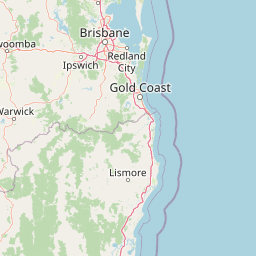
The landscape of Nightcap National Park is defined by its position on the south-eastern edge of the Mount Warning erosion caldera, one of the most prominent volcanic remnants in eastern Australia. The terrain consists of gullies, ridges, and a dramatic massif of peaks that form the Nightcap Range, a spur of the Great Dividing Range. The park's highest point, Mount Burrell (known locally as Blue Knob), reaches 933 metres above sea level and offers sweeping views across the surrounding terrain. The underlying geology comprises basalt and rhyolite lava flows from the ancient Tweed volcano, which have produced diverse soil types supporting distinct vegetation communities. Rhyolitic soils support warm temperate rainforest covering much of the park, while the nutrient-rich basalt soils enable subtropical rainforest to thrive. The landscape is dissected by numerous watercourses that feed waterfalls including the prominent Minyon Falls, which drops approximately 100 metres from a subtropical rainforest valley, and Protesters Falls, named for the conservation activists who fought to protect the area.
Nightcap National Park ecosystems, habitats, and plant life
Nightcap National Park supports an extraordinary diversity of ecosystems and habitats, with approximately 70 percent of its area covered by various rainforest communities representing some of the most intact Gondwanan rainforests in Australia. The park contains warm temperate rainforest on rhyolitic soils and subtropical rainforest on basalt-derived soils, along with areas of wet sclerophyll forest and smaller patches of dry sclerophyll forest. The park also contains lowland species from the former Big Scrub, once the largest area of subtropical lowland rainforest in Australia but now reduced to less than 1 percent of its original extent. The botanical significance is remarkable, with over 650 known plant species recorded, including numerous ferns and various orchid species. Approximately 10 percent of all known native vascular flora in New South Wales occurs within the park, and 72 species are identified as threatened with extinction. The park forms part of the Forests of East Australia Biodiversity Hotspot, recognized in 2011 as the 35th biodiversity hotspot globally due to exceptional concentrations of endemic species facing significant habitat loss.
Nightcap National Park wildlife and species highlights
Nightcap National Park supports an exceptional diversity of wildlife, with over 140 bird species, more than 40 mammal species, 27 reptile species, and 23 frog species recorded within its boundaries. The park contains the largest known population of Albert's lyrebird (Menura alberti), a threatened ground-dwelling bird species listed under the NSW Threatened Species Conservation Act. Other significant bird species include the critically endangered red goshawk and black-breasted button-quail, the endangered regent honeyeater, and the rufous scrub-bird. Mammal species of conservation concern include the endangered spotted-tailed quoll, vulnerable koala, vulnerable Parma wallaby, vulnerable yellow-bellied glider, and the rufous bettong. The park also supports significant bat diversity, with numerous microbat and megabat species recorded, several of which are threatened. Reptile species include the vulnerable Stephens' banded snake and the three-toed snake-tooth skink, while notable frog species include the endangered Fleay's barred frog, giant barred frog, and Loveridge's frog. Many of these species are threatened by the chytrid fungus that has affected frog populations throughout the Gondwana Rainforests World Heritage area.
Nightcap National Park conservation status and protection priorities
Nightcap National Park holds significant conservation importance as part of the Gondwana Rainforests of Australia World Heritage Site, which was inscribed in 1986 and added to the Australian National Heritage List in 2007. The park is classified as IUCN Category II and protects outstanding examples of subtropical rainforest with high biodiversity and unique geological landforms showing evolutionary links to Gondwana. The park conserves the full range of native plants and animals in the region, with 72 species identified as threatened with extinction. The critically endangered Nightcap oak (Eidothea hardeniana), discovered in 2000, exists only in a single population on the southern side of the Nightcap Range. The park's management objectives focus on maintaining and rehabilitating ecosystems according to World Heritage convention principles, conserving native species and habitats, controlling invasive weeds and pest species, and preventing fire from affecting rainforest communities. The 2019-2020 Australian bushfire season significantly impacted the park, though many native species including the Nightcap oak demonstrated remarkable regenerative capacity.
Nightcap National Park cultural meaning and human context
Nightcap National Park holds deep cultural significance for several Aboriginal communities who have inhabited the region for thousands of years. The Wiyabal people lived at the Nightcap Range for at least 4,000 years, maintaining a spiritual connection to the land that continues today. The region also served as the homeland for the Nganduwal (Yugambeh language) people, Galibal language speakers, and Githabul-speaking peoples. The park provides rock shelters that were inhabited by Aboriginal people, and the landscapes, plants, and animals of the area feature prominently in Aboriginal culture and dreaming stories. The area contains sacred sites of high cultural significance. Historically, the park was part of the Historic Nightcap Track, established in 1871 as the first bridle track connecting the Richmond and Tweed valleys, with a telegraph line following in 1874. This historic route now forms part of the walking track system within the park. The park also lies within the territory of the Bundjalung nation, reflecting the broader cultural landscape of the Northern Rivers region.
Top sights and standout views in Nightcap National Park
Nightcap National Park offers several outstanding natural highlights, most notably its ancient Gondwanan rainforests forming part of a World Heritage Site. The park contains the largest known population of Albert's lyrebird, a distinctive ground-dwelling bird species. Protesters Falls, accessible via walking track, commemorates the conservation blockades that helped establish the park, while Minyon Falls drops approximately 100 metres from a subtropical rainforest valley with road-accessible viewing. The critically endangered Nightcap oak, discovered in 2000 and found nowhere else on Earth, represents a botanical treasure within the park. The Mount Nardi section provides access to Tuntable Falls and the Pholis Walk to Pholis Gap via sealed road from Nimbin. The Historic Nightcap Track, dating to 1871, preserves a piece of the region's pioneering history and is now maintained as a walking trail through the park.
Best time to visit Nightcap National Park
Nightcap National Park can be visited throughout the year, though the wet summer months from November to March bring the region's highest rainfall, exceeding 2,500 millimetres annually, which contributes to the park's lush rainforest character but may affect some walking track conditions. The cooler winter months from June to August typically offer more comfortable hiking conditions, though temperatures can still be warm given the subtropical setting with mean temperatures ranging from 19 to 30 degrees Celsius and humidity often remaining high. Summer storms and high rainfall events can occur, and visitors should be aware of the potential for flash flooding in gullies and creek crossings. The park's rainforests are evergreen, so scenery remains verdant throughout the year. The best time for wildlife viewing may vary, but the wetter months often increase frog activity while birdlife can be observed year-round. Visitors should check current conditions and track accessibility before planning visits, particularly following periods of extreme weather or bushfire activity.