
Why Průchodnice stands out
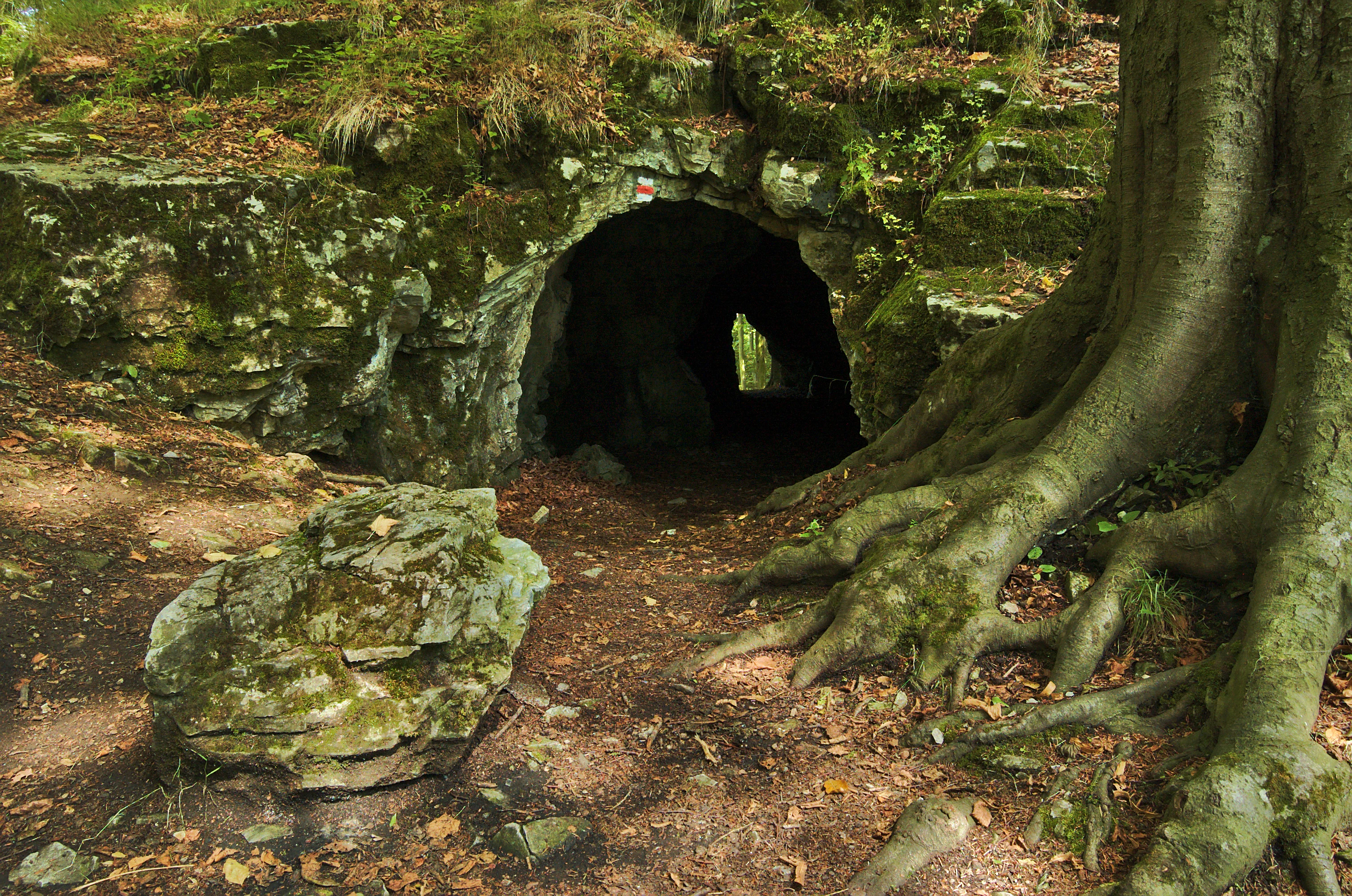
Průchodnice is known for a compact Devonian limestone formation that rises out of a beech forest and contains three short cave passages. Two of these passages can be walked through end to end, which is what gave the locality its name and its identity as a walk-through karst feature. The reserve is also recognized for the combination of rocky outcrops, beech woodland, and cave-dwelling wildlife in a relatively small area. Wintering populations of rare bats in the caves and the presence of unusual rock-loving plants make this a small but ecologically interesting karst site within the broader Zábřežská vrchovina.
Průchodnice history and protected-area timeline
Průchodnice was declared a nature reserve on 31 October 1985 by decree of the District National Committee in Prostějov. The legal designation created an IUCN Category IV protected area focused on the conservation of a specific habitat, in this case the Devonian limestone outcrops, the small karst caves, and the surrounding woodland.
Beyond the formal protection process, the locality has a longer human history. Archaeological traces of prehistoric settlement have been discovered in the surroundings of the reserve, including skeletal remains of Quaternary animals and fragments of pottery vessels. These finds show that the area has been known and visited by people for a very long time, well before the modern nature conservation framework was established.
Today the reserve is administered by the Regional Authority of the Olomouc Region, which oversees its continued protection within the broader context of the regional protected-area network.
Průchodnice landscape and geographic character
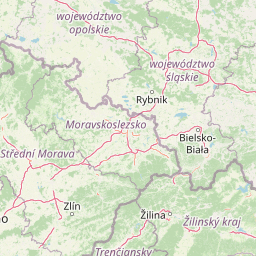
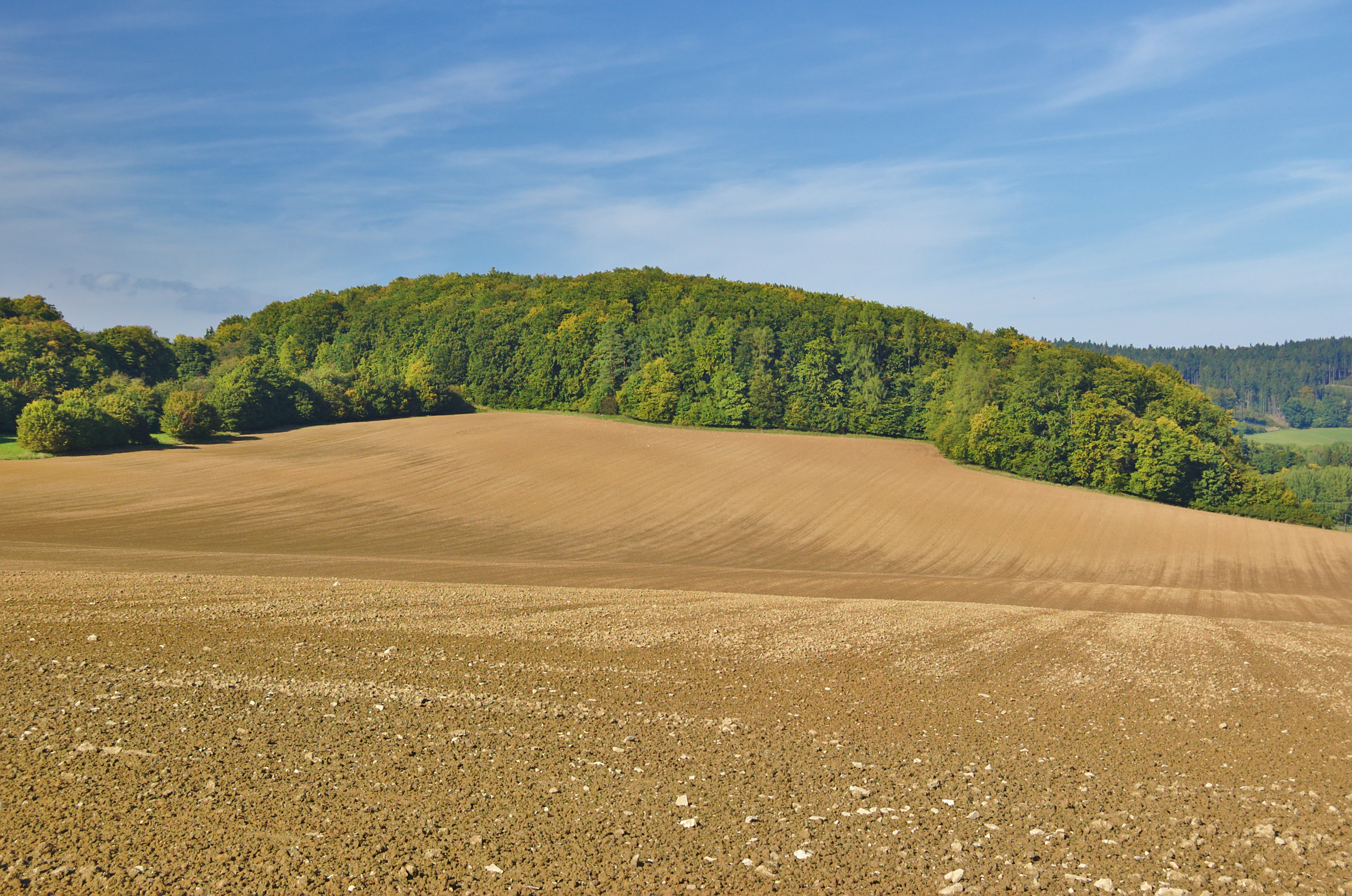
The landscape of Průchodnice is shaped by the modest but pronounced difference between forested hill slopes and bare limestone ridges. The hill Stráň, locally also called Průchodnice, rises into a landscape that is part of the southern Zábřežská vrchovina, a highland region that is geologically varied but generally gentler than the better-known Moravian karst areas to the east.
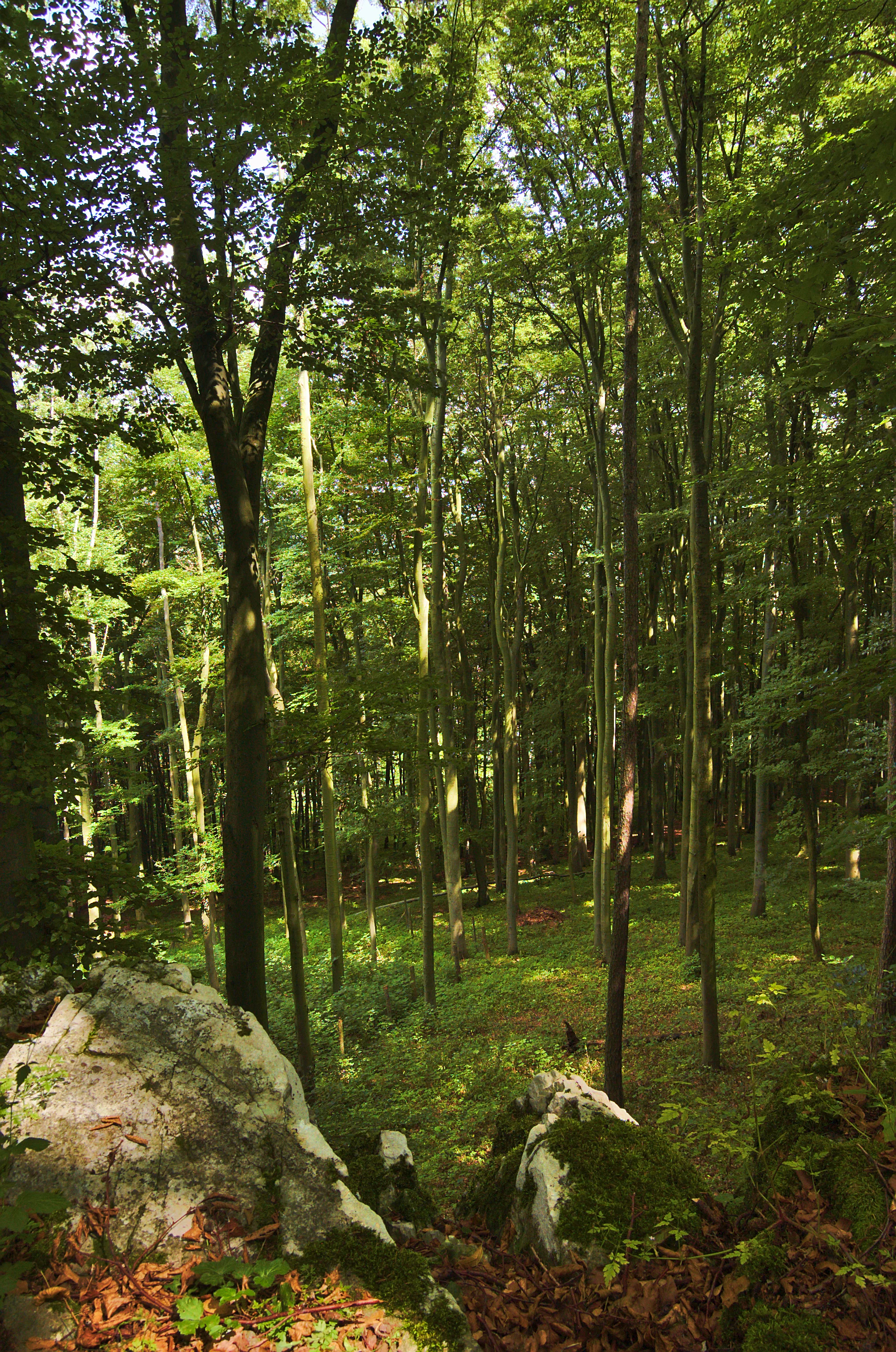
The defining landform is the Devonian limestone ridge that emerges from the wooded slope. It consists of two rocky outcrops; the larger extends about 120 meters along the hillside and reaches roughly 12 meters above ground at its highest point. Between and into these rock masses extend three short cave passages without classic dripstone decoration, giving the locality a more rugged, raw appearance than the ornate caves elsewhere in Moravia. Around the rocky core, smooth beech-forested slopes enclose the reserve and shape the way visitors experience the site: a transition from typical wooded highland terrain to a surprising, exposed limestone spine.
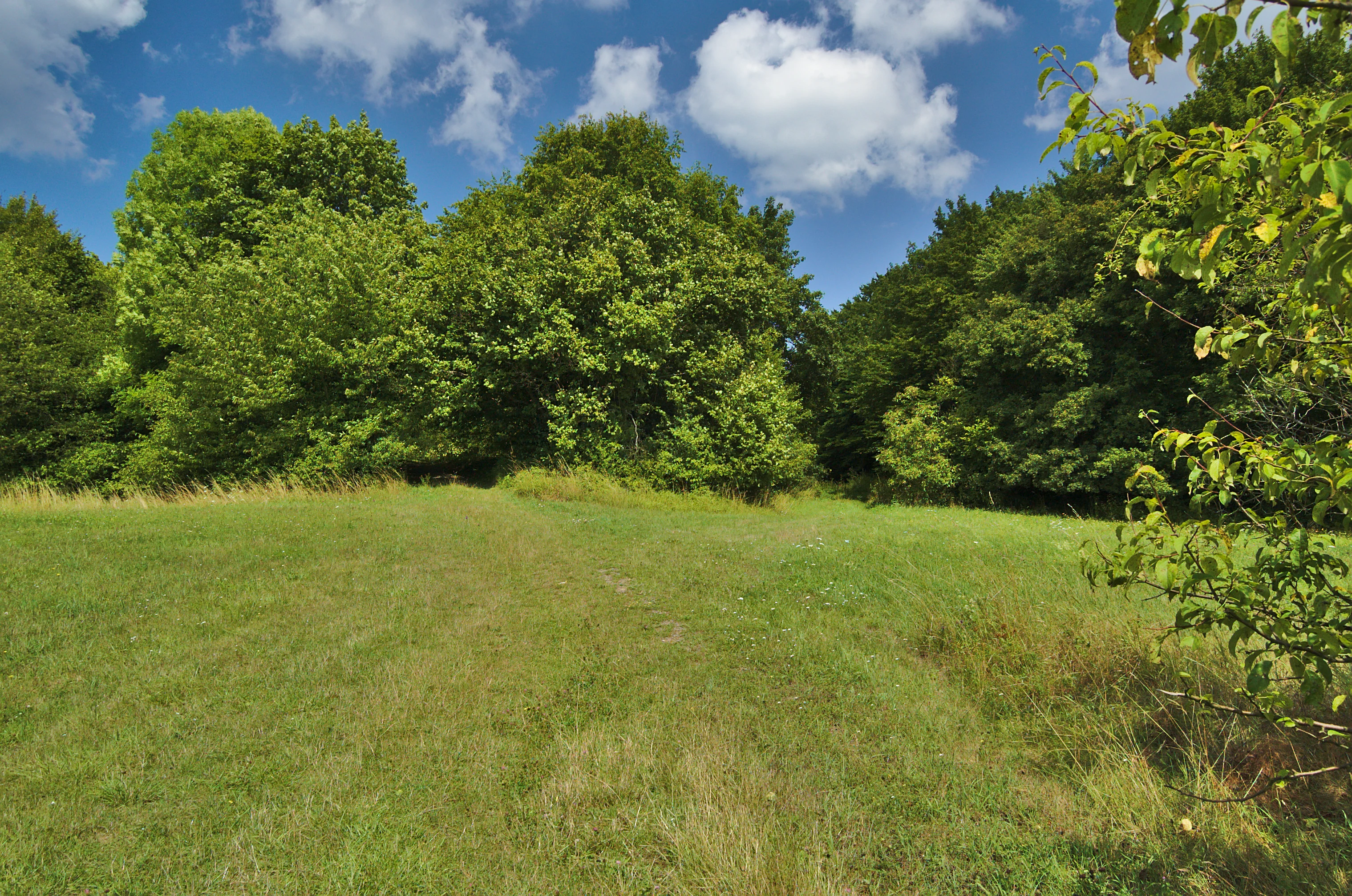
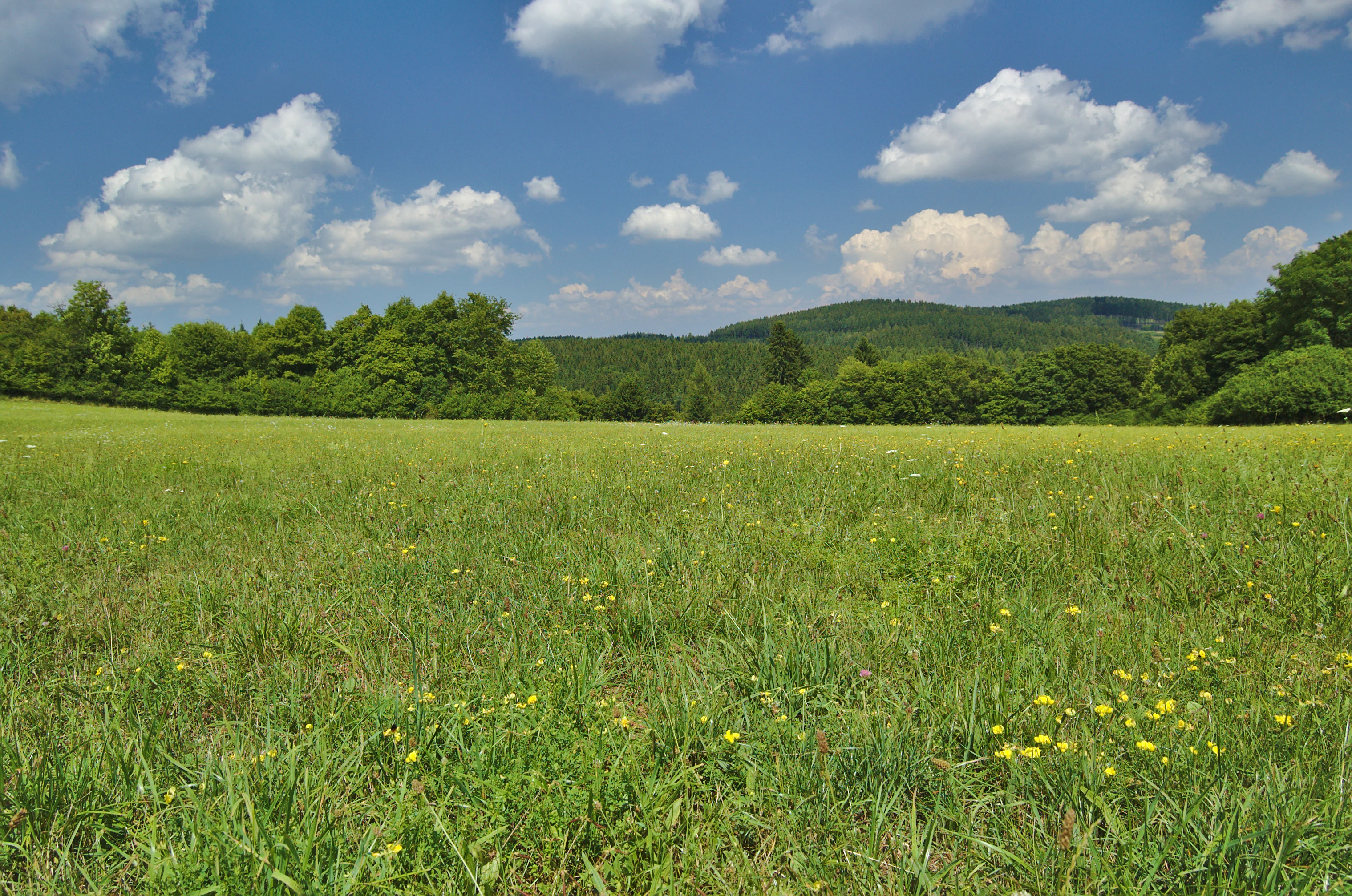
The wider setting is rolling highland rather than dramatic mountain terrain. It is the kind of landscape where subtle geological features like Průchodnice stand out because most of the surroundings are clothed in continuous forest cover, with occasional openings, small valleys, and views toward the hills around Konice.
Průchodnice ecosystems, habitats, and plant life
Průchodnice preserves a compact mosaic of habitats centered on a single hill. Beech forest covers most of the reserve, providing the shaded, relatively humid environment that supports both the understory flora and the bat fauna using the caves. Mature beech woodland in this part of Moravia is characteristic of the higher slopes of the Zábřežská vrchovina.
The rocky outcrops introduce a very different microhabitat. Thin, dry, sun-exposed limestone surfaces support a specialized rock flora, including ferns such as spleenworts and succulents such as stonecrops. These plants are adapted to the limited soil and harsh conditions on the rocks and give the reserve a botanical profile quite distinct from the surrounding closed forest. Below the rocks, the transition zone between woodland and outcrop hosts orchids and the conspicuous martagon lily, both indicators of habitat quality in Central European deciduous forests.
The caves form the third major habitat element. Although small and undecorated, they maintain stable, sheltered conditions that are important for cave-dwelling fauna. Together, these three intersecting habitats, forest, rock, and cave, make the reserve ecologically richer than its modest size would suggest.
Průchodnice wildlife and species highlights
The most distinctive wildlife at Průchodnice is the bat community that uses the caves as winter roosts. The caves shelter protected species, notably the greater mouse-eared bat (Myotis myotis) and the serotine bat (Eptesicus serotinus). These species depend on quiet, undisturbed underground spaces, and the cave passages at Průchodnice provide exactly the kind of stable, sheltered environment that bats require during the cold months.
Outside the caves, the beech forest and rocky habitats support a broader range of forest and rock-dwelling fauna typical of central Moravian highlands. While the reserve is not described as a stronghold of large mammals, the continuity of woodland cover on the hill and in the surrounding Zábřežská vrchovina provides habitat for common forest species such as small mammals and typical woodland birds.
Průchodnice conservation status and protection priorities
Průchodnice is classified as a nature reserve, a strict protection category under Czech law, and corresponds to IUCN Category IV, which is dedicated to the conservation of specific species or habitats. The reserve was created specifically to protect the Devonian limestone outcrops, the cave passages within them, and the surrounding beech forest that frames the geology.
The conservation value of the site lies in the combination of three relatively fragile elements: karst geology that would otherwise be unprotected and subject to weathering, a layered beech-forest community that depends on continuity over decades, and a cave microclimate that supports rare bat species. By holding these elements together in a small area under formal protection, the reserve helps maintain a rare intersection of geological, botanical, and zoological values within the otherwise largely forested Zábřežská vrchovina. Its management under the Olomouc Regional Authority aims to preserve these qualities without turning the site into a heavily visited destination.
Průchodnice cultural meaning and human context
The hill and the surrounding countryside around Průchodnice carry long traces of human presence. Archaeological discoveries near the reserve have revealed remains linked to prehistoric settlement, including bone material from Quaternary animals and fragments of pottery vessels, suggesting that people used the area in deep historical times.
The locality itself takes its name from the practical experience of walking through the rock. Two of the small cave passages can be traversed entirely, and this physical possibility gave rise to the name Průchodnice, meaning something like a passage or thoroughfare. In this way, the natural and the human-scaled meet in the very identity of the place, even though the surrounding region is more commonly associated with larger karst show caves such as Javoříčské jeskyně and Mladečské jeskyně.
Top sights and standout views in Průchodnice
Among the more memorable features of Průchodnice is the walk-through character of the limestone ridge. Two of the three small cave passages can be followed completely through the rock, an unusual experience for a site that is essentially a single forested hill, and one that gives the reserve a tangible sense of physical exploration.
Equally distinctive is the way diverse natural values are layered into a small footprint. Devonian limestone cliffs, exposed rock-flora communities, mature beech forest with orchids and martagon lilies, and caves that shelter rare bats together form a concentrated cross-section of central Moravian highland nature. This combination of geology, botany, and cave zoology in just over 20 hectares is the core of what makes Průchodnice stand out.
Best time to visit Průchodnice
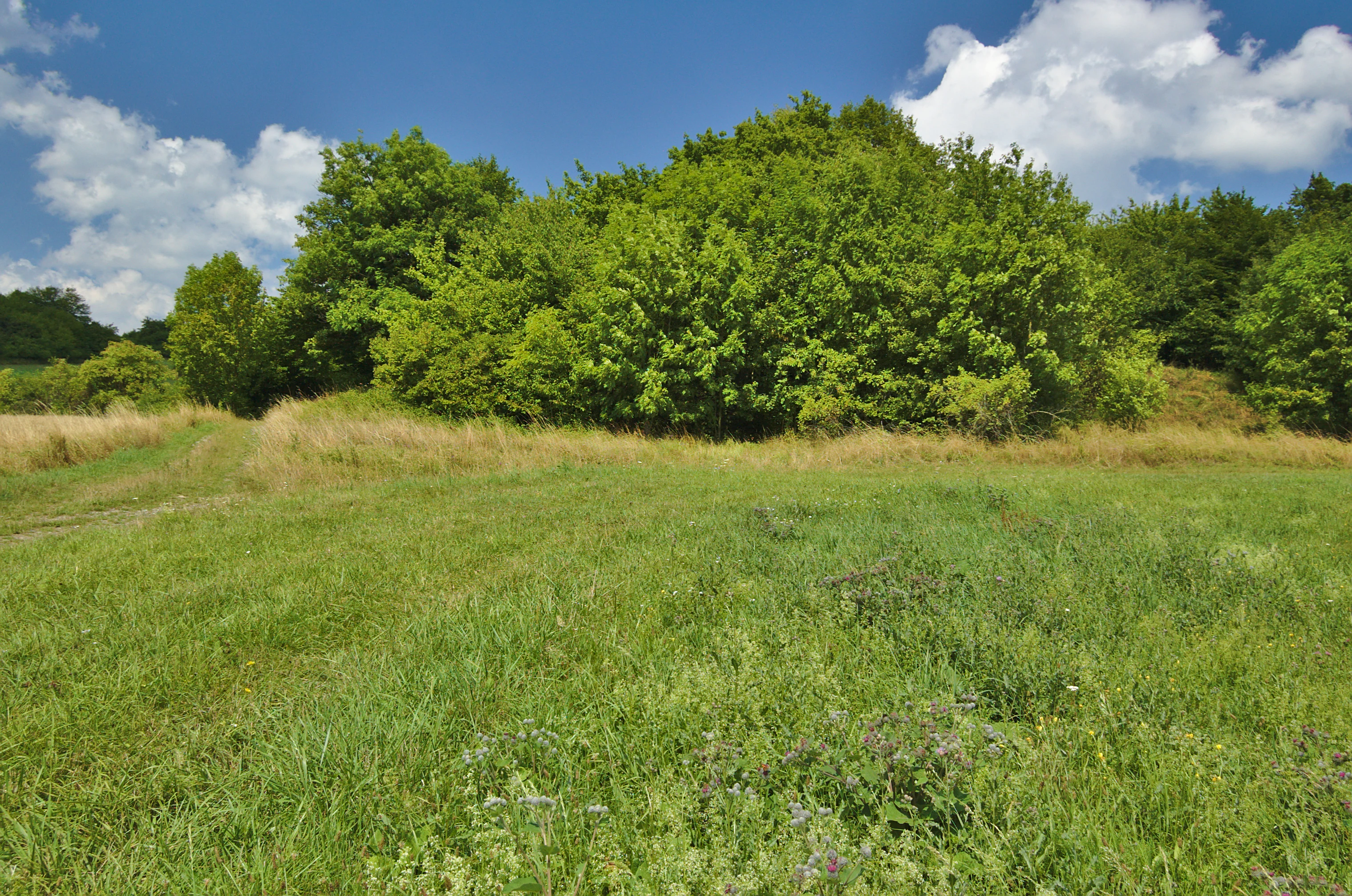
Průchodnice is the kind of site that comes alive most clearly between spring and early autumn. In late spring and summer, the beech canopy is fully leafed out, the martagon lilies and orchids in the understory are in bloom, and the contrast between dark forest and pale rock is at its most visible. The caves, however, are particularly meaningful in cooler months, when bats return to use them as winter roosts, although visiting during the bat-sensitive season requires a quieter, more careful approach.
For visitors interested in the rock vegetation of spleenworts and stonecrops, dry and sunny late spring or summer weather offers the best chance to see these specialized plants in good condition. Year-round hiking along the red-marked trail is possible, but spring, early summer, and early autumn are the most rewarding times to appreciate the combination of forest, rock, and distant views across the Zábřežská vrchovina.