
Why Psí kuchyně Natural Reserve stands out
Psí kuchyně is best known for its well-preserved beech forests of the Asperulo-Fagetum association, combined with ash-alder floodplain woodlands of the Alno-Padion alliance and tall-forb fringe vegetation that thrives along moist forest edges. These habitat types together give the reserve its distinctive character of structurally rich, humid, and species-diverse temperate woodland. The reserve is also recognized for sustaining a notably high concentration of protected breeding bird species in a relatively compact forested area, including sightings of the black stork, the stock dove, and the elusive Eurasian eagle-owl, alongside a range of other forest-interior birds.
Psí kuchyně Natural Reserve history and protected-area timeline
Psí kuchyně was first designated as a nature reserve by the Svitavy District Office on 1 June 1994, responding to the recognized natural value of the forest habitats, the moist tall-forb fringe communities, and the breeding populations of protected bird species found in the area. For more than two decades the reserve operated under this original proclamation.
In 2017, a new decree issued by the Pardubice Regional Authority, effective from 1 April 2017, formally replaced the earlier proclamation. The reconstitution did not change the underlying purpose of the protection but updated the legal framework and administrative footing of the reserve under current Czech nature conservation law. Management responsibility for the area rests with the Czech Agency for Nature Conservation and Landscape Protection, which oversees ongoing habitat monitoring and protection measures.
Psí kuchyně Natural Reserve landscape and geographic character
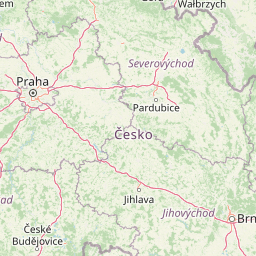
The landscape of Psí kuchyně is shaped by the gently undulating forested terrain of the western Bohemian-Moravian borderlands. Elevations within the reserve fall roughly between 452 and 570 meters above sea level, producing a moderate, hilly relief that drains into small streams and moist valley bottoms where the ash-alder floodplain forests take hold.
Beneath the forest cover, the geology reflects the Bohemian Cretaceous Basin, with bedrock formed by Cretaceous marlstones, opukas, and sandstones. In parts of the reserve, these Cretaceous rocks are overlain by Tertiary clays and gravel-sand deposits, which influence local soil moisture and contribute to the wet, herb-rich character of the forest fringes and lower-lying woodland. The result is a varied topographic and substrate mosaic for a landscape that, at first glance, appears uniformly forested.
Psí kuchyně Natural Reserve ecosystems, habitats, and plant life
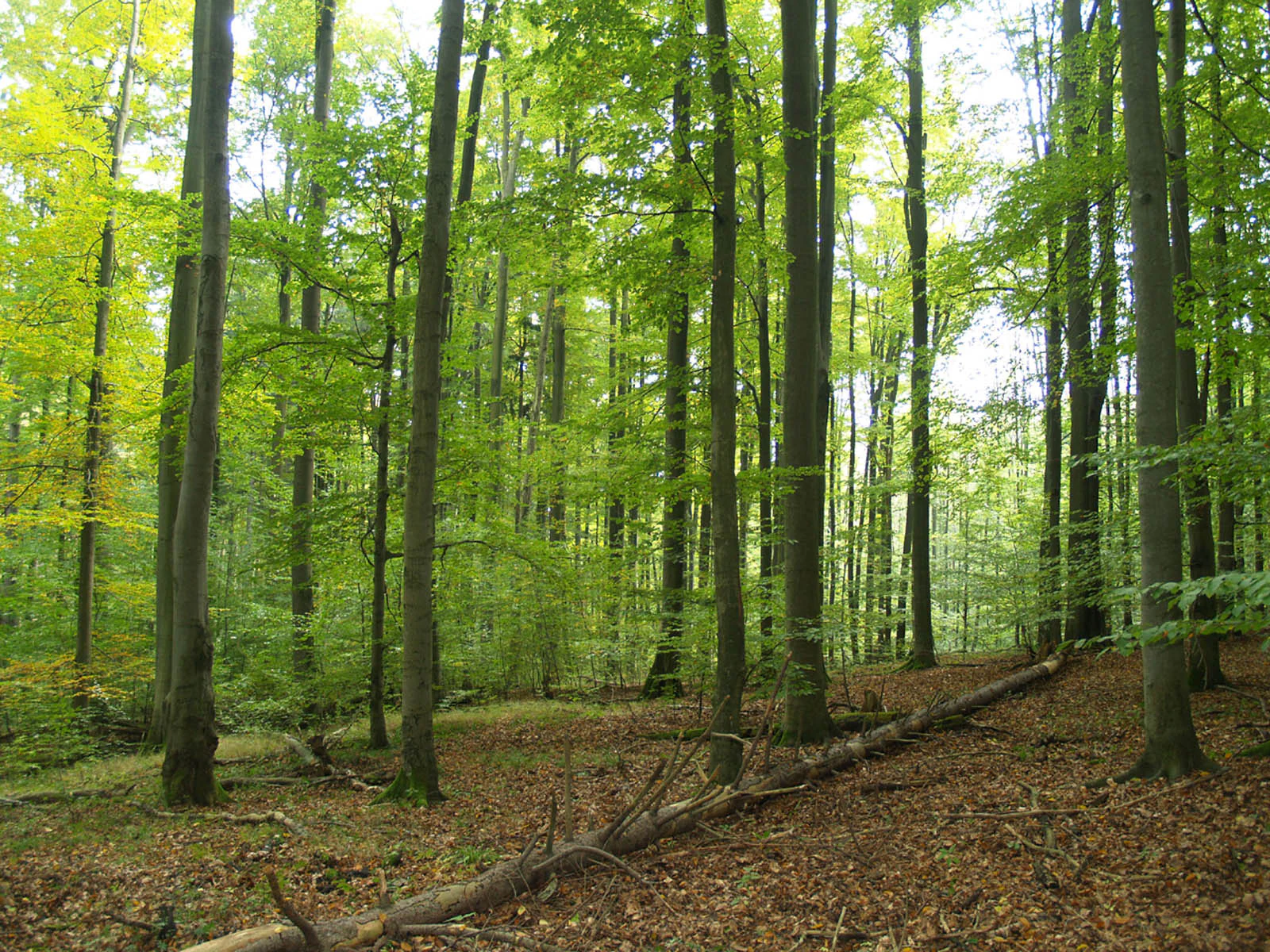
The ecological identity of Psí kuchyně is built around three interlinked forest and fringe habitat types. The most distinctive are the beech forests of the Asperulo-Fagetum association, which form the structural backbone of the reserve with mature beech trees and a rich herbaceous understorey. Along the wetter valley fringes and stream corridors, mixed ash-alder floodplain forests of the Alno-Padion, Alnion incanae, and Salicion albae alliances add a distinctly humid character, often fringed by tall-forb vegetation that flourishes where light reaches the forest edge.
In the tree layer, European beech and Norway spruce dominate, with sessile oak, sycamore maple, and common ash as important secondary species. The herb layer is particularly notable for its mixture of protected woodland species, including spring snowflake, lords-and-ladies, white helleborine, and lesser butterfly-orchid. The reserve is also documented for the presence of alpine enchanter's nightshade, mezereon, European wood barley, common clubmoss, and cowslip, indicating both the humid microclimate and the continuity of older forest habitats.
Psí kuchyně Natural Reserve wildlife and species highlights
Psí kuchyně supports a notably diverse breeding bird fauna for a protected area of its size. The mature forest interiors provide nesting habitat for several strictly protected species, including the stock dove, black stork, European honey buzzard, boreal owl, northern goshawk, common raven, and Eurasian eagle-owl. Additional woodland species regularly documented in the reserve include the black woodpecker, common buzzard, tawny owl, and grey-headed woodpecker, underlining the importance of large, undisturbed forest patches for the area's avifauna.
Beyond the birds, the reserve holds documented populations of protected invertebrates such as the green tiger beetle and the noble chafer, alongside the ground beetle Carabus arcensis. Amphibians and reptiles are also present, with common toad breeding in wetter forest sections, viviparous lizard occupying sunny edges, and both common European adder and grass snake recorded within the broader reserve area. Together these groups reinforce the image of Psí kuchyně as a functioning, multi-layered forest ecosystem rather than a single-species focus site.
Psí kuchyně Natural Reserve conservation status and protection priorities
From a conservation perspective, Psí kuchyně is significant as a regionally important refuge for mature Central European forest habitats that have become fragmented elsewhere in the landscape. The reserve's declared protection focuses specifically on the moist tall-forb fringe habitats, the Asperulo-Fagetum beech forests, and the mixed ash-alder floodplain communities, three habitat types of high biodiversity value within the European forest classification.
The site also functions as a breeding refuge for several protected woodland bird species that depend on large, structurally diverse, and relatively undisturbed forest interiors. Maintaining continuity of old-growth characteristics, moisture regimes, and minimal disturbance is therefore central to the reserve's conservation role. The site is recognized under IUCN Category IV as a habitat or species management area, and it is administered under updated regional legislation since 2017, with ongoing management overseen by the Czech Agency for Nature Conservation and Landscape Protection.
Psí kuchyně Natural Reserve cultural meaning and human context
The human context of the Psí kuchyně area is shaped by traditional Bohemian rural land use, in which the surrounding villages of Janov, Opatov, and Semanín historically relied on mixed forest and agricultural landscapes. The reserve itself lies within and across the cadastral territories of these communities, reflecting a long-standing relationship between local settlement and the surrounding woodland.
The name of the reserve, which translates roughly to a place name tied to the historical landscape vocabulary of the region rather than to any modern facility, reflects the older Czech tradition of locally descriptive place names. There is no significant cultural, archaeological, or indigenous narrative attached to the site itself; its value is primarily ecological rather than cultural.
Top sights and standout views in Psí kuchyně Natural Reserve
Psí kuchyně stands out as one of the more complete forested nature reserves in the Svitavy District, bringing together Asperulo-Fagetum beech forests, ash-alder floodplain woodlands, and tall-forb fringe communities in a single protected block. Its elevated position on Cretaceous bedrock with localized Tertiary cover creates a distinctive substrate pattern that supports unusually rich herbaceous understorey.
The reserve's birdlife is another defining asset, with breeding populations of black stork, stock dove, boreal owl, and Eurasian eagle-owl highlighting the value of its undisturbed forest interiors. For visitors interested in forest botany, ornithology, or the conservation of Central European woodland habitats, Psí kuchyně offers a compact and representative example of the region's natural heritage.
Best time to visit Psí kuchyně Natural Reserve
Spring is the most rewarding season for experiencing the botanical character of the area, when woodland species such as spring snowflake and lords-and-ladies come into bloom in the beech and ash-alder stands, and the tall-forb fringes begin to develop their lush vegetation.
Early summer through autumn tends to be the strongest period for observing the reserve's breeding bird fauna in active song and display, when species such as the black woodpecker, boreal owl, and the raptors associated with mature forest can be most readily detected. The forested setting means that visits are generally quiet, low-traffic experiences, with autumn also offering attractive forest colors in the mixed beech, spruce, and oak canopy.