

Mori Atlas logo
Protected areaPuszcza Napiwodzko-Ramucka

Mapping the extensive lowland forest, post-glacial lakes, and unique sinkhole terrain of a primeval wilderness.

Puszcza Napiwodzko-Ramucka Protected Landscape and Glacial Geography in Warmian-Masurian Voivodeship

Puszcza Napiwodzko-Ramucka represents one of the most significant forest complexes in northeastern Poland, covering expansive sandy outwash plains and frontal moraines within the Warmian-Masurian Voivodeship. This protected area provides a rich geographic study of post-glacial landscapes, ranging from rare suffosion sinkholes to a complex network of hydrological watersheds. Beyond its dense pine forests, the region serves as a vital corridor for diverse wildlife and bird populations, illustrating the intersection of conservation efforts and glacial geomorphology.

lowland pine forestglacial landscapepost-glacial lakesmorainesNatura 2000bird sanctuary

Puszcza Napiwodzko-Ramucka

Protected area

Park overview

Structured park overview, official facts, and landscape profile for Puszcza Napiwodzko-Ramucka

Puszcza Napiwodzko-Ramucka park facts, protected area profile, and essential visitor context

Review the core facts for Puszcza Napiwodzko-Ramucka, including designation, size, terrain, visitor scale, habitats, and operating context in one park-focused overview.

About Puszcza Napiwodzko-Ramucka

Puszcza Napiwodzko-Ramucka represents one of the signature lowland forest landscapes of Poland's Masurian region. The forest forms a continuous belt of habitat stretching between several historic towns in the Warmian-Masurian Voivodeship, blending productive forestry lands with areas of high natural value. Its identity is defined by the contrast between flat sandy outwash plains and more varied upland terrain, where sudden hill ranges and deep meltwater valleys break the horizontal uniformity of the forest.

The forest landscape belongs to the Masurian Lake District's broader geomorphological system and bears the typical signatures of Pleistocene glaciation: sandrs carved by rivers of meltwater, drumlins and frontal moraines rising locally, and an unusually rich pattern of small lakes and wetlands. This terrain produces a mosaic of habitats, including dry pine forests, mixed deciduous groves, oak-hornbeam stands, boggy spruce swamps, and open mires, supporting an exceptional breadth of lowland biodiversity.

As a working state forest managed by the Regional Directorate of State Forests in Olsztyn, the complex is divided among numerous forest districts, yet remains ecologically coherent. Beyond its silvicultural role, the area has gained recognition as a key conservation landscape, hosting Natura 2000 sites, numerous nature reserves, and a network of ecological sites that protect its wetland, lake, and forest core. The continuous restoration of large carnivores, particularly the return of lynx after decades of absence, illustrates the forest's growing ecological maturity.

Quick facts and research context for Puszcza Napiwodzko-Ramucka

Puszcza Napiwodzko-Ramucka lies in the Warmian-Masurian Voivodeship of northeastern Poland, spanning the counties of Olsztyn, Ostróda, Nidzica, and Szczytno. It comprises an extensive lowland forest complex of about 117,319 hectares dominated by pine stands, with spruce, birch, beech, oak, and hornbeam as secondary species.

The area is administered by the Regional Directorate of State Forests in Olsztyn across multiple forest districts. It features over 30 lakes and ponds, sits on a major European watershed divide, and hosts at least 11 nature reserves plus a dense network of Natura 2000 sites protecting its bird and habitat values.

Protection and recognition

Documented terrestrial protection scope and official international designation details

Puszcza Napiwodzko-Ramucka Protection Status and Natura 2000 Recognition

Puszcza Napiwodzko-Ramucka maintains a documented terrestrial protection status supported by verified Natura 2000 designation records. Structured records outline the official recognition framework and management scope governing this protected landscape.

International recognition

Protection details

Protection scope
Terrestrial
Transboundary protection
No
Park context

Deeper park guide and search-rich context for Puszcza Napiwodzko-Ramucka

Puszcza Napiwodzko-Ramucka history, landscape, wildlife, and travel context

Explore Puszcza Napiwodzko-Ramucka through its history, landscape character, ecosystems, wildlife, conservation priorities, cultural context, and seasonal travel timing in a structured park guide built for atlas discovery and search intent.

Why Puszcza Napiwodzko-Ramucka stands out

Puszcza Napiwodzko-Ramucka is best known for being one of the most extensive pine forest complexes remaining in the Polish lowlands, shaped in characteristic glacial fashion by sandrs, frontal moraines, and rare suffusion sinkholes. The region stands out for the unusual density of its breeding bird populations, including white-tailed eagles, ospreys, lesser spotted eagles, and black storks, which has earned it international protection status. It is also notable for its large post-glacial lakes, the presence of moose amid mixed lowland forest ecosystems, and the recent natural return of the lynx from neighboring forest regions, marking a significant wildlife recovery moment for the area.

Puszcza Napiwodzko-Ramucka history and protected-area timeline

Puszcza Napiwodzko-Ramucka is a surviving remnant of a much larger primeval forest that, in the Middle Ages, stretched broadly between Nidzica, Olsztyn, Giżycko, Ełk, and the Narew river. This immense woodland was historically known as the Galindian Forest (Puszcza Galindzka), named after the Old Prussian Galindian tribe that inhabited the area before colonization and the spread of Germanic settlement transformed the region.

Through centuries of regional development, the original Galindian wilderness contracted and fragmented, leaving today's contiguous forest as the principal vestige in the central portion of the old range. Although the broad outline of the forest is now far smaller than its medieval extent, it still preserves the ecological continuity of a landscape that once dominated northeastern Poland.

Puszcza Napiwodzko-Ramucka landscape and geographic character

The terrain of Puszcza Napiwodzko-Ramucka is unusually varied for a lowland forest, with elevation differences of up to about 70 meters and the highest points reaching roughly 229 meters above sea level. The dominant landform is the sandr plain, a flat sandy outwash surface left behind by retreating glaciers, but this base is repeatedly interrupted by chains of frontal moraines, most notably those forming hills such as Jastrzębia Góra, Złota Góra, and Zielona Góra in the southern part of the complex.

A particularly distinctive landscape feature of the forest is the presence of active suffosion processes, which have produced characteristic sinkholes and depressions concentrated in the southwestern portion of the complex and which are considered unique at a national scale. The forest also straddles a major hydrological divide separating the Vistula basin, draining southward, from the Pregolya basin to the north. This watershed is marked by the rivers Omulew, Łyna, and Orzyc, alongside dozens of smaller streams, and feeds a network of lakes that includes large post-glacial water bodies such as Lake Łańskie, Lake Kośno, and Lake Omulew.

Puszcza Napiwodzko-Ramucka ecosystems, habitats, and plant life

Ecologically, Puszcza Napiwodzko-Ramucka represents a broad cross-section of Masurian lowland forest types. The dominant forest habitats are coniferous, especially dry pine forest, fresh pine forest, and mixed fresh pine forest, but the mosaic also includes oak-hornbeam groves, alder swamps, moist pine forests, and boggy pine stands. The full species list reflects this habitat richness, anchored by pine but complemented locally by spruce, birch, beech, oak, and hornbeam.

The complexity of habitats has allowed a wide range of rare and protected plant species to persist, including yew, silver fir, common juniper, twinflower, marsh Labrador tea, dwarf birch, several sundews, multiple orchid species such as the military orchid and both marsh and spotted marsh-orchids, and a number of aquatic and mire specialist plants. Such botanical diversity, combined with the forest's large scale and varied hydrology, makes the complex a key reservoir of lowland biodiversity in northern Poland.

Puszcza Napiwodzko-Ramucka wildlife and species highlights

The wildlife of Puszcza Napiwodzko-Ramucka mirrors its habitat diversity. Among large mammals, the forest regularly hosts moose, red deer, roe deer, wild boar, European badger, European beaver, Eurasian otter, raccoon dog, and gray wolf. From 2003 onward, lynx were again sighted in the area, including a female with young, having returned from the neighboring Pisz Forest after the major windstorm of July 2002, which opened movement corridors by flattening vast stands of forest that had previously hidden them.

The forest is especially celebrated for its birdlife: the marshy sections of the Lasy Napiwodzko-Ramuckie have been documented as breeding habitat for roughly 160 bird species, including a striking list of rare species. White-tailed eagles, ospreys, lesser spotted eagles, black kites, and red kites nest here, along with black storks, hoopoes, European rollers, black grouse, corncrakes, Eurasian nightjars, spotted crakes, and common cranes. Amphibians and reptiles are similarly well represented, with most lowland Polish species present and the European pond turtle still occurring in suitable wetland areas. The lakes and rivers sustain over thirty fish species, while insect diversity is naturally exceptional, with species such as the large stag beetle among the most conspicuous.

Puszcza Napiwodzko-Ramucka conservation status and protection priorities

Puszcza Napiwodzko-Ramucka is protected through a layered system of national and European designations. Its open wetlands and forest stands are recognized as a bird area of European importance and are covered by the Natura 2000 site Puszcza Napiwodzko-Ramucka (PLB 280007), while a separate Site of Community Importance, Ostoja Napiwodzko-Ramucka (PLH 280052), safeguards nine habitat enclaves across the complex. The whole forest is additionally encompassed by a Protected Landscape Area of the same name.

Within the broader conservation network lie eleven formal nature reserves, ranging in scale from small wetland pockets of only a few hectares to large reserves such as Las Warmiński (over 1,800 hectares) and Jezioro Kośno (over 1,200 hectares). Numerous ecological sites are scattered through the forest, including the substantial Obiekt Stawowy Tylkowo pond complex. Conservation plans also envision the establishment of a dedicated Landscape Park for the forest, which would formalize recognition of its natural and cultural values. The combination of bird protection, habitat protection, and reserve-level safeguards places the complex among the most comprehensively protected forest landscapes in northeastern Poland.

Puszcza Napiwodzko-Ramucka cultural meaning and human context

The forest carries deep historical resonance as the heartland of the medieval Galindian Forest, the dense wilderness associated with the Baltic Galindian tribe. Although no Galindian villages survive in the historic sense, the very name of the forest preserves this pre-Germanic cultural memory and ties the modern landscape to its early medieval identity as a remote, sparsely settled woodland. Over centuries, the area transitioned through Teutonic Order colonization, Prussian settlement, and later Polish administration, leaving a layered cultural landscape of villages such as Nidzica, Olsztynek, Szczytno, and Pasym ringing the forested interior.

Top sights and standout views in Puszcza Napiwodzko-Ramucka

Puszcza Napiwodzko-Ramucka is distinguished by the sheer scale of its pine-dominated lowland forests and by an unusually varied glacial topography comprising sandrs, moraines, meltwater channels, and nationally unique suffosion sinkholes. Its lake network, anchored by large post-glacial lakes, and its continuous forest cover support one of the densest breeding bird communities documented in Polish forests.

The forest is also notable for hosting rich communities of large mammals, the recent natural return of the lynx, and a tiered conservation framework that includes Natura 2000 sites, a Protected Landscape Area, eleven nature reserves, and plans for an official landscape park.

Best time to visit Puszcza Napiwodzko-Ramucka

The forest is accessible year-round as an evergreen protected landscape, but its character shifts meaningfully with the seasons. Late spring and early summer bring active bird breeding, with the marshy forest interiors alive with the calls of cranes, corncrakes, and rare raptors at their most observable. Summer also offers the fullest experience of the lakes and forest understory.

Autumn is visually striking, when mixed deciduous stands turn color against the dominant green of the pine stands and mushroom foraging peaks across the forest floor. Winter, when snow cover is reliable, transforms the sandy plains and moraines into a quiet, open landscape ideal for tracking mammal activity and observing the forest's large-scale glacial patterns.

Monthly climate preview

Long-term representative point measurements for annual temperature and precipitation rhythm

Puszcza Napiwodzko-Ramucka Climate Normals and Average Temperature Profiles

Representative coordinates record long-term monthly temperature swings and daily precipitation rates across the landscape. The complete twelve-month normals profile supplies deeper comparative context for examining regional climate patterns.
Annual mean7 °C
-4 °C19 °C
Jan-4°
Feb-3°
Mar
Apr
May13°
Jun16°
Jul19°
Aug18°
Sep13°
Oct
Nov
Dec-2°
Warmest month
July

18.7 °C

Coolest month
January

-4.2 °C

Wettest month
July

2.6 mm/day

Driest month
March

1.4 mm/day

Park location guide

Geography guide, regional context, and park location map for Puszcza Napiwodzko-Ramucka

Puszcza Napiwodzko-Ramucka park geography, regions, and map view in Poland

Understand where Puszcza Napiwodzko-Ramucka sits in Poland through a broader geographic reading of the surrounding landscape, nearby location context, and its mapped position within the national park landscape.

How Puszcza Napiwodzko-Ramucka fits into Poland

Poland, officially the Republic of Poland, is a Central European country spanning from the Baltic Sea in the north to the Carpathian Mountains in the south. It borders Germany, Czech Republic, Slovakia, Ukraine, Belarus, Lithuania, and Kaliningrad Oblast. The country has a temperate climate, diverse landscapes, and is known for its rich history, cultural heritage, and strong economic position within the EU.

Wider geography shaping Puszcza Napiwodzko-Ramucka in Poland

Poland occupies 312,696 km2 in Central Europe, extending from the Baltic Sea coast in the north to the Sudetes and Carpathian Mountains in the south. It borders Germany to the west, Czech Republic and Slovakia to the south, Ukraine and Belarus to the east, and Lithuania and Kaliningrad Oblast to the northeast. The landscape includes lowland plains, uplands, and mountain ranges.

Map view of Puszcza Napiwodzko-Ramucka

Use this park location map to pinpoint Puszcza Napiwodzko-Ramucka in Poland, understand its exact geographic position, and read its mapped placement within the surrounding landscape more clearly.

Pigeon | © OpenStreetMap contributors

Location context for Puszcza Napiwodzko-Ramucka

Warmian-Masurian Voivodeship
Park atlas

Compare regional forest reserves and glacial habitats across northeastern Poland

Other Parks Near Puszcza Napiwodzko-Ramucka and Surrounding Protected Landscapes

Browsing other parks near Puszcza Napiwodzko-Ramucka reveals connected lowland pine forests and glacial water basins across the surrounding region. Comparing adjacent protected areas provides deeper context into regional wildlife corridors and forest conservation patterns.
Nature reserveWarmian-Masurian Voivodeship
Mapped location lies within the park boundary#1 closest

South

Dęby Napiwodzkie Nature Reserve: Geographic Overview and Protected Forest Boundaries

Ancient oak woodlands in Warmian-Masurian Voivodeship

Dęby Napiwodzkie preserves a unique mosaic of lowland forest communities, including rare old-growth pedunculate oaks that reach over three centuries in age. This nature reserve provides a critical, well-preserved look at the ecological diversity of the Warmian-Masurian landscape, featuring a dense concentration of forest types that have largely vanished elsewhere in the surrounding terrain.

Area
0.37 km²
Established
1989
Relief
Lowland
Climate
Temperate
Nature reserveWarmian-Masurian Voivodeship
Mapped location lies within the park boundary#2 closest

Southeast

Rezerwat przyrody Małga: Protected Wetland and Ornithological Reserve in Warmian-Masurian

Analyzing the hydrology of the Omulew River valley landscapes

Rezerwat przyrody Małga represents a specialized faunistic nature reserve characterized by expansive sedge marshes and peat-forming wetland vegetation. Situated in the Masurian Plain, the reserve functions as a critical sanctuary for nesting birds and provides a unique look at the interaction between abandoned rural geography and restored riverine wilderness.

Area
1.639 km²
Established
1991
Relief
Lowland
Scope
Terrestrial
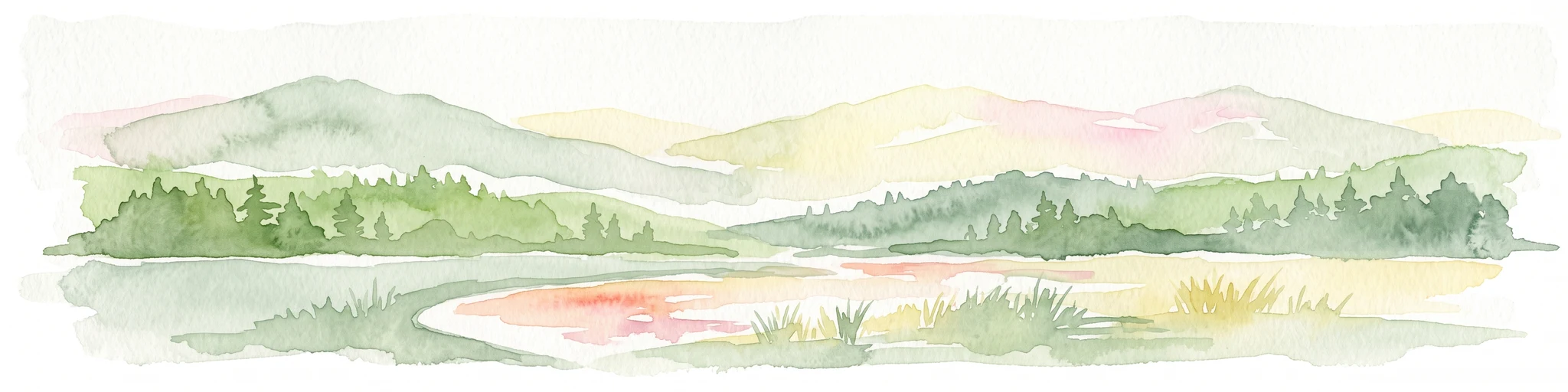
A wide watercolor illustration showing a body of water curving through green forests with soft pink and yellow mountains in the background.
Protected areaWarmian-Masurian Voivodeship
Mapped location lies within the park boundary#3 closest

Southwest

Rezerwat przyrody Jezioro Orłowo Małe: Protected Area and Regional Geography

Wetland mosaic within the Masurian Plain

This protected area centers on a small lake and its surrounding forest stands, creating a vital habitat for the European pond turtle. Spanning 14.76 hectares in the Warmian-Masurian region, the reserve showcases the glacial topography and wetland biodiversity characteristic of the Polish landscape.

Area
0.148 km²
Established
1958
Relief
Lowland
Climate
Temperate
Nature reserveMasovian Voivodeship
19 km away#4 closest

Southeast

Zachodniokurpiowskie Bory Sasankowe: Protected Forest Geography and Reserve Map

A study of dry pine habitats in the Masovian Voivodeship

The Zachodniokurpiowskie Bory Sasankowe nature reserve serves as an essential reference for continental pine forest ecosystems. By protecting the delicate interplay between sandy dune topographies and lichen-rich woodland floors, this site provides a rare window into the post-glacial geography of the Kurpie Plain.

Area
22.141 km²
Established
2018
Relief
Lowland
Climate
Temperate
Protected landscapeWarmian-Masurian Voivodeship
21 km away#5 closest

West

Park Krajobrazowy Wzgórz Dylewskich: Protected Moraine Terrain and Regional Geography

A study of glacial landforms and hydrological patterns in the Warmian-Masurian Voivodeship

Explore the unique geomorphology of Park Krajobrazowy Wzgórz Dylewskich, where Pleistocene glaciation has carved steep slopes, deep valleys, and expansive hill summits. This protected landscape serves as a central hub for regional biodiversity and acts as a primary source for radiating water networks in northern Poland, offering a high-relief counterpoint to the surrounding lakeland.

Area
71.7 km²
Established
1994
Relief
Mountain
Scope
Terrestrial
Nature reserveWarmian-Masurian Voivodeship
About 23 km away#6 closest

West

Dylewo Nature Reserve: Protected Beech Woodland in the Warmian-Masurian Voivodeship

A study of glacial topography and rare fern habitats

Located within the Wzgórza Dylewskie landscape park, Dylewo Nature Reserve protects a stable, closed-canopy beech woodland on elevated morainic terrain. Gain deeper insights into the forest composition and the ecological importance of this site as a sheltered habitat for rare flora within the larger northern Polish lakeland region.

Area
0.101 km²
Established
1970
Relief
Mountain
Scope
Terrestrial
Nature reserveWarmian-Masurian Voivodeship
About 26 km away#7 closest

Northeast

Rezerwat przyrody Dębowo Nature Reserve: Geography and Forest Protected Area Overview

A preserved lowland beech woodland within the Warmian-Masurian Voivodeship

Rezerwat przyrody Dębowo stands as a vital representative of mixed lowland forest ecosystems at the eastern edge of their natural range. The reserve protects a complex, multi-layered canopy and a rich herb layer including species like the Martagon lily and wild garlic. By safeguarding these veteran beech stands, the site provides a primary reference for understanding forest development and biogeographical boundaries within the broader Mrągowski Lakeland landscape.

Area
0.258 km²
Established
1954
Relief
Lowland
Scope
Terrestrial
Nature reserveWarmian-Masurian Voivodeship
About 32 km away#8 closest

West

Jezioro Neliwa Nature Reserve: Mapping Protected Landscapes and Glacial Lake Geography

An important eutrophic water reserve in the Warmian-Masurian Voivodeship.

Located within the Welski Landscape Park, this nature reserve protects a vanishing eutrophic lake ecosystem and its unique slope oak-lime forest. The area provides essential habitat for breeding bird populations and rare aquatic plant species, serving as a vital point of study for lowland glacial geography in northeastern Poland.

Area
0.165 km²
Established
2006
Water
Water-dominated

Common questions about visiting, size, designation, and location context for Puszcza Napiwodzko-Ramucka

Puszcza Napiwodzko-Ramucka FAQs for park facts, access, geography, and protected area context

Find quick answers about Puszcza Napiwodzko-Ramucka, including protected-area facts, park geography, trail and visitor context, and how the park fits into its surrounding country and regional landscape.
MoriAtlas Explorer

Continue Your Protected Areas Search Across the Global Atlas

Deepen your exploration by continuing the structured search for national parks and protected areas worldwide. Utilize the comprehensive filtering capabilities to compare different conservation landscapes and refine your understanding of global park geography. Discover more about the distribution and characteristics of protected natural areas.

Global natural geography