
Mori Atlas logo
Nature reservePyšolec

Examining the ecological terrain, rocky Svratka river slopes, and diverse woodland habitats

Pyšolec Nature Reserve: A Protected Beech Forest and Castle Ruin Landscape in Kraj Vysočina

(Přírodní rezervace Pyšolec)

Pyšolec Nature Reserve encompasses a rugged, 34-hectare expanse within the Hornosvratecká vrchovina highlands of the Czech Republic. This protected area preserves a complex mosaic of herb-rich beech forests, rocky scree slopes, and ancient woodland habitats along the Svratka River valley. The integration of medieval castle ruins into the forest terrain creates a distinct microclimate, supporting a high concentration of invertebrate species and rare biodiversity across varied metamorphic rock substrates.

beech forestherb-rich forestriparian valleyriver valleyrocky slopesscree woodland

Pyšolec

Nature reserve

Park overview

Structured park overview, official facts, and landscape profile for Pyšolec Nature Reserve

Pyšolec Nature Reserve park facts, protected area profile, and essential visitor context

Review the core facts for Pyšolec Nature Reserve, including designation, size, terrain, visitor scale, habitats, and operating context in one park-focused overview.

About Pyšolec Nature Reserve

Pyšolec Nature Reserve sits in the upper Svratka River region of the Czech-Moravian Highlands, a landscape defined by forested ridges, deeply incised river valleys, and scattered castle ruins. The protected area occupies a steep, rocky slope above the right bank of the Svratka and extends into a narrow side valley shaped by a small watercourse, giving it a strongly dissected terrain for its modest size.

Ecologically, Pyšolec is centred on a near-natural broadleaf forest complex that has largely retained its original species composition even as much of the surrounding woodland was affected by the bark-beetle outbreaks of the early twenty-first century. The reserve's herb-rich beech stands are dominated by European beech (Fagus sylvatica), accompanied by sycamore maple (Acer pseudoplatanus), Norway maple (Acer platanoides), hornbeam (Carpinus betulus) in the lower slopes, and more occasional wych elm (Ulmus glabra) and silver fir (Abies alba). This diversity of native broadleaf species, maintained on difficult rocky ground, gives the forest a layered structure with abundant fallen and standing deadwood.

The reserve's conservation value rests heavily on this continuity of habitat. Old-growth features such as decaying trunks, cavities, bark crevices, and mossy stones support large numbers of saproxylic beetles and other invertebrates, as well as a diverse mollusc fauna adapted to damp, shaded forest conditions. Forest springs, scree slopes, and rocky outcrops introduce further habitat variety, while the open habitats around the Pyšolec castle ruin add sunny, dry conditions that favour light-demanding plants and insects.

Although Pyšolec is small, its combination of habitat quality, structural complexity, and a relatively complete set of associated species makes it locally important for forest biodiversity conservation in the Vysočina Region. Its protected status, declared in 2021 and renewed in 2024, reflects this ecological role and aims explicitly at preserving viable populations of key species and the integrity of the existing forest ecosystems.

Quick facts and research context for Pyšolec Nature Reserve

Pyšolec is a Czech nature reserve (přírodní rezervace), classified as an IUCN Category IV area focused on the protection of a particular species or habitat. It covers 34.2 hectares in the Žďár nad Sázavou district of the Vysočina Region, within the Hornosvratecká vrchovina uplands and the Svratka River basin.

The reserve sits on steep slopes above the right bank of the Svratka River and extends into the deep valley of a small tributary, with elevations from 365 to 532 metres. Geologically it rests on metamorphic Moldanubian rocks: two-mica schists, migmatites, and orthogneisses with inserts of erlan and serpentinite, overlain by modal cambisol and modal ranker soils.

Established in 2021 and renewed in 2024, the reserve safeguards herb-rich beech forest, scree woodland, and forest edge habitats, along with invertebrate communities tied to deadwood and a suite of rare molluscs and insects.

Protection and recognition

Terrestrial protected area history established in 2024

Pyšolec Protection Status and Documented Conservation Designation

Pyšolec maintains a documented terrestrial protection status established in the year 2024. Official conservation records detail the designated management history and international recognition sources associated with the landscape.

Protection details

Protection scope
Terrestrial
Designated year
2024
Transboundary protection
No
Park context

Deeper park guide and search-rich context for Pyšolec Nature Reserve

Pyšolec Nature Reserve history, landscape, wildlife, and travel context

Explore Pyšolec Nature Reserve through its history, landscape character, ecosystems, wildlife, conservation priorities, cultural context, and seasonal travel timing in a structured park guide built for atlas discovery and search intent.

Why Pyšolec Nature Reserve stands out

Pyšolec is best known for its herb-rich beech forest (květnatá bučina), which forms about 80 percent of the reserve, and for its exceptionally rich invertebrate fauna associated with mature broadleaf woodland and large quantities of deadwood. A 2019 beetle inventory recorded 271 species, including 25 on the national red list and two specially protected species, with the discovery of the critically endangered spider Theridion boesenbergi being a particularly notable find. The reserve is also distinguished by the combination of a natural mosaic of mature forest, rocky scree, and the cultural-historical setting of the Pyšolec castle ruin, which introduces open, sun-exposed habitats into an otherwise deeply wooded landscape.

Pyšolec Nature Reserve history and protected-area timeline

The forests around Pyšolec were affected during the twenty-first century by a wide-scale bark-beetle (kůrovcová) outbreak that swept across Czech woodlands. By 2020 much of the infested timber in the surrounding area had been harvested, but the steep terrain and species-rich deciduous stands within what would become the reserve meant that even the beetle-damaged patches retained a notable admixture of original broadleaf species. Agricultural land use has had only a minor influence on the protected area.

Beyond its natural history, the site carries a medieval cultural legacy. The ruin of Pyšolec castle sits on a rocky hill within the reserve and contributes to habitat diversity by introducing open, rocky, sun-exposed patches into an otherwise densely forested landscape, creating conditions favoured by light-demanding plants and animals.

Formal protection came relatively recently. The Regional Authority of the Vysočina Region first declared the area as a nature reserve (přírodní rezervace) with effect from 23 September 2021. A renewed declaration followed on 25 January 2024, consolidating the reserve's legal status and reaffirming its conservation objectives.

Pyšolec Nature Reserve landscape and geographic character

Pyšolec lies within the Hornosvratecká vrchovina (Upper Svratka Highlands), more specifically in the Nedvědická vrchovina sub-unit and the Vírská vrchovina district of Czech geomorphological classification. The terrain is shaped by the incision of the Svratka River and its tributaries, producing steep slopes, rock outcrops, and narrow valleys.

The reserve occupies a steep, rocky slope above the right bank of the Svratka, combined with a deep valley cut by a small stream. This combination of main-valley cliff and side-valley gorge gives the site strong vertical relief, with elevations ranging from about 365 to 532 metres above sea level. The underlying geology is varied: metamorphic Moldanubian rocks including two-mica schists, migmatites, and orthogneisses, interspersed with erlan and serpentinite, give way to modal cambisol and modal ranker soils.

Climatically, the area falls within the mildly warm Quitt climate zone MT3, receiving roughly 600 to 750 millimetres of precipitation annually and experiencing 120 to 140 days per year with temperatures above 10 °C. The combination of stony substrates, varied slope exposure, and a partially sheltered river valley creates a finely patterned microtopography that supports an unusually diverse mosaic of forest, scree, and rock habitats within a compact area.

Pyšolec Nature Reserve ecosystems, habitats, and plant life

The vegetation of Pyšolec is dominated by herb-rich beech forest, which covers about four-fifths of the reserve and forms the core of its ecological character. The canopy is built around European beech (Fagus sylvatica), with sycamore maple (Acer pseudoplatanus) and Norway maple (Acer platanoides) adding structural diversity, hornbeam (Carpinus betulus) appearing on the lower slopes, and scattered wych elm (Ulmus glabra) and silver fir (Abies alba) contributing to compositional richness. The result is a multilayered broadleaf forest on stony, sloping terrain.

Around 5 percent of the reserve consists of forest-edge habitats, with additional transitional zones along rock outcrops, screes, and the open areas created by the castle ruin. These edges and openings support light-demanding plants that would otherwise be excluded from a closed forest, increasing the overall botanical diversity of the site.

Among the more notable vascular plants recorded are coral-root fumewort (Corydalis intermedia), common juniper (Juniperus communis), fir-specific white mistletoe (Viscum album subsp. abietis), nine-leaved toothwort (Dentaria enneaphyllos), martagon lily (Lilium martagon), mountain speedwell (Veronica montana), alpine currant (Ribes alpinum), and greater butterfly-orchid (Platanthera chlorantha). Together, these species underline the value of the site for forest-floor flora typical of well-preserved beech woodlands on base-rich substrates.

Pyšolec Nature Reserve wildlife and species highlights

Pyšolec's wildlife profile is dominated by invertebrates, reflecting the abundance of dead and decaying wood and the structural complexity of the habitat. A beetle survey conducted in 2019 recorded 271 species, 25 of which appear on the Czech red list and two of which are specially protected under Czech law. Among the most notable finds is the critically endangered spider Theridion boesenbergi, which appears to depend on the lower branches of solitary shrubs and spaces beneath stones, a highly localised microhabitat.

The reserve also hosts other rare spiders and beetles including Dysdera moravica, Hahnia ononidum, Zelotes apricorum, Xysticus lanio, Endomychus coccineus, and the flat bark beetle Cucujus cinnaberinus, along with several species of jewel beetles (Buprestidae). Molluscs are similarly diverse, with 41 species recorded, including the near-threatened Aegopis verticillus. Rock-dwelling species such as Causa holosericea and Helicigona lapicida live on scree and outcrops, while forest-floor species like Daudebardia rufa, Macrogastra ventricosa, Vitrea subrimata, Clausilia pumila, and Petasina unidentata inhabit damp leaf litter and logs.

The vertebrate fauna includes the fire salamander (Salamandra salamandra), classed as vulnerable to endangered. The mature woodland provides nesting habitat for birds such as the Eurasian sparrowhawk (Accipiter nisus), stock dove (Columba oenas), lesser spotted woodpecker (Dryobates minor), middle spotted woodpecker (Dendrocopos medius), common raven (Corvus corax), tawny owl (Strix aluco), red-breasted flycatcher (Ficedula parva), and collared flycatcher (Ficedula albicollis). The wider surroundings add species such as grey heron (Ardea cinerea), black stork (Ciconia nigra), common swift (Apus apus), Eurasian eagle-owl (Bubo bubo), red-backed shrike (Lanius collurio), and common quail (Coturnix coturnix), indicating that the reserve sits within a richer regional bird network.

Pyšolec Nature Reserve conservation status and protection priorities

Pyšolec is managed with the explicit objective of preserving its existing forest ecosystems and the viable populations of key species for which it was designated. The primary subjects of protection are the herb-rich beech forest, which covers around 80 percent of the reserve, the forest-edge habitats that contribute the remaining roughly 5 percent, the invertebrate communities closely tied to dead and dying wood, and the mollusc communities of natural forest, scree, and forest springs.

In species terms, the reserve targets the conservation of particular taxa whose presence reflects habitat quality: the critically endangered spider Theridion boesenbergi, the beetle Cryptocephalus sexpunctatus, the snail Aegopis verticillus, the fire salamander Salamandra salamandra, the stock dove Columba oenas, and the middle spotted woodpecker Dendrocopos medius.

The IUCN classifies Pyšolec as a Category IV protected area, focused on the conservation of particular species or habitats. The relatively recent declaration, first in 2021 and renewed in 2024, reflects an effort to secure these values before further forest degradation in the wider region, building on the fact that the reserve's rocky slopes helped preserve more of the original broadleaf character than surrounding, flatter woodlands affected by bark-beetle outbreaks.

Pyšolec Nature Reserve cultural meaning and human context

The most prominent cultural feature within Pyšolec Nature Reserve is the ruin of Pyšolec castle, a medieval stronghold whose remaining walls and rock-cut platforms rise above the forest on a rocky hill. Although only fragmentary remains are visible today, the site has shaped both the local identity of the Svratka valley and, ecologically, the composition of the protected area itself.

The castle's rocky hilltop and the disturbance historically associated with it have introduced patches of open, sun-exposed habitat into an otherwise closed forest landscape. These openings support a distinct suite of light-demanding plants and invertebrates, enriching the botanical and entomological character of the reserve. Today, the ruin functions as a minor but significant cultural landmark along the regional trail network, linking natural heritage with the broader medieval history of the highlands between Bohemia and Moravia.

Top sights and standout views in Pyšolec Nature Reserve

Pyšolec's standout features combine a small but ecologically dense forest reserve with a notable cultural-historical element. Its herb-rich beech forest on rocky, sloping terrain supports more than 270 recorded beetle species and 41 mollusc species, including several of conservation concern, and is one of the few sites in the Czech Republic known to host the critically endangered spider Theridion boesenbergi.

Equally distinctive is the way the Pyšolec castle ruin is embedded within the protected landscape: its rocky, sun-exposed slopes interrupt the closed canopy and add habitat variety unusual for a forest-dominated reserve. Together, these qualities make Pyšolec a compact but information-rich site at the intersection of forest biodiversity conservation and the medieval heritage of the Czech-Moravian Highlands.

Best time to visit Pyšolec Nature Reserve

Pyšolec lies in a mildly warm climate zone with moderate precipitation, and its mature beech forest and castle-ruin landscapes are attractive across much of the year. Late spring and early summer typically offer the most rewarding visits for plant diversity, when the herb-rich forest floor displays characteristic species such as martagon lily, nine-leaved toothwort, and coral-root fumewort in flower.

For birdwatchers, late spring and early summer are also the most productive period, as species such as the middle spotted woodpecker, stock dove, and both red-breasted and collared flycatchers are actively nesting and most easily detected through vocalisations. Autumn brings a more muted but atmospheric experience of the beech forest in colour, while the rocky slopes above the Svratka remain accessible whenever conditions are safe; in winter, broadleaf woodland in leafless condition makes it easier to observe structural features such as deadwood, cavities, and the silhouette of the castle ruin.

Monthly climate preview

Long-term representative point measurements for monthly temperature and precipitation rhythm

Pyšolec Climate Normals and Measured Annual Temperature Patterns

Historical climate records for Pyšolec demonstrate a measured annual progression of temperature and precipitation from representative coordinate sampling. Detailed monthly breakdowns provide complete baseline normals across the full twelve-month cycle.
Annual mean7 °C
-4 °C18 °C
Jan-4°
Feb-2°
Mar
Apr
May12°
Jun16°
Jul18°
Aug18°
Sep13°
Oct
Nov
Dec-3°
Warmest month
July

18.5 °C

Coolest month
January

-3.8 °C

Wettest month
July

2.8 mm/day

Driest month
February

1.2 mm/day

Park location guide

Geography guide, regional context, and park location map for Pyšolec Nature Reserve

Pyšolec Nature Reserve park geography, regions, and map view in Czechia

Understand where Pyšolec Nature Reserve sits in Czechia through a broader geographic reading of the surrounding landscape, nearby location context, and its mapped position within the national park landscape.

How Pyšolec Nature Reserve fits into Czechia

Czech Republic is a landlocked Central European country with a population of approximately 10.9 million people. The nation was established as an independent state on January 1, 1993, following the dissolution of Czechoslovakia. Its capital and largest city is Prague, with other major urban centers including Brno, Ostrava, Plzeň, and Liberec.

Wider geography shaping Pyšolec Nature Reserve in Czechia

The Czech Republic is a landlocked country in Central Europe. It is bordered by Germany to the west, Austria to the south, Poland to the northeast, and Slovakia to the southeast. The landscape is predominantly hilly, with the territory covering 78,871 square kilometers.

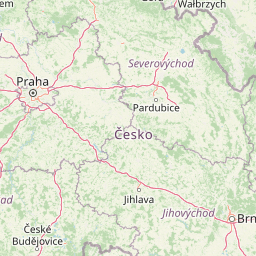
Map view of Pyšolec Nature Reserve

Use this park location map to pinpoint Pyšolec Nature Reserve in Czechia, understand its exact geographic position, and read its mapped placement within the surrounding landscape more clearly.

Pigeon | © OpenStreetMap contributors

Location context for Pyšolec Nature Reserve

Kraj Vysočina
Park atlas

Compare regional protected areas and discover related forest reserves nearby.

Parks Near Pyšolec and Connected Protected Landscapes in the Surrounding Region

Continue exploring regional protected areas and nearby national reserves to examine similar forest ecosystems and valley terrain. Comparing adjacent protected landscapes provides a broader geographical understanding of the surrounding highlands.
A soft, horizontal watercolor painting showing a green meadow in the foreground leading to a line of trees and distant rolling hills.
Natural monumentKraj Vysočina
About 4.8 km away#1 closest

Northwest

Na Ostrážné Natural Monument: Geographic Boundaries and Protected Meadow Landscapes

A vital Natura 2000 site in the Bohemian-Moravian Highlands

The Na Ostrážné natural monument encompasses a compact meadow ecosystem situated on an ecologically expressive slope. This area serves as a critical refuge for rare invertebrate species, maintaining traditional grassland characteristics within the Svratecká hornatina. Its status as both a national monument and a European site makes it a key focus for understanding habitat preservation in the Vysočina Region.

Area
0.014 km²
Established
2015
IUCN
IV
Relief
Upland
A watercolor painting showing a wide view of soft, green rolling hills against a pale, warm-toned sky.
Protected landscapeBlansko District
About 13 km away#2 closest

East

Halasovo Kunštátsko Nature Park: Protected Highland Landscapes and Regional Geography

A detailed geographic study of the Blansko District highland interior.

Covering the eastern flank of the Czech-Moravian Highlands, Halasovo Kunštátsko Nature Park provides a diverse inland environment of ridges, valleys, and forest mosaics. From the high summit of Kulíšek to the transitional zones of the Boskovická brázda, this protected landscape integrates geological, botanical, and regional environmental values into a single, cohesive geographic area.

Area
68.3 km²
Established
1980
Relief
Upland
Climate
Temperate
Natural monumentJihomoravský kraj
About 16 km away#3 closest

South

Veselský chlum Natural Monument: Protected Highland Landscape and Regional Geography

A diverse habitat mosaic in the South Moravian Highlands

Veselský chlum functions as a compact natural monument, preserving an unusual blend of vegetation formations including dry grasslands and shrublands. Located in the South Moravian region, this protected area offers significant value for understanding how historical land use creates rich habitat mosaics on low-elevation summits. The site provides a valuable geographic reference point for highland conservation patterns.

Area
0.124 km²
Established
1991
IUCN
IV
Relief
Mountain
Natural monumentKraj Vysočina
About 17 km away#4 closest

West

Vávrova skála Natural Monument: Geological Exploration in the Kraj Vysočina Region

Metamorphic rock outcrops and highland protected habitats

Vávrova skála stands as a protected natural monument near Pohledec, showcasing a distinct orthogneiss formation shaped by Quaternary weathering. This site serves as a vital reference for the geological diversity of the Bohemian-Moravian highlands, protecting rare summit heath and dry grassland within the larger Žďárské vrchy protected landscape.

Area
0.001 km²
Established
1983
IUCN
III
Relief
Upland
A horizontal watercolor painting depicting a soft, scenic view of hills with rocky outcrops in the foreground and a forested landscape in the distance.
Protected areaCzechia
About 23 km away#5 closest

Northwest

Malinská skála: Geomorphological Landmark and Viewpoint in the Czech-Moravian Highlands

Protected gneiss rock group and mountain ridge geography

Rising as a striking summit in the Žďárské vrchy, Malinská skála presents a concentrated group of named gneiss towers reaching 20 meters in height. The site functions as a geological monument, preserving classic examples of frost-shattered boulder streams and high-elevation landforms. With its panoramic vantage points, it serves as a central point for mapping the topography of the surrounding Czech upland ridges.

Area
0.058 km²
Established
1987
Relief
Mountain
Climate
Temperate
A watercolor painting of a soft, rolling landscape with green hills, patches of trees, and a pale sky.
Natural monumentPardubický kraj
About 24 km away#6 closest

North

Sněženky ve Vysokém lese: Exploring the Protected Natural Monument and Forest Geography

A small-scale Bohemian botanical reserve and valley landscape

Located in the Svitavy district of Pardubický kraj, Sněženky ve Vysokém lese is a natural monument dedicated to preserving a dense, naturally occurring population of wild snowdrops. The protected hollow, carved into the broader Vysoký les spruce woodland, illustrates how specific moisture conditions and soil patterns create essential habitats for rare local wildflowers within the Czech landscape.

Area
0.022 km²
Established
1994
IUCN
IV
Relief
Upland
A soft watercolor illustration featuring rolling hills in pink and green tones with stylized coniferous trees, set against a white background.
Natural monumentPardubický kraj
About 24 km away#7 closest

Northwest

Rybenské Perničky: Natural Monument and Geological Landmark of the Bohemian-Moravian Highlands

Geological rock outcrops and protected upland terrain in the Pardubice Region

Investigate the geological structure of Rybenské Perničky, a protected natural monument featuring unique orthogneiss outcrops and characteristic bowl-shaped weathering basins. Situated in the Pardubice Region, this site offers a focused look at the crystalline rock formations and undulating plateau terrain of the Bohemian-Moravian Highlands, providing essential geographic context for this noteworthy natural landmark.

Area
0.141 km²
Established
1980
Relief
Upland
Climate
Temperate
A watercolor painting showing a soft landscape of rolling hills, grassy meadows, and patches of vegetation in a pastel color palette.
Natural monumentKraj Vysočina
About 25 km away#8 closest

West

Sklenské louky Natural Monument: Wetland Landscapes in Kraj Vysočina

Highland geography and protected peatland habitats

Sklenské louky functions as a concentrated nature monument within the Kraj Vysočina region, preserving vital moisture-loving vegetation and peat-based ecosystems. The terrain features a characteristic mix of open meadows and spruce groupings, illustrating the diverse landscape character of the Bohemian-Moravian Highlands. This protected area provides a clear view into the region's unique upland hydrological and botanical patterns.

Area
0.063 km²
Established
1985
IUCN
IV
Relief
Upland

Common questions about visiting, size, designation, and location context for Pyšolec Nature Reserve

Pyšolec Nature Reserve FAQs for park facts, access, geography, and protected area context

Find quick answers about Pyšolec Nature Reserve, including protected-area facts, park geography, trail and visitor context, and how the park fits into its surrounding country and regional landscape.
MoriAtlas Explorer

Continue Your Protected Areas Search Across the Global Atlas

Deepen your exploration by continuing the structured search for national parks and protected areas worldwide. Utilize the comprehensive filtering capabilities to compare different conservation landscapes and refine your understanding of global park geography. Discover more about the distribution and characteristics of protected natural areas.

Global natural geography