
Mori Atlas logo
Nature reserveRašeliniště u Martinala

Analyzing the ecological mosaic of peatlands and juniper grasslands in the Šumava foothills

Rašeliniště u Martinala: Protected Transitional Bog Landscapes in the Jihočeský kraj Region

(Přírodní rezervace Rašeliniště u Martinala)

Rašeliniště u Martinala represents a significant protected area located on the eastern slopes of Popelová hora within the Jihočeský kraj. This nature reserve consists of two distinct parcels that safeguard an intricate transitional bog system alongside species-rich submontane grasslands. By maintaining critical headwater zones for the Jáchymovský potok, the area serves as a vital refuge for rare flora and specialized bird species within the wider Šumava catchment network.

peatlandtransitional bogjuniper grasslandsubmontane habitatŠumava foothillsprotected nature reserve
A graphic illustration of a mountainous landscape with a valley, coniferous trees, and a waterfall.

Rašeliniště u Martinala

Nature reserve

Park overview

Structured park overview, official facts, and landscape profile for Rašeliniště u Martinala

Rašeliniště u Martinala park facts, protected area profile, and essential visitor context

Review the core facts for Rašeliniště u Martinala, including designation, size, terrain, visitor scale, habitats, and operating context in one park-focused overview.

About Rašeliniště u Martinala

Rašeliniště u Martinala sits in a quiet upland section of southern Bohemia, a region better known to visitors for the larger Šumava landscapes that lie just to the south and west. The reserve occupies elevated ground on the eastern flank of Popelová hora, where the terrain transitions from the rolling foothills of the Prachatice district into steeper submontane slopes. Although small in absolute terms, the site captures a meaningful slice of the ecological character that defines the Šumava borderlands: a mosaic of peat-forming hollows, juniper-rich grasslands, and open habitats interspersed with patches of forest and shrub.

The protection of this area reflects the broader recognition, across the Šumava region, that small peatland and grassland sites outside the national park still hold significant conservation value. By placing Rašeliniště u Martinala under formal protection in 2011, the Administration of the Šumava National Park and Protected Landscape Area extended its management mandate beyond the strict boundaries of the national park itself. Today, the reserve works as a complementary refuge: not a destination in the conventional tourism sense, but a node in the wider ecological network of southern Bohemian peatlands and submontane habitats.

Visitors who come across the reserve, whether by intention or while exploring the surrounding countryside near Stachy, encounter a landscape that has been allowed to develop with minimal direct intervention. Bog surfaces, juniper stands, and grassy slopes coexist here in close proximity, and the area continues to host species that have become rare elsewhere in central Europe's agricultural and forested landscapes. The reserve's significance lies less in dramatic scenery than in the integrity of these small-scale ecological patterns, which makes it an important reference site for understanding transitional peatland dynamics in the Czech part of the Šumava system.

Quick facts and research context for Rašeliniště u Martinala

Rašeliniště u Martinala is a nationally designated nature reserve in the Czech Republic, classified as a strict reserve under Czech nature protection law and corresponding to IUCN Category IV (habitat/species management area). It was formally declared on 14 October 2011 by the Administration of the Šumava National Park and Protected Landscape Area, with oversight provided by the Agency for Nature Conservation and Landscape Protection of the Czech Republic.

The reserve occupies a position on the eastern slopes of Popelová hora, within the headwater catchment of the Jáchymovský potok, a tributary of the Spůlka stream. Its setting in the foothills of the Šumava region means it lies at the interface between submontane and montane vegetation zones, a transition zone that gives the site its characteristic mosaic of bog, grassland, and juniper scrub habitats.

Park context

Deeper park guide and search-rich context for Rašeliniště u Martinala

Rašeliniště u Martinala history, landscape, wildlife, and travel context

Explore Rašeliniště u Martinala through its history, landscape character, ecosystems, wildlife, conservation priorities, cultural context, and seasonal travel timing in a structured park guide built for atlas discovery and search intent.

Why Rašeliniště u Martinala stands out

The reserve is best known for protecting a naturally evolving transitional bog ecosystem set within a submontane landscape. Unlike many larger bog complexes in the Šumava region, this site combines peat-forming wetland processes with extensive juniper-dominated dry grasslands, an unusual ecological juxtaposition for its altitude band in southern Bohemia. The reserve is also recognized for the unusually high density of legally protected species it supports across multiple taxonomic groups. In a compact area, it brings together threatened mammals such as the Eurasian lynx, a suite of rare breeding birds associated with open wetland and grassland mosaics, and several relict or cold-adapted plant species typical of intact Šumava-edge peatland habitats. This combination of small size, high species richness, and intact ecological processes defines the site's scientific and conservation significance.
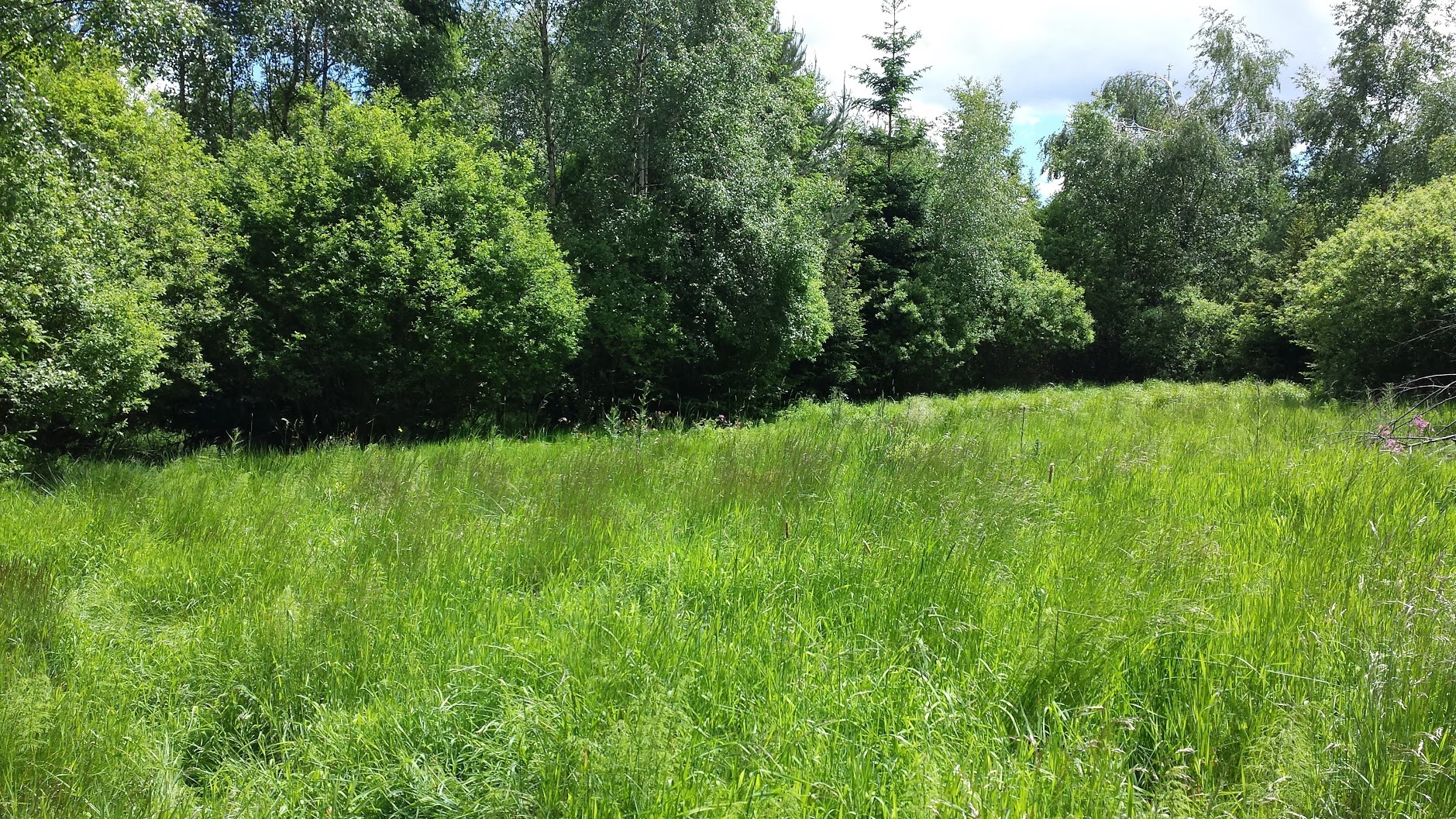
A green, grassy meadow transitions into a dense forest edge under a partly cloudy sky.
A view of the transition mire and grassland environment at the Rašeliniště u Martinala nature reserve.

Rašeliniště u Martinala history and protected-area timeline

Rašeliniště u Martinala was established as a nature reserve relatively recently, formally declared on 14 October 2011. Its designation was issued by the Administration of the Šumava National Park and Protected Landscape Area, the institution responsible for managing both the Šumava National Park and the surrounding Šumava Protected Landscape Area. The reserve's creation followed a broader pattern across the region, in which the Šumava administration extended formal protection to ecologically valuable sites outside the strict boundaries of the national park.

The reserve's establishment was driven primarily by the growing scientific recognition of the importance of small peatland and juniper-grassland complexes in the Šumava foothills. Long before formal protection arrived, the area functioned as a relatively undisturbed ecological patch within a working cultural landscape near the settlements of Jáchymov and Michalov. Its protection status formalized the value of this site and brought its management explicitly into the framework of Czech nature conservation policy.

Since its designation, the reserve has been administered under the broader system overseen by the Agency for Nature Conservation and Landscape Protection of the Czech Republic, which coordinates protected-area management across the country. While detailed restoration or intervention histories are limited in available public sources, the reserve's short formal history reflects a contemporary phase of careful monitoring and minimal-intervention conservation, consistent with the wider approach to peatland protection applied across the Šumava region.

Rašeliniště u Martinala landscape and geographic character

The landscape of Rašeliniště u Martinala is defined by the eastern upper slope of Popelová hora, a hill marking the transition from the low foothills of the Prachatice district into the closer upland character of the Šumava range. The reserve sits within a moderately elevated altitudinal zone, with terrain shaped by glacial and post-glacial processes typical of the Šumava borderlands. Drainage on this slope gives rise to small seepage zones and waterlogged flats where peat can accumulate, and it is these bog-forming conditions, combined with adjacent drier slopes, that define the reserve's physical character.

Two geographically separate parcels make up the reserve, both lying above the small settlements of Jáchymov and Michalov. This dual structure mirrors the natural patchiness of the habitats present, with peatland depressions alternating with juniper-rich dry grassland on slightly raised ground. The broader catchment of the Jáchymovský potok, of which the reserve forms a part, ensures that the site remains linked hydrologically to a wider network of headwater streams feeding into the Spůlka, one of the small rivers draining northward from the Šumava foothills.

The visual impression of the reserve is one of openness rather than dramatic relief. There are no towering cliffs, karst formations, or major rivers cutting through the site. Instead, the landscape conveys a quieter, more intricate scenery: bog surfaces with saturated, spongy ground cover; scattered juniper shrubs giving structure to dry grasslands; and belts of taller vegetation marking transitions between wet and dry habitats. It is this fine-grained mosaic of landforms and vegetation patterns that gives the area its particular ecological character.

Rašeliniště u Martinala ecosystems, habitats, and plant life

Ecologically, Rašeliniště u Martinala centers on a transitional bog system, an intermediate peatland type that combines features of both raised bogs and fens. Such transitional mires are relatively uncommon in central Europe and have become a focus of conservation attention because they support specialized plant communities and serve as key hydrological nodes in their landscapes. The reserve's bog has been left to develop naturally, allowing peat-forming processes, moss communities, and moisture-dependent plant species to maintain their ecological function with minimal direct human interference.

Surrounding and interleaved with the bog surfaces are extensive submontane and montane grasslands of the kind characterized historically by the dominance of sheep's fescue and related grass species. These open grasslands support common juniper as a structural shrub, forming the juniper-rich swards that are a recognized conservation feature of the Šumava foothills. The juxtaposition of wet peatland and dry juniper grassland, occurring over small distances, creates a high level of habitat diversity within a compact area.

The botanical interest of the site is substantial. The bog vegetation supports specialist peatland plants such as round-leaved sundew, bog rosemary, and small cranberry, while the broader habitat mosaic includes alpine arnica, snowbell Soldanella montana, and several orchid species including forms of Dactylorhiza. These species, many of them rare or declining across central Europe, reflect the relatively undisturbed nature of the reserve and its capacity to retain cold-adapted and moisture-dependent flora typical of more northern or higher-altitude environments.

Rašeliniště u Martinala wildlife and species highlights

The wildlife profile of Rašeliniště u Martinala is unusually rich for such a small reserve. The mosaic of open bog, juniper grassland, and surrounding forest patches supports an unusual concentration of legally protected species across mammals, birds, reptiles, amphibians, and invertebrates. The reserve's conservation planning reflects this diversity, since its official designation explicitly names multiple threatened species and their biotopes as subjects of protection.

Among mammals, the Eurasian lynx stands out as a particularly significant presence. The reserve lies within a landscape where this large felid has maintained a foothold in the border region between the Czech Šumava and its Bavarian counterpart, and the open mosaic habitats of the reserve contribute to the structural complexity that lynx require for movement and hunting. This elevates the site's significance well beyond its modest boundaries, linking it into broader transboundary carnivore conservation efforts.

Birdlife is an equally important dimension of the reserve. The combination of open ground, wetland edges, and adjacent woodland supports a notable suite of breeding and foraging species. The corncrake, hazel grouse, whinchat, red-backed shrike, common snipe, and water pipit all use the site, along with the spotted nutcracker and Eurasian woodcock in the wooded margins. The varied amphibian and reptile fauna, including the alpine newt, common toad, slow worm, sand lizard, viviparous lizard, grass snake, and common European adder, further reinforces the site's ecological value, as do invertebrates such as the critically endangered Menetries' ground beetle.

Rašeliniště u Martinala conservation status and protection priorities

The core conservation significance of Rašeliniště u Martinala lies in its function as a refuge for a transitional bog and its associated species-rich habitat mosaic at a time when such landscapes have become scarce across much of central Europe. Peatlands of this type store carbon, regulate local hydrology, and provide irreplaceable habitat for specialized species. The reserve's protected status, established in 2011, places it within a broader Czech conservation framework that recognizes small peatland sites as critical components of national biodiversity infrastructure.

Beyond bog protection, the reserve's designation explicitly preserves habitat for several highly threatened species whose populations have declined across the wider region. The inclusion of the Eurasian lynx in the reserve's protection rationale reflects its role within an established transboundary population that requires landscape features such as the structural mosaics maintained here. Similarly, the focus on bird species associated with open bog and juniper-grassland mosaics, including the corncrake and hazel grouse, aligns the reserve's conservation priorities with broader European efforts to safeguard declining farmland-edge and peatland bird populations.

Management of the site is overseen under the authority of the Šumava National Park administration, with national regulatory oversight provided by the Czech Agency for Nature Conservation and Landscape Protection. The reserve is managed with a minimal-intervention approach, allowing the bog ecosystem and its associated habitats to continue their natural dynamics. By preserving peat-forming processes, juniper-grassland structures, and the species that depend on them, the reserve contributes meaningfully to the long-term resilience of the Šumava region's ecological network, even though it lies outside the formal boundaries of the national park itself.

Rašeliniště u Martinala cultural meaning and human context

The reserve sits within a cultural landscape shaped by long-standing traditional land use typical of the Šumava foothills. Settlements such as Jáchymov and Michalov represent small-scale, historically rural communities whose surroundings have included a mix of pasture, hay meadows, woodland, and peatland. The juniper-rich submontane grasslands of the area reflect this pastoral history, as juniper colonization is often associated with formerly grazed or mowed land that has since been abandoned or reduced in intensity.

The reserve thus represents not only an ecological refuge but also a place where natural processes have begun to overwrite older patterns of traditional rural land use. This dynamic, common across much of the wider Šumava region, has given such sites a dual character: they are simultaneously natural and cultural landscapes, where past human activity set the stage for present-day ecological recovery and conservation value.

Top sights and standout views in Rašeliniště u Martinala

Among the most notable features of Rašeliniště u Martinala is the concentration of legally protected species within a small geographic footprint. Few reserves of comparable size in the Czech Republic combine a transitional bog system, extensive juniper-dominated grasslands, and habitat for a large predator like the Eurasian lynx, alongside a rich assemblage of rare breeding birds, amphibians, reptiles, and plants.

Equally distinctive is the reserve's role as a node within the broader Šumava conservation system. Although technically outside the national park, its administration by the Šumava National Park administration and its position in the headwaters of the Jáchymovský potok tie it ecologically and institutionally to one of central Europe's most important protected landscapes. For visitors interested in peatland ecology, transitional habitats, or the quieter corners of the Šumava region, the reserve offers an example of how small, well-chosen sites can carry disproportionate conservation weight.

Best time to visit Rašeliniště u Martinala

The reserve's character varies meaningfully with the seasons in ways that reflect its mix of open bog, juniper grassland, and woodland edges. Late spring and early summer bring the most active period for breeding birds and for flowering in the grasslands and bog margins, when the reserve's rare orchids, arnica, and peatland plants are most visible. This period also offers the best chance to hear vocal species such as the corncrake in the surrounding mosaic of wetland and grass.

Autumn brings a quieter atmosphere, with declining insect activity and shifting vegetation color across the juniper stands and bog surfaces. Winter can highlight the reserve's open structure, though snow cover and cold conditions make access more difficult and any visit requires careful preparation. For most visitors interested in the ecological character of the site, late spring through mid-summer is the most rewarding window, balancing accessibility with peak biological activity.
Monthly climate preview

Measured monthly thermal swings and precipitation baselines from representative coordinates

Rašeliniště u Martinala Climate Normals, Long-Term Temperature and Precipitation Rhythm

Representative coordinates at a 648 meter elevation record measured monthly temperature and precipitation baselines spanning a full annual cycle from 1991 to 2020. Examining the complete twelve-month profile reveals detailed thermal extremes and precipitation rates across each period.
Annual mean7 °C
-3 °C18 °C
Jan-3°
Feb-2°
Mar
Apr
May12°
Jun16°
Jul18°
Aug17°
Sep13°
Oct
Nov
Dec-2°
Warmest month
July

17.5 °C

Coolest month
January

-3.4 °C

Wettest month
June

3.3 mm/day

Driest month
April

1.6 mm/day

Park location guide

Geography guide, regional context, and park location map for Rašeliniště u Martinala

Rašeliniště u Martinala park geography, regions, and map view in Czechia

Understand where Rašeliniště u Martinala sits in Czechia through a broader geographic reading of the surrounding landscape, nearby location context, and its mapped position within the national park landscape.

How Rašeliniště u Martinala fits into Czechia

Czech Republic is a landlocked Central European country with a population of approximately 10.9 million people. The nation was established as an independent state on January 1, 1993, following the dissolution of Czechoslovakia. Its capital and largest city is Prague, with other major urban centers including Brno, Ostrava, Plzeň, and Liberec.

Wider geography shaping Rašeliniště u Martinala in Czechia

The Czech Republic is a landlocked country in Central Europe. It is bordered by Germany to the west, Austria to the south, Poland to the northeast, and Slovakia to the southeast. The landscape is predominantly hilly, with the territory covering 78,871 square kilometers.

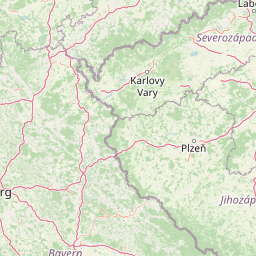
Map view of Rašeliniště u Martinala

Use this park location map to pinpoint Rašeliniště u Martinala in Czechia, understand its exact geographic position, and read its mapped placement within the surrounding landscape more clearly.

Pigeon | © OpenStreetMap contributors

Location context for Rašeliniště u Martinala

Jihočeský kraj

Explore photographic records of transitional bogs, juniper grasslands, and protected Šumava foothill habitats.

Rašeliniště u Martinala Photos and Landscapes: Visualizing Submontane Peatland Scenery

Photographic collections reveal the subtle terrain, saturated bog surfaces, and juniper-studded dry grasslands that define the protected landscape character of Rašeliniště u Martinala. Visual documentation helps researchers and observers examine the intricate habitat mosaic and ecological transition zones across the Šumava foothills.

A green, grassy meadow transitions into a dense forest edge under a partly cloudy sky.

Park atlas

Compare surrounding Šumava foothill reserves and connected wetland habitats

Parks near Rašeliniště u Martinala and Related Protected Areas in the Region

Browsing other protected areas near Rašeliniště u Martinala reveals wider patterns in regional peatland formation and submontane conservation. Expanding the comparison across nearby natural reserves provides essential context for understanding southern Bohemian highland ecosystems.
Watercolor illustration of a river flowing through a forested landscape with rolling hills in the background
National parkSouth Bohemian Region
About 2.1 km away#1 closest

Southwest

Šumava National Park: Czech Republic's Premier Forested National Park and Protected Landscape

Explore the unique glacial lakes, peat bogs, and regional geography.

Šumava National Park, situated in the South Bohemian Region of the Czech Republic, is the nation's largest protected area and a vital component of Central Europe's forest ecosystems. This entry details its expansive terrain, highlighting the significant peat bog complexes and ancient glacial lakes that define its unique landscape. Discover the park's geographic context, mapped boundaries, and its importance as a protected natural asset within the broader regional atlas.

Area
680.64 km²
Established
1991
IUCN
II
Visitors
2M annual
A watercolor painting showing a panoramic view of a green wetland area with trees, grass, and rolling hills in the background.
Nature reserveJihočeský kraj
About 14 km away#2 closest

South

Pravětínská Lada Nature Reserve: Geography and Protected Area Landscape Context

Wetland mosaics and peat bog terrain in the South Bohemian Region

Pravětínská Lada serves as a vital protected landscape where peatland and spring headwater ecosystems meet recovering farmland. Located in the Jihočeský kraj, this nature reserve demonstrates how small-scale terrain variations and moisture gradients support high ecological density within the wider Bohemian Forest. The site provides a concentrated look at the transitional boundary between wetland communities and secondary meadows.

Area
0.516 km²
Established
2000
IUCN
IV
Relief
Upland
Watercolor painting showing mountains, forests, and valleys in a landscape.
National parkGermany
About 15 km away#3 closest

Southwest

Bavarian Forest National Park: Protected Landscape and Regional Geography Atlas

Explore mapped terrain and protected park boundaries in Germany.

Dive into the specifics of Bavarian Forest National Park, a key protected area noted for its distinct landscape and geographic importance. This MoriAtlas entry details the park's mapped boundaries and its setting within the surrounding regional geography, offering a clear atlas-style view of its natural terrain. Understand its identity as a national park and discover its place in Germany's protected lands.

Area
242.45 km²
Established
1970
IUCN
II
Visitors
1.3M annual
Watercolor painting of a soft, panoramic landscape with rolling green hills, a gentle path or stream, and misty mountain silhouettes in the background under a pale sky.
Natural monumentStrakonice District
About 19 km away#4 closest

East

Na Opukách Natural Monument: Protected Calcareous Landscapes in Strakonice District

Botanical richness and geological geography of a unique Bohemian hilltop reserve

Na Opukách protects a specialized environment of dry grassland and opuka outcrops that remain rare within the wider Strakonice foothills. This site provides a focused look at how specific sedimentary geology supports diverse orchid populations and hardy meadow flora within a predominantly forested regional geography.

Area
0.348 km²
Established
1996
IUCN
IV
Relief
Upland
A horizontal watercolor painting showing rolling green hills and distant purple ridges against a white background.
Protected landscapeKlatovy District
About 21 km away#5 closest

North

Přírodní park Buděticko: Protected Landscape and Geographic Atlas of Klatovy District

Orchid-rich meadows and riparian terrain in the Bohemian foothills

Přírodní park Buděticko serves as a vital protected landscape in the Klatovy District, characterized by the transition between the Šumava foothills and broader upland plains. This area supports a mosaic of orchid-rich limestone meadows and riparian habitats along the Otava River. Discover the park's geological character and its integration of natural biodiversity with the cultural heritage of southwestern Bohemia.

Area
44 km²
Established
1994
Relief
Upland
Climate
Temperate
A horizontal watercolor illustration depicting soft, rolling hills in shades of green, yellow, and light pink with small clusters of trees.
Nature reservePlzeňský kraj
About 24 km away#6 closest

North

Prácheň Nature Reserve: Protected Broadleaf Woodlands and Historic Castle Remains

An atlas view of Bohemian forest geography and heritage landscapes

Prácheň Nature Reserve protects a compact block of warm-loving deciduous woodland set atop a hilltop in the Plzeňský kraj region. The area integrates significant natural habitats with cultural heritage, encompassing an early medieval hillfort and castle ruins. This unique blend of forest ecology and Bohemian historical geography offers a distinct perspective on protected areas within the southwestern Czech landscape.

Area
0.283 km²
Established
1953
IUCN
IV
Relief
Upland
Natural monumentJihočeský kraj
About 24 km away#7 closest

East

V polích Natural Monument: Meadow Conservation in the Jihočeský kraj Region

A protected orchid-rich grassland above the Blanice river valley

V polích is a designated natural monument in the Czech Republic known for its managed hay-meadow habitats. This site plays a vital role in regional conservation by maintaining a rare, species-rich landscape that supports native orchid populations on a sunny, south-east facing slope in the Prachatice District.

Area
0.017 km²
Established
1992
IUCN
IV
Relief
Upland
A watercolor painting of soft green rolling hills and small clusters of pine trees against a light sunset sky.
Natural monumentJihočeský kraj
About 27 km away#8 closest

Northeast

Ryšovy Natural Monument and Botanical Protected Area in Jihočeský kraj

Exploring limestone woodland terrain and rare floral habitats

Ryšovy is a notable natural monument in the Czech Republic, defined by its characteristic limestone bedrock and the resulting diverse herb layer. This protected area creates a significant botanical stronghold within the wider landscape of the Jihočeský kraj, featuring a mosaic of woodland patches and sun-exposed clearings that support protected orchids and other rare thermophilous plant species.

Area
0.35 km²
Established
1990
IUCN
IV
Relief
Upland

Common questions about visiting, size, designation, and location context for Rašeliniště u Martinala

Rašeliniště u Martinala FAQs for park facts, access, geography, and protected area context

Find quick answers about Rašeliniště u Martinala, including protected-area facts, park geography, trail and visitor context, and how the park fits into its surrounding country and regional landscape.
MoriAtlas Explorer

Continue Your Protected Areas Search Across the Global Atlas

Deepen your exploration by continuing the structured search for national parks and protected areas worldwide. Utilize the comprehensive filtering capabilities to compare different conservation landscapes and refine your understanding of global park geography. Discover more about the distribution and characteristics of protected natural areas.

Global natural geography