
Mori Atlas logo
Nature reserveRéserve naturelle régionale des Mardelles de Prémery

Exploring the rare peatland habitats, calcareous substrates, and hydrological networks of the Prémery forest

Réserve naturelle régionale des Mardelles de Prémery: A Detailed Look at France's Protected Forest Pools

The Réserve naturelle régionale des Mardelles de Prémery spans over 250 hectares of woodland, protecting a distinctive network of shallow forest pools and peat-forming depressions. This protected area offers significant insights into palynological history, with deposits preserving ecological records spanning more than 15,000 years. As a crucial source for headwater streams, the reserve showcases the complex relationship between calcareous geology and lowland wetland ecosystems in the Bourgogne-Franche-Comté region.

mardellesforest poolspeatlandmireswetland forestcalcareous peatland
Digital illustration of a scenic mountain landscape featuring a waterfall cascading between cliffs into a river winding through a coniferous forest.

Réserve naturelle régionale des Mardelles de Prémery

Nature reserve

Park overview

Structured park overview, official facts, and landscape profile for Réserve naturelle régionale des Mardelles de Prémery

Réserve naturelle régionale des Mardelles de Prémery park facts, protected area profile, and essential visitor context

Review the core facts for Réserve naturelle régionale des Mardelles de Prémery, including designation, size, terrain, visitor scale, habitats, and operating context in one park-focused overview.

About Réserve naturelle régionale des Mardelles de Prémery

Set within the state-owned forest of Prémery in the Nièvre department of Bourgogne-Franche-Comté, the Réserve naturelle régionale des Mardelles de Prémery protects one of the most unusual wetland complexes of central France. Classified as a regional nature reserve on 13 November 2015, the site covers roughly 252 hectares of forested landscape dominated by a dense network of small peat-filled pools known locally as mardelles, along with associated peatland habitats in various stages of development.

The reserve's identity is built around a peculiar ecological contrast: thriving peat-forming wetland communities on calcareous bedrock, in the relatively dry interior of France. This unusual combination has produced habitats rich in biodiversity despite the modest size of the protected area. Eighty-two plant species and around sixty animal species have been recorded, including a substantial number of species protected at the national level, making the site disproportionately important for conservation in the Bourgogne-Franche-Comté region.

Beyond its ecological role, the reserve carries scientific value through its peat deposits, which preserve pollen sequences that document more than 15,000 years of vegetation and climate history. The same network of forest pools and peatlands feeds a range of small headwater streams, giving the reserve a hydrological function for the surrounding forest and downstream water systems. Five educational trails allow visitors, students, and researchers to explore these interwoven ecological, geological, and hydrological features without disturbing the protected habitats.

Protection and recognition

Documented protection records and official conservation designation history

Réserve naturelle régionale des Mardelles de Prémery Protection Status

Protected area records for Réserve naturelle régionale des Mardelles de Prémery outline documented conservation status and registry identifiers. Systematic database entries provide verified administrative frameworks for regional landscape preservation.

Protection details

WDPA ID
555597279
Park context

Deeper park guide and search-rich context for Réserve naturelle régionale des Mardelles de Prémery

Réserve naturelle régionale des Mardelles de Prémery history, landscape, wildlife, and travel context

Explore Réserve naturelle régionale des Mardelles de Prémery through its history, landscape character, ecosystems, wildlife, conservation priorities, cultural context, and seasonal travel timing in a structured park guide built for atlas discovery and search intent.

Why Réserve naturelle régionale des Mardelles de Prémery stands out

The reserve is best known for protecting a network of mardelles, shallow forest pools and peat-forming depressions on calcareous soil, a rare habitat type in lowland France that supports a rich assemblage of protected flora and fauna. It is also recognized for the palynological value of its peat deposits, which preserve a continuous ecological record of more than 15,000 years.
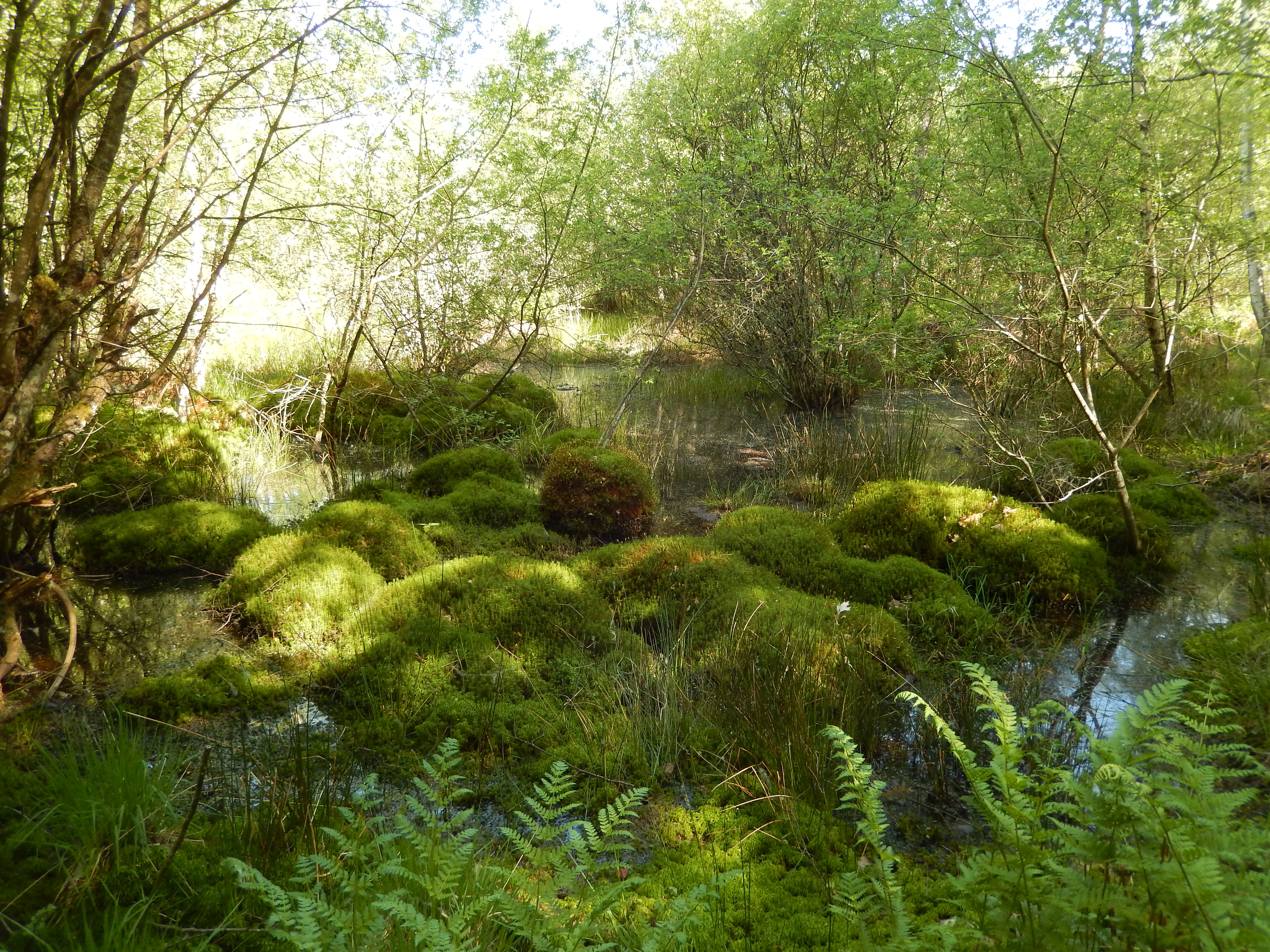
A small forest pond covered in vibrant green mossy mounds and surrounded by trees and ferns.
A mardelle pond, characterized by moss-covered hummocks and lush forest vegetation, in the Prémery forest.

Réserve naturelle régionale des Mardelles de Prémery history and protected-area timeline

The mardelles of Prémery have shaped the Prémery state forest for more than 15,000 years, with their peat layers quietly recording the long ecological history of the surrounding landscape. Although the pools themselves were formed long before any modern conservation framework existed, the site's ecological importance began to attract attention in the 1960s, particularly from members of the French National Forest Office (Office National des Forêts), who recognized the unusual concentration of forest pools and peatland habitats.

A formal protection campaign grew out of this early scientific and forestry interest. After years of documentation and local advocacy, the Conseil régional officially classified the site as a regional nature reserve on 13 November 2015 under the designation RNR303, giving the mardelles and their surrounding forests enduring legal protection and dedicated management.

Réserve naturelle régionale des Mardelles de Prémery landscape and geographic character

The landscape of the reserve is defined by the canopy and quiet interior of the Prémery state forest, within which the mardelles form a distinctive mosaic of small open water surfaces, damp margins, and peat-forming ground. The terrain is gently undulating lowland forest, but the visual character shifts constantly as visitors move from one pool depression to the next, with the wet centers often ringed by wet woodland, mossy edges, and herbaceous wetland vegetation typical of peatland transitions.

The underlying calcareous substrate is unusual for this type of peat-forming habitat, lending the mardelles their distinctive ecological character. The broader forested setting, intersected by small streams that originate in the mardelles themselves, gives the reserve a soft, water-rich atmosphere rarely associated with the otherwise comparatively dry Nièvre countryside.

Réserve naturelle régionale des Mardelles de Prémery ecosystems, habitats, and plant life

Ecologically, the reserve is defined by a rare juxtaposition of forest and peatland dynamics on calcareous bedrock. The mardelles and surrounding peatlands span different stages of ecological development, from open water through transitional marsh to more established wet woodland, creating a gradient of microhabitats within a relatively small area. This structural complexity supports an unusually dense biodiversity for a lowland forest reserve of this size.

The wetland systems also serve as the headwaters of numerous small streams that drain the surrounding forest, integrating the reserve tightly with the wider hydrology of the Prémery forest. The presence of protected plant species at or near the limit of their natural range, combined with older peatland communities, makes this site ecologically disproportionate to its modest footprint in the regional landscape.

Réserve naturelle régionale des Mardelles de Prémery wildlife and species highlights

Wildlife in the reserve reflects the richness of the wetland-forest mosaic. Birdlife includes protected species such as the Black Stork, the European Nightjar, the Booted Eagle, and the Hen Harrier, which use the open canopy, forest clearings, and wet edges of the mardelles for foraging or breeding. Amphibians are a particular feature, with populations of the marbled newt and the palmate newt recorded in the pools and their surrounding margins.

The invertebrate fauna is similarly notable. Dragonflies and damselflies found in the reserve include the Large White-faced Darter among the most remarkable species, alongside other pool-dwelling odonates such as the dryad and green emerald damselflies. Forest invertebrates like the saw-tailed bush-cricket also occur in the surrounding woodland, completing a faunal profile that combines wetland specialists with forest-interior species.

Réserve naturelle régionale des Mardelles de Prémery conservation status and protection priorities

The reserve's conservation significance rests on its protection of a regionally rare combination of lowland peatland habitats and calcareous-soil mardelles within a forested matrix. Twenty protected species across the flora and fauna underline the disproportionate biodiversity value of the site despite its modest size of about 252 hectares. By safeguarding these habitats and the headwater streams they sustain, the reserve also contributes to long-term water resource protection in the surrounding landscape.

The site's classification as a regional nature reserve (RNR303) under French law provides a durable management framework, giving the mardelles, peatlands, and their dependent species a stable protective status. The combination of ecological and palynological relevance, with peat records extending over more than 15,000 years, gives the reserve a dual role in both contemporary biodiversity conservation and the long-term scientific study of landscape change.

Réserve naturelle régionale des Mardelles de Prémery cultural meaning and human context

The mardelles have shaped how the Prémery forest has been understood and used locally, with the unusual pools recognized as distinctive features of the area long before formal protection. Although the site is primarily valued for its natural heritage, the long human relationship with the state forest, a managed public forest for generations, frames the reserve as a meeting point between forestry tradition and modern ecological conservation.

Top sights and standout views in Réserve naturelle régionale des Mardelles de Prémery

An exceptional network of forest pools and peatlands on calcareous substrate in lowland France, hosting twenty nationally protected species; a palynological archive of more than 15,000 years preserved in the peat deposits; and five educational trails that make this ecologically rich and scientifically significant site accessible to visitors.

Best time to visit Réserve naturelle régionale des Mardelles de Prémery

Visiting in late spring or early summer offers the richest experience of the reserve, when wetland vegetation around the mardelles is at its most active, dragonflies and other invertebrates are emerging, breeding birds are most present, and the forest trails are accompanied by warmer, drier ground conditions. Autumn visits can also appeal to those interested in the broader forest atmosphere of the Prémery state forest, with softer light and quieter conditions under the canopy.
Monthly climate preview

Long term temperature and precipitation patterns across the representative coordinate point

Réserve naturelle régionale des Mardelles de Prémery Climate Normals and Weather by Month

Representative coordinate records show sustained annual temperature variations alongside steady monthly precipitation distribution across the protected area. Examining full twelve month meteorological normals provides complete climatological depth for geographic analysis.
Annual mean11 °C
3 °C20 °C
Jan
Feb
Mar
Apr10°
May14°
Jun18°
Jul20°
Aug20°
Sep16°
Oct11°
Nov
Dec
Warmest month
July

19.9 °C

Coolest month
January

2.6 °C

Wettest month
May

2.5 mm/day

Driest month
March

1.6 mm/day

Park location guide

Geography guide, regional context, and park location map for Réserve naturelle régionale des Mardelles de Prémery

Réserve naturelle régionale des Mardelles de Prémery park geography, regions, and map view in France

Understand where Réserve naturelle régionale des Mardelles de Prémery sits in France through a broader geographic reading of the surrounding landscape, nearby location context, and its mapped position within the national park landscape.

How Réserve naturelle régionale des Mardelles de Prémery fits into France

France is a unitary semi-presidential republic and one of the world's largest economies. It borders Belgium, Luxembourg, Germany, Switzerland, Italy, Monaco, Andorra, and Spain, with a maritime border to the United Kingdom. The country is known for its cultural influence, art, cuisine, and political history spanning centuries.

Wider geography shaping Réserve naturelle régionale des Mardelles de Prémery in France

France is located in Western Europe. Metropolitan France extends from the Rhine to the Atlantic Ocean and from the Mediterranean Sea to the English Channel and North Sea. The country borders Belgium, Luxembourg, Germany, Switzerland, Italy, Monaco, Andorra, Spain, and has a maritime border with the United Kingdom.

Map view of Réserve naturelle régionale des Mardelles de Prémery

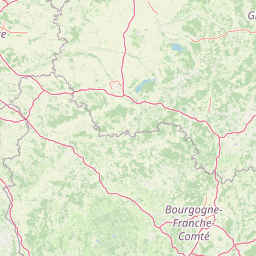
Use this park location map to pinpoint Réserve naturelle régionale des Mardelles de Prémery in France, understand its exact geographic position, and read its mapped placement within the surrounding landscape more clearly.

Pigeon | © OpenStreetMap contributors

Location context for Réserve naturelle régionale des Mardelles de Prémery

Bourgogne-Franche-Comté

Visualizing the mardelles, peat-forming habitats, and protected woodland terrain

Réserve naturelle régionale des Mardelles de Prémery Photos and Forest Scenery

Visual documentation captures the forest pools, calcareous peatlands, and wetland vegetation that define the landscape of Réserve naturelle régionale des Mardelles de Prémery. Photographic records reveal the ecological character of the wooded terrain, shallow depressions, and headwater habitats preserved within the protected regional reserve.

A small forest pond covered in vibrant green mossy mounds and surrounded by trees and ferns.

A cluster of vibrant green royal fern fronds growing from a base of brownish, dried vegetation in a wet habitat.

Park atlas

Compare nearby protected areas and surrounding regional forest landscapes

Other Parks Near Réserve naturelle régionale des Mardelles de Prémery

Browsing other parks near Réserve naturelle régionale des Mardelles de Prémery reveals broader ecological patterns across the surrounding forested terrain and regional wetlands. Continued comparison helps place individual woodland reserves into a wider geographic context of protected natural spaces.
A horizontal watercolor painting depicting a wide river valley with grassy banks and distant hills in soft pastel shades of green, yellow, and muted pink.
Nature reserveBourgogne-Franche-Comté
About 25 km away#1 closest

West

Réserve naturelle nationale du val de Loire: Protected River Geography and Map

An active alluvial landscape in the French river corridor

The Réserve naturelle nationale du val de Loire preserves one of the most representative segments of a free-flowing river system in Europe. This protected corridor showcases an exceptionally active dynamic, featuring shifting sandbanks, calm backwaters, and diverse alluvial forests that define the valley floor. Learn about the geographic boundaries and the natural terrain that characterize this essential French nature reserve.

Area
14.54 km²
Established
1995
IUCN
IV
Relief
Lowland
Watercolor painting of the Loire river showing trees along the banks and soft pink clouds in the background.
Nature reserveBourgogne-Franche-Comté
About 51 km away#2 closest

Southeast

Réserve naturelle régionale de la Loire bourguignonne: Regional Nature Reserve Map

Protected fluvial geography in Bourgogne-Franche-Comté

Located in the Nièvre department, this reserve protects an essential section of the Loire river. The landscape offers a rich mosaic of 31 natural habitats, featuring exposed gravel banks and riparian woodlands that support rare endemic flora and diverse ground-nesting bird populations.

Area
7.397 km²
Established
2015
IUCN
IV
Relief
Lowland
A horizontal watercolor painting showing a small pond surrounded by soft green trees, grass, and a few small red flowers against a pale sky.
Nature reserveBourgogne-Franche-Comté
About 58 km away#3 closest

East

Réserve naturelle régionale des tourbières du Morvan: A Geographic Study of Peatland Protection

Regional Nature Reserve in the Bourgogne-Franche-Comté landscape

This expansive network reserve protects twelve notable peatlands across the departments of Nièvre and Saône-et-Loire. From the rare raised bog at Champgazon to the peat-fringed ponds of Étang Taureau, the reserve acts as a critical conservation mosaic that maintains the ecological connectivity of diverse sphagnum habitats within the greater Morvan regional landscape.

Area
2.66 km²
Established
2015
IUCN
IV
Relief
Mountain
Nature reserveAuvergne-Rhône-Alpes
About 65 km away#4 closest

Southeast

Réserve naturelle régionale du val de Loire Bourbonnais Protected Area and Atlas View

Riverine geography and floodplain landscapes in Allier, France

Examine the geographic profile of the Réserve naturelle régionale du val de Loire Bourbonnais. This site protects a significant stretch of the Loire River characterized by active meanders and alluvial deposits, representing a key example of riverine conservation in the Bourbonnais region of central France.

Area
3.08 km²
Established
2015
IUCN
IV
A soft, horizontal watercolor painting showing a meandering river winding through lush green riverbanks, with distant rolling hills against a white background.
Nature reserveAllier
About 74 km away#5 closest

South

Réserve naturelle nationale du val d'Allier Protected Area and River Corridor Map

Alluvial landscape and floodplain geography in central France

The Réserve naturelle nationale du val d'Allier encompasses a mosaic of gravel bars, islands, and side channels shaped by natural river dynamism. This protected expanse showcases a complete riparian forest sequence, providing a rare example of a largely untamed river floodplain preserved for its ongoing geomorphic activity.

Area
14.5 km²
Established
1994
IUCN
IV
Relief
Lowland
Nature reserveAuvergne-Rhône-Alpes
About 92 km away#6 closest

Southwest

Espace naturel sensible de la Vauvre Protected Wetland Reserve and Geographic Landscape

Mapping wetland conservation in the Allier department

Covering 46 hectares of reclaimed terrain, this protected nature reserve provides a critical sanctuary for birds and wetland species. The site functions as a documented mosaic of ponds and damp grasslands, offering a clear example of localized ecological restoration within the broader context of the Cher valley geography.

Area
0.46 km²
Established
1996
IUCN
IV
Relief
Lowland
Nature reserveCentre-Val de Loire
About 104 km away#7 closest

West

Réserve naturelle régionale du Tertre des canaux: Protected Geography and Sologne Landscapes

A regional nature reserve protecting wetland mosaics in Loir-et-Cher

Situated in the heart of the Sologne, Réserve naturelle régionale du Tertre des canaux covers 35 hectares of diverse habitat. This reserve is defined by its characteristic interplay between small elevated landforms and historic water channels. It serves as an essential example of how targeted management protects ecologically rich terrain within the rural, inland geography of the Centre-Val de Loire region.

Area
0.351 km²
Established
2026
IUCN
IV
Relief
Lowland
Watercolor illustration of a forested landscape with rolling hills, distant mountains, and a sky with soft pastel colors
National parkFrance
About 115 km away#8 closest

Northeast

Forêts National Park: A Protected Landscape of Lowland Deciduous Forests

Explore its unique geography and protected forest ecosystems.

Delve into Forêts National Park, a significant protected area in northeastern France dedicated to preserving lowland deciduous forests and their associated biodiversity. This park represents a unique atlas entry for understanding mapped protected lands, featuring extensive broad-leaved forest tracts, diverse wetlands, and limestone grasslands across the Grand Est and Bourgogne-Franche-Comté regions. Discover the geographic identity of this conservation landscape and its role within the Paris Basin's terrain.

Area
560 km²
Established
2019
IUCN
II
Relief
Lowland

Common questions about visiting, size, designation, and location context for Réserve naturelle régionale des Mardelles de Prémery

Réserve naturelle régionale des Mardelles de Prémery FAQs for park facts, access, geography, and protected area context

Find quick answers about Réserve naturelle régionale des Mardelles de Prémery, including protected-area facts, park geography, trail and visitor context, and how the park fits into its surrounding country and regional landscape.
MoriAtlas Explorer

Continue Your Protected Areas Search Across the Global Atlas

Deepen your exploration by continuing the structured search for national parks and protected areas worldwide. Utilize the comprehensive filtering capabilities to compare different conservation landscapes and refine your understanding of global park geography. Discover more about the distribution and characteristics of protected natural areas.

Global natural geography