Why Réserve naturelle régionale du réseau de grottes à chauves-souris en Drôme et en Ardèche stands out
The reserve is best known for safeguarding two bat roosting caves that together harbor a significant share of southeastern France's cave-dwelling bat biodiversity. The Grotte de Meysset at Rompon shelters 14 bat species, while the Grotte de Baume-Sourde at Francillon-sur-Roubion hosts 16, including protected and notable species such as the lesser mouse-eared bat, the greater and lesser horseshoe bats, and Schreiber's bent-winged bat. It is recognized as a compact, targeted example of how cave and karst habitats can be conserved through regional protection instruments. The reserve underlines the ecological value of these cavities for species that depend on stable underground conditions for hibernation, breeding, or seasonal shelter, and illustrates an effort to stitch together a small network of caves across two departments under one integrated protection framework.
Réserve naturelle régionale du réseau de grottes à chauves-souris en Drôme et en Ardèche history and protected-area timeline
The Réserve naturelle régionale du réseau de grottes à chauves-souris en Drôme et en Ardèche was formally created through a deliberation of the Regional Council on 28 June 2019. The reserve was established as part of France's regional nature reserve system, which allows regional authorities to designate and manage protected areas focused on specific ecological priorities.
The classification reflected growing recognition of the ecological importance of two particular caves in the region: the Grotte de Meysset at Rompon and the Grotte de Baume-Sourde at Francillon-sur-Roubion. Both had been identified through prior chiroptological surveys and natural heritage inventories, with bat counts and species records establishing them as significant shelters with substantial roost populations.
Prior to formal protection, the caves were known to local naturalists and bat specialists, and baseline inventories documented the diversity of species using the sites. The official designation in 2019 marked a step from informal conservation awareness to legally binding protection, bringing the surface areas above the caves, the access points, and the surrounding territory into a coordinated management regime aligned with the IUCN Category IV framework.
Réserve naturelle régionale du réseau de grottes à chauves-souris en Drôme et en Ardèche landscape and geographic character
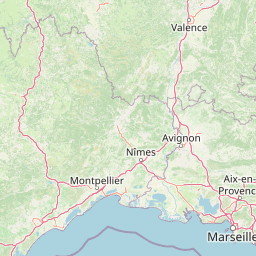
The territory of the reserve lies in the transitional landscapes of southeastern France, where the limestone and pre-Alpine foothills of the southern Rhône valley meet the wooded slopes of the Drôme and Ardèche backcountry. The two protected caves sit within a regional context shaped by karst geology, where subterranean voids and surface fissures are common features of the terrain.
Above ground, the reserve traverses a mix of Mediterranean-influenced low woodlands, scrubby garrigue-like vegetation, and rocky hillside habitats typical of the areas around Rompon, Francillon-sur-Roubion, and Soyans. These surface conditions contrast with the stable, humid, and sheltered environments found inside the caves themselves, where temperature and humidity remain relatively constant through the year.
Although the protected perimeter is small in surface terms, its landscape character is shaped by the relationship between the visible hillsides and the hidden underground cavities beneath them. The karstic geology that defines much of this part of France produces a terrain where surface ecosystems and subterranean habitats are tightly interconnected, even when the underground environment is not directly visible to visitors.
Réserve naturelle régionale du réseau de grottes à chauves-souris en Drôme et en Ardèche ecosystems, habitats, and plant life
The reserve is centered on a very specific ecological resource: the subterranean cavities that act as bat roosts. From a habitat perspective, caves represent a niche but ecologically vital environment, characterized by stable temperatures, high humidity, and minimal light, conditions that support highly specialized fauna adapted to life in total darkness.
The two protected caves function as a complementary network, each contributing different roosting conditions for different bat species. The Grotte de Meysset is used by 14 species of bats, while the Grotte de Baume-Sourde hosts 16 species, with overlapping but not identical species assemblies. Together, this small network supports a substantial share of regional chiroptological diversity concentrated in just two sites.
The surrounding hill country adds a secondary habitat layer, with Mediterranean and pre-Alpine vegetation patterns including mixed deciduous woodland, low scrub, and rocky outcrops. Although the reserve's primary ecological significance lies below ground, the surface habitat acts as a buffer around cave entrances and provides foraging and commuting space for bats emerging from the roosts at dusk.
Réserve naturelle régionale du réseau de grottes à chauves-souris en Drôme et en Ardèche wildlife and species highlights
The wildlife identity of the reserve is overwhelmingly defined by its bat populations. The Grotte de Meysset at Rompon harbors 14 chiropteran species, while the Grotte de Baume-Sourde at Francillon-sur-Roubion hosts 16, including some of Europe's most notable cave-dwelling bats.
Among the species of particular interest recorded at the Grotte de Baume-Sourde are the lesser mouse-eared bat (Myotis blythii), a species considered rare and vulnerable across much of its European range, the greater horseshoe bat (Rhinolophus ferrumequinum) and the lesser horseshoe bat (Rhinolophus hipposideros), both of which are protected and considered sensitive indicators of cave habitat quality, and Schreiber's bent-winged bat (Miniopterus schreibersii), a colonial cave-roosting species with strong roost fidelity and particular vulnerability to disturbance.
These caves likely play distinct roles across the seasonal cycle of bat ecology, supporting hibernation, maternity, or transitional roosting activities depending on the species. The concentration of so many species in such a small number of sites makes this network a regionally important stronghold for cave-roosting bats in southeastern France.
Réserve naturelle régionale du réseau de grottes à chauves-souris en Drôme et en Ardèche conservation status and protection priorities
The conservation significance of the reserve rests on the protection of a small but ecologically critical network of bat roosting caves. Caves used by bats for hibernation, breeding, or seasonal shelter are highly vulnerable to disturbance, and the loss or degradation of even one cavity can have disproportionate consequences for local bat populations.
By placing the caves and their immediate surroundings under formal protection, the reserve secures these roosts against activities that could damage the underground environment, such as unauthorized access, blocking of entrances, vandalism, or development within the protected perimeter. The IUCN Category IV classification emphasizes the role of the site in active habitat and species management, aligning the legal framework with the specific ecological priorities of the site.
The reserve also contributes to a wider conservation network for cave-dwelling bats in the Drôme and Ardèche regions, embedding two already-documented key sites within a coordinated management system. Its existence demonstrates a targeted conservation model in which small, ecologically specialized natural features are protected on their own terms rather than treated as incidental elements within broader landscape reserves.
Réserve naturelle régionale du réseau de grottes à chauves-souris en Drôme et en Ardèche cultural meaning and human context
The landscape around the reserve carries the cultural imprint of the southern Rhône valley and its historic rural communities. Rompon in Ardèche and the small Drôme communes of Francillon-sur-Roubion and Soyans are part of an older rural fabric shaped by agriculture, livestock, and a long tradition of cave exploration and natural observation.
Local naturalists and caving associations have been involved in documenting the bat populations of these caves, contributing to chiroptological surveys and broader regional biodiversity inventories. This practical engagement between scientific volunteers and local communities has helped build the case for formal protection and continues to play a role in monitoring and stewardship of the reserve.
The designation itself reflects a growing regional conservation awareness that values small but ecologically important natural features and seeks to safeguard them within France's regional nature reserve framework, even when they do not fit the conventional image of a national park or large public-access landscape.
Top sights and standout views in Réserve naturelle régionale du réseau de grottes à chauves-souris en Drôme et en Ardèche
The standout features of the reserve are the two protected cavities themselves, the Grotte de Meysset at Rompon and the Grotte de Baume-Sourde at Francillon-sur-Roubion, which together provide roosting habitat for around thirty different bat species.
The reserve's compact protection of these caves, encompassing less than 49 hectares but focused entirely on critical roosting habitat, makes it an unusually clear-cut example of targeted conservation. Its location at the meeting point of two departments adds a cross-boundary dimension, demonstrating how a single regional reserve can knit together ecologically linked sites that sit within different administrative geographies.
Best time to visit Réserve naturelle régionale du réseau de grottes à chauves-souris en Drôme et en Ardèche
Because the reserve is a strictly protected conservation site focused on bat roosting caves rather than a public-access landscape, traditional seasonal tourism guidance is not strongly applicable. Access to the caves and their immediate surroundings is restricted in order to avoid disturbing bat populations during sensitive periods such as hibernation and the maternity season, when human presence can disrupt critical behaviors.
Visitors interested in the broader landscape of the Drôme and Ardèche region typically encounter more favorable conditions from late spring through early autumn, when Mediterranean and pre-Alpine flora is active and the rural scenery around Rompon, Francillon-sur-Roubion, and Soyans is most accessible. Visitors should consult the managing authority for any guided events or interpretive opportunities associated with the reserve, as the cave itself is not generally open to the public.