Mori Atlas logo
Nature reserveRéserve naturelle régionale du Scamandre

A comprehensive look at the saline steppe, reedbeds, and marshland terrain defining this southern French nature reserve.

Réserve naturelle régionale du Scamandre: An Atlas of Protected Wetland Geography and Landscape Context

(Réserve naturelle régionale du Scamandre (RNR88))

The Réserve naturelle régionale du Scamandre stands as a prime example of the Petite Camargue wetland landscape in the Gard department of southern France. Stretching across roughly 146 hectares, this protected area provides a rare concentration of characteristic habitats, from salt-tolerant sansouïre steppe to expansive reedbeds and brackish marshes. Our geographic data maps the transition between these vital ecosystems, illustrating the complex hydrological systems that sustain an exceptionally rich avifauna and diverse flora within a compact, visitor-accessible reserve.

Camarguewetlandsregional nature reservePetite Camarguemarshlandsansouïre
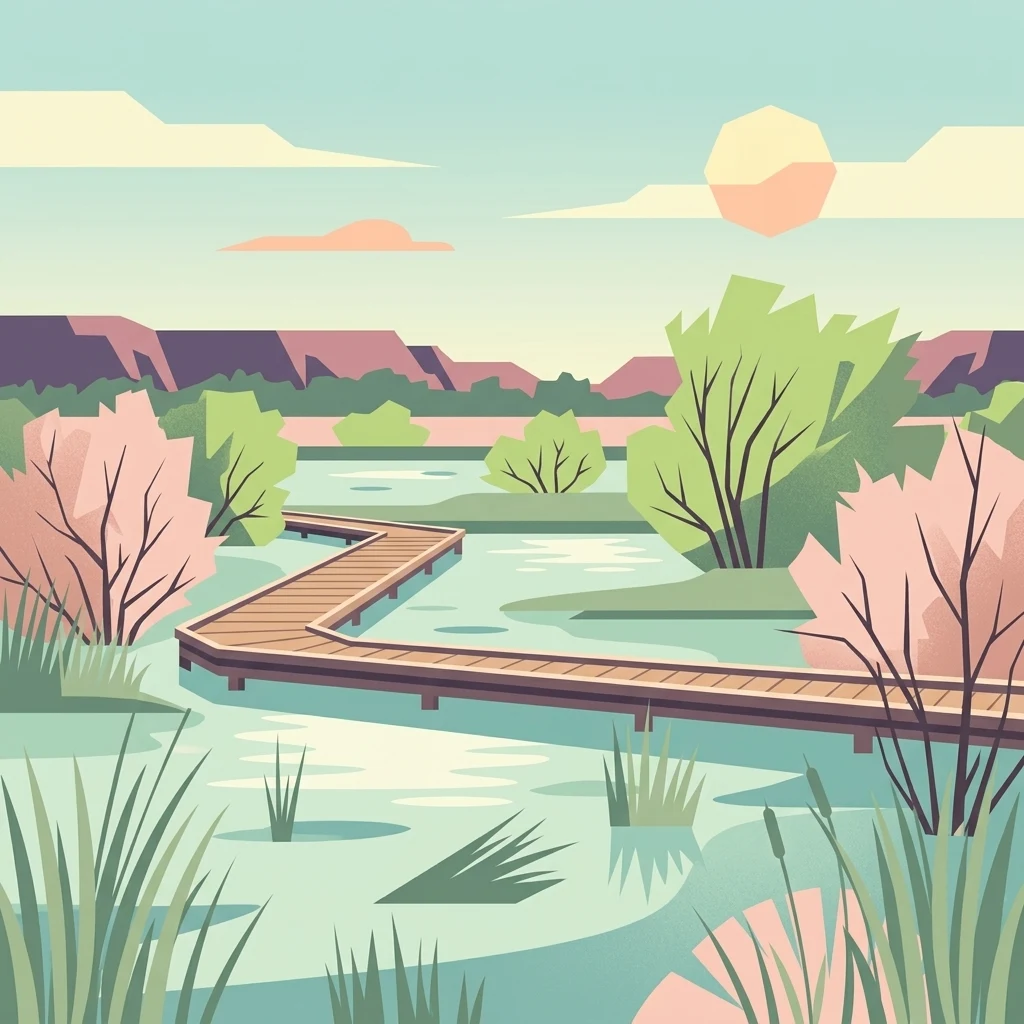
A flat vector illustration featuring a winding wooden boardwalk over a green wetland, surrounded by marsh grasses and trees under a setting sun.

Réserve naturelle régionale du Scamandre

Nature reserve

Park overview

Structured park overview, official facts, and landscape profile for Réserve naturelle régionale du Scamandre

Réserve naturelle régionale du Scamandre park facts, protected area profile, and essential visitor context

Review the core facts for Réserve naturelle régionale du Scamandre, including designation, size, terrain, visitor scale, habitats, and operating context in one park-focused overview.

About Réserve naturelle régionale du Scamandre

The Réserve naturelle régionale du Scamandre occupies a pivotal position within the Petite Camargue, the western, Gard-side portion of the larger Camargue delta system in southern France. Although modest in size, the reserve captures an unusually complete cross-section of Camargue landscapes. Within a single, easily walkable area, visitors pass from open herbaceous prairies characteristic of traditionally grazed Camargue land, through the distinctive sansouïre or salt steppe that fringes the saline depressions, into true marshland around the margins of the Étang de Scamandre.

This compact juxtaposition of habitats is the foundation of the site's ecological and educational value. Each of the principal Camargue biotopes supports a distinct flora and fauna, and Scamandre acts as a field laboratory where the broader Camargue ecosystem can be observed in compressed form. The reserve's location midway between Vauvert and Saint-Gilles, just south of the hamlet of Gallician, places it in the heartland of the Camargue gardoise, an area long shaped by pastoralism, salt production, and the seasonal rhythms of the Rhône delta.

The site's history as a protected area reflects an evolution from private, pastoral land to a publicly recognised conservation and education site. The grasslands once served as pasture for sheep flocks, and the principal building on the site was traditionally a bergerie, or sheepfold, giving one part of the newer reserve the name "La Fromagère." Today the reserve functions both as a refuge for Camargue biodiversity and as a discovery centre, helping visitors and school groups understand the wetlands, the birdlife, and the cultural identity of the Camargue.

Quick facts and research context for Réserve naturelle régionale du Scamandre

Situated in the Petite Camargue region of southern France, within the Gard department (Occitanie region), the Scamandre reserve is positioned along the southern edge of the Étang de Scamandre between the communes of Vauvert and Saint-Gilles. Covering about 146.7 hectares, it is classified as a regional nature reserve (réserve naturelle régionale) with IUCN Category IV status and is registered in the World Database on Protected Areas.

Originally created as a voluntary nature reserve in 1994, the site gained formal regional nature reserve status in late 2006. It is managed by the Syndicat mixte pour la protection et la gestion de la Camargue gardoise, the public body responsible for protected area management in the Gard portion of the Camargue. The reserve hosts an environmental discovery centre and three marked interpretation trails, and is the only regional nature reserve in Petite Camargue set up to receive the general public.

Protection and recognition

Review documented terrestrial protection scope and official registry records for this regional reserve.

Protection Status and International Recognition Data for Réserve naturelle régionale du Scamandre

Territorial protection status and official database registration provide baseline context for Réserve naturelle régionale du Scamandre. Structured registry metrics outline the documented conservation scope and associated administrative records.

Protection details

Protection scope
Terrestrial
WDPA ID
555514316
Park context

Deeper park guide and search-rich context for Réserve naturelle régionale du Scamandre

Réserve naturelle régionale du Scamandre history, landscape, wildlife, and travel context

Explore Réserve naturelle régionale du Scamandre through its history, landscape character, ecosystems, wildlife, conservation priorities, cultural context, and seasonal travel timing in a structured park guide built for atlas discovery and search intent.

Why Réserve naturelle régionale du Scamandre stands out

The Scamandre reserve is especially known for its exceptional concentration of Camargue wetland habitats within a compact area, and above all for its remarkable heron and egret populations. The site brings together prairie, sansouïre (salt steppe), and marsh within a single boundary, and harbours all nine European species of the Ardeidae family: grey heron, purple heron, night heron, cattle egret, little bittern, great bittern, squacco heron, great egret, and little egret, along with a large share of the French population of glossy ibis. Equally distinctive are the reedbeds of Petite Camargue, of which Scamandre is part, regarded as among the most important in western Europe. The reserve is also notable as the only regional nature reserve in Petite Camargue that has been deliberately developed for public reception, environmental education, and accessible nature tourism.
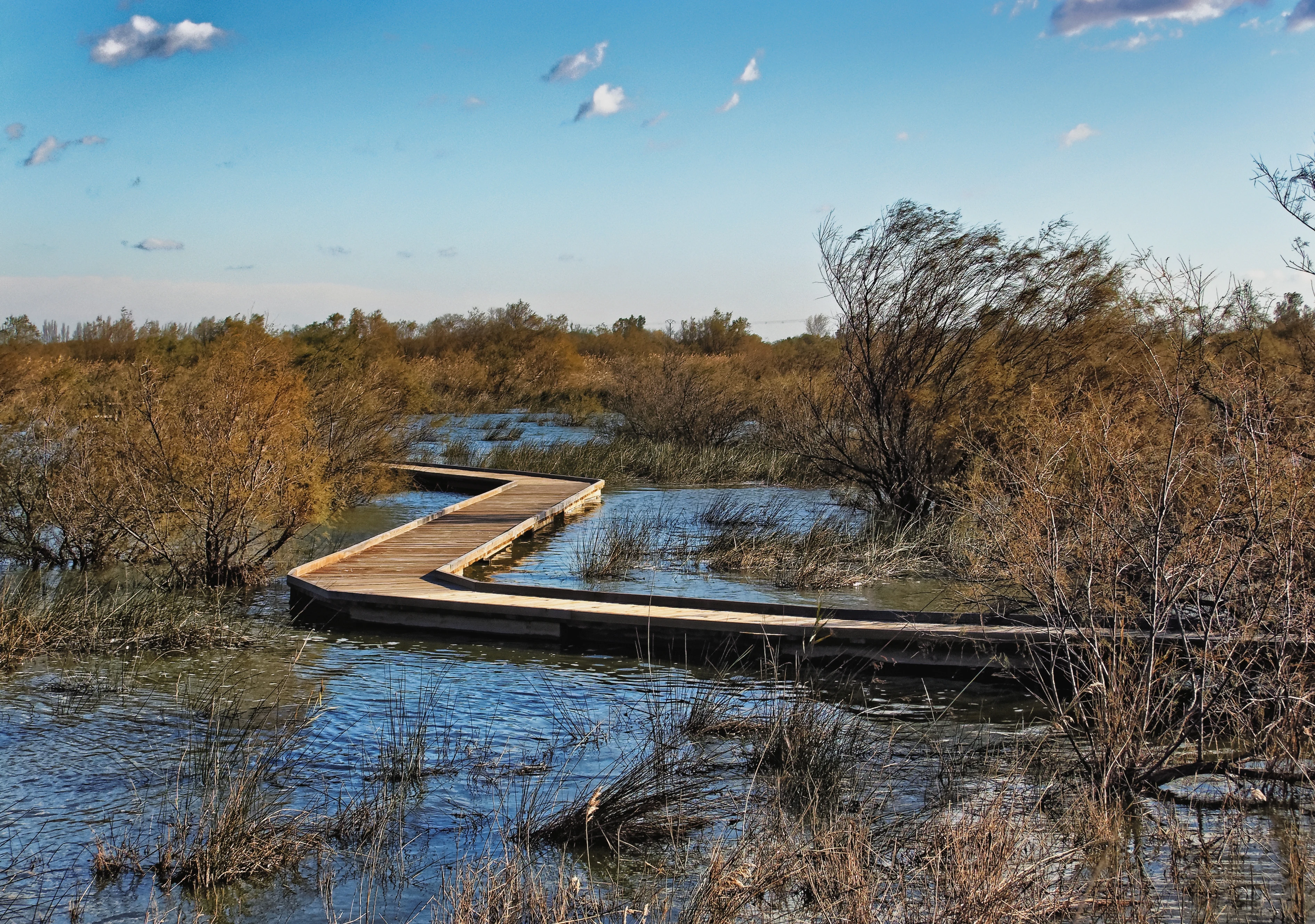
A long wooden boardwalk path curves through shallow marshland surrounded by shrubs and reeds under a blue sky.
A wooden boardwalk winding through the wetlands at the Scamandre Nature Reserve.

Réserve naturelle régionale du Scamandre history and protected-area timeline

The history of the Scamandre reserve is closely tied to the pastoral and rural character of the Gard-side Camargue. For generations before any formal protection, the open prairies of what is now the reserve served as grazing land for flocks of sheep, a traditional land use that shaped the openness of the landscape and the structure of its vegetation. The principal building on the site during this period was a bergerie, the local term for a sheepfold, and one of the reserve's sectors still carries the nickname "La Fromagère" in reference to this pastoral past.

Formal protection began on 10 November 1994, when the area was established as a voluntary nature reserve (réserve naturelle volontaire) under the name "Domaines du Buisson gros et de la Fromagère." This voluntary status laid the groundwork for subsequent management, habitat restoration, and the development of visitor infrastructure. Roughly twelve years later, on 29 November 2006, the site was reclassified as a regional nature reserve (réserve naturelle régionale), placing it under a stronger and more durable legal protection framework.

Since reclassification, management of the reserve has been entrusted to the Syndicat mixte pour la protection et la gestion de la Camargue gardoise, a public body bringing together the Conseil départemental du Gard and eight communes of the Gard Camargue. The transition from voluntary reserve to regional nature reserve marked a shift towards long-term conservation management, public outreach, and formal integration into the regional network of Camargue protected areas.

Réserve naturelle régionale du Scamandre landscape and geographic character

The landscape of the Scamandre reserve is a textbook example of the Camargue's distinctive mosaic. The terrain is essentially flat, shaped by the Rhône delta plain, but transitions sharply between very different visual and ecological zones. Visitors move from open grassy prairies, dotted with tamaris and white poplar, into the more austere, saline environment of the sansouïre, where the soil glistens with salt crusts in summer and is colonised by highly specialised, salt-tolerant plants such as sea-lavender, glasswort, and water plantain.

Beyond the sansouïre lies the marais, the marshland proper. Here open water blends into dense stands of reeds and rushes along the margins of the Étang de Scamandre, the large brackish lagoon that defines the reserve's southern boundary. The combination of still water, dense reedbeds, and raised banks creates a landscape that alternates between wide-open horizons and enclosed, almost tunnel-like reed corridors. Wooden boardwalks and raised walkways, particularly along the Butor trail, allow visitors to traverse the wettest zones without disturbing the substrate.

In geomorphological terms, the reserve is a small but representative piece of the Camargue's hydrological system, where fresh water from agriculture and rainfall mingles with the brackish influence of the nearby étangs and the Mediterranean. The result is the layered structure of habitats, from dry saline steppe to permanent freshwater marsh, that gives Scamandre its particular landscape character.
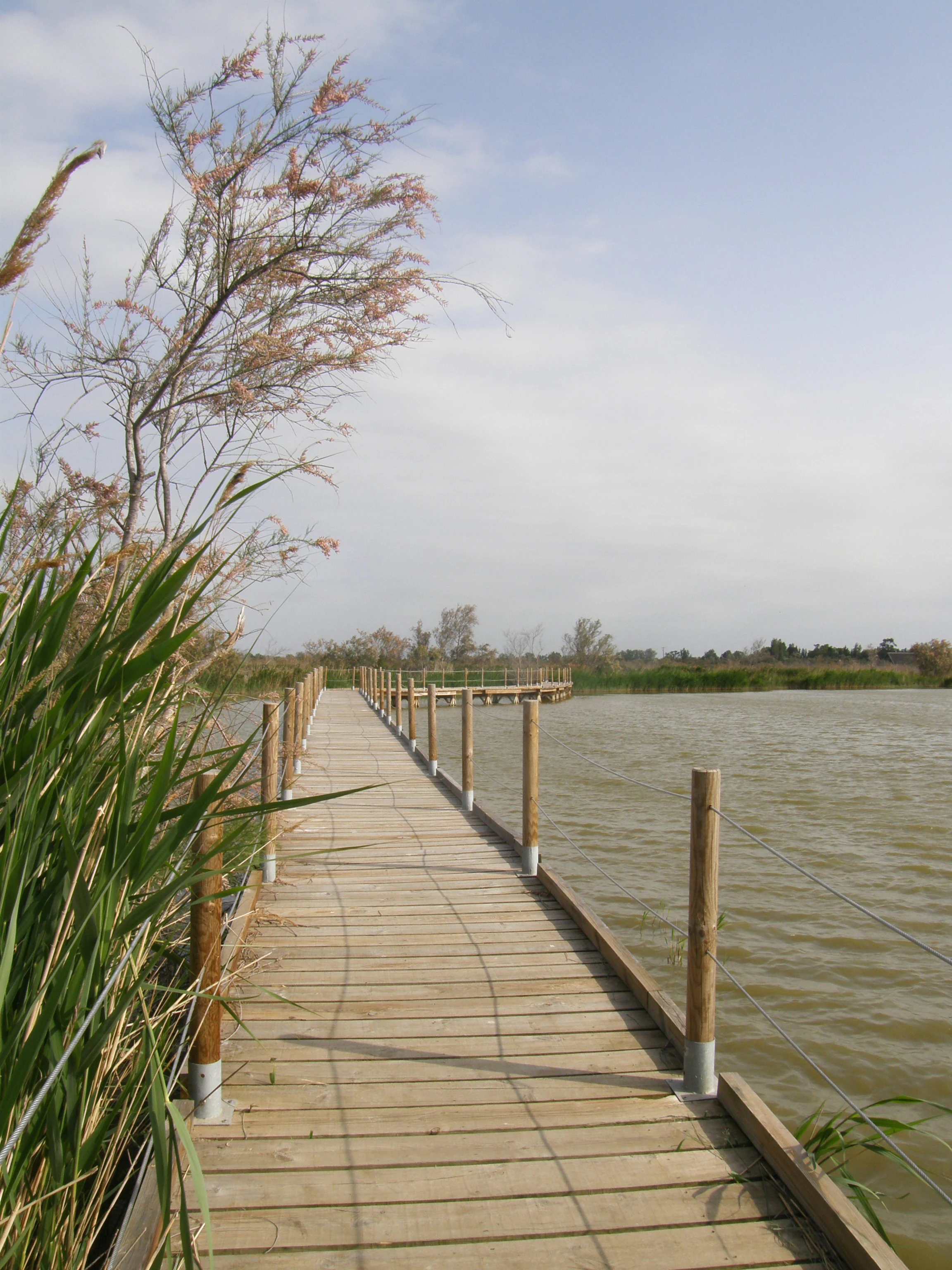
A wooden boardwalk trail stretches over calm wetland water under a cloudy sky, with tall reeds and sparse trees along the side.
A wooden boardwalk trail extending over the wetlands of the Scamandre Regional Nature Reserve.

Réserve naturelle régionale du Scamandre ecosystems, habitats, and plant life

Ecologically, the Scamandre reserve functions as a condensed representation of the entire Camargue. Within its boundaries, three principal biotopes can be observed side by side: the prairie, the sansouïre, and the marais. This juxtaposition is unusual and ecologically valuable because each habitat hosts a distinct suite of plant and animal communities that, taken together, reflect the broader diversity of the Camargue.

The arboreal flora is dominated by tamarisk, white poplar, ash, and willow, a typical riparian gallery along the wetter zones. The water bodies and their edges are bordered by extensive reedbeds and rushes, which are one of the key conservation features of the site. The saline flats of the sansouïre support highly adapted halophytic vegetation, including sea-lavender, glasswort, and water plantain, descended from ancestors that evolved to cope with the salt-rich, periodically flooded soils.

The reedbeds of Petite Camargue, of which the Scamandre reserve forms part, are considered among the most important in western Europe for reed-dependent and marshland bird species. They provide refuge and breeding habitat for a wide range of aquatic and semi-aquatic species, and act as a stepping stone within the broader network of Mediterranean wetland sites. This combination of representative habitats and high-quality reedbeds gives the reserve a disproportionately high ecological value relative to its modest area.
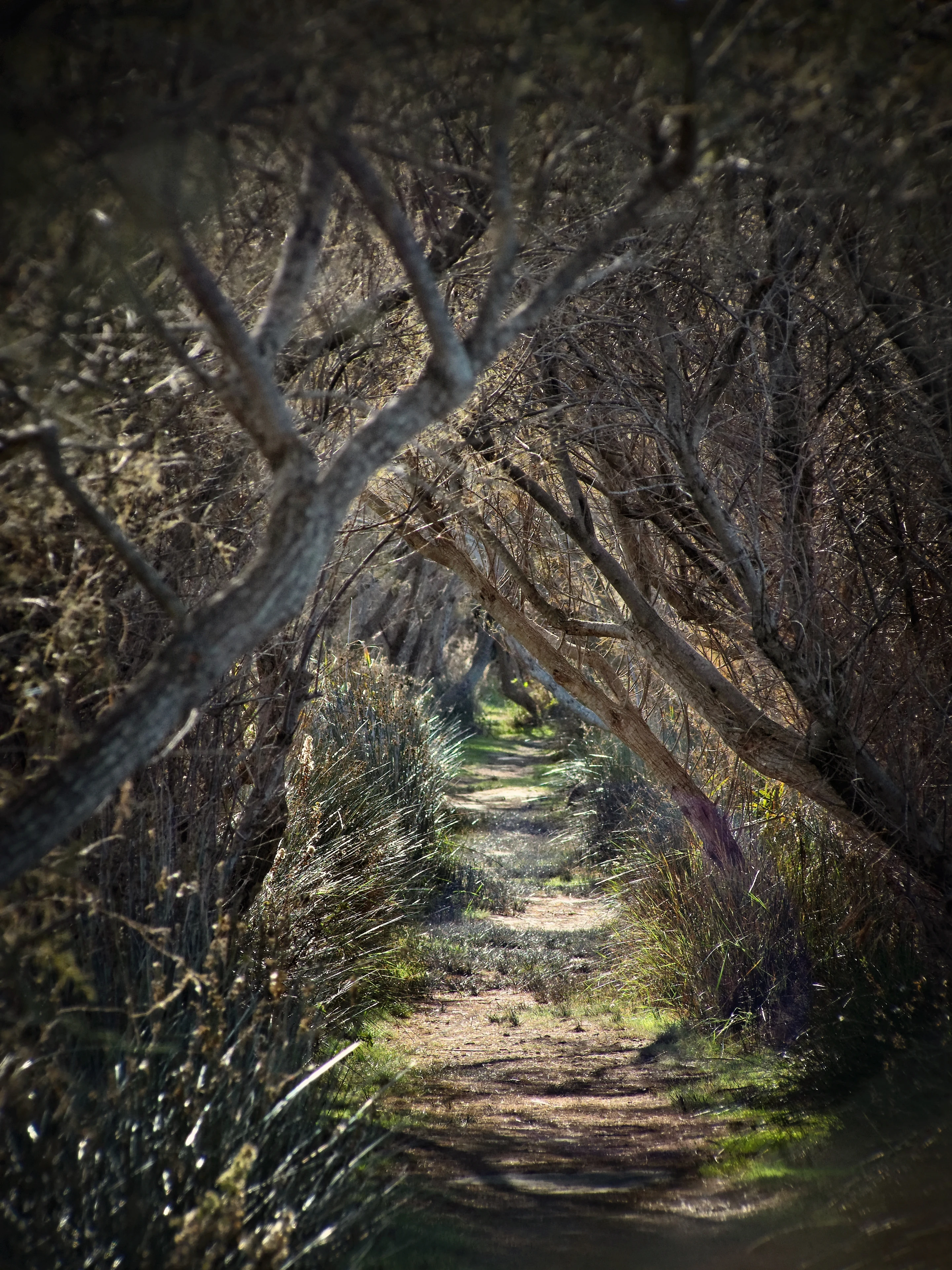
A narrow, dirt foot trail stretches into the distance, framed by low-hanging tree branches and thick reeds, creating a natural tunnel effect with dappled light.
A shaded, narrow path winds through the dense, arching vegetation along the banks of the Scamandre Pond.

Réserve naturelle régionale du Scamandre wildlife and species highlights

Wildlife is at the heart of the Scamandre reserve's identity, and birds in particular are the main attraction. The site is renowned for hosting all nine European species of the Ardeidae family: grey heron, purple heron, night heron, cattle egret, little bittern, great bittern, squacco heron, great egret, and little egret. This makes the reserve a de facto showcase for European heron and egret diversity. In addition, Scamandre hosts black-winged stilt, common kingfisher, European bee-eater, zitting cisticola, several species of reed warbler, and mallard, and serves as an important site for France's glossy ibis population.

Beyond the birds, the reserve supports a representative sample of Camargue mammals, including coypu (nutria), muskrat, wild boar, and red fox. The Camargue cattle, a hardy free-ranging breed closely associated with the cultural landscape of the delta, also graze in the area. Reptiles and amphibians are represented by the European pond turtle and the Montpellier snake, while the aquatic fauna includes common carp, eel, and pumpkinseed sunfish.

The reserve also faces conservation challenges from invasive species. Primrose-willow (Ludwigia) is recorded on open water surfaces, and the Louisiana crayfish is present in the aquatic system, both requiring ongoing management attention. The balance between native biodiversity and invasive pressures is part of the longer-term ecological work of the reserve.
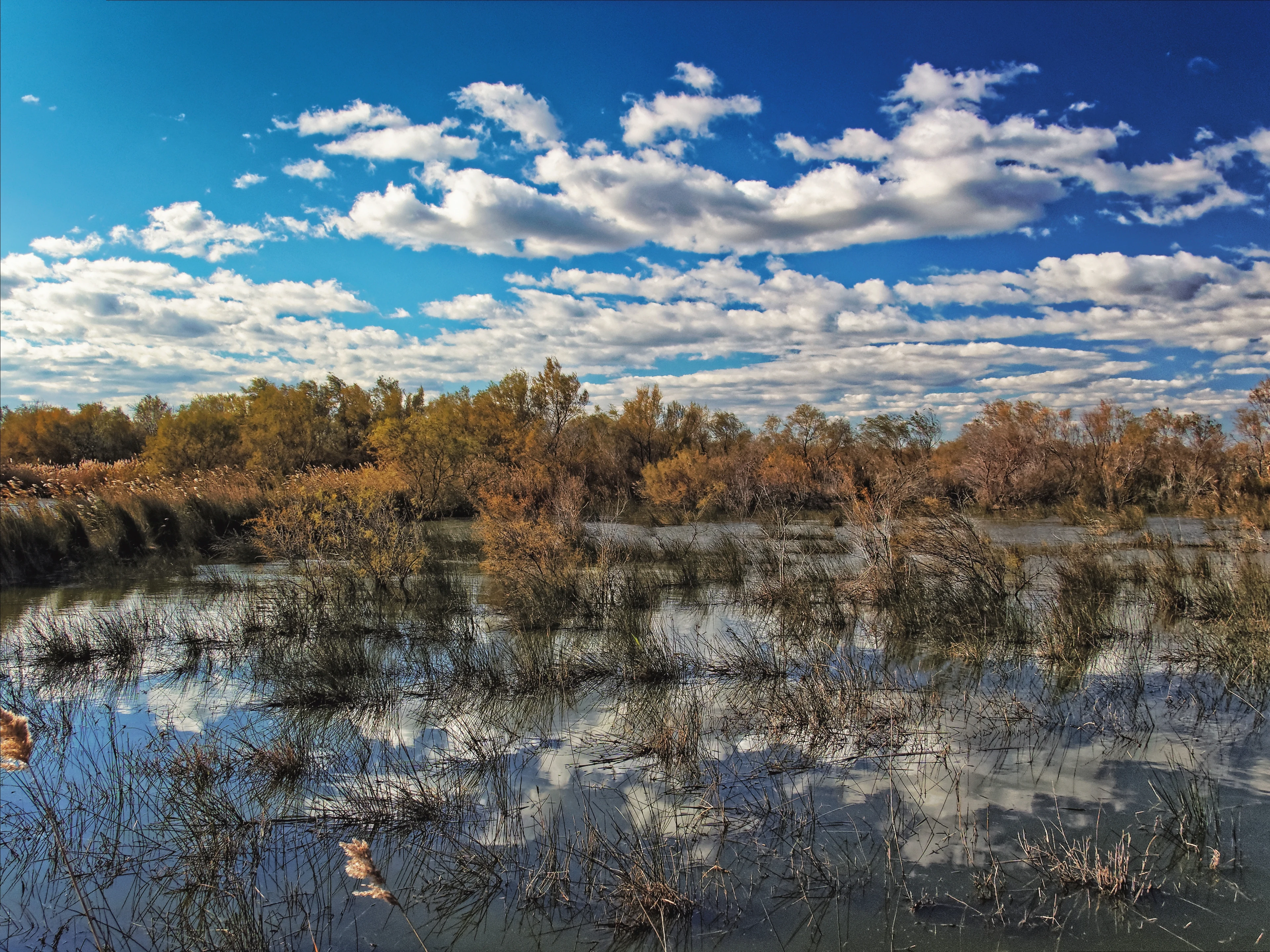
A wide view of a marshy pond reflecting a blue sky with scattered clouds, with golden-toned autumn trees and reeds in the midground.
Autumn landscape at the Scamandre Pond, showcasing the characteristic marshland vegetation of the reserve.

Réserve naturelle régionale du Scamandre conservation status and protection priorities

From a conservation perspective, the Scamandre reserve's significance lies as much in the concentration and completeness of Camargue habitats within a small, manageable area as in any single species. By assembling prairie, sansouïre, and marsh within a single protected boundary, and by embedding it within a wider network of Camargue wetland sites, the reserve contributes to the safeguarding of the Camargue ecosystem's overall structure and function. Its strong legal status as a regional nature reserve, its inclusion in the World Database on Protected Areas, and its IUCN Category IV designation reflect this regional-to-international conservation relevance.

The reedbeds of Petite Camargue, including those of Scamandre, are considered among the most important in western Europe for marshland-dependent bird populations, giving the reserve an outsized importance for waterbird conservation. The site's educational and discovery function also plays a conservation role: by raising awareness of the fragility and richness of Camargue wetlands, it builds public support for the broader conservation of the Camargue.

The recent history of the site, transitioning from a voluntary reserve in 1994 to a formally recognised regional nature reserve in 2006, illustrates an ongoing strengthening of protection. Active management by the Camargue gardoise syndicate, combined with controlled public access through marked trails and a discovery centre, represents an attempt to balance conservation of sensitive habitats with public engagement.

Réserve naturelle régionale du Scamandre cultural meaning and human context

The reserve is embedded in the cultural landscape of the Camargue gardoise, the Gard portion of the Camargue. Long before the site gained any formal protection, the open prairies here were shaped by transhumant sheep grazing, an ancient Mediterranean pastoral tradition that defined both the vegetation structure and the human geography of the area. The principal building on the site was a bergerie, a sheepfold, and one part of the reserve still carries the pastoral nickname "La Fromagère," preserving this rural heritage in the landscape itself.

The reserve's location within walking distance of the hamlet of Gallician, between the communes of Vauvert and Saint-Gilles, places it within a region marked by centuries of interaction between human activity, livestock, salt, and wetland. The Camargue as a whole carries strong regional identity, expressed in its cattle breeds, its horsemanship, its festivals, and its distinct Provençal-influenced dialects and traditions. Scamandre participates in this regional identity by interpreting the natural heritage of the Camargue to residents, school groups, and visitors.
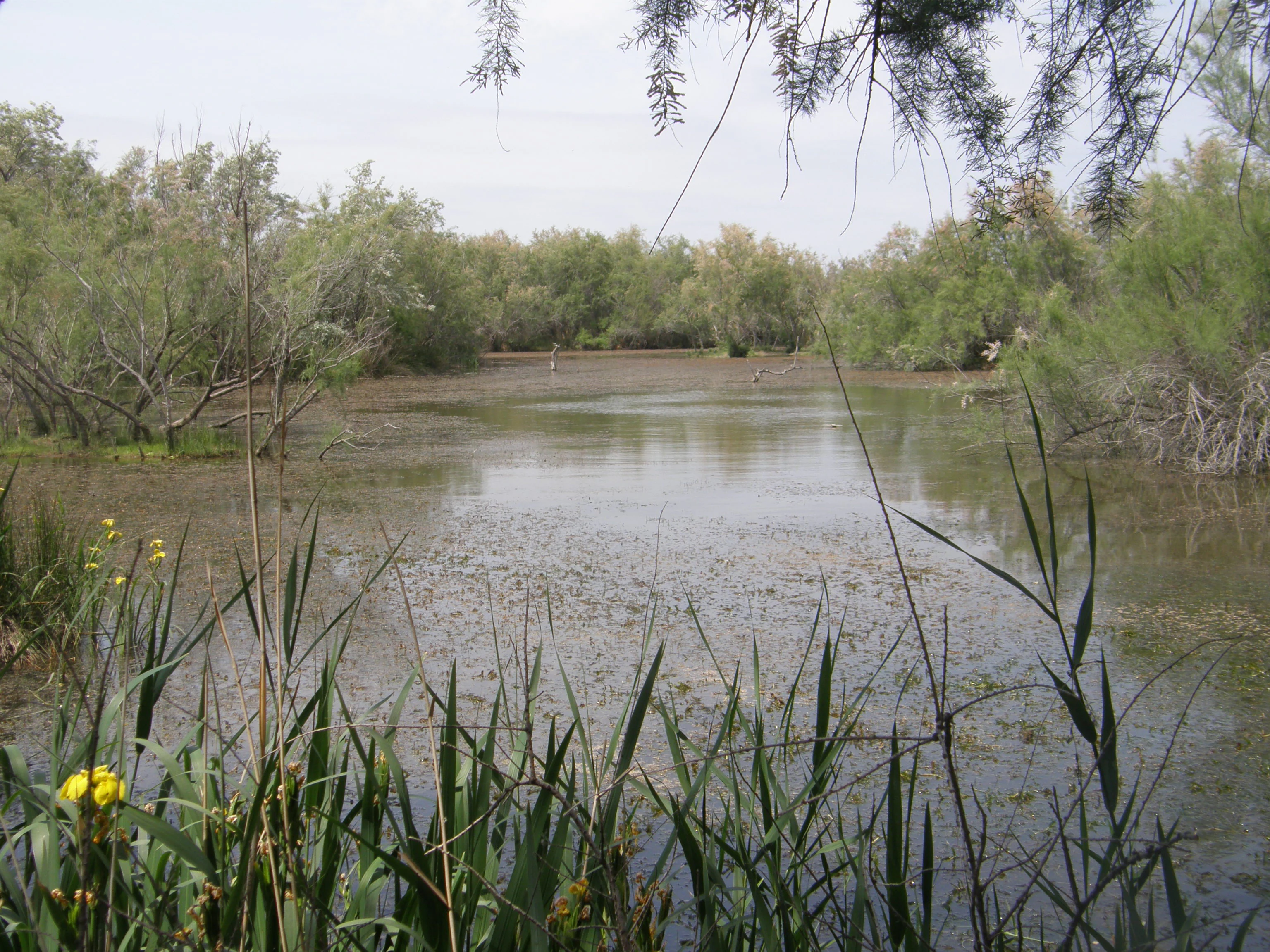
A calm, shallow pond in a wetland, surrounded by shrubs and reeds under an overcast sky.
A view of the pond and wetland habitat at the Scamandre regional nature reserve.

Top sights and standout views in Réserve naturelle régionale du Scamandre

A standout feature is the reserve's ability to present all three iconic Camargue habitats, prairie, sansouïre, and marsh, within a single, easily explored site. The juxtaposition of saline steppe and marsh is not just visually striking but ecologically definitive for the Camargue, and Scamandre is unique in the Petite Camargue in being a regional nature reserve specifically developed for public reception.

Equally compelling is the reserve's birdlife, particularly its hosting of all nine European species of herons and egrets, together with a strong population of glossy ibis and a rich supporting cast of kingfishers, bee-eaters, stilts, reed warblers, and other marsh-dependent birds. Together with the discovery centre and the boardwalk routes, these features make the Scamandre reserve a compact but unusually complete gateway to the wetland heritage of the Camargue.
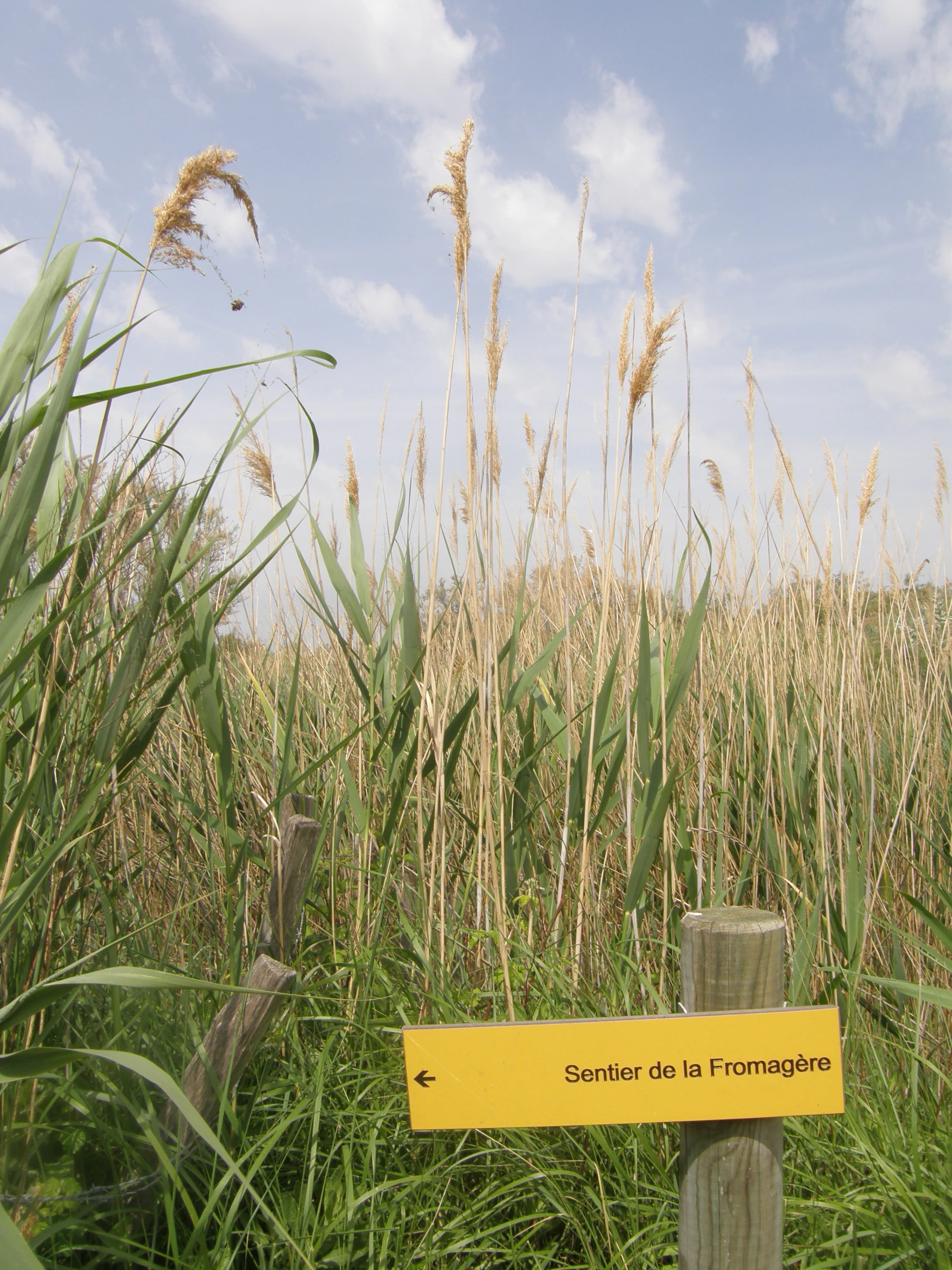
A yellow trail sign with black text reading Sentier de la Fromagere, mounted on a wooden post in front of tall marsh reeds under a light blue sky.
A trail marker sign for the Sentier de la Fromagere, guiding visitors through the marshy habitats of the Scamandre nature reserve.

Best time to visit Réserve naturelle régionale du Scamandre

Because the reserve's identity revolves around its wetland habitats and birdlife, the character of a visit shifts notably with the seasons. Spring is the most rewarding period for birdwatchers, when herons, egrets, bitterns, and reedbed warblers are establishing territories and the reedbeds are at their most active, while the discovery centre's education programme is in full swing for school groups.

Late spring and early summer offer comfortable temperatures and active wildlife, with the sansouïre's salt-tolerant plants in flower and the marais at its lushest. Autumn and winter have their own appeal: cooler conditions bring different waterbird concentrations, the surrounding étang takes on quieter atmospheres, and the tamarisk stands and poplars shift colour. Summer can be hot and dry, and the saline flats are at their most exposed. Throughout the year, the discovery centre and the marked trails, particularly the boardwalk Butor trail, provide a structured way to experience the site across seasons.
Monthly climate preview

Long-term monthly temperature and precipitation averages recorded at a representative coordinate

Réserve naturelle régionale du Scamandre Climate Normals and Temperature Rhythms

Historical NASA POWER data spanning 1991 to 2020 outlines measured monthly temperature swings and precipitation rates across Réserve naturelle régionale du Scamandre. Examining the complete twelve-month climate profile reveals comprehensive multi-year baseline averages for this protected Gard location.
Annual mean16 °C
8 °C24 °C
Jan
Feb
Mar11°
Apr14°
May18°
Jun22°
Jul24°
Aug24°
Sep20°
Oct17°
Nov12°
Dec
Warmest month
July

24.5 °C

Coolest month
January

7.8 °C

Wettest month
November

2.6 mm/day

Driest month
July

0.6 mm/day

Park location guide

Geography guide, regional context, and park location map for Réserve naturelle régionale du Scamandre

Réserve naturelle régionale du Scamandre park geography, regions, and map view in France

Understand where Réserve naturelle régionale du Scamandre sits in France through a broader geographic reading of the surrounding landscape, nearby location context, and its mapped position within the national park landscape.

How Réserve naturelle régionale du Scamandre fits into France

France is a unitary semi-presidential republic and one of the world's largest economies. It borders Belgium, Luxembourg, Germany, Switzerland, Italy, Monaco, Andorra, and Spain, with a maritime border to the United Kingdom. The country is known for its cultural influence, art, cuisine, and political history spanning centuries.

Wider geography shaping Réserve naturelle régionale du Scamandre in France

France is located in Western Europe. Metropolitan France extends from the Rhine to the Atlantic Ocean and from the Mediterranean Sea to the English Channel and North Sea. The country borders Belgium, Luxembourg, Germany, Switzerland, Italy, Monaco, Andorra, Spain, and has a maritime border with the United Kingdom.

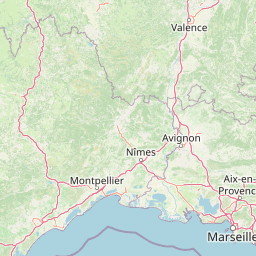
Map view of Réserve naturelle régionale du Scamandre

Use this park location map to pinpoint Réserve naturelle régionale du Scamandre in France, understand its exact geographic position, and read its mapped placement within the surrounding landscape more clearly.

Pigeon | © OpenStreetMap contributors

Location context for Réserve naturelle régionale du Scamandre

GardOccitanie

Visualizing the wetland habitats, salt steppes, and marsh terrain of Petite Camargue

Réserve naturelle régionale du Scamandre Photos and Protected Landscape Scenery

Visual documentation captures the distinct mosaic of salt steppes, grassy prairies, and dense reedbeds that define the terrain of Réserve naturelle régionale du Scamandre. Examining photographic records allows researchers and visitors to observe habitat transitions, wetland flora, and the natural environment of protected bird species more closely.

A long wooden boardwalk path curves through shallow marshland surrounded by shrubs and reeds under a blue sky.

A brown, striped Eurasian bittern bird standing in shallow water, surrounded by dense reeds in a wetland environment.

A wooden boardwalk trail stretches over calm wetland water under a cloudy sky, with tall reeds and sparse trees along the side.

A narrow, dirt foot trail stretches into the distance, framed by low-hanging tree branches and thick reeds, creating a natural tunnel effect with dappled light.

A wide view of a marshy pond reflecting a blue sky with scattered clouds, with golden-toned autumn trees and reeds in the midground.

A calm, still pool of water reflecting the sky, surrounded by tall marsh grasses and overhanging trees at the Scamandre Regional Nature Reserve.

A calm, shallow pond in a wetland, surrounded by shrubs and reeds under an overcast sky.

A yellow trail sign with black text reading Sentier de la Fromagere, mounted on a wooden post in front of tall marsh reeds under a light blue sky.

Park atlas

Compare surrounding wetland reserves and regional protected habitats in southern France

Other Parks Near Réserve naturelle régionale du Scamandre And Protected Landscapes

Browsing other protected areas near Réserve naturelle régionale du Scamandre reveals a continuous network of delta wetlands, salt steppes, and expansive reedbeds. Expanding the geographic comparison helps trace broader ecological patterns across the regional landscape and surrounding Mediterranean river basins.
A horizontal watercolor illustration showing a marshy, grassy landscape with soft green and muted pink tones against a white background.
Regional parkProvence-Alpes-Côte d'Azur
About 6.4 km away#1 closest

East

Parc naturel régional de Camargue: Mapping the Rhône Delta Protected Wetland Landscape

Regional park geography and wetland conservation zones

Parc naturel régional de Camargue is a sprawling protected landscape at the confluence of the Rhône and the Mediterranean. This regional park contains significant saline lagoons, coastal dunes, and fertile marshes that serve as a crucial site for waterbird migration. Understand the interplay between traditional salt-making, pastoral ranching, and the strictly protected nature reserves that shape this delta territory.

Area
856.9 km²
Established
1970
IUCN
V
Relief
Lowland
A horizontal watercolor painting depicting a soft, washed-out landscape of wetlands with green vegetation, calm water, and gentle hills in the distance.
Nature reserveOccitanie
About 9.3 km away#2 closest

West

Réserve naturelle régionale de Mahistre et Musette: Regional Nature Reserve and Wetland Atlas

Petite Camargue geography and protected marshland mosaic in Occitanie

Located in the Gard department of southern France, the Réserve naturelle régionale de Mahistre et Musette represents a successful case of wetland restoration. This protected area features a distinct landscape of reedbeds, saline flats, and ponds, providing critical habitat for numerous wetland species. Access detailed geographic context on how these restored marshes link to the broader Petit Camargue environmental network.

Area
2.616 km²
Established
1999
IUCN
IV
A watercolor illustration of a tranquil marshland scene with soft green and muted pink tones, depicting reeds, sparse trees, and calm water.
Nature reserveFrance
About 29 km away#3 closest

Southeast

Réserve naturelle régionale de la Tour du Valat: Mediterranean Wetland and Research Landscape Map

A critical protected area and ecological research estate in the Rhône delta of France.

Located in the Bouches-du-Rhône department, the Réserve naturelle régionale de la Tour du Valat serves as a reference point for Mediterranean wetland science. The reserve features an intricate landscape of marshes, salt meadows, and woodland patches that support diverse birdlife and habitats. This protected area demonstrates the integration of active pastoral land use with habitat management on a significant deltaic estate near Arles.

Area
18.44 km²
Established
2008
Relief
Lowland
Climate
Mediterranean
A horizontal watercolor painting depicting a soft-focus landscape of grassy wetlands in the foreground with gentle, rolling hills in the background.
Nature reserveProvence-Alpes-Côte d'Azur
About 35 km away#4 closest

East

Réserve naturelle régionale de l'Ilon: Protected Wetland Atlas and Geographic Context

Mapping Mediterranean marshes in the Alpilles foothills.

Covering 176 hectares of diverse wetland habitat, Réserve naturelle régionale de l'Ilon preserves critical marshlands and floodable meadows. This site demonstrates the interplay between lowland water systems and the rocky Alpilles range, providing a essential refuge for diverse dragonfly and bird species within the heart of Provence.

Area
1.76 km²
Established
2012
IUCN
IV
A soft watercolor painting of a winding river flowing through a gentle, rolling green valley with hills in the background.
Nature reserveOccitanie
About 36 km away#5 closest

North

Réserve naturelle régionale des gorges du Gardon: Geography and Protected Area Overview

Mediterranean river valley and raptor conservation corridor

Examine the distinct topography of the Réserve naturelle régionale des gorges du Gardon. The protected area features steep limestone cliffs and a river corridor that sustains dense Mediterranean oak forests. This site remains a critical node for raptor conservation, specifically supporting nesting Egyptian vultures and Bonelli eagles within its structured valley geography.

Area
4.913 km²
Established
2007
IUCN
IV
Watercolor painting of a low lying landscape with calm water, grassy wetlands in the foreground, and distant green hills under a soft sunset sky.
Protected areaHérault
About 49 km away#6 closest

West

Salins de Frontignan: An Atlas of Protected Coastal Wetlands in the Hérault Region

Explore saline landscapes and marshland geography on the Gulf of Lion.

Located in the Hérault department, Salins de Frontignan offers a fascinating study in coastal geography and ecological reclamation. This protected area features abandoned salt marshes that have evolved into a vital network of evaporation basins, salt steppes, and lagoon margins. The site serves as a crucial habitat for specialized halophytic plants, positioned uniquely between the Mediterranean shoreline and the limestone foothills of the Gardiole range.

Area
2.795 km²
Established
1980
IUCN
IV
Relief
Lowland
Nature reserveProvence-Alpes-Côte d'Azur
About 54 km away#7 closest

East

Réserve naturelle régionale de la Poitevine-Regarde-Venir: Steppe Conservation and Geography

Protected dry steppe landscapes in the French Crau region

Delve into the geography of the Réserve naturelle régionale de la Poitevine-Regarde-Venir, a specialized nature reserve that safeguards the distinctive pebbly coussoul of the Crau plain. The area represents a fundamental piece of Mediterranean pastoral history, balancing fragile steppe ecosystems with traditional agricultural meadows.

Area
2.207 km²
Established
2009
IUCN
IV
Nature reserveProvence-Alpes-Côte d'Azur
About 55 km away#8 closest

East

Réserve naturelle régionale du Pourra - Domaine du Ranquet: Coastal Lagoon Protected Landscape

Regional Nature Reserve in Provence-Alpes-Côte d'Azur

Spanning over 300 hectares near Port-de-Bouc, this protected area preserves interconnected Mediterranean lagoons and surrounding marshlands. It offers a distinct geographic perspective on transitional coastal habitats situated within the heavily developed Bouches-du-Rhône department.

Area
3.153 km²
Established
2020
IUCN
IV

Common questions about visiting, size, designation, and location context for Réserve naturelle régionale du Scamandre

Réserve naturelle régionale du Scamandre FAQs for park facts, access, geography, and protected area context

Find quick answers about Réserve naturelle régionale du Scamandre, including protected-area facts, park geography, trail and visitor context, and how the park fits into its surrounding country and regional landscape.
MoriAtlas Explorer

Continue Your Protected Areas Search Across the Global Atlas

Deepen your exploration by continuing the structured search for national parks and protected areas worldwide. Utilize the comprehensive filtering capabilities to compare different conservation landscapes and refine your understanding of global park geography. Discover more about the distribution and characteristics of protected natural areas.

Global natural geography