Why Réserve naturelle régionale Ermitage-Escampeaux stands out
The Ermitage-Escampeaux reserve is best known as a newly designated regional nature reserve in the Vaucluse, in the interior of Provence-Alpes-Côte d'Azur. Its identity is linked to the local landscape around Villes-sur-Auzon, on the approaches to Mont Ventoux, rather than to any single landmark or species. The site's distinctive value lies in its combination of Provençal upland terrain, Mediterranean scrubland patterns, and a regional-level protection status that reflects growing local attention to natural heritage in inland Provence. As a category IV IUCN area, it is centered on the conservation of habitats and species rather than on wilderness preservation.
Réserve naturelle régionale Ermitage-Escampeaux history and protected-area timeline
The Réserve naturelle régionale Ermitage-Escampeaux does not yet have a detailed published history. The reserve was formally created on 9 April 2026 by a deliberation of the Conseil régional of Provence-Alpes-Côte d'Azur, and it received the registry code RNR351.
Given how recent its establishment is, the reserve's history is primarily administrative rather than a long narrative of use or protection. It does not have a predecessor reserve status, and its current boundaries reflect the area recognized by the regional authorities as warranting conservation attention. Its development as a fully described protected area, with ecological assessments and a management plan, is still in progress.
Réserve naturelle régionale Ermitage-Escampeaux landscape and geographic character
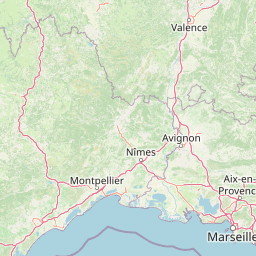
The reserve lies in the northern Vaucluse, near Villes-sur-Auzon, in a landscape shaped by the transition between the Rhône valley system and the foothills of Mont Ventoux. The terrain combines gentle hills, rocky outcrops, and areas of Mediterranean woodland and scrub, characteristic of inland Provence.
The surrounding region is known for its open garrigue vegetation, mixed forests of evergreen and deciduous species, and agricultural mosaics of vineyards, orchards, and fields. The reserve captures a portion of this transitional landscape, contributing to the protection of the natural scenery that defines the area between the Provençal plains and the higher Ventoux massif.
Cooler microclimates associated with elevation differences, together with exposures to wind and sun typical of southern France, give the area a varied physical character across a relatively compact territory.
Réserve naturelle régionale Ermitage-Escampeaux ecosystems, habitats, and plant life
Although the reserve's specific ecological inventory is still being developed, the natural environment of the area around Villes-sur-Auzon is typical of inland Provence. The site sits in a region where Mediterranean ecosystems meet more continental influences from the nearby mountain zones. Vegetation patterns are likely to include garrigue scrub, holm oak and other evergreen woodland patches, and areas of mixed forest that reflect the transitional geography of the northern Vaucluse.
The reserve's protected status suggests that its habitats, which may include rocky slopes, woodland, and open scrub areas, are ecologically significant at a regional scale. Its IUCN category IV designation implies a focus on conserving particular habitats and species communities rather than on a fully undisturbed wilderness.
As the reserve matures and detailed biodiversity data becomes available, it will likely contribute to broader conservation networks in Provence-Alpes-Côte d'Azur, where ecological corridors between protected areas are an important regional concern.
Réserve naturelle régionale Ermitage-Escampeaux wildlife and species highlights
Detailed wildlife information for the reserve is not yet available. Based on the broader ecological context of the northern Vaucluse and the foothills around Mont Ventoux, the area would generally be expected to support species typical of Mediterranean and pre-Alpine Provençal environments, including a mix of resident and migratory birds, small mammals, reptiles, and invertebrates associated with garrigue and oak woodland.
The reserve's classification suggests that habitat- and species-level conservation are priorities, which will shape future inventory efforts once more detailed ecological studies are completed.
Réserve naturelle régionale Ermitage-Escampeaux conservation status and protection priorities
The reserve is managed under France's regional nature reserve framework, a status that provides legal protection through the Conseil régional of Provence-Alpes-Côte d'Azur. Its IUCN category IV designation indicates that the protection strategy focuses on the conservation of specific habitats and species, rather than the establishment of a strictly preserved wilderness.
By securing 252.9 hectares around Villes-sur-Auzon, the reserve contributes to the network of regionally significant protected areas in a department where national-level protections are complemented by a network of smaller, locally important sites. Its creation in 2026 reflects the continued strengthening of regional conservation instruments in southeastern France, particularly in inland areas where natural heritage intersects with traditional agricultural and rural landscapes.
Réserve naturelle régionale Ermitage-Escampeaux cultural meaning and human context
The reserve lies within a part of Provence whose cultural identity is closely tied to rural land use, including viticulture, olive cultivation, and small-scale farming. Villes-sur-Auzon and the surrounding villages in the northern Vaucluse have long histories shaped by interaction with the Provençal landscape, and the regional nature reserve framework in France is designed to balance conservation with the continuation of traditional local activities.
Beyond its ecological role, the reserve is therefore part of a regional effort to maintain the natural settings that define Provençal rural life. Its relatively small size and recent establishment suggest that future management will need to integrate conservation objectives with the cultural and economic practices of the surrounding community.
Top sights and standout views in Réserve naturelle régionale Ermitage-Escampeaux
The Réserve naturelle régionale Ermitage-Escampeaux is notable as one of France's newest regional nature reserves, classified in 2026 in the Vaucluse department of Provence-Alpes-Côte d'Azur. Its location near Mont Ventoux places it within a distinctive transition zone between Mediterranean lowland landscapes and the higher Provençal uplands.
Highlights of the reserve include its 252.9 hectares of protected Provençal terrain, its role in the regional conservation network of southeastern France, and its basis in a landscape where Mediterranean garrigue, oak woodland, and traditional rural land use come together.
Best time to visit Réserve naturelle régionale Ermitage-Escampeaux
The timing of a visit to the Ermitage-Escampeaux reserve is influenced by the wider seasonal rhythms of inland Provence. Spring and early summer are typically the most comfortable seasons for experiencing Provençal landscapes, with blooming garrigue vegetation, active birdlife, and mild temperatures before the heat of high summer.
Late summer and early autumn bring warmer, drier conditions and a more golden landscape, while winter can be cooler, particularly given the reserve's position in the foothills approaching Mont Ventoux. Because the reserve is newly created and visitor infrastructure is still being developed, those interested in exploring it should treat the surrounding Provençal countryside and the town of Villes-sur-Auzon as the main context for any seasonal planning.