Mori Atlas logo
Nature reserveRezerwat przyrody Jezioro Święte

Examining the post-glacial lake basin and protected aquatic vegetation of this Polish nature reserve

Rezerwat przyrody Jezioro Święte: A Mapped Protected Area in the Pojezierze Sławskie

Rezerwat przyrody Jezioro Święte preserves a distinct freshwater ecosystem within the Pojezierze Sławskie lake district of western Poland. This nature reserve protects a rare post-glacial channel lake and its surrounding accumulation zones, characterized by floating vegetation mats and uncommon Chara stonewort communities that thrive along the northern shore. The surrounding terrain reflects the flat sandy outwash plains typical of the region, providing a stable, strictly managed environment for these delicate aquatic habitats.

lake reservepost-glacial lakestrict protectionaquatic vegetationChara stonewortsandr plain

Rezerwat przyrody Jezioro Święte

Nature reserve

Park overview

Structured park overview, official facts, and landscape profile for Jezioro Święte Nature Reserve

Jezioro Święte Nature Reserve park facts, protected area profile, and essential visitor context

Review the core facts for Jezioro Święte Nature Reserve, including designation, size, terrain, visitor scale, habitats, and operating context in one park-focused overview.

About Jezioro Święte Nature Reserve

Jezioro Święte Nature Reserve is one of many small, ecologically focused protection areas scattered across the lake districts of western Poland, but it stands out for the concentration of botanical value packed into a very compact lake basin. The reserve centers on Lake Święte, a narrow water body shaped like a glacial channel running east to west. The lake was formed during the Baltic glaciation and sits on a broad sandr plain built from medium and coarse sands deposited by glacial meltwater. This sandy setting, combined with groundwater feeding rather than surface runoff, gives the lake a particular ecological character.

About 94 percent of the lake's shoreline is lined with aquatic vegetation, and emergent and floating plant communities together cover roughly a quarter of the water surface. Botanical surveys inside the reserve have identified five distinct reed and sedge (oczeretowo-szuwarowe) plant associations and six submerged and floating-leaved plant associations. In the more sheltered accumulation zones and at the lake's western end, reed vegetation builds floating mats over soft, waterlogged sediment. These mats, known locally as pło, drift on the lake and represent an unusual lake-shore formation that develops only where organic sediment accumulates under calm conditions.

The surrounding landscape belongs to the Pojezierze Sławskie, a mesoregion characterized by numerous post-glacial lakes, sandy outwash plains, and pine-dominated forests. The reserve itself is contiguous with forested land administered by the Sława Śląska Forest District, which ensures that the lake basin is buffered by forested catchment rather than agricultural land. The lake feeds the Obrzyca river system via an artificial open ditch, but the lake's main water source remains groundwater seeping up through the sandy substrate.

As a strictly protected reserve, Jezioro Święte is intended to allow the natural processes of this lake ecosystem to continue uninterrupted. Strict protection in Poland is reserved for sites of high natural value where scientific observation and ecological integrity are prioritized over public access. The reserve thus serves both as a refuge for uncommon aquatic species and as a reference site for understanding post-glacial lake ecology in the region.

Quick facts and research context for Jezioro Święte Nature Reserve

Jezioro Święte is a water nature reserve (rezerwat wodny) covering 19.35 hectares, established on 22 April 1983 by order of the Minister of Forestry and the Wood Industry. It lies in Lubuskie Voivodeship, in Nowosolski County, within Gmina Kolsko, in the mezoregion of Pojezierze Sławskie. The protected object is Lake Święte itself, a post-glacial lake of the Baltic glaciation period, fed primarily by groundwater and connected to the Obrzyca river system by an artificial open ditch. The reserve is under strict protection (ochrona ścisła) and is owned by the State Treasury, administered by the Sława Śląska Forest District.

Park context

Deeper park guide and search-rich context for Jezioro Święte Nature Reserve

Jezioro Święte Nature Reserve history, landscape, wildlife, and travel context

Explore Jezioro Święte Nature Reserve through its history, landscape character, ecosystems, wildlife, conservation priorities, cultural context, and seasonal travel timing in a structured park guide built for atlas discovery and search intent.

Why Jezioro Święte Nature Reserve stands out

The reserve is best known for protecting a rare assemblage of aquatic plant communities in and around a small post-glacial lake. Among these, the most notable feature is the presence of Chara (ramienica) stonewort stands along the northern shore, a plant group that is uncommon in Poland. The lake is also distinguished by its nearly continuous ring of emergent and floating-leaved aquatic vegetation, including floating mats (pło) of reed and sedge communities over waterlogged sediment in the lake's accumulation zones and western end.

Jezioro Święte Nature Reserve history and protected-area timeline

Jezioro Święte Nature Reserve was created on 22 April 1983 by an order of the Polish Minister of Forestry and the Wood Industry, published in the Polish legal gazette (Monitor Polski, 1983, No. 16, item 91, §15). The date falls during a period when Poland was intensively expanding its network of nature reserves, especially in lake and forest landscapes, often by formalizing protection over sites that had already been informally valued by foresters, botanists, and naturalists for decades.

Following Poland's administrative reorganization in 1999, when the modern voivodeship structure was introduced, the reserve's official listing was reissued by the Voivode of Lubuskie on 16 January 2002 in a consolidated register of nature reserves established before 31 December 1998. Later, on 23 July 2010, the Regional Director for Environmental Protection in Gorzów Wielkopolski issued Order No. 19/2010 specifically addressing the reserve, updating its management framework.

Ownership of the reserve has rested with the State Treasury, with day-to-day administration delegated to the Sława Śląska Forest District (Nadleśnictwo Sława Śląska). The reserve was registered under regional number 27, reflecting its position as one of the older formally codified nature reserves in the Lubuskie region.

Jezioro Święte Nature Reserve landscape and geographic character

The landscape of Jezioro Święte is defined by a narrow, east-west oriented lake basin surrounded by the flat sandy outwash plain of the Pojezierze Sławskie lake district. The terrain is gently undulating rather than dramatic, with glacial landforms shaped by the Baltic glaciation. The reserve sits on a broad sandr formed from medium and coarse glacial sands, giving the area a sandy, well-drained character beyond the lake itself.

The lake follows the shape of a glacial channel (rynna), a long, narrow depression cut and then filled by glacial activity. Maximum depths reach around 11 meters, while average depth is roughly 5 meters. The shoreline is almost continuously bordered by watery vegetation that softens the transition between open water and land, while in the calmer western end of the lake, floating mats of organic material drift over waterlogged sediment. Beyond the immediate lakeshore, the broader landscape shifts into forested sandy terrain typical of western Poland's lake country.

Jezioro Święte Nature Reserve ecosystems, habitats, and plant life

The ecological character of the reserve is dominated by freshwater vegetation and the unusual conditions that support it. Five reed and sedge (oczeretowo-szuwarowe) plant associations and six submerged and floating-leaved plant associations have been documented inside the reserve, a remarkable diversity for a lake of this size. The aquatic plant cover is so extensive that about a quarter of the lake's open water surface is occupied by vegetation, and only a small fraction of shoreline remains free of plant growth.

A particular highlight is the presence of Chara (ramienica) stonewort stands along the northern shore. Stoneworts are a special group of macroalgae-like aquatic plants that prefer clear, calcium-rich, groundwater-fed waters and are considered indicators of good ecological condition. Their rarity across Poland makes the stands at Jezioro Święte ecologically noteworthy.

Jezioro Święte Nature Reserve wildlife and species highlights

The reserve's wildlife focus is closely tied to its aquatic plant communities. While no specific vertebrate fauna is highlighted in the source material, the dense zones of emergent, floating, and submerged vegetation create sheltered habitat for invertebrates, amphibians, and waterbirds typical of small post-glacial lakes in western Poland. The floating mats and vegetated shallows in particular offer nesting, foraging, and refuge conditions for species associated with undisturbed lakeshore ecosystems.

Jezioro Święte Nature Reserve conservation status and protection priorities

Jezioro Święte receives strict protection (ochrona ścisła), the highest tier of nature conservation in Poland. Under this regime, the lake and its surrounding buffer are managed to preserve natural processes with minimal direct human intervention. The conservation aim stated in the founding order is to preserve a lake fed by groundwater and to safeguard the characteristic plant communities and habitats of rare aquatic plant species present there.

The reserve's importance lies in its role as a refuge for uncommon freshwater vegetation types, especially Chara stonewort stands and diverse submerged and floating-leaved plant associations, within a broader regional landscape where lake ecosystems have often been modified by drainage, agriculture, or water level changes. By protecting the lake basin and the forest buffer administered by the Sława Śląska Forest District, the reserve helps maintain a relatively undisturbed example of how groundwater-fed post-glacial lakes function in this part of Poland.

Top sights and standout views in Jezioro Święte Nature Reserve

Among the reserve's most distinctive features are its floating mats of emergent vegetation (pło) drifting over waterlogged sediment in the accumulation zones and western end of the lake. These formations are visually striking and ecologically unusual, forming only where organic sediment builds up under calm conditions.

Equally noteworthy is the nearly continuous ring of aquatic plant communities that surround the lake, and especially the Chara stonewort stands along the northern shore. Chara communities are uncommon in Poland, and their presence here is one of the main reasons the area received strict protection status rather than a more general conservation designation.

Best time to visit Jezioro Święte Nature Reserve

Given the reserve's strict protection status and focus on undisturbed lake ecology, any visit framing should emphasize appreciation of the landscape context rather than active recreation. For general visitors interested in similar landscapes in the Pojezierze Sławskie region, late spring through early autumn is typically the most rewarding period, when aquatic vegetation is fully developed, the surrounding forests are in leaf, and lake conditions are calm. Winter can offer a quieter view of the same landforms, though frozen water and snow cover limit access and visibility of the lake's ecological character.
Monthly climate preview

Long-term representative point measurements tracking monthly temperature and precipitation rhythm

Rezerwat przyrody Jezioro Święte Climate Normals and Annual Weather Patterns

Representative coordinate records for Rezerwat przyrody Jezioro Święte document measured monthly temperature ranges and daily precipitation rates across a multi-year climatology period. Detailed analysis of the complete twelve-month normals provides deeper insight into annual meteorological cycles for this protected location.
Annual mean9 °C
-2 °C20 °C
Jan-2°
Feb
Mar
Apr
May14°
Jun18°
Jul20°
Aug20°
Sep15°
Oct
Nov
Dec
Warmest month
July

20.2 °C

Coolest month
January

-1.7 °C

Wettest month
July

2.6 mm/day

Driest month
April

1.1 mm/day

Park location guide

Geography guide, regional context, and park location map for Jezioro Święte Nature Reserve

Jezioro Święte Nature Reserve park geography, regions, and map view in Poland

Understand where Jezioro Święte Nature Reserve sits in Poland through a broader geographic reading of the surrounding landscape, nearby location context, and its mapped position within the national park landscape.

How Jezioro Święte Nature Reserve fits into Poland

Poland, officially the Republic of Poland, is a Central European country spanning from the Baltic Sea in the north to the Carpathian Mountains in the south. It borders Germany, Czech Republic, Slovakia, Ukraine, Belarus, Lithuania, and Kaliningrad Oblast. The country has a temperate climate, diverse landscapes, and is known for its rich history, cultural heritage, and strong economic position within the EU.

Wider geography shaping Jezioro Święte Nature Reserve in Poland

Poland occupies 312,696 km2 in Central Europe, extending from the Baltic Sea coast in the north to the Sudetes and Carpathian Mountains in the south. It borders Germany to the west, Czech Republic and Slovakia to the south, Ukraine and Belarus to the east, and Lithuania and Kaliningrad Oblast to the northeast. The landscape includes lowland plains, uplands, and mountain ranges.

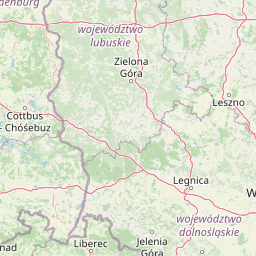
Map view of Jezioro Święte Nature Reserve

Use this park location map to pinpoint Jezioro Święte Nature Reserve in Poland, understand its exact geographic position, and read its mapped placement within the surrounding landscape more clearly.

Pigeon | © OpenStreetMap contributors
Park atlas

Compare regional post-glacial lake reserves and connected freshwater habitats across western Poland

Explore Parks Near Rezerwat przyrody Jezioro Święte and Surrounding Protected Landscapes

Browsing nearby protected areas allows visitors to evaluate similar glacial channel basins and aquatic plant communities located throughout the wider regional lake district. Expanding the geographic scope reveals how small forest reserves and freshwater habitats connect across sandy outwash plains.
Nature reserveLubusz Voivodeship
About 1.9 km away#1 closest

South

Rezerwat przyrody Mesze Nature Reserve: Geographic Analysis of Protected Polish Lands

Post-glacial lake and peatland geography in Lubusz Voivodeship.

Rezerwat przyrody Mesze preserves an essential slice of Polish lowlands geography, showcasing the interaction between post-glacial water-laid sands and lake-driven peat formation. Within this protected valley, the transition from open water to bog communities provides a significant example of natural succession, offering high value for those mapping the diverse terrain of the Sławskie Lakeland region.

Area
0.199 km²
Established
1983
Relief
Lowland
Climate
Temperate
Protected areaLubusz Voivodeship
About 18 km away#2 closest

Southwest

Otyń Special Area of Conservation: Natura 2000 Site Details and Habitat Geography

A vital bat maternity roost located in western Poland.

Otyń is a specialized protected area in Lubusz Voivodeship, Poland, designated under the Natura 2000 framework to safeguard a significant maternity colony of greater mouse-eared bats. The site demonstrates how historic church structures function as vital ecological reservoirs, providing a protected habitat that contributes to broader regional wildlife preservation and conservation efforts.

Area
0.002 km²
Relief
Lowland
Water
No major water
Watercolor painting depicting a gentle river winding through green meadows and groves of trees with a soft, hazy background.
Protected areaLower Silesian Voivodeship
About 30 km away#3 closest

Southeast

Łęgi Odrzańskie: Protected Riverine Corridor in Lower Silesian Voivodeship

A 101-kilometer valley mosaic of forest and wetland habitats.

Traversing the Pradolina Wrocławska and beyond, Łęgi Odrzańskie serves as a critical protected landscape preserving remnant floodplain forests and oxbow lakes. The area functions as a premier riverine sanctuary in Central Europe, documented through its unique combination of alder swamps, peatlands, and diverse avian populations maintained along the middle Oder.

Area
21,350.5 km²
Established
2007
Relief
Lowland
Scope
Mixed
Nature reservePoland
About 31 km away#4 closest

East

Rezerwat przyrody Jezioro Trzebidzkie Nature Reserve: Geographic Map and Protected Habitat Study

Wetland and forest conservation within the Greater Poland moraine landscape

Investigate the protected boundaries of Rezerwat przyrody Jezioro Trzebidzkie. This faunistic reserve illustrates a transition between shallow lake basin, marshy reed beds, and deciduous forest stands, offering a clear view of postglacial terrain dynamics in the Przemęt commune of Poland.

Area
0.907 km²
Established
2000
Relief
Lowland
Scope
Terrestrial
Nature reserveGreater Poland Voivodeship
About 46 km away#5 closest

East

Rezerwat przyrody Dolinka: Protected Nature Reserve and Botanical Site in Greater Poland

A focused study of wet meadow conservation in western Poland

Rezerwat przyrody Dolinka is a key protected area in Greater Poland, dedicated to maintaining delicate molinia meadow habitats and native globeflower populations. This site highlights the importance of small-scale nature reserves in preserving botanical diversity within the post-glacial landscapes of the Krzywińskie Lakeland, offering a clear look at local environmental protection in action.

Area
0.018 km²
Established
1974
Relief
Lowland
Climate
Temperate
A watercolor painting showing a panoramic view of a light-colored lake surrounded by soft, green rolling hills and distant pink-toned mountains.
Nature reserveLubusz Voivodeship
About 53 km away#6 closest

North

Rezerwat przyrody Jezioro Wielkie: Protected Nature Reserve and Regional Landscape Geography

Faunistic reserve in Lubusz Voivodeship, western Poland.

Rezerwat przyrody Jezioro Wielkie preserves a shallow, post-glacial lake environment enriched by reedbeds, sedge meadows, and forested islands. This bird-focused protected area within Lubusz Voivodeship sustains a complex mosaic of woodland and wetland habitats, serving as a primary site for migratory waterbirds and locally threatened avian populations across the western Polish landscape.

Area
2.363 km²
Established
1991
Relief
Upland
Scope
Terrestrial
Protected areaGreater Poland Voivodeship
About 53 km away#7 closest

East

Wonieść Lake Protected Area: Geography, Wetland Habitats, and Regional Landscape Context

Postglacial water management and bird refuge in Greater Poland

Examine the geographic character of Wonieść Lake, a segmented retention reservoir reflecting the classic postglacial lowlands of western Poland. This protected area provides a significant wetland habitat within the Krzywińskie Lake District, blending historic hydraulic infrastructure with rich bird populations and forest-fringed shorelines that span across the rural Wielkopolska countryside.

Area
7.77 km²
Established
1974
Relief
Lowland
Climate
Temperate
Nature reserveLubusz Voivodeship
About 53 km away#8 closest

Northwest

Dębowy Ostrów Nature Reserve: Protected Oak Woodland and Lakeside Geography

Mapping ecological preservation in the Lubusz Voivodeship

Dębowy Ostrów is a significant nature reserve in western Poland, safeguarding a pristine fragment of acidic oak forest on a lakeside peninsula. Its geography is defined by the surrounding waters of Lake Paklicko Wielkie and the post-glacial terrain of the Pojezierze Łagowskie region, offering a concentrated look at lowland woodland ecosystems.

Area
0.018 km²
Established
1970
Relief
Lowland
Climate
Temperate

Common questions about visiting, size, designation, and location context for Jezioro Święte Nature Reserve

Jezioro Święte Nature Reserve FAQs for park facts, access, geography, and protected area context

Find quick answers about Jezioro Święte Nature Reserve, including protected-area facts, park geography, trail and visitor context, and how the park fits into its surrounding country and regional landscape.
MoriAtlas Explorer

Continue Your Protected Areas Search Across the Global Atlas

Deepen your exploration by continuing the structured search for national parks and protected areas worldwide. Utilize the comprehensive filtering capabilities to compare different conservation landscapes and refine your understanding of global park geography. Discover more about the distribution and characteristics of protected natural areas.

Global natural geography