Mori Atlas logo
Nature reserveRezerwat przyrody Małecz

Mapping the landscape and botanical conservation boundaries within Poland's Łódź Voivodeship

Rezerwat przyrody Małecz: Geographic Analysis of a Specialized Floristic Protected Nature Reserve

Rezerwat przyrody Małecz represents a significant floristic protected area situated within the Równina Piotrkowska mesoregion of Poland. This reserve preserves a rare population of yellow rhododendron nestled among mature pine and oak stands, illustrating a unique intersection of botanical rarity and managed forest structure. Through its distinct zones of strict and active protection, the site provides a concentrated look at central European forest dynamics and long-term ecological preservation.

floristic reservenature reservePolandŁódzkie VoivodeshipRównina PiotrkowskaSpała Forest District

Rezerwat przyrody Małecz

Nature reserve

Park overview

Structured park overview, official facts, and landscape profile for Małecz Nature Reserve

Małecz Nature Reserve park facts, protected area profile, and essential visitor context

Review the core facts for Małecz Nature Reserve, including designation, size, terrain, visitor scale, habitats, and operating context in one park-focused overview.

About Małecz Nature Reserve

Małecz Nature Reserve is a compact but ecologically distinctive protected site located in central Poland, in the Łódzkie Voivodeship near the village communities of Lubochnia. Although classified as a floristic reserve rather than a national park, it represents the kind of high-value botanical site that gives Polish nature protection much of its character, combining old forest stands with a flagship plant species of considerable biogeographical interest.

The reserve is administered on lands belonging to the Spała Forest District, an area known in Poland for its large, well-managed pine forests and its longstanding tradition of forestry and hunting culture. Within this forest landscape, the Małecz site stands out because of its unusual botanical composition, which includes not only typical central European coniferous species but also a thriving colony of yellow rhododendron, a shrub whose natural distribution lies in the Caucasus region and adjacent Pontic steppe areas to the southeast.

The broader landscape surrounding the reserve belongs to the Równina Piotrkowska, a flat lowland mesoregion characterized by sandy soils, pine-dominated forest communities, and a mosaic of agricultural land. The reserve's protected area reflects these conditions, hosting plant communities typical of both dry mixed coniferous forest and moist coniferous forest on slightly wetter ground.

Because of its small size and specialized focus, Małecz is best understood as a place of plant species conservation rather than general landscape tourism. Its value lies in the persistence of a rare shrub population, the integrity of its old-growth trees, and the example it provides of how a carefully managed floristic reserve can safeguard species of unusual biogeographical origin within an otherwise typical central Polish forest setting.

Quick facts and research context for Małecz Nature Reserve

Małecz Nature Reserve is a floristic reserve covering about 9.15 hectares in the Łódzkie Voivodeship of central Poland. It was established in 1987 by order of the Minister of Environmental Protection and Natural Resources, with a current management plan established in 2007. The reserve falls within the Spała Forest District in the Równina Piotrkowska mesoregion. Its defining protection objective is the preservation of a stand of yellow rhododendron (Rhododendron flavum) along with mixed and moist coniferous forest phytocoenoses.

Protection and recognition

Explore documented protection status and territorial designation records.

Rezerwat przyrody Małecz Protection Status and Terrestrial Designation

Rezerwat przyrody Małecz features a terrestrial protection scope grounded in formal designation records and administrative frameworks. Structured conservation data outlines the established governance boundaries and documented recognition metrics for this protected area.

Protection details

Protection scope
Terrestrial
Transboundary protection
No
Core area
2.09 km²
Park context

Deeper park guide and search-rich context for Małecz Nature Reserve

Małecz Nature Reserve history, landscape, wildlife, and travel context

Explore Małecz Nature Reserve through its history, landscape character, ecosystems, wildlife, conservation priorities, cultural context, and seasonal travel timing in a structured park guide built for atlas discovery and search intent.

Why Małecz Nature Reserve stands out

The reserve is best known for its population of yellow rhododendron (Rhododendron flavum), a Pontic-origin shrub that is one of the rarest and most botanically distinctive species in Europe. The Małecz stand is exceptional both because of the plant's unexpected presence well outside its native range and because the population has persisted and spread naturally since its original introduction in 1928.

Małecz Nature Reserve history and protected-area timeline

The reserve was formally created on 12 August 1987 through an order issued by the Polish Minister of Environmental Protection and Natural Resources, published in the official Monitor Polski journal of that year. Its establishment reflected growing recognition within the Polish conservation system of the biological importance of the site's yellow rhododendron stand and the surrounding mixed and moist coniferous forest communities.

Although the reserve itself dates from 1987, the history of the rhododendron population at Małecz is considerably older. According to regional botanical accounts, yellow rhododendron was deliberately planted at the site in 1928, an act that introduced a Pontic-origin species into a central Polish forest environment. Over the following decades, the shrubs became established and began to naturalize, spreading beyond the original planting locality into neighboring forest stands.

In 2007, the reserve received a formal protection plan that divided its territory into zones of strict protection and active conservation management, an approach designed both to preserve the most sensitive habitats and to allow controlled forestry or habitat-maintenance interventions where appropriate. This plan continues to define how the site is managed today and gives the reserve a modern, structured framework for ongoing botanical and forest conservation.

Małecz Nature Reserve landscape and geographic character

The reserve lies in a lowland area belonging to the Równina Piotrkowska, a relatively flat mesoregion typical of central Poland's sandy plains. The terrain around Małecz is gently undulating rather than dramatic, with sandy soils that favor the growth of coniferous species, particularly pine. The broader landscape is shaped by managed forest tracts belonging to the Spała Forest District, interspersed with small clearings and rural agricultural areas associated with the surrounding gmina.

Within the reserve itself, the forest is dominated by tall, long-lived pines. Some pines in the stand are estimated to be roughly 130 years old, suggesting that parts of the forest have been left relatively undisturbed for well over a century. Mixed among these pines are oaks, some of which exceed a century in age, while spruce, birch, rowan, and poplar fill out the middle layers and edge communities of the forest, contributing to a layered forest structure typical of mature central European woodland.

The hydrological character of the site is also important to its identity. A portion of the reserve is classified as moist coniferous forest, indicating the presence of areas where slight changes in water availability create wetter ground conditions. This subtle variation helps the reserve support both typical dry mixed coniferous forest communities, with their pine and oak emphasis, and the wetter, more specialized moist coniferous communities with their characteristic ground flora.

Małecz Nature Reserve ecosystems, habitats, and plant life

Ecologically, Małecz is significant for two overlapping reasons: its forest community composition and its exceptional botanical inhabitant. The site protects representative examples of mixed coniferous forest and moist coniferous forest, two phytocoenoses that are characteristic of the sandy lowlands of central Poland. These communities contain a mixture of pine, oak, spruce, birch, rowan, and poplar, and vary in moisture and species composition across the small reserve area.

The most unusual natural feature is the presence of a self-sustaining population of yellow rhododendron, a shrub with a native range far to the southeast. The species is a botanical curiosity in central Europe, and its successful establishment here demonstrates both the resilience of the plant and the suitability of certain parts of the Polish forest landscape for sustaining rare shrub populations when conditions are right.

The combination of old trees, structurally diverse forest layers, and an unusual shrub species gives the reserve an ecological profile that is richer than its small footprint would suggest. The forest's age structure, with multiple generations of trees including pines and oaks past a century in age, also means the reserve contains decaying wood, old bark, and other microhabitats important to fungi, insects, and other organisms that depend on mature forest conditions, even though the reserve is officially designated for floristic rather than faunal protection.

Małecz Nature Reserve wildlife and species highlights

The reserve's wildlife profile is not its primary conservation focus, since Małecz is officially a floristic reserve, not a faunal one. However, the presence of old-growth pine and oak stands, fallen wood, and varied canopy and shrub layers creates habitat for typical central European forest fauna. The mature and overmature trees likely support populations of forest birds, small mammals, and forest-floor invertebrates associated with long-established woodlands in this part of Poland.

The moist coniferous portions of the site probably add small additional habitat value for amphibians, moss- and lichen-dependent invertebrates, and bird species more closely tied to damp forest conditions, while the drier mixed coniferous sections favor species typical of sandy pine forests more broadly. Because the reserve is small and primarily managed for plant protection, wildlife observation is not a major activity associated with the site, but its structural diversity gives it underlying biodiversity value beyond its flagship rhododendron population.

Małecz Nature Reserve conservation status and protection priorities

From a conservation standpoint, Małecz represents the specific Polish model of a floristic reserve, a protected-area designation focused primarily on preserving particular plant species and the plant communities that support them. This makes it distinct from landscape parks, strictly protected forest reserves, or faunal reserves, and positions it as part of a national network of small but scientifically valuable botanical protection sites.

The reserve's central conservation justification is the preservation of its yellow rhododendron population, a species classified among the rarest and most botanically interesting in Europe. Protecting this population safeguards both a living example of a Pontic-origin shrub surviving far from its native range and a documented case of successful naturalization after deliberate introduction in 1928.

The application of a 2007 protection plan, with separate zones of strict and active protection, gives the site a layered conservation approach. The strict protection zone of about 2.09 hectares preserves the most sensitive habitats with minimal human intervention, while the active protection zone of about 6.84 hectares allows management actions that maintain forest health and the conditions that support the rhododendron population. Together, these arrangements ensure that the reserve is not only a static protected site but a managed conservation area in which specific actions can be taken to maintain its defining botanical features.

Małecz Nature Reserve cultural meaning and human context

Małecz's cultural context is closely tied to the forestry heritage of the Spała Forest District and the broader tradition of managed central Polish forests. The Spała area has long been associated with state forestry, and the reserve's location within its administrative boundaries reflects the integration of nature protection into a working forest landscape rather than its separation from it.

The rhododendron itself carries a particular cultural and historical resonance. Its deliberate planting in 1928, far from the species' natural range, places the reserve's story within the early twentieth-century period when Polish foresters and landowners experimented with introducing non-native ornamental and forest species. The subsequent naturalization of the shrub transformed what was originally a horticultural act into a long-term ecological phenomenon, giving the site a layered history of human intention and natural spread that is part of what makes it distinctive.

Top sights and standout views in Małecz Nature Reserve

The reserve's strongest highlights are its well-documented yellow rhododendron population, its roughly 130-year-old pines and century-old oaks, and its representation of two distinct coniferous forest communities within a small protected footprint. The 2007 management plan, with its dual approach of strict and active protection, is another notable feature, giving the site a modern and structured conservation framework. Together, these elements make Małecz a compact example of how Poland combines botanical rarity, old-growth forest structure, and active management in a single floristic reserve.

Best time to visit Małecz Nature Reserve

As a small, forested floristic reserve without major visitor infrastructure, Małecz is best experienced in late spring and early summer, when the yellow rhododendron is in bloom and the distinct character of the reserve's shrub layer is most visible. Late spring typically offers pleasant conditions for walking through lowland Polish pine forest, while early summer highlights the contrast between dry mixed coniferous areas and moist coniferous zones. Autumn visits can also be rewarding for observing the area's mature trees and overall forest atmosphere, although the rhododendron's flowering peak is the main seasonal attraction of the site.

Monthly climate preview

Long-term temperature ranges and monthly precipitation recorded at representative coordinates

Rezerwat przyrody Małecz Climate Normals and Annual Weather Patterns

Rezerwat przyrody Małecz experiences a measured annual temperature and precipitation rhythm derived from long-term representative point observations. Reviewing the complete twelve-month profile provides deeper analytical insight into monthly temperature swings and precipitation distribution across the protected area.
Annual mean8 °C
-3 °C20 °C
Jan-3°
Feb-2°
Mar
Apr
May14°
Jun18°
Jul20°
Aug20°
Sep14°
Oct
Nov
Dec-2°
Warmest month
July

20.2 °C

Coolest month
January

-3.4 °C

Wettest month
July

2.7 mm/day

Driest month
January

1.3 mm/day

Park location guide

Geography guide, regional context, and park location map for Małecz Nature Reserve

Małecz Nature Reserve park geography, regions, and map view in Poland

Understand where Małecz Nature Reserve sits in Poland through a broader geographic reading of the surrounding landscape, nearby location context, and its mapped position within the national park landscape.

How Małecz Nature Reserve fits into Poland

Poland, officially the Republic of Poland, is a Central European country spanning from the Baltic Sea in the north to the Carpathian Mountains in the south. It borders Germany, Czech Republic, Slovakia, Ukraine, Belarus, Lithuania, and Kaliningrad Oblast. The country has a temperate climate, diverse landscapes, and is known for its rich history, cultural heritage, and strong economic position within the EU.

Wider geography shaping Małecz Nature Reserve in Poland

Poland occupies 312,696 km2 in Central Europe, extending from the Baltic Sea coast in the north to the Sudetes and Carpathian Mountains in the south. It borders Germany to the west, Czech Republic and Slovakia to the south, Ukraine and Belarus to the east, and Lithuania and Kaliningrad Oblast to the northeast. The landscape includes lowland plains, uplands, and mountain ranges.

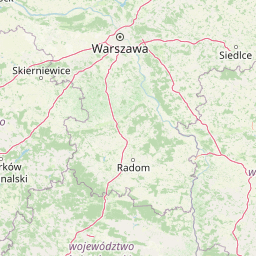
Map view of Małecz Nature Reserve

Use this park location map to pinpoint Małecz Nature Reserve in Poland, understand its exact geographic position, and read its mapped placement within the surrounding landscape more clearly.

Pigeon | © OpenStreetMap contributors

Location context for Małecz Nature Reserve

Łódź Voivodeship
Park atlas

Compare nearby regional reserves and forested landscapes

Explore Protected Areas Near Rezerwat przyrody Małecz

Browse other protected areas near Rezerwat przyrody Małecz to examine similar lowland forest ecosystems and regional botanical sites. Comparing adjacent nature reserves provides a broader perspective on central Polish woodland conservation networks.
Nature reserveLodzkie Voivodeship
About 9.8 km away#1 closest

Southeast

Łąki Ciebłowickie Nature Reserve: A Central Poland Floodplain Landscape Analysis

Protected riparian ecosystems and riverine lowland geography

Łąki Ciebłowickie represents an ecologically rich floodplain environment within the Lodzkie Voivodeship. This nature reserve preserves a sequence of vital lowland habitats ranging from marshy meadows to oak-hornbeam forests. Analyze the mapped boundaries and natural terrain features that define this protected riverine mosaic in the heart of central Europe.

Area
4.772 km²
Relief
Lowland
Climate
Temperate
Access
Access unknown
National parkMasovian Voivodeship
About 16 km away#2 closest

Northeast

Kampinos National Park: Geographic Profile and Protected Forest Landscape Map

Inland dune formations and wetland habitats in Masovian Voivodeship

The expansive woodland of Kampinos National Park represents a critical protected area in Poland, characterized by its parabolic sand dunes and low-lying marshes. Gain insights into the geomorphological features of this UNESCO biosphere reserve and trace the complex hydrological network that defines its unique forest environment.

Area
385.44 km²
Established
1959
IUCN
II
Relief
Lowland
A soft watercolor illustration of a marshy landscape with low rolling hills, scattered trees, and a winding stream, rendered in light green and yellow tones on a white background.
National parkMasovian Voivodeship
About 16 km away#3 closest

Northeast

Kampinoski Park Narodowy: Mapping the Inland Dune and Wetland Landscapes of Central Poland

A vital protected area in Masovian Voivodeship

The landscape of Kampinoski Park Narodowy is defined by the Grochalskie Piachy dune complex and diverse riparian habitats. This atlas entry covers the geological history and protected boundaries of this significant lowland forest, tracing the Vistula river valley's influence on the surrounding terrain and ecological character.

Area
385.443 km²
Established
1959
Visitors
1M annual
Relief
Lowland
Protected landscapeLodzkie Voivodeship
About 16 km away#4 closest

South

Sulejowski Park Krajobrazowy: Geography and Protected Landscape Mapping

Central Polish river valley and reservoir terrain

Examine the territorial boundaries and landscape character of Sulejowski Park Krajobrazowy. This protected area integrates riverine corridors, large reservoir habitats, and mixed lowland forests across the Lodzkie Voivodeship, providing a core reference for understanding the ecological geography of the central Pilica valley.

Area
170.26 km²
Established
1994
Relief
Lowland
Climate
Temperate
Nature reserveLodzkie Voivodeship
About 23 km away#5 closest

Southwest

Rezerwat przyrody Meszcze Nature Reserve: Mapped Protected Landscape and Forest Ecology

Protected fresh mixed forest within the Sulejów Landscape Park context

Rezerwat przyrody Meszcze represents a compact, protected forest block in central Poland. Known for its historical small-leaved lime regeneration, this reserve provides a key case study for forest structure and lowland biodiversity within the Lodzkie Voivodeship, serving as an important part of the Sulejów Landscape Park's protected corridor.

Area
0.353 km²
Established
1959
Relief
Lowland
Scope
Terrestrial
Nature reserveŁódź Voivodeship
About 24 km away#6 closest

Southwest

Rezerwat przyrody Dęby w Meszczach: Protected Oak Forest and Regional Geography

Nature reserve in the Równina Piotrkowska of central Poland.

Located in Łódź Voivodeship, this nature reserve is defined by its ancient pedunculate oaks, some over 250 years old. The site protects a unique blend of oak-hornbeam and mixed coniferous forest communities, serving as an ecologically vital fragment of lowland woodland within an agricultural landscape.

Area
0.392 km²
Established
1989
Relief
Lowland
Climate
Temperate
Nature reserveLodzkie Voivodeship
About 26 km away#7 closest

North

Doliska Nature Reserve: Protected Forest Boundaries and Geographic Landscape Context in Poland

A study in regional forest conservation and woodland ecology

Located in the Lodzkie Voivodeship, Doliska Nature Reserve is a designated phytocenotic forest area established to preserve specific woodland communities. Its primary geographic value lies in the protection of silver fir populations that exist outside their natural distribution range, making this a foundational site for regional conservation history and ecological study in the heart of lowland Poland.

Area
0.033 km²
Established
1954
Relief
Upland
Scope
Terrestrial
A watercolor painting of a rolling forested landscape with soft hills and light colors.
Nature reserveLodz Voivodeship
About 33 km away#8 closest

West

Rezerwat przyrody Molenda: Nature Reserve and Ancient Forest Geography in Lodz Voivodeship

Mapping the protected old-growth forest stands of central Poland.

Rezerwat przyrody Molenda represents an essential piece of central Polish geography, safeguarding a mature mixed-forest enclave near Tuszyn. By protecting rare admixtures of fir and beech alongside 150-year-old oaks, the reserve maintains a distinct ecological character. This site provides a look into the region's historical forest heritage, showcasing structurally complex woodlands that contrast with the surrounding lowlands and agricultural terrain.

Area
1.471 km²
Established
1959
Relief
Lowland
Scope
Terrestrial

Common questions about visiting, size, designation, and location context for Małecz Nature Reserve

Małecz Nature Reserve FAQs for park facts, access, geography, and protected area context

Find quick answers about Małecz Nature Reserve, including protected-area facts, park geography, trail and visitor context, and how the park fits into its surrounding country and regional landscape.
MoriAtlas Explorer

Continue Your Protected Areas Search Across the Global Atlas

Deepen your exploration by continuing the structured search for national parks and protected areas worldwide. Utilize the comprehensive filtering capabilities to compare different conservation landscapes and refine your understanding of global park geography. Discover more about the distribution and characteristics of protected natural areas.

Global natural geography