Why Mesze Nature Reserve stands out
The reserve is best known for its post-glacial lake undergoing natural overgrowth, with floating mat (pło) formation, peatland transition zones, and adjacent bog communities. It is a representative example of a glacially formed valley lake in the Polish lowlands that has shifted into a peat-dominated landscape through long-term ecological succession.
Mesze Nature Reserve history and protected-area timeline
Mesze was formally designated as a nature reserve on 22 April 1983 under a regulation of the Minister of Forestry and Wood Industry, an act that recognized the area's outstanding natural values even during a period when many Polish protected areas were being reorganized or newly established. The reserve was assigned provincial registration number 28 and has since been recognized in successive regional legal acts, including a 2002 announcement by the Lubusz Voivodeship governor consolidating the list of reserves created before the end of 1998, and a 2010 regulation by the Regional Director of Environmental Protection in Gorzów Wielkopolski that updated the reserve's administrative framework.
From its establishment, the reserve was classified as a strict protection area, a designation that limits active management and emphasizes the preservation of natural ecological processes. Its land is owned by the State Treasury and administered by the Sława Śląska Forest District, which continues to oversee the area in cooperation with regional environmental authorities. In more recent decades, Mesze has also been formally recognized through its inclusion in the Pojezierze Sławskie Natura 2000 Special Protection Area for birds, integrating the reserve into the broader European ecological network and reinforcing its role as part of a wider landscape of lakes and wetlands.
Mesze Nature Reserve landscape and geographic character
The landscape of Mesze Nature Reserve is a textbook example of the post-glacial terrain that characterizes much of northern and western Poland. The reserve sits within the Sławskie Lakeland mesoregion, an area shaped by the retreat of the ice sheet during the Baltic glaciation. Lake Mesze occupies a nearly enclosed valley with steeply sloping sides, and the broader terrain is composed of basal moraine clays interspersed with kames, small glacial mounds of sand and gravel, and flat sand sheets deposited during glacial melt.
The valley's slopes are covered by forest communities, while the valley floor holds the lake and surrounding wetlands. The lake has an irregular shape, with its western and eastern ends transitioning into bog areas. These extensions create a soft, gradual interface between open water and saturated peatland, rather than a sharp shoreline. The surrounding uplands, by contrast, are relatively flat because glacial and water-deposited sediments dominate the area.
This compact arrangement of lake, slope forest, and upland plain gives the reserve a strong sense of topographic contrast within a very small footprint. Although the area is modest in size, it preserves many of the landscape elements that typify the broader Sławskie Lakeland, making it a useful reference site for understanding the glacially formed landscapes of the region.
Mesze Nature Reserve ecosystems, habitats, and plant life
The most distinctive ecological feature of Mesze is its actively terrestrializing lake, a process in which open water is gradually replaced by wetland communities through the buildup of plant material at the lake's edges. The lake supports formations of floating mats, known locally as pło, which are accumulations of vegetation that float on or just beneath the water surface. As these mats thicken, they reduce open water and create new substrates for bog species to colonize.
Around the lake, the western and eastern ends of the basin have become bog zones inhabited by different sedge and moss communities. These bogs function as transitional peatlands, showing characteristics of both transitional mires and lowland peat bogs. The vegetation includes dense sedge-moss mats with abundant bryophyte cover, as well as characteristic hummock-forming sedges and reed-like emergents that occupy the wetter fringes of the lake.
The valley slopes are covered by forest communities whose composition reflects the moisture and soil conditions of the glacial terrain. In the surrounding uplands, the more level surface is shaped by glacial and water-deposited materials that support a different, drier forest character. Together, these three zones, open water and floating mats, peatlands, and forested slopes, form a tightly integrated ecological gradient across the reserve. Human influence, particularly through historical land use, has also shaped the distribution of plant communities observed today across most of the site.
Mesze Nature Reserve conservation status and protection priorities
Mesze is administered as a strict nature reserve, a category intended to preserve ecosystems in their most natural state by limiting direct human intervention. This designation is well aligned with the reserve's central ecological processes, including the slow, natural overgrowth of the lake and the long-term dynamics of transitional peatland formation. Although the reserve covers only about 19.88 hectares, it captures a full range of these processes within a single, compact site.
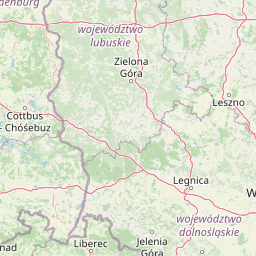
The wider significance of Mesze is reinforced by its location within the Pojezierze Sławskie Natura 2000 Special Protection Area (PLB300011), which extends protection to birds and other wildlife across a much larger lake-and-forest landscape. This linkage means that Mesze contributes to the conservation of regional bird populations and wetland species that depend on the interconnected lakes, bogs, and forests of the Sławskie Lakeland. The reserve therefore serves both as a local stronghold for strictly protected habitats and as a contributing element of a transnational ecological network.
Top sights and standout views in Mesze Nature Reserve
The principal highlights of Mesze Nature Reserve are the post-glacial Lake Mesze with its actively forming floating plant mats, the surrounding transitional peatlands with sedge and moss communities, and the forested slopes of a glacially shaped valley that brings all these elements together in a small area. The reserve stands out for showing, within a few hectares, the full progression from open water through bog stages to slope forest, a sequence that elsewhere in the region is typically scattered across larger landscapes.
Best time to visit Mesze Nature Reserve
Mesze is an ecologically focused reserve under strict protection, and visitor access is generally limited. For those interested in observing its wetland character, late spring and early summer are typically the most visually expressive seasons, when aquatic and peatland vegetation is at peak growth and bog communities are most active. Late summer and autumn can also reveal the structural character of the surrounding forests and the changing water levels of the aging lake, while winter offers a quieter view of the valley's glacial landforms beneath snow. Visitors should treat the area as a conservation site first and a landscape site second.