Why Milechowy Nature Reserve stands out
Milechowy is best known for combining natural forest habitats with xerothermic, sun-loving plant communities on warm rocky slopes. This unusual pairing of woodland and dry grassland vegetation within a single reserve gives it a distinctive ecological character in the Holy Cross Mountains. The reserve is also recognized for its karst landscape, which includes eight caves and rock shelters. Among these, Piekło pod Małogoszczem stands out as a notable cave site, adding a strong geological and speleological dimension to the reserve's identity beyond its botanical interest.
Milechowy Nature Reserve history and protected-area timeline
Milechowy Nature Reserve was created in 1978 by an ordinance of the Minister of Forestry and Timber Industry dated 16 January 1978, published in the Polish legal monitor. The founding instrument formally established the area as a forest nature reserve with partial protection status aimed at safeguarding both its woodland and its xerothermic habitats and karst features.
The reserve has been managed as part of the broader Chęciny-Kielce Landscape Park framework, which provides additional landscape-level protection around its core. It falls within the Dyminy administrative forest area managed by the Kielce Forest Management unit, and over time it has come to be regarded as a representative example of natural and semi-natural woodland communities in the northern Holy Cross Mountains, alongside its complementary role in preserving dry, warm-loving plant communities and cave features.
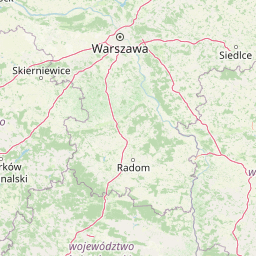
Milechowy Nature Reserve landscape and geographic character
The landscape of Milechowy Nature Reserve is shaped by two forested ridges whose structure reflects the regional character of the northern Holy Cross Mountains. One of these ridges is a continuation of the Grząby Bolmińskie landform, giving the reserve a clear topographic connection to the surrounding ridges and valleys of the area. The terrain is therefore not flat, but rather broken into elevated woodland sections that transition into rocky slopes and warmer exposures.
Beyond the forest cover itself, the reserve includes open, sun-facing slopes where soil is thin and rock outcrops dominate. These rocky exposures create conditions characteristic of steppe-like dry grasslands and low shrub communities, producing a striking contrast with the cooler, shaded woodland elsewhere in the reserve. The resulting landscape juxtaposes closed forest with open xerothermic vegetation within a small area.
Beneath the surface, the reserve's bedrock hosts caves and rock shelters, of which eight are recorded within its boundaries. The most widely known is Piekło pod Małogoszczem, a feature that confirms the karst nature of the underlying geology and adds another layer to the reserve's surface and subsurface landscape character.
Milechowy Nature Reserve ecosystems, habitats, and plant life
Milechowy Nature Reserve protects a layered ecological profile that combines mature woodland habitats with rare open plant communities typical of dry, warm sites. The forest component includes recognized Polish forest habitat types such as upland mixed forest, upland forest, fresh coniferous forest, and fresh mixed coniferous forest. Together these habitat types represent a meaningful cross-section of the natural forest patterns of the Holy Cross Mountains, supporting a range of plant species typical of both deciduous and coniferous stands.
On the warmer, sunnier slopes, the reserve preserves xerothermic shrub communities and xerothermic grassland communities. These vegetation types are typically associated with thin, rocky soils and conditions resembling steppe environments. They shelter numerous protected plant species, which is why the reserve is regarded as botanically valuable rather than purely as a forest protection site. The contrast between shaded, cooler forest and exposed, warmer rocky vegetation is one of the reserve's most important natural features.
The combination of woodland plus dry open habitats makes Milechowy a particularly useful site for studying and conserving xerothermic vegetation communities within a broader forested setting in the Holy Cross region.
Milechowy Nature Reserve conservation status and protection priorities
Milechowy Nature Reserve plays a meaningful conservation role in the northern Holy Cross Mountains by protecting a defined set of forest habitat types that retain natural characteristics, including upland mixed forest, upland forest, fresh coniferous forest, and fresh mixed coniferous forest. By safeguarding these woodland communities, the reserve helps maintain forest biodiversity at a landscape scale within the broader Chęciny-Kielce Landscape Park.
A second core conservation value is the protection of xerothermic shrub and grassland communities with numerous protected plant species. Such dry, warm-loving habitats are among the rarer and more threatened plant community types in Poland, and their inclusion inside a formally protected reserve enhances the overall importance of Milechowy for biodiversity conservation.
The reserve also contributes to the conservation of karst features. With eight caves and rock shelters within its area, including Piekło pod Małogoszczem, Milechowy protects underground habitats that are part of the natural heritage of the Holy Cross Mountains. The partial protection status allows conservation of these features while keeping the broader landscape accessible within the framework of the surrounding landscape park.
Top sights and standout views in Milechowy Nature Reserve
Milechowy Nature Reserve stands out for the unusual pairing of natural forest communities with xerothermic shrub and grassland vegetation on rocky slopes, a combination that gives it strong botanical significance in the Holy Cross Mountains. The presence of eight caves and rock shelters within the reserve, including the well-known Piekło pod Małogoszczem, adds a clear karst and geological dimension. Set within the Chęciny-Kielce Landscape Park and managed as part of the Dyminy forest district under Kielce Forest Management, the reserve is a compact but representative example of the region's natural woodland and dry-habitat diversity.
Best time to visit Milechowy Nature Reserve
As a wooded and rocky reserve in the Holy Cross Mountains, Milechowy is best experienced when the contrast between shaded forest and sunny xerothermic slopes is most visible. Late spring and early summer are typically well suited to observing the protected plants of the xerothermic grasslands, while autumn can highlight the character of the mature forest stands through changing foliage and lower visitor pressure on the trails. Visiting in mild, dry conditions also makes it easier to appreciate the open rocky slopes and the broader ridge scenery that defines the reserve.