Why Rocky Mountain National Park stands out
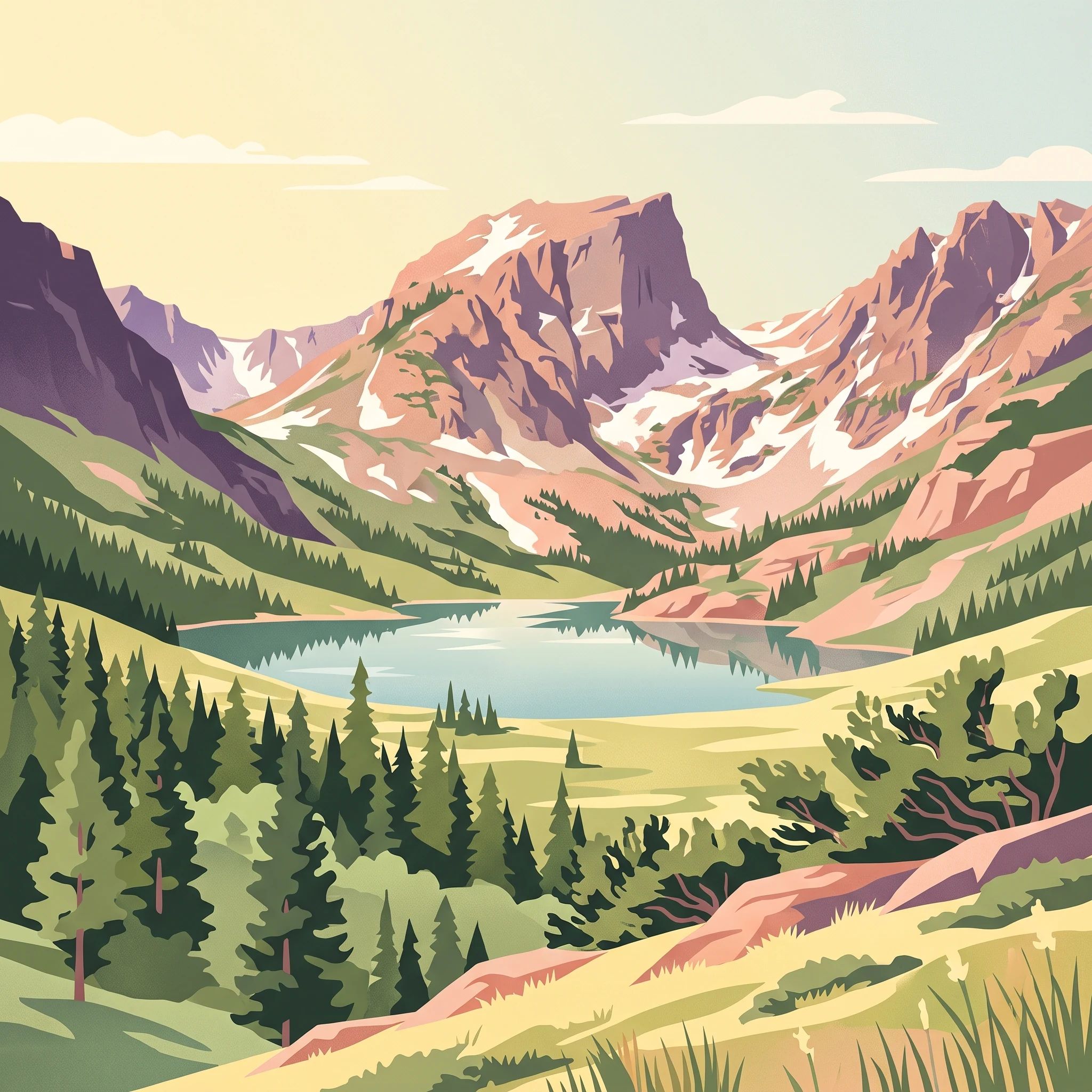
Rocky Mountain National Park is renowned for its spectacular alpine scenery, with dramatic mountain vistas, glacial cirques, and tundra landscapes that define the high Rocky Mountains. The park is famous for Trail Ridge Road, an engineering marvel that traverses the Continental Divide and offers visitors access to environments ranging from verdant montane forests to windswept alpine tundra. The park's population of approximately 2,000 to 3,000 elk makes it one of the best places in the country to observe these large mammals, particularly during the autumn rut. The diversity of ecosystems across elevation gradients, from riparian corridors to krummholz zones, provides exceptional ecological variety within a single protected area.
Rocky Mountain National Park history and protected-area timeline
The history of human presence in what is now Rocky Mountain National Park extends back thousands of years, with Paleo-Indians traveling routes near present-day Trail Ridge Road to hunt and forage. Ute and Arapaho peoples subsequently used the area for hunting and camping before settlers began arriving in the mid-1800s, displacing Native Americans by 1878. The region experienced brief mining booms in the 1870s with the establishment of Lulu City, Dutchtown, and Gaskill in the Never Summer Mountains, though the boom ended by 1883. The arrival of the railroad in Lyons in 1881 and completion of the Big Thompson Canyon Road in 1904 opened the area to more visitors. The campaign to establish a national park gained momentum in the early 20th century, with Enos Mills from Estes Park leading the effort alongside James Grafton Rogers from Denver and J. Horace McFarland of Pennsylvania. President Woodrow Wilson signed the Rocky Mountain National Park Act on January 26, 1915, formalizing protection. The Civilian Conservation Corps constructed Trail Ridge Road in the 1930s, creating the main automobile route across the park. In 1976, UNESCO designated the park as one of the original World Biosphere Reserves.
Rocky Mountain National Park landscape and geographic character
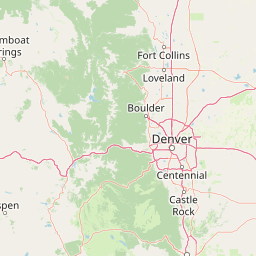
The physical landscape of Rocky Mountain National Park is defined by the dramatic topography of the Front Range, where glaciated peaks rise sharply from valley floors carved by ancient ice sheets. The Continental Divide runs north-south through the park's center, with the Mummy Range containing several thirteeners on the north side including Hagues Peak, Mummy Mountain, Fairchild Mountain, Ypsilon Mountain, and Mount Chiquita. The Never Summer Mountains in the west feature a horseshoe-shaped bend in the Continental Divide that creates a unique hydrological anomaly. Elevations range from 7,860 feet at the lowest points to 14,259 feet at Longs Peak, the park's highest point. Approximately 450 miles of rivers and streams traverse the landscape, fed by snowmelt and precipitation that varies significantly between the wetter western slopes and drier eastern approaches. Several small glaciers and permanent snowfields persist in high mountain cirques, remnants of the more extensive glacial systems that once filled these valleys.
Rocky Mountain National Park ecosystems, habitats, and plant life
The ecological diversity of Rocky Mountain National Park stems from its dramatic elevation range, which supports four distinct ecosystem zones that transition from valley floors to alpine tundra. The montane zone, between 5,600 and 9,500 feet, features ponderosa pine forests, Douglas fir, lodgepole pine, and quaking aspens, with wide meadow valleys supporting diverse plant communities. The subalpine zone, from 9,000 to 11,000 feet, is dominated by Engelmann spruce and subalpine fir, with the characteristic krummholz formation occurring near tree line where wind shapes trees into twisted shapes. Above 11,000 feet, the alpine tundra zone supports only the most hardy plants, including cushion plants, grasses, sedges, and dwarfed flowering plants adapted to extreme conditions. The riparian zone runs through all elevation bands, following streams and rivers with willows, alders, and water birch creating important habitat corridors.
Rocky Mountain National Park wildlife and species highlights
Rocky Mountain National Park supports remarkable wildlife diversity, with nearly seventy mammal species and almost three hundred bird species documented within its boundaries. The park is particularly known for its elk population of approximately 2,000 to 3,000 in summer, with 800 to 1,000 remaining through winter, making elk the most commonly observed large mammal. Other ungulates include bighorn sheep, mule deer, and moose, with the bighorn sheep population having recovered to an estimated 350 animals. Predators present include cougars, coyotes, Canada lynx, black bears, and bobcats, though wolves, wolverines, and grizzly bears have been extirpated from the area. The bird population includes species adapted to each ecosystem zone, from mountain chickadees and Steller's jays in subalpine forests to white-tailed ptarmigans and prairie falcons in the tundra. The elk rut in autumn draws many visitors who come to witness the bugling and territorial displays of these impressive animals.
Rocky Mountain National Park conservation status and protection priorities
Rocky Mountain National Park was designated as a World Biosphere Reserve by UNESCO in 1976, recognizing its significance as a protected area for scientific research, conservation, and environmental education. The park serves as an outdoor laboratory for studying ecosystem dynamics, climate change impacts, and biodiversity patterns across elevation gradients. Research and monitoring programs focus on ungulate ecology, high-altitude revegetation, acid precipitation effects, and aquatic ecosystem management. The park faces ongoing conservation challenges, including impacts from air pollution originating on the Front Range, climate change effects on snowpack and fire regimes, and management of the elk population that has grown large enough to cause overgrazing concerns in riparian areas. Mountain pine beetle outbreaks have caused significant tree mortality, and the park participates in climate change studies in cooperation with NASA and the academic scientific community.
Rocky Mountain National Park cultural meaning and human context
The area now within Rocky Mountain National Park has been inhabited by indigenous peoples for thousands of years, with Ute and Arapaho peoples historically hunting and camping in the region before European American settlement. The landscape holds significance in the cultural history of Colorado, with the establishment of the park representing one of the early successful conservation movements in the American West. The Beaver Meadows Visitor Center, designed by the Frank Lloyd Wright School of Architecture at Taliesin West, represents significant architectural heritage and is designated as a National Historic Landmark. The park's establishment in 1915 reflected growing appreciation for the Rocky Mountains as a distinctive American landscape worthy of protection, part of a broader movement that would eventually create the national park system we know today.
Top sights and standout views in Rocky Mountain National Park
Rocky Mountain National Park offers visitors access to some of the most spectacular alpine scenery in North America, with Trail Ridge Road providing a scenic crossing of the Continental Divide at elevations exceeding 12,000 feet. The park's alpine lakes, including Bear Lake, Sprague Lake, and Odessa Lake, occupy glacial cirques and provide iconic mountain vistas. Longs Peak, at 14,259 feet, presents a challenging mountaineering objective for experienced climbers seeking to summit one of Colorado's fourteeners. The elk herds, particularly visible during autumn rutting season, represent one of the best wildlife viewing opportunities in any national park. The diversity of ecosystems, from riparian corridors to alpine tundra, creates remarkable ecological variety within a single protected area.
Best time to visit Rocky Mountain National Park
Rocky Mountain National Park offers distinct seasonal experiences, with summer providing the most accessible conditions for hiking and scenic driving along Trail Ridge Road, though afternoon thunderstorms are common. The subalpine zone does not experience spring-like conditions until June, with wildflowers blooming from late June through early August. Fall brings the elk rut, drawing visitors to witness the dramatic displays, though October can bring significant snow to higher elevations. Winter transforms the park into a backcountry wilderness with extreme conditions, as arctic conditions prevail with sudden blizzards, high winds, and deep snowpack. Trail Ridge Road closes for the winter season due to heavy snow, limiting motorized access. The park implemented a timed-entry reservation system from May to October to address crowding concerns.