
Why Sandgrasheiden am Elgersheimer Hof stands out
Sandgrasheiden am Elgersheimer Hof is primarily known for its surviving sand grassland habitat, a vegetation type that has largely vanished from the landscapes of central Europe. The reserve acts as a relict site for this community, harbouring Jurinea cyanoides, a species of European conservation concern, alongside a diverse mix of rare flowering plants, mosses, lichens, and fungi that depend on open dry sandy soils. Beyond its botanical value, the site is also appreciated as a small but ecologically coherent part of the larger Main valley Natura 2000 network. Its combination of exposed sandy ground, grassland vegetation, and nearby woodland and farmland is considered a useful reference example for the kind of habitat mosaic that once dominated warmer lowland areas along the Main.
Sandgrasheiden am Elgersheimer Hof history and protected-area timeline
The history of Sandgrasheiden am Elgersheimer Hof begins in 1986, when an earlier natural monument known as Flugsande bei Fahr, the drifting sands near the village of Fahr, was elevated to a formal protection status. This first step recognized the ecological value of the open sandy soils in the southern part of the Fahr village territory, an area that had probably retained its unusual dry grassland character because the loose sandy ground was unsuitable for intensive farming.
On 1 December 1999, the protection was extended and reorganized into the present nature reserve. The new designation brought together two adjacent but physically separate zones south of the road Am Sportplatz, creating the two-part structure that defines the reserve today. Since then, the area has been managed as part of the Natura 2000 ecological network and is listed under the identifier DE6027471, contributing to the broader Main valley conservation corridor between Schweinfurt and Dettelbach. A regional natural heritage inventory by Andreas Pampuch has helped document the importance of such small protected sites within the Landkreis Kitzingen.
Sandgrasheiden am Elgersheimer Hof landscape and geographic character
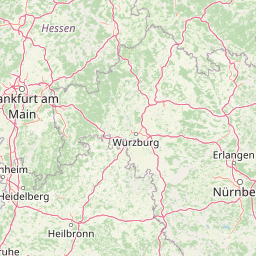
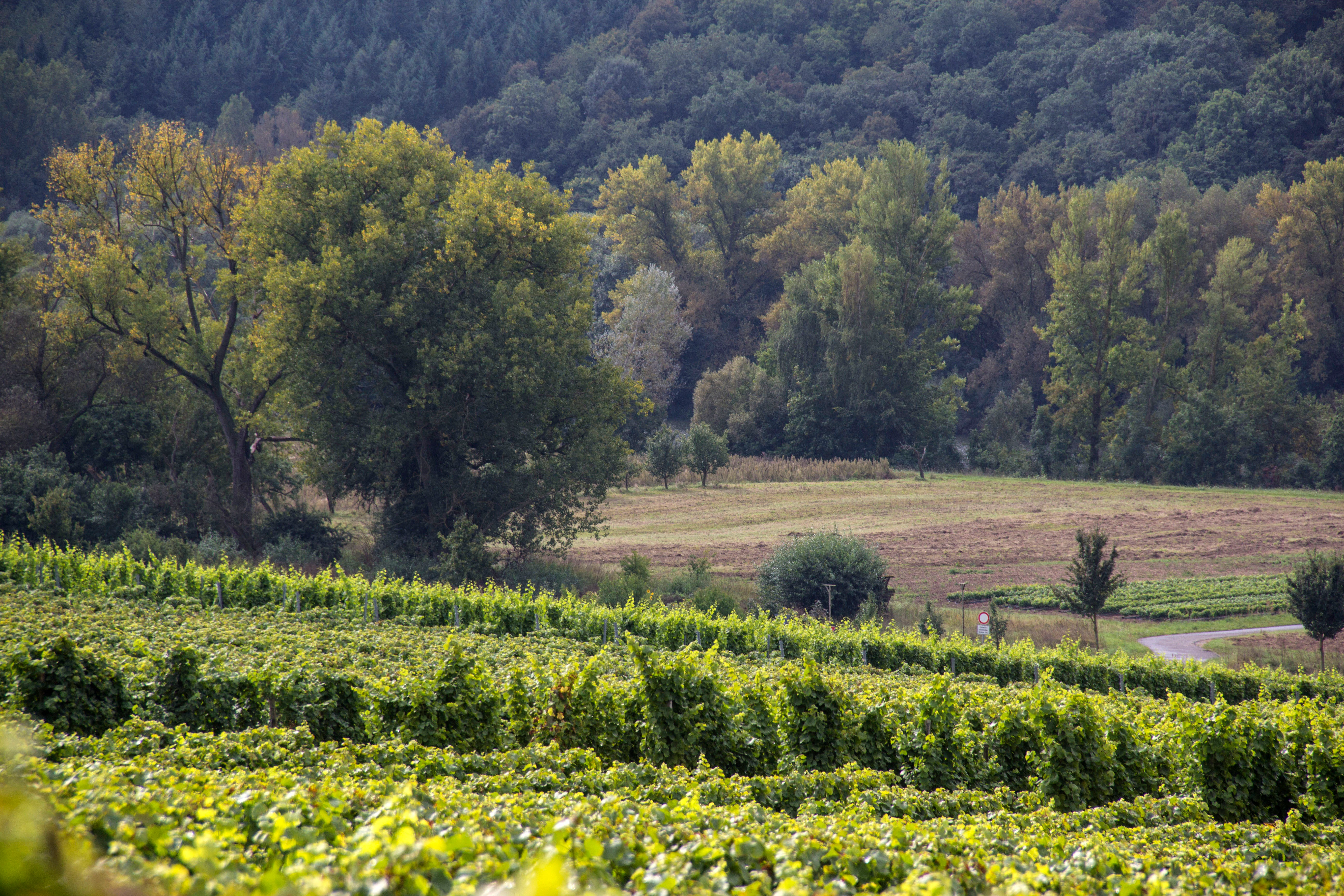
The landscape of Sandgrasheiden am Elgersheimer Hof is shaped by the unusual presence of loose, sandy soils in a region that is otherwise dominated by the agricultural and forested slopes of the Main valley in Lower Franconia. The two protected parcels sit in the southern part of the Fahr village territory, on gently undulating ground that lies between the settled farmland of the village and the meadows bordering the Main river. The western parcel opens out into this more agricultural transitional zone, while the eastern parcel is enclosed by woodland on its flanks.
This combination of open sand, dry grassland vegetation, wetter riverine meadows to the west, and forest to the east gives the reserve a distinctive mosaic character for such a small area. The exposed sandy ground is the central feature of the landscape and the reason it is called Sandgrasheiden, or sand grasslands. The soils are dry and free-draining, and they have historically supported open plant communities rather than closed forest, which is unusual in a region where woodland cover has been increasing.
Sandgrasheiden am Elgersheimer Hof ecosystems, habitats, and plant life
The ecological character of Sandgrasheiden am Elgersheimer Hof is dominated by its sand grassland vegetation, a relict habitat type that depends on ongoing open, dry conditions to survive. The loose sandy substrate prevents the build-up of richer soils, which in turn sustains a specialised community of plants, mosses, fungi, and lichens adapted to drought, heat, and low nutrient levels. Compared with the surrounding agricultural land and forest, the reserve therefore functions as a small island of uncommon, light-requiring biodiversity in the Main valley.
Because the sandy soils are easily disturbed, the habitat is also vulnerable. The presence of Jurinea cyanoides, a species listed as endangered across much of Europe, elevates the site's conservation significance well beyond its modest size. The combination of rare vascular plants, mosses, lichens, and fungi gives the reserve an unusually rich small-scale biodiversity profile for a habitat of this type, and reinforces the value of local protection to prevent the area from being overtaken by scrub or woodland succession.
Sandgrasheiden am Elgersheimer Hof wildlife and species highlights
Although the reserve is best known for its plant communities, the sand grassland and its surroundings also provide habitat for characteristic dry-ground invertebrates and the bird species associated with open sandy landscapes and the wider Main valley. The designation of the broader area DE6027471, which includes this reserve, as a bird protection area reflects the importance of these open and semi-open habitats for birds that depend on rough grassland, low scrub, and nearby farmland or water bodies.
The mosaic of dry sandy ground, meadow, and forest creates a variety of microhabitats within a very small footprint, supporting a mix of species typical of dry habitats alongside those associated with the wooded edges and the Main river corridor. While the site is not primarily a large mammal reserve, this habitat diversity contributes to the broader ecological network of the Main valley.
Sandgrasheiden am Elgersheimer Hof conservation status and protection priorities
From a conservation perspective, Sandgrasheiden am Elgersheimer Hof is significant as a surviving relict of a sand grassland habitat that has been heavily reduced across central Europe through agricultural intensification, afforestation, and urban development. Its formal protection as a nature reserve and its inclusion in the Natura 2000 network both as a Flora-Fauna-Habitat area and as part of a larger bird protection area underline its value at the European scale.
The conservation aim of the reserve is explicitly focused on maintaining the open sand conditions necessary for Jurinea cyanoides and the associated community of rare plants, mosses, lichens, and fungi. Management efforts are therefore directed at preventing the gradual encroachment of shrubs and trees, which would otherwise shade out the dry grassland community and undermine the ecological function of the site.
Sandgrasheiden am Elgersheimer Hof cultural meaning and human context
Sandgrasheiden am Elgersheimer Hof fits into a wider local context of small, ecologically valuable protected sites within the Landkreis Kitzingen in Lower Franconia. The reference to the historic farmstead Elgersheimer Hof, from which the reserve takes its name, reflects the long-standing pattern of small isolated farms and hamlets along the Main valley. The persistence of open sandy ground in an otherwise heavily farmed and forested landscape is itself tied to the historical difficulty of cultivating these soils, which left the area unsuitable for intensive arable use and helped preserve the unusual vegetation that modern conservation now seeks to protect.
Top sights and standout views in Sandgrasheiden am Elgersheimer Hof
Sandgrasheiden am Elgersheimer Hof stands out for the survival of open sand grassland habitat in an intensively used agricultural and forested region of the Main valley. The reserve's two-part structure, with a more open western parcel near river meadows and an eastern parcel enclosed by woodland, gives visitors a real sense of how this unusual habitat sits within its surrounding landscape. Its role as a refuge for Jurinea cyanoides and a relict community of specialised plants, mosses, lichens, and fungi gives it disproportionate conservation value relative to its size, and its integration into the larger Maintal zwischen Schweinfurt und Dettelbach Natura 2000 site connects it to one of the most important nature conservation corridors in Lower Franconia.
Best time to visit Sandgrasheiden am Elgersheimer Hof
The reserve is best experienced in the warmer half of the year, when the sand grassland vegetation is actively growing and the rare plants, mosses, and lichens are easiest to observe. Late spring and summer typically offer the most vivid display of flowering plants and the clearest view of how open the sandy ground remains between the surrounding forest and agricultural land. Early autumn can also be rewarding for observing fungi associated with the dry sandy soils and for appreciating the contrast between the open reserve and the surrounding wooded and farmed landscape of the Main valley.