Why Sangay National Park stands out
Sangay is renowned for its remarkable volcanic landscape, featuring two perpetually active volcanoes within a protected area, a geological rarity globally. The park protects one of the largest and most intact páramo ecosystems in the Andes, the high-elevation moorlands critical for water regulation and endemic biodiversity. Its exceptional altitudinal range creates a vertical spectrum of ecosystems from tropical rainforest to glaciers within a single protected area. The park serves as a vital refuge for endangered species including the mountain tapir and spectacled bear, and supports significant populations of Andean Condors and the distinctive Andean Cock-of-the-rock.
Sangay National Park history and protected-area timeline
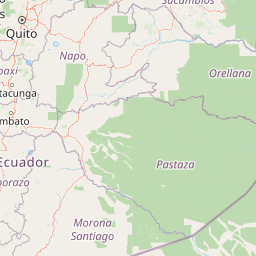
Sangay National Park was established in 1979 as part of Ecuador's expanding network of protected areas during a period of growing environmental consciousness in the country. The park's outstanding universal value was recognized internationally in 1983 when it was inscribed as a UNESCO World Heritage Site, becoming one of the earliest Latin American protected areas to receive this designation. The inscription acknowledged the park's exceptional combination of natural phenomena, including its volcanic landscape, biodiversity, and the ecological processes occurring across its altitudinal gradient. In 1992, Sangay was added to the List of World Heritage in Danger due to mounting pressures from illegal poaching, extensive grazing by domestic livestock, unplanned road construction, and encroachment along the park's perimeter. These threats reflected the challenges facing many developing-world protected areas where traditional land uses and population pressures create ongoing management tensions. Through strengthened conservation efforts and improved boundary management, the park was removed from the endangered list in 2005, representing a successful example of international collaboration and improved park management. The park's name derives from the Shuar indigenous language, originating from the word "samkay" meaning "volcano," reflecting the deep cultural connections between the landscape and the indigenous peoples who have inhabited this region for centuries.
Sangay National Park landscape and geographic character
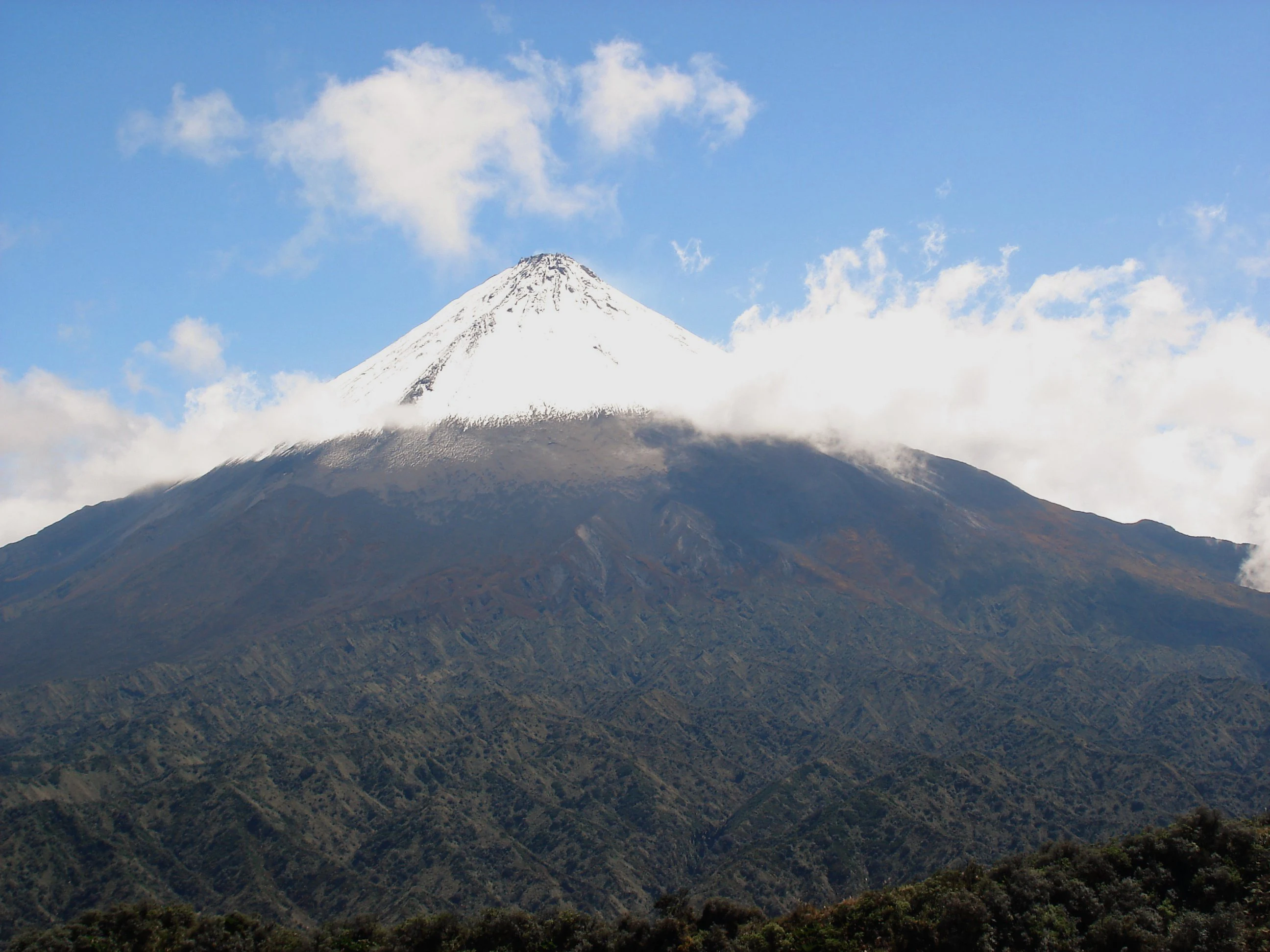
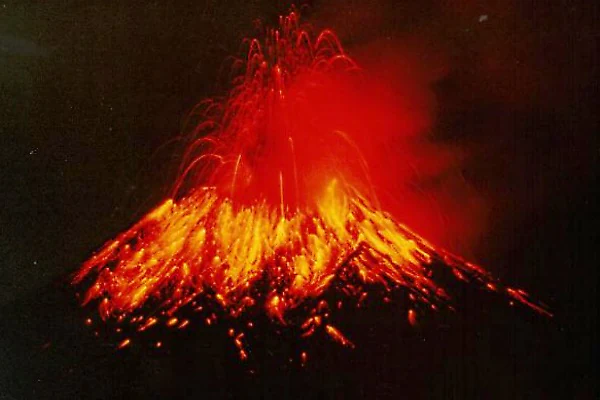
The physical landscape of Sangay National Park is dominated by volcanic geology, with three major volcanic complexes defining the terrain's character and visual identity. Tungurahua, a persistently active stratovolcano, rises to 5,023 meters and has experienced numerous significant eruptions in recent decades, including major explosions in 1999 and 2016 that deposited ash across surrounding communities. Sangay volcano, standing at 5,230 meters, represents one of the most active volcanoes in the world, with continuous Strombolian eruptions visible from the park's higher elevations. The extinct El Altar volcano, reaching 5,319 meters, forms a spectacular horseshoe-shaped caldera with nine peaks surrounding an internal crater lake, creating one of the most photographed landscapes in Ecuador's highlands. Between these volcanic peaks, the terrain drops through dramatic valleys carved by glacial processes and subsequent fluvial erosion, creating a landscape of steep ravines, cascading waterfalls, and U-shaped valleys characteristic of past glaciation. The park's lower elevations feature the rolling hills and forested slopes that mark the transition toward the Amazon basin, while the higher elevations present the stark, windswept terrain of the páramo with its distinctive cushion vegetation and alpine meadows.
Sangay National Park ecosystems, habitats, and plant life
The ecological diversity within Sangay National Park stems directly from its extraordinary altitudinal range, which encompasses multiple distinct biomes within a relatively compact territory. The tropical rainforests of the lower elevations, below approximately 1,500 meters, represent the northern extension of Amazonian forests, characterized by high species diversity, lianas, and evergreen canopies. Rising through the slopes, cloud forests develop where persistent mist and fog maintain high humidity, supporting epiphytes, ferns, and a specialized community of moisture-dependent species. The páramo zone, beginning around 3,500 meters, represents one of the most distinctive Andean ecosystems, adapted to the cold, windy conditions and seasonal water availability. This high-elevation biome features plants with growth forms specifically adapted to survive freezing temperatures, including cushion plants and bunch grasses that create the characteristic patchwork patterns visible across the landscape. The wetland system comprising 327 lakes and extensive marshlands provides critical habitat diversity, supporting species adapted to aquatic environments within the broader terrestrial matrix.
Sangay National Park wildlife and species highlights
Sangay National Park supports an exceptional concentration of wildlife, with over 430 bird species, 107 mammal species, 33 amphibian species, 14 reptile species, and 17 fish species documented within its boundaries. The park provides crucial habitat for two of the Andes' most emblematic endangered mammals: the mountain tapir, the largest terrestrial mammal in South America and the park's most significant conservation priority, and the spectacled bear, the continent's only bear species, which inhabits the forested lower elevations. The predator community includes jaguar, cougar, ocelot, and margay, representing a full suite of Neotropical felids. Wetland areas support populations of giant otter, while the streams and rivers harbor populations of endangered fish species. The bird fauna is particularly remarkable, with the park recognized as an Important Bird Area by BirdLife International. The Andean Condor, one of the world's largest flying birds, soars above the park's higher elevations, while the Andean Cock-of-the-rock, with its brilliant red plumage, inhabits the forested slopes. The park has also been the site of significant recent scientific discoveries, including the description of Caenolestes sangay, a new species of shrew opossum, in 2013 and the frog Pristimantis tinguichaca from cloud forest habitats in 2016.
Sangay National Park conservation status and protection priorities
Sangay National Park holds significant conservation importance as one of the most biodiverse protected areas in the Andes and a critical component of Ecuador's national protected area network. The park's UNESCO World Heritage designation recognizes its outstanding universal value as a natural site of significance that transcends national boundaries. The páramo ecosystems within Sangay represent crucial water Catchment areas, providing hydrological services to millions of people in the surrounding provinces, making the park's conservation important for both biodiversity and human welfare. The mountain tapir population in Sangay represents one of the most significant remaining strongholds for this endangered species, making the park globally important for its conservation. The successful resolution of the threats that led to the park's endangered status between 1992 and 2005 demonstrates the effectiveness of improved management and international attention, though ongoing vigilance remains essential as pressures from surrounding communities and development continue to evolve.
Sangay National Park cultural meaning and human context
The landscape of Sangay National Park holds deep significance for the indigenous Shuar people, whose language gave the park its name. The Shuar term "samkay," meaning volcano, reflects the central place that these volcanic peaks hold in indigenous cosmology and traditional land use. The park spans traditional territories that have been inhabited for centuries, with the Shuar and other indigenous communities maintaining cultural connections to the landscape even as the area has been designated as a protected area. The park's establishment represents a balance between conservation objectives and the recognition of indigenous peoples' relationships with the land, though the implementation of protected area management has required ongoing dialogue with local communities. The highland communities surrounding the park maintain traditional agricultural practices that interact with the park's boundaries, creating both management challenges and opportunities for community-based conservation approaches.
Top sights and standout views in Sangay National Park
The defining highlight of Sangay National Park remains its volcanic trio: the active Tungurahua and Sangay volcanoes providing ongoing geological drama while the extinct El Altar offers a spectacular hiking destination with its nine-peaked crater rim. The park's páramo ecosystems represent some of the finest high-altitude grassland environments in the Andes, with the characteristic cushion vegetation creating surreal landscapes that change with the light throughout the day. Wildlife viewing opportunities include the chance to encounter mountain tapirs in the higher forest zones and Andean Condors soaring on thermal currents above the volcanic slopes. The 327 lakes scattered throughout the park offer fishing, birdwatching, and scenic beauty, particularly the crater lake within El Altar's caldera. The vertical diversity allows visitors to experience multiple ecosystems in a single visit, from tropical forest trails to alpine meadow walks.
Best time to visit Sangay National Park
The optimal time to visit Sangay National Park depends on the specific activities planned, though the dry season from June to September generally offers the most reliable conditions for trekking and wildlife viewing in the highland areas. The park experiences a marked wet season from October through May, when páramo trails can become muddy and visibility in the higher elevations may be reduced by cloud cover. The active volcanoes are best observed during clear weather periods, typically in the drier months, though Tungurahua's activity can create atmospheric effects at any time. Birdwatching remains productive throughout the year, though the wet season brings migratory species to the wetland areas. The shoulder seasons of May-June and September-October may offer favorable conditions with fewer visitors while still providing reasonable weather. Temperature extremes vary dramatically with elevation, so visitors planning to explore the full altitudinal range should prepare for conditions ranging from tropical warmth to freezing alpine winds.