Why Yasuní National Park stands out
Yasuní National Park is best known for holding world records in biodiversity at multiple scales. Within less than 100 square kilometers, the park achieves maximum species richness for trees, amphibians, and bats on Earth. It is one of the richest spots in the world for birds and mammals at local scales, and hosts an extraordinary concentration of life with over 100,000 insect species in a single hectare, roughly equivalent to all insect species found across all of North America. The park is also famous for its population of uncontacted indigenous peoples and the controversial Yasuní-ITT Initiative, a groundbreaking international effort to protect the park from oil extraction in exchange for climate compensation. Additionally, the park contains a 50-hectare Forest Dynamics Plot established in 1995 for long-term ecological research.
Yasuní National Park history and protected-area timeline
Yasuní National Park was established on July 26, 1979, as part of Ecuador's expanding system of protected areas designed to conserve the country's unique Amazonian ecosystems. In 1989, the park was designated as a UNESCO Biosphere Reserve alongside the adjacent Waorani Ethnic Reserve, acknowledging both its ecological significance and its importance as an indigenous territory. The park gained international prominence in the early 2000s when oil exploration activities revealed massive hydrocarbon deposits beneath its surface, estimated at 1.7 billion barrels representing approximately 40 percent of Ecuador's oil reserves. In response to plans for expanded oil extraction, President Rafael Correa launched the Yasuní-ITT Initiative in 2007, a pioneering effort to leave the oil underground in exchange for international financial compensation. The initiative attracted support from prominent environmental advocates and celebrities, as well as pledges from several countries. However, the effort fell short of its fundraising goals, and in 2013 the initiative was formally ended. Oil drilling subsequently began in 2016 and was expanded in 2019 into buffer zones protecting indigenous communities. A historic turning point came in August 2023 when Ecuador held a national referendum on oil exploitation in Yasuní, and voters approved a measure requiring the progressive withdrawal of all oil extraction activities within one year.
Yasuní National Park landscape and geographic character
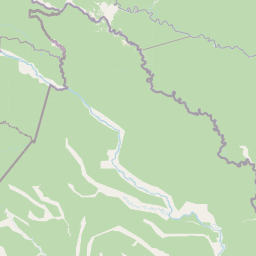
The physical landscape of Yasuní National Park is defined by its position within the Amazon basin and the complex hydrology created by the Napo and Curaray River systems. The terrain is predominantly flat or gently rolling, typical of lowland Amazonian rainforest, with elevations generally ranging from 200 to 400 meters above sea level. The park is dissected by numerous waterways including blackwater rivers characterized by their high tannin content derived from decomposing vegetation, which gives the water a distinctive dark color. These slow-moving blackwater tributaries, known as igapós when they flood the surrounding forest, create a dynamic environment where the river edges are lined with distinctive vegetation including the spine-covered palm Bactris riparia and the aquatic plant Montrichardia linifera. The landscape also includes patches of white-sand forests, palm swamps, and seasonally flooded areas that create habitat diversity within the broader rainforest matrix. The Forest Dynamics Plot, a 50-hectare research area established in 1995 in the northwest region of the park, provides detailed insight into the structure and composition of the park's terra firma forests.
Yasuní National Park ecosystems, habitats, and plant life
The ecological character of Yasuní National Park is defined by its extraordinary biodiversity, which reaches levels unmatched anywhere else on Earth. The park sits at the center of a globally significant hotspot where amphibian, bird, mammal, and vascular plant diversity all reach their maximum levels within the western hemisphere. For tree, amphibian, and bat species richness at local scales of less than 100 square kilometers, Yasuní holds world records. The park is one of only nine places in the world with more than 4,000 vascular plant species per 10,000 square kilometers, and it holds at least four world records for tree and liana richness and three world records for woody plant species diversity. The park's diverse habitats support remarkable concentrations of life across all taxonomic groups, with the park containing an estimated 43 endemic vertebrate species and between 220 and 720 endemic plant species. The 50-hectare Forest Dynamics Plot established through collaboration between Pontifical Catholic University of Ecuador, Aarhus University, and ForestGEO-STRI has enabled detailed study of the park's forest dynamics and species interactions.
Yasuní National Park wildlife and species highlights
Yasuní National Park supports an extraordinary array of wildlife, with species richness across multiple taxonomic groups reaching global maxima. The park is home to at least 596 bird species, representing approximately one-third of all native bird species found in the Amazon, while reptile diversity includes 121 documented species and amphibian diversity holds a world record of 150 species for comparable landscapes. Fish diversity is exceptionally high with 382 known species, and potentially up to 500 species when cryptic diversity is considered. The park's mammalian fauna includes the endangered giant otter, which inhabits the river systems and must adapt to seasonal water level fluctuations, as well as numerous primate species including the Napo saki, Eastern Ecuadorian squirrel monkey, pygmy marmoset, Ecuadorian white-fronted capuchin, red-crowned titi, Colombian red howler, white-bellied spider monkey, and brown woolly monkey. A species of bat, Lophostoma yasuní, is endemic to the park. The insect diversity is staggering, with a single hectare containing over 100,000 different species of insects, a number comparable to all insect species found across all of North America. Many of these wildlife species play critical ecological roles as seed dispersers, pollinators, and predators, maintaining the forest's ecological balance.
Yasuní National Park conservation status and protection priorities
Yasuní National Park represents one of the most important conservation priorities in the world due to its unparalleled biodiversity and the irreplaceable ecosystem services it provides. Despite covering less than 0.15 percent of the Amazon Basin, the park contains approximately one-third of all amphibian and reptile species found in the entire Amazon, demonstrating the extraordinary concentration of biodiversity within its boundaries. The park's conservation significance has been recognized internationally through its UNESCO Biosphere Reserve designation and its IUCN Category II protected area status. However, the park faces significant threats from oil extraction, with drilling activities beginning in 2016 and expanding in 2019 into buffer zones intended to protect indigenous communities. The 2023 referendum approving a ban on oil exploitation represents a major conservation victory, though the implementation of this mandate remains ongoing. Additional conservation challenges include colonization, deforestation, illegal logging, and unsustainable hunting, all of which require sustained management attention to protect the park's exceptional biodiversity.
Yasuní National Park cultural meaning and human context
Yasuní National Park holds profound cultural significance as the ancestral homeland of the Huaorani indigenous people, whose territory encompasses much of the park's area. The Huaorani have maintained their traditional way of life in this forest environment for generations, utilizing the riverways within the park as primary transportation routes and depending on the forest for their subsistence. The park is also notable for providing refuge to two uncontacted indigenous tribes, the Tagaeri and the Taromenane, whose isolated communities live within the park's boundaries and whose survival depends on the integrity of this ecosystem. The presence of these uncontacted peoples has created complex questions about indigenous rights, territorial protection, and the balance between conservation and human habitation. The Huaorani Ethnic Reserve, established adjacent to the national park, represents another dimension of the region's indigenous protection framework. The cultural dimension of Yasuní extends beyond its indigenous communities to include broader Ecuadorian identity and the ongoing national conversation about resource extraction, environmental protection, and economic development.
Top sights and standout views in Yasuní National Park
Yasuní National Park stands as Earth's most biodiverse protected area, where a single hectare contains more insect species than exist across all of North America. The park protects the intersection of three major geographic regions, creating ecological conditions that support world records for tree, amphibian, and bat species richness at local scales. Its population of uncontacted indigenous peoples, the Tagaeri and Taromenane, makes it one of the few places on Earth where truly isolated human communities continue to live in their ancestral forest environment. The park's dramatic conservation history includes the groundbreaking Yasuní-ITT Initiative, an international effort to keep oil underground in exchange for climate compensation, and the historic 2023 referendum that voted to end oil extraction. The Yasuní Research Station along the Tiputini River serves as a hub for scientific study, while the Forest Dynamics Plot enables long-term ecological research in one of the most diverse forests on the planet.
Best time to visit Yasuní National Park
Yasuní National Park can be visited year-round, though the experience varies with the seasons. The dry season from roughly December through March typically offers easier access to waterways and more comfortable conditions for wildlife observation, though the wet season from April to November creates the characteristic flooded igapó forest environment that supports unique ecological interactions. The wettest months generally occur from May to August, when river levels rise significantly and create opportunities to explore flooded forests by boat. Wildlife viewing remains productive throughout the year, though the dry season often concentrates animals around remaining water sources. The park's equatorial location means that temperature and humidity remain relatively constant year-round, with warm conditions typical of lowland tropical rainforest. Visitors should be prepared for high humidity and rainfall regardless of when they visit, and should plan visits well in advance given the limited tourism infrastructure within the park.