
Mori Atlas logo
Natural monumentSlepeč

Examining the ecological boundaries and botanical significance of this unique lowland forest sanctuary.

Slepeč Natural Monument: An Essential Protected Oak-Hornbeam Woodland in Central Bohemia

Slepeč serves as a critical botanical refuge within the Středočeský kraj region of the Czech Republic, encompassing a remnant lowland oak-hornbeam forest. This protected area acts as a vital sanctuary for rare thermophilous plant communities and the Pojizeří area's only surviving population of the lady's slipper orchid. Through its mapped boundaries, this site provides important evidence of historically widespread deciduous woodland ecosystems preserved within the rolling agricultural plains of the Jizera river basin.

natural monumentoak-hornbeam forestlowland woodlandlady's slipper orchidwild orchidsthermophilous flora
A flat-style digital illustration of a forested canyon with a small waterfall flowing into a stream, framed by trees in the foreground.

Slepeč

Natural monument

Park overview

Structured park overview, official facts, and landscape profile for Slepeč Natural Monument

Slepeč Natural Monument park facts, protected area profile, and essential visitor context

Review the core facts for Slepeč Natural Monument, including designation, size, terrain, visitor scale, habitats, and operating context in one park-focused overview.

About Slepeč Natural Monument

Slepeč is a compact protected natural monument located in the lowlands of central Bohemia, near the village of Kochánky in the Mladá Boleslav district. It represents one of the many small forest reserves that together form the backbone of Czech nature conservation, focused less on scenic grandeur and more on preserving specific biological communities and rare species that would otherwise be lost to agricultural intensification and forestry change.

The site is built around a fragment of oak-hornbeam forest, a vegetation type once common across the warm lowlands of central Europe but now increasingly reduced to small isolated patches. This particular fragment has survived partly because of its position in the landscape and partly through formal protection, allowing it to retain the herb-layer diversity typical of older, lightly disturbed lowland woodland. Elevation across the monument is gentle, ranging from roughly 200 to 240 meters above sea level, in line with the broader lowland character of the Jizera basin.

Within this small woodland, conservation priorities are strongly botanical. The most celebrated feature is the presence of Cypripedium calceolus, the lady's slipper orchid, whose conspicuous yellow flowers and specific habitat requirements make it a flagship species for woodland conservation across Europe. Accompanying this orchid is a guild of other warmth-loving vascular plants and woodland orchids that together define the area's character.

Faunal interest is less emphasized in the site's documentation, but several notable insect species have been recorded, including ground beetles of the Carabus genus, a rose chafer (Potosia aeruginosa), a longhorn beetle (Lioderus collari), and the stag beetle Lucanus cervus, all indicators of mature, well-structured deciduous woodland with retained dead wood and undisturbed microhabitats. This combination of rare flora and saproxylic fauna gives the site a richer ecological profile than its small footprint would suggest, anchoring its role as a biodiversity refuge in an otherwise heavily used agricultural region.

Quick facts and research context for Slepeč Natural Monument

Slepeč is a Czech natural monument (přírodní památka), a protected-area category corresponding to IUCN Category IV, focused on the conservation of a specific species or habitat. The site covers 8.83 hectares near Kochánky in the Mladá Boleslav district of the Středočeský kraj. It was declared in 1984 by the former District National Committee of Mladá Boleslav. Its protective focus is an oak-hornbeam forest supporting rare thermophilous plants, particularly the lady's slipper orchid Cypripedium calceolus, which has its only documented Pojizeří population within this woodland.

Protection and recognition

Documented terrestrial boundaries, management scope, and Natura 2000 records for Slepeč.

Slepeč Protection Status and International Recognition Details

Terrestrial protection status, management scope, and official Natura 2000 network recognition for Slepeč appear in structured records. Conservation oversight data and boundary designations provide a verified factual overview of international recognition standards.

International recognition

Protection details

Protection scope
Terrestrial
Transboundary protection
No
Park context

Deeper park guide and search-rich context for Slepeč Natural Monument

Slepeč Natural Monument history, landscape, wildlife, and travel context

Explore Slepeč Natural Monument through its history, landscape character, ecosystems, wildlife, conservation priorities, cultural context, and seasonal travel timing in a structured park guide built for atlas discovery and search intent.

Why Slepeč Natural Monument stands out

Slepeč is best known for harboring the sole remaining population of the lady's slipper orchid (Cypripedium calceolus) in the Pojizeří region of central Bohemia. The site's oak-hornbeam forest has become a small but regionally important sanctuary for this iconic wild orchid species, whose Eurasian populations have declined across much of Europe due to habitat loss. Beyond the lady's slipper, the woodland is also recognized for its assemblage of other thermophilous forest plants, woodland orchids such as Cephalanthera damasonium and Platanthera bifolia, the upright clematis Clematis recta, and rare fungi. Together these species give the small forest fragment an outsized botanical significance relative to its size.
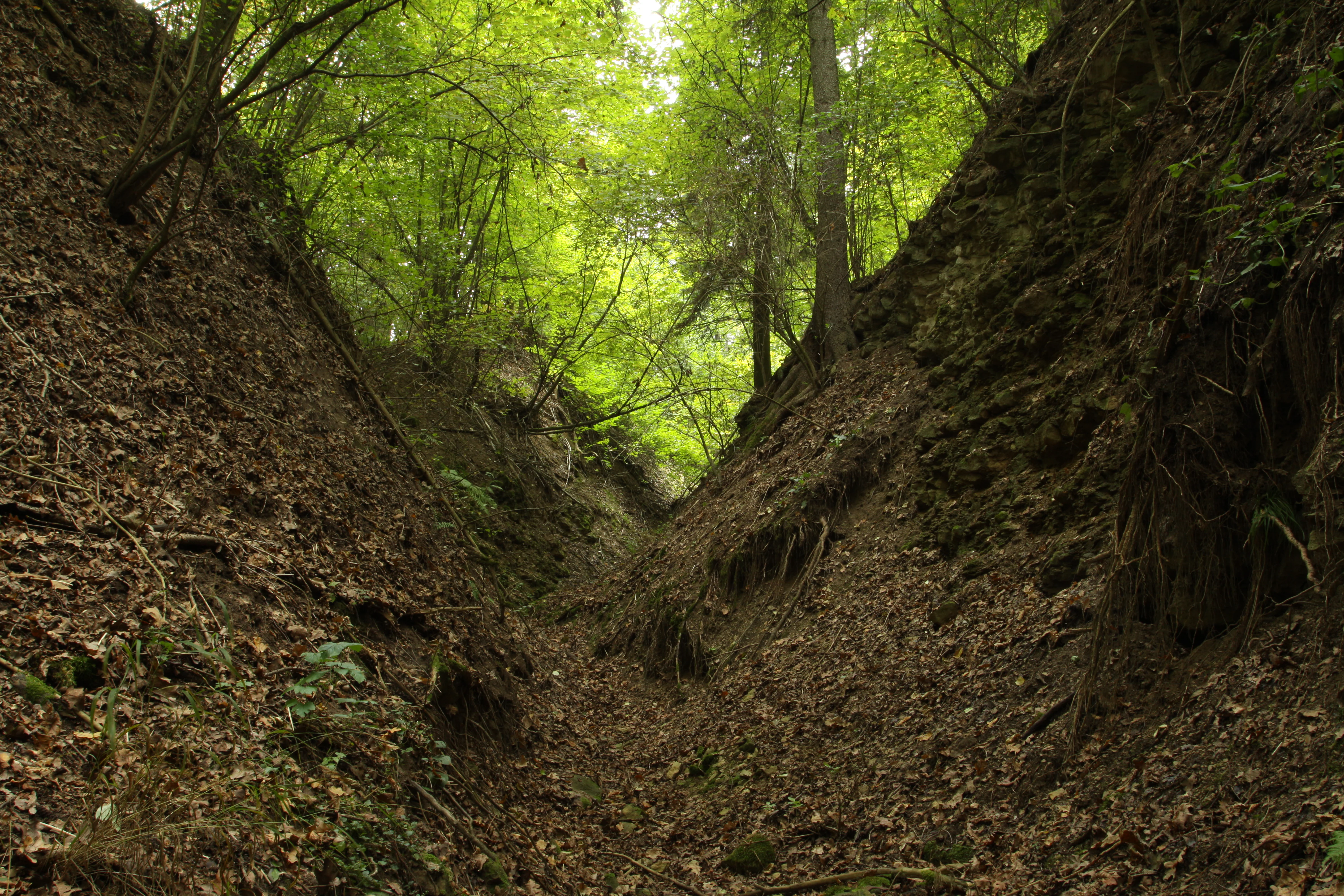
A narrow, deep, earth-walled ravine surrounded by deciduous trees with autumn leaves covering the forest floor.
A steep, forested ravine in the Slepeč natural monument.

Slepeč Natural Monument history and protected-area timeline

Slepeč was officially designated as a protected natural monument on 17 April 1984. The declaration was issued by the District National Committee (Okresní národní výbor) of Mladá Boleslav, the regional administrative authority responsible during the period of Czechoslovak governance.

The motivation behind the protection was the conservation of an oak-hornbeam forest fragment harboring rare and protected plant species. The site entered the Czech protected-area system as a přírodní památka, the classification used for ecologically valuable smaller localities with concentrated biodiversity of flora, fauna, or geological features. Its designation reflected growing awareness during the late twentieth century of the vulnerability of lowland forest fragments and their resident thermophilous species, particularly orchids such as Cypripedium calceolus.

Slepeč Natural Monument landscape and geographic character

The natural monument occupies a small portion of the gently undulating lowland terrain typical of central Bohemia's Pojizeří region. Elevations across the site fall between roughly 200 and 240 meters above sea level, consistent with agricultural plains broken only by subtle rises and shallow valleys associated with the Jizera river basin.

The defining landscape element is the surviving oak-hornbeam forest itself, a deciduous woodland community historically widespread across the Bohemian lowlands. The topography is modest, with the reserve occupying a valley floor and adjacent slopes where soil and microclimate allow thermophilous vegetation to thrive. Outside the reserve boundary, the surrounding area is shaped by long-established agriculture and small settlements, including the nearby village of Kochánky.

Slepeč Natural Monument ecosystems, habitats, and plant life

Slepeč's ecological identity centers on its oak-hornbeam forest, a classic Central European deciduous woodland community that combines pedunculate oak and hornbeam in the canopy with a richly structured understory. The forest's microclimate and soil conditions support a notably diverse herb layer, unusual for such a small site.

The woodland is particularly characterized by thermophilous, or warmth-loving, plant species that depend on open-canopy light conditions and relatively undisturbed ground. The presence of the lady's slipper orchid anchors the reserve's botanical identity, while accompanying woodland orchids, including Cephalanthera damasonium and Platanthera bifolia, extend the orchid diversity typical of well-preserved lowland forest. Clematis recta, an upright clematis of dry deciduous woodland margins, adds further herb-layer interest.

Mycologically, the site has produced notable records including the rare fungus Floccularia straminea, an indicator of undisturbed fungal communities in mature deciduous forest. The combination of vascular plant richness and preserved mycorrhizal and saprophytic fungal communities gives the small forest a relatively complete biological profile for its size.

Slepeč Natural Monument wildlife and species highlights

Although Slepeč is primarily recognized for its flora, surveys have documented a community of invertebrates associated with mature deciduous woodland habitat. Among the notable insect records are two ground beetle species, Carabus arcensis and Carabus glabratus, both sensitive indicators of forest continuity.

Additional records include the rose chafer Potosia aeruginosa, a longhorn beetle Lioderus collari, and the stag beetle Lucanus cervus, a saproxylic species whose presence suggests the retention of older trees, dead wood, and natural microhabitats within the reserve. These faunal elements complement the botanical richness, painting a fuller picture of a small but ecologically intact lowland woodland.

Slepeč Natural Monument conservation status and protection priorities

Slepeč carries the IUCN Category IV designation typical of Czech přírodní památka sites, a category used for protected areas focused primarily on the conservation of particular species or habitat types. In practice, the reserve's conservation value derives from its role as a refuge for thermophilous lowland forest species, particularly the lady's slipper orchid, whose populations have declined across much of Europe.

By maintaining an oak-hornbeam forest fragment under formal protection, the site contributes to habitat connectivity and to the survival of species that depend on undisturbed woodland processes. Its botanical and entomological records imply a long history of ecological continuity, making it valuable for monitoring the health of lowland forest biodiversity in central Bohemia.

Top sights and standout views in Slepeč Natural Monument

Slepeč's principal highlight is its surviving lowland oak-hornbeam forest harboring the only documented Pojizeří population of the lady's slipper orchid Cypripedium calceolus. The site is also distinguished by the presence of additional protected woodland orchids, rare thermophilous plants, notable fungi such as Floccularia straminea, and saproxylic insects including the stag beetle, all concentrated within an area of less than nine hectares. This combination of rare species within a small forest patch grants the site an outsized regional conservation importance.

Best time to visit Slepeč Natural Monument

For visitors interested in the woodland flora, late spring and early summer are typically the most rewarding periods, coinciding with the flowering season of woodland orchids including the lady's slipper. Autumn, which is reflected in the site's photographic record, brings mushroom-rich forest conditions that highlight the mycological dimension of the reserve. Winter offers quieter visits, though without the seasonal botanical displays.

Monthly climate preview

Long term average temperature and precipitation rhythm across twelve months

Slepeč Climate Normals and Measured Monthly Weather Patterns

Representative coordinate sampling records baseline annual temperature ranges and daily precipitation rates for Slepeč between 1991 and 2020. Examining the complete monthly climate profile reveals detailed thermal progression and multi-year meteorological trends across the protected landscape.
Annual mean8 °C
-3 °C19 °C
Jan-3°
Feb-2°
Mar
Apr
May13°
Jun17°
Jul19°
Aug18°
Sep13°
Oct
Nov
Dec-2°
Warmest month
July

18.7 °C

Coolest month
January

-3.1 °C

Wettest month
July

2.9 mm/day

Driest month
April

1.3 mm/day

Park location guide

Geography guide, regional context, and park location map for Slepeč Natural Monument

Slepeč Natural Monument park geography, regions, and map view in Czechia

Understand where Slepeč Natural Monument sits in Czechia through a broader geographic reading of the surrounding landscape, nearby location context, and its mapped position within the national park landscape.

How Slepeč Natural Monument fits into Czechia

Czech Republic is a landlocked Central European country with a population of approximately 10.9 million people. The nation was established as an independent state on January 1, 1993, following the dissolution of Czechoslovakia. Its capital and largest city is Prague, with other major urban centers including Brno, Ostrava, Plzeň, and Liberec.

Wider geography shaping Slepeč Natural Monument in Czechia

The Czech Republic is a landlocked country in Central Europe. It is bordered by Germany to the west, Austria to the south, Poland to the northeast, and Slovakia to the southeast. The landscape is predominantly hilly, with the territory covering 78,871 square kilometers.

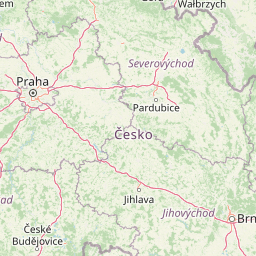
Map view of Slepeč Natural Monument

Use this park location map to pinpoint Slepeč Natural Monument in Czechia, understand its exact geographic position, and read its mapped placement within the surrounding landscape more clearly.

Pigeon | © OpenStreetMap contributors

Location context for Slepeč Natural Monument

Středočeský kraj
Recorded earthquake history

Review Recorded Earthquake Activity Near Slepeč Natural Monument

Explore the historical catalogue of seismic events recorded in the surroundings of Slepeč. This structured dataset provides transparent access to regional earthquake history, including event metrics and proximity data for the protected lowland forest area.

Slepeč Earthquake History

Catalogued events

4 events

Strongest magnitude

Magnitude 3.7

Most recent event

Mar 29, 1991

This history includes earthquakes recorded inside the park or within 50 km of its borders

Explore the forest habitats, terrain, and botanical character of the reserve.

Slepeč Photos and Landscape Scenery: Visualizing Protected Woodlands

Visual documentation captures the rare oak-hornbeam forest and sheltered valley terrain that define the protected landscape at Slepeč. Examining field photography reveals the delicate woodland habitats and native plant communities preserved within the Jizera river basin.

A narrow, deep, earth-walled ravine surrounded by deciduous trees with autumn leaves covering the forest floor.

Park atlas

Compare nearby lowland woodlands and regional botanical reserves in central Bohemia.

Other Parks Near Slepeč and Protected Areas Across the Surrounding Region

Browsing other parks near Slepeč reveals connected lowland forests and regional botanical reserves across the central Bohemian landscape. Comparing these protected habitats provides broader geographical context for understanding rare woodland flora and valley ecosystems.
A soft, horizontal watercolor painting showing a green meadow with scattered bushes, distant rolling hills, and a pale, warm-toned sky.
Natural monumentStředočeský kraj
16 km away#1 closest

Southeast

Slatinná louka u Velenky Natural Monument: Geography and Protected Meadow Landscape

Protected grassland terrain in the Středočeský kraj

Slatinná louka u Velenky preserves a rare fragment of alkaline fen meadow within the Czech lowlands. As a designated natural monument and part of the Natura 2000 network, it functions as a crucial habitat buffer. This atlas entry provides insight into the park's flat lowland geography and its role in maintaining regional biodiversity across the Polabí plain.

Area
0.038 km²
Established
2014
IUCN
IV
Relief
Lowland
A watercolor painting showing a panoramic view of a wetland area with reeds in the foreground and a forested ridge in the background.
Protected landscapeMladá Boleslav District
About 18 km away#2 closest

Northeast

Přírodní park Chlum: Exploring the Geography of a Protected Czech Woodland Ridge

Mladá Boleslav District protected landscape analysis

Examine the structural character of Přírodní park Chlum, an asymmetric horst ridge in the Czech Republic that serves as a vital ecological corridor. This protected landscape preserves rare forest communities and geological features, providing essential habitat continuity across the surrounding agricultural lowlands of the Mladá Boleslav District.

Area
13.19 km²
Established
2000
Relief
Upland
Climate
Temperate
A horizontal watercolor painting of a serene wetland scene with birch trees, calm water reflecting the sky, and grassy shores.
Natural monumentStředočeský kraj
23 km away#3 closest

Southeast

Milčice Natural Monument: A Protected Wetland Sanctuary in the Středočeský kraj

Rare calcareous spring systems and lowland fen ecology

Milčice serves as a regionally important natural monument in the Středočeský kraj, protecting a distinct set of tufa-forming springs. This site offers a rare glimpse into the specialized ecology of mineralized lowland wetlands, providing a stark contrast to the surrounding agricultural terrain of the Middle Elbe Table.

Area
0.041 km²
Established
2017
IUCN
III
Relief
Lowland
A horizontal watercolor painting depicting a soft landscape with green hills, light forest foliage, and a water body in a muted, warm color palette.
Protected landscapeMladá Boleslav District
About 24 km away#4 closest

Northeast

Přírodní park Čížovky: Geographic Overview of the Protected Landscape in Mladá Boleslav District

Mapping wetlands, aquatic ecosystems, and rural terrain

Přírodní park Čížovky serves as a significant protected landscape in the Mladá Boleslav District. It features a dense mosaic of ponds, marshes, and orchards. Explore the mapped boundaries of this terrain, ranging from the Křesovský potok valley to the elevated Křemenice ridge, showcasing a classic Central Bohemian ecological heritage.

Area
386 km²
Established
1998
Relief
Upland
Climate
Temperate
Natural monumentStředočeský kraj
24 km away#5 closest

North

Valcha Natural Monument: Mapping Protected Wetland Ecosystems in Středočeský Kraj

A rare mosaic of forest ponds and mire habitats

Situated in the Středočeský kraj region, Valcha Natural Monument protects a distinctive silting pond and marshland ecosystem. This site demonstrates the ecological significance of small, hydrologically active ravine landscapes nestled within the broader Jizerská tabule plateau terrain, providing critical refuge for rare wetland species.

Area
0.024 km²
Established
2013
IUCN
III
Relief
Lowland
A watercolor illustration depicting a panoramic landscape with a golden meadow in the foreground and soft green hills in the distance.
Protected landscapeStředočeský kraj
About 25 km away#6 closest

South

Přírodní park Škvorecká obora, Králičina: Protected Landscape and Regional Geography

Natural terrain and historic forest near the Prague boundary

Přírodní park Škvorecká obora, Králičina preserves a layered cultural and natural landscape characterized by the Výmola stream floodplain. The area functions as a vital forest habitat on the eastern edge of the Prague Plateau, integrating rare botanical sites with historical remnants of a centuries-old game enclosure.

Established
2009
Relief
Lowland
Climate
Temperate
Access
Easy access
A watercolor illustration depicting a soft, panoramic landscape of gentle, rolling green hills, scattered trees, and grassland areas with a muted color palette.
Nature reserveStředočeský kraj
About 25 km away#7 closest

Northwest

Na oboře Nature Reserve in Středočeský kraj: A Detailed Geographic Atlas Overview

Protected loess slopes and rare steppe ecosystems.

Na oboře comprises a series of south-facing slopes in the Středočeský kraj region, serving as a sanctuary for heat-loving flora and critically endangered insect species. The reserve features a rare geological intersection of wind-deposited loess and sandstone bedrock, forming a warm, mineral-rich landscape that remains a vital, mapped study area for steppe-like grassland conservation in the Czech Republic.

Area
0.034 km²
Established
2001
IUCN
IV
Relief
Upland
Natural monumentStředočeský kraj
About 25 km away#8 closest

Northwest

Vehlovické opuky Natural Monument: Geological Mapping and Historical Mining Context

Protected paleontological and mining heritage in the Czech Republic

Vehlovické opuky stands as a compact but rich natural monument in the Středočeský kraj region. This protected area showcases the geological legacy of the Bohemian Cretaceous Basin, preserving fossilized remains within yellowish opuka beds and demonstrating historical underground extraction techniques that now support local bat populations.

Area
0.009 km²
Established
2002
IUCN
III
Relief
Lowland

Common questions about visiting, size, designation, and location context for Slepeč Natural Monument

Slepeč Natural Monument FAQs for park facts, access, geography, and protected area context

Find quick answers about Slepeč Natural Monument, including protected-area facts, park geography, trail and visitor context, and how the park fits into its surrounding country and regional landscape.
MoriAtlas Explorer

Continue Your Protected Areas Search Across the Global Atlas

Deepen your exploration by continuing the structured search for national parks and protected areas worldwide. Utilize the comprehensive filtering capabilities to compare different conservation landscapes and refine your understanding of global park geography. Discover more about the distribution and characteristics of protected natural areas.

Global natural geography