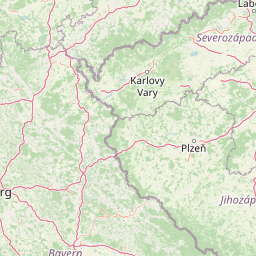
Why Smečno Natural Monument stands out
Smečno is best known for being one of the Czech Republic's dedicated conservation sites for the hermit beetle (Osmoderma barnabita), a species that has become a flagship indicator of old-growth broadleaf forest quality across much of Europe. The site's Natura 2000 designation ties its identity directly to this single invertebrate, which means that the management of mature deciduous trees and their natural cavities is effectively the central management objective of the protected area. In broader ecological terms, the natural monument is valued as a relatively intact fragment of the woodland that historically covered parts of the Džbán transition zone toward the Prague Plateau. It shows how even small, strategically placed protected patches can play an outsized role in maintaining the habitat networks that species such as the hermit beetle require across heavily settled Central Europe.
Smečno Natural Monument history and protected-area timeline
The Smečno natural monument has a relatively short formal history, since its protection was established only in 2012, but its conservation significance is rooted in a longer regional context of biodiversity awareness in Central Bohemia. Prior to its declaration, the woodland patch on the northwestern edge of Smečno had been identified as a particularly valuable site because of the presence of a strong population of Osmoderma barnabita, a beetle species listed as strongly endangered in the Czech Republic.
The decision to formally protect the area was made by the Regional Authority of the Central Bohemian Region on 23 July 2012. The declaration was driven by the need to secure the long-term persistence of this species' habitat, while simultaneously aligning the site with the wider Natura 2000 network of European protected areas. The site's inclusion in Natura 2000 reflects a broader Central European trend of conserving not only large national parks and landscape protection areas but also smaller, species-focused sites that play an outsized role in maintaining continent-wide biodiversity.
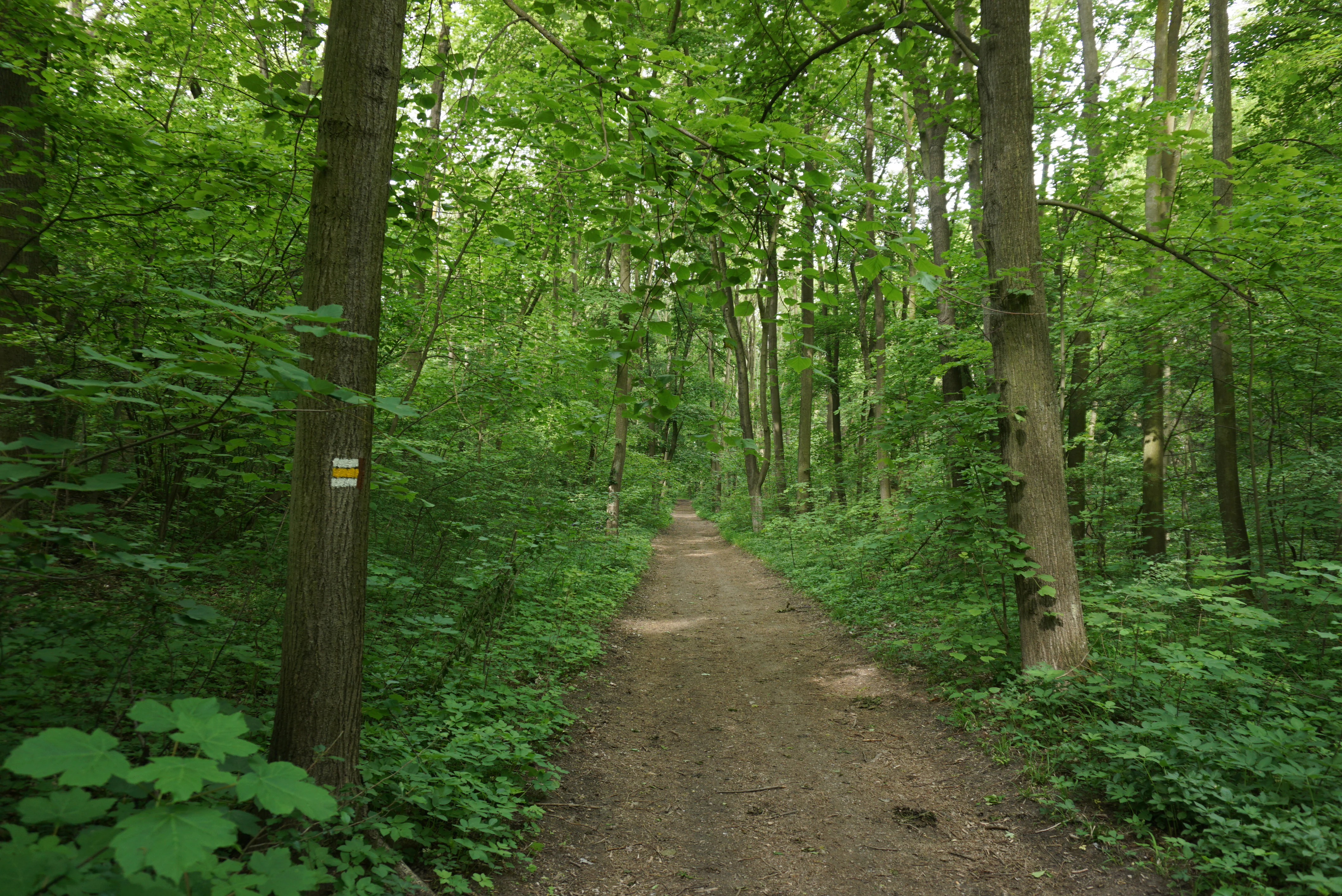
Since its establishment, the protected area has functioned less as a flagship tourism destination and more as a quietly managed conservation site, where the primary objective is the preservation of mature deciduous trees and the natural cavities that are essential to the survival of the species it was created to protect. A network of three hiking trails and an existing third-class road between Smečno and the village of Nová Ves provide the main human access corridors through the protected area.
Smečno Natural Monument landscape and geographic character
The landscape of the Smečno natural monument is shaped by its position at the edge of two contrasting Central Bohemian landform regions. To the north and northwest lies the Džbán, a geomorphological cell characterized by broader forested ridges and a more continuous woodland character, while to the south and east the terrain opens up into the Pražská plošina, or Prague Plateau, where the relief is flatter and the land cover historically more mixed between fields, pastures, and smaller woodland patches. The resulting transition zone is precisely what the monument captures and protects.
Within the protected area itself, the topography is gently undulating rather than dramatic, with elevations ranging from roughly 309 meters at lower points to about 396 meters at the highest elevations. This subtle relief produces a mosaic of small slopes, shallow valleys, and relatively level upland areas, all of which support a nuanced pattern of habitats. The woodland here is characterized predominantly by broadleaf species, with the mature, cavity-bearing trees that the protected status is designed to safeguard scattered through the forest in patterns that reflect both natural dynamics and centuries of low-intensity human land use in the region.
Because the area sits on the edge of the town of Smečno rather than deep in the countryside, its landscape also carries an interesting sense of proximity between protected nature and everyday settlement. Visitors walking the marked trails can move quickly between forest interiors, forest edges, and the outskirts of the town, allowing the boundary between protected habitat and inhabited landscape to be experienced directly. This compactness and accessibility give the natural monument a particular identity as a local landscape feature, rather than as a remote wilderness.
Smečno Natural Monument ecosystems, habitats, and plant life
Ecologically, Smečno is not a large or visually spectacular site, but it is unusually focused. Its nature is defined by the presence of mature deciduous woodland, particularly broadleaf trees with natural cavities and decay features that have been allowed to develop over long periods without intensive management. The site's most important ecological value is that this habitat is large and undisturbed enough to support a viable population of Osmoderma barnabita, a beetle that functions as a classic umbrella species for old-growth forest habitat in Central Europe.
The broader vegetation mosaic reflects the transition between the Džbán and the Prague Plateau. On the more sheltered, slightly higher ground, denser and more continuous woodland can develop, while on the lower slopes and toward the plateau-like southern areas, the forest becomes more open and interspersed with other land uses. This creates a varied structural habitat, with different tree ages, light conditions, and dead-wood levels present across relatively short distances, which benefits many species beyond the beetle itself.
The site's formal ecological classification is IUCN Category IV, which is internationally recognized as a habitat or species management area. This category is used for protected areas whose primary purpose is to maintain, conserve, or restore particular species or habitats, in Smečno's case the habitat requirements of Osmoderma barnabita. The dual designation as a natural monument under Czech law and a Natura 2000 site under European Union environmental legislation underlines the alignment of national and transnational objectives for managing this small but ecologically important area.
Smečno Natural Monument wildlife and species highlights
Wildlife at Smečno is, by design, centered around a single but highly significant species: Osmoderma barnabita, the hermit beetle or páchník hnědý in Czech, a relatively large scarab beetle that is listed as strongly endangered in the Czech Republic. The species is dependent on very specific habitat conditions, particularly the presence of old deciduous trees, especially oaks and other large broadleaves, with natural cavities filled by decaying wood, in which the larvae develop over multiple years. As a result, the protection of this beetle is effectively also the protection of a forest structure that can only develop when trees are allowed to age and die in place.
Because the site's overall size is modest, the range of other large mammal species that visitors might encounter is relatively limited. The woodland character, however, supports typical Central Bohemian forest fauna associated with mature broadleaf stands, including a community of smaller mammals, common forest birds, and invertebrates that depend on dead wood and natural tree cavities. Over time, the protected status and management of the area are expected to increase the abundance of these cavity-dependent species, since the very trees that host the target beetle also create habitat for many others.
The area's Natura 2000 status means that its wildlife value is being monitored within a broader European context. Such sites are often considered important stepping stones in the conservation network for saproxylic, or dead-wood-dependent, species, whose populations have declined sharply across much of lowland Central Europe due to the historical removal of old trees from the agricultural and urban landscape. Smečno, despite its small footprint, contributes to this transnational habitat network.
Smečno Natural Monument conservation status and protection priorities
The conservation significance of Smečno lies in the fact that the site is explicitly designed around the habitat needs of a single strongly endangered species, Osmoderma barnabita, and that this focus is reinforced simultaneously at national and European levels. The site was declared as a Czech natural monument in 2012, and its registration as a Natura 2000 site of European importance means that its management contributes to the European Union's goal of maintaining viable populations of habitat-specialist species across member states.
The category IV IUCN designation further emphasizes the area's role as a habitat and species management area, rather than a strictly preserved wilderness. In practice, this implies that active management, such as retaining mature trees, ensuring the continuity of cavity-bearing trees over time, and limiting disturbance to the forest floor and the natural processes that produce dead wood, is central to the area's conservation strategy.
From a broader perspective, Smečno is a representative example of how the modern Czech system of smaller protected areas, including přírodní památky and přírodní rezervace, complements the country's better-known national parks and landscape protection areas. By protecting small but ecologically critical patches, such as this one, the conservation network in Central Bohemia aims to secure habitat continuity, maintain ecological processes at a local scale, and contribute meaningfully to European-level biodiversity targets.
Smečno Natural Monument cultural meaning and human context
The cultural context of Smečno is closely tied to the town of the same name, which has its own long history in Central Bohemia. The town of Smečno is best known for its imposing château and its long association with Czech aristocratic and later industrial history. The natural monument lies on the northwestern edge of this town, effectively serving as a wooded landscape buffer between the historic settlement area and the broader countryside.
For the local community, the protected area is part of the everyday landscape around the town rather than a remote wilderness. Its marked hiking trails connect the town to the surrounding villages, including the small settlement of Nová Ves near Hradečno, and a third-class road passes through the protected area, linking Smečno to that village. This means that the site sits at a meeting point of local transport, recreation, and conservation, rather than being set apart from everyday rural life.
The conservation efforts at Smečno can also be seen as part of a broader Central European cultural shift in how small landscapes are valued. The recognition that even modest woodland patches can host species of international conservation concern reflects a more detailed, ecologically literate view of the countryside, where traditional land use history, regional identity, and modern biodiversity awareness intersect.
Top sights and standout views in Smečno Natural Monument
Smečno stands out as one of the Czech Republic's small but nationally and ecologically significant protected sites, with its conservation identity built almost entirely around the habitat needs of a single strongly endangered beetle species. Its dual role as a national natural monument and an EU Natura 2000 site demonstrates how local protection decisions are integrated into a wider European biodiversity framework.
The site also highlights the ecological importance of the transition zone between the Džbán and the Prague Plateau, two well-defined geomorphological regions of Central Bohemia. Its compact size, gentle relief, and position on the edge of a historic town make it an accessible example of how mature broadleaf woodland, dead-wood processes, and small-scale conservation management intersect in the modern Czech landscape.
Best time to visit Smečno Natural Monument
The natural monument at Smečno can be appreciated through much of the year, but the late spring and early summer period, from roughly May into July, tends to be especially rewarding. This is when the broadleaf canopy reaches its full thickness, the understory is in active growth, and the activity period of many forest invertebrates, including the beetle species for which the site is protected, is at its peak. Warm, dry days in this period also make walking the marked trails more pleasant in the gently rolling terrain.
Autumn is another strong option for visitors, when the deciduous canopy turns color and the visual character of the woodland becomes especially distinctive against the backdrop of the broader Central Bohemian landscape. Local cultural events and the historic château in the town of Smečno can complement an autumn visit, since the natural monument lies on the edge of the town. Winter visits are possible but tend to be quieter and focus on the structural character of the bare deciduous trees, which is also when the cavity-bearing trees that host the protected species are most visible.