
Mori Atlas logo
Natural monumentSmyslov

Mapping the unique transition between rocky juniper pastures and species-rich wet meadows in Jihočeský kraj

Smyslov Natural Monument: A Distinctive Protected Landscape and Botanical Mosaic in the Czech Republic

Smyslov serves as a representative protected natural monument within the Jihočeský kraj region, showcasing the traditional rural character of the Blatná countryside. This compact site offers a unique habitat mosaic where dry, boulder-strewn slopes dotted with juniper shrubs transition sharply into moisture-retaining wet meadows. Our atlas data captures these distinct ecological boundaries, revealing a dense concentration of rare flora including marsh orchids, cotton grasses, and sedges within this preserved South Bohemian landscape.

natural monumentwet meadowjuniper pasturebotanical interesttraditional landscapeBlatná countryside
A flat-style digital illustration of a mountain valley featuring a waterfall cascading between cliffs, a winding river, and pine forests under a soft sun.

Smyslov

Natural monument

Park overview

Structured park overview, official facts, and landscape profile for Smyslov

Smyslov park facts, protected area profile, and essential visitor context

Review the core facts for Smyslov, including designation, size, terrain, visitor scale, habitats, and operating context in one park-focused overview.

About Smyslov

Smyslov is a small but ecologically meaningful natural monument (přírodní památka) in the Czech Republic's formal system of protected areas. It lies near the village of Kadov, in the Strakonice district of the South Bohemian Region, in an area whose rolling rural scenery is broadly known as the Blatná countryside (Blatensko). The protected territory preserves a particularly characteristic mosaic of two landscape types that historically shaped this part of South Bohemia: bouldery pastures with juniper, and species-rich wet meadows occupying the damp hollows between them.

Geographically, Smyslov sits at a modest elevation of roughly 460 to 464 meters above sea level, on land that has clearly been shaped by a long history of traditional pastoral use. What gives the site its particular importance is not its size, but the fact that it retained a notably intact version of a landscape pattern that has become rare elsewhere in the region. The rocky knolls, thin soils and open grazed turf support junipers and drought-tolerant meadow plants, while the low-lying, groundwater-influenced areas harbor a very different set of moisture-loving species, including several orchids and characteristic sedges.

Because the two habitat types are tightly interwoven here, the monument offers a microcosm of the kind of fine-grained ecological variation that once characterized much of inland South Bohemia. This complexity has led to the site's formal recognition as a nature monument and its international classification as an IUCN Category IV area, a designation reserved for sites where specific habitats or species require active, area-based management.

The site was legally declared as a protected natural monument on 19 March 1990 by the Strakonice District National Committee, in the period of administrative reorganization around the end of the socialist era. Today, its administration belongs to the regional authority of the South Bohemian Region. Despite its modest extent (just under eight hectares), it remains a closely watched botanical reference site, included in the regional overview of protected areas of the Českobudějovicko area and catalogued in the central nature conservation register under code 1376.

Quick facts and research context for Smyslov

Smyslov lies a short distance from the village of Kadov, in the Strakonice district of the South Bohemian Region, in the Czech Republic. It sits at a relatively low elevation typical of inland South Bohemia, around 460 to 464 meters above sea level. The protected territory covers just under eight hectares, making it one of the smaller protected-area units in the regional system.

Its official IUCN designation is Category IV (habitat/species management area), reflecting its conservation role for a specific and botanically distinctive landscape mosaic. The site is administered by the regional office of the South Bohemian Region, and it is registered in the Czech nature conservation database as site code 1376.

Protection and recognition

Terrestrial protected area records and official designation context for Smyslov

Smyslov Protection Status and Documented Conservation Scope

Smyslov maintains a documented terrestrial protection scope within its regional conservation boundaries. Official records organize management details and administrative parameters for this protected landscape.

Protection details

Protection scope
Terrestrial
Transboundary protection
No
Park context

Deeper park guide and search-rich context for Smyslov

Smyslov history, landscape, wildlife, and travel context

Explore Smyslov through its history, landscape character, ecosystems, wildlife, conservation priorities, cultural context, and seasonal travel timing in a structured park guide built for atlas discovery and search intent.

Why Smyslov stands out

Smyslov is best known for being a representative example of the Blatná countryside, specifically the unique pairing of rocky, juniper-dotted pastures with moisture-retaining wet meadows rich in orchids and sedges. It illustrates how a relatively small Czech protected site can preserve a very specific traditional rural landscape in surprisingly intact condition. The botanical interest is unusually concentrated for such a compact area: the same slopes that support juniper shrubs and dry-loving grasses also host moisture-demanding species such as marsh grass of Parnassus, narrow-leaved cotton grass and marsh cinquefoil, creating a habitat mosaic that is ecologically distinctive within the region.
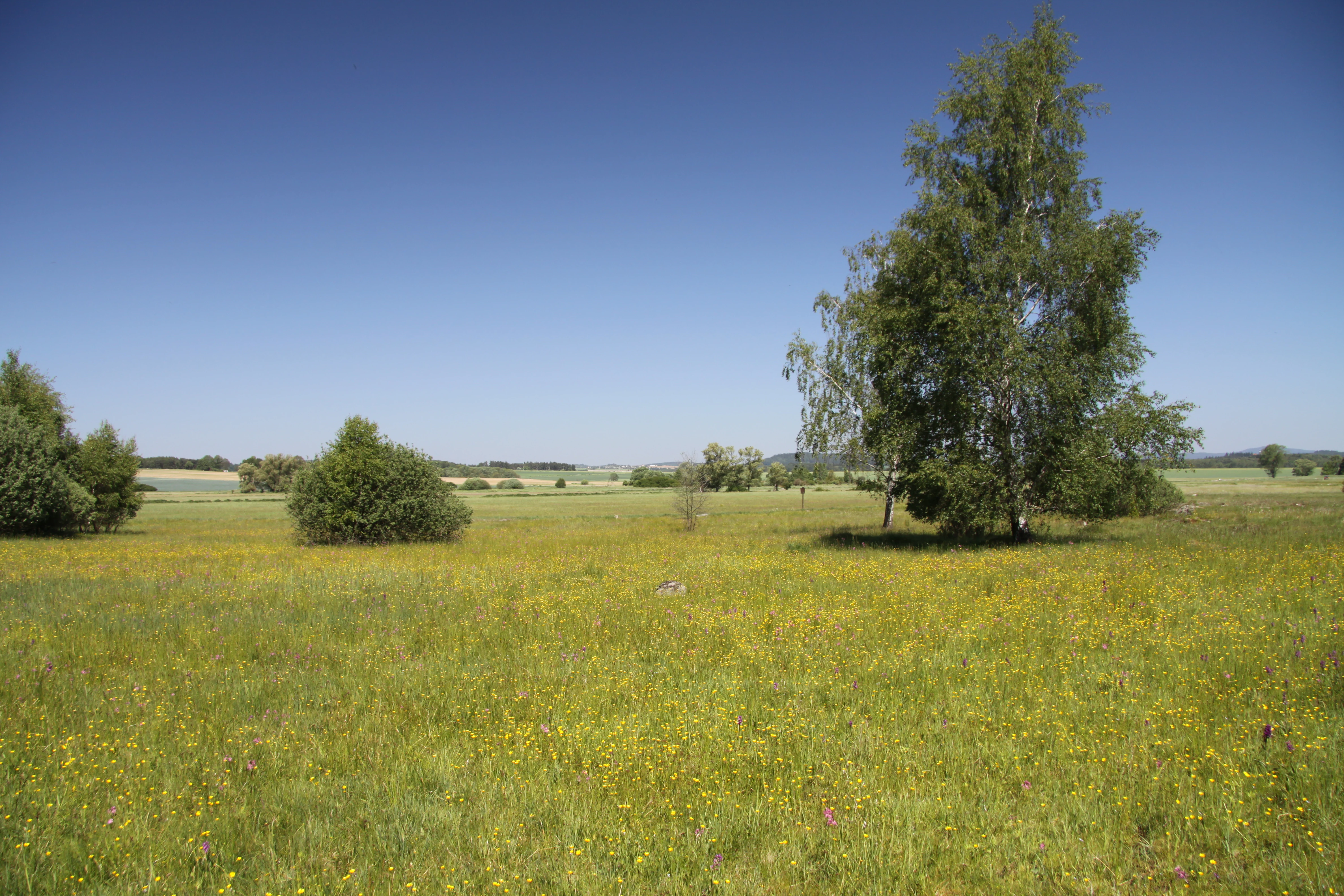
A wide view of a yellow wildflower meadow in Smyslov with scattered birch trees under a clear blue sky.
A summer view of the meadows at the Smyslov natural monument in Czechia.

Smyslov history and protected-area timeline

Smyslov was formally declared a natural monument (přírodní památka) on 19 March 1990 by the then Strakonice District National Committee, at the very beginning of the post-1989 reshaping of environmental policy in the Czech Republic. Its establishment came as part of a broader re-evaluation of small-scale landscapes that had been overlooked by larger-scale nature protection during the preceding decades.

The protective designation was justified by the site's role as a representative example of the Blatná countryside, where juniper pastures and wet meadows still survived together in unusually intact form. Following the dissolution of district national committees, administrative responsibility for the area gradually shifted to the regional level, and Smyslov is now managed by the office of the South Bohemian Region.

Smyslov landscape and geographic character

The landscape of Smyslov is defined by subtlety rather than scale. Rather than dramatic terrain, the site takes the form of a gently undulating mosaic of low knolls, scattered surface boulders, open grassy slopes and small, shallow depressions where water lingers. The rocky patches host juniper shrubs and a thin, herb-rich turf, while the depressions grade naturally into wet meadows whose soils remain damp for much of the year.

This visible combination of dry and wet micro-landscapes, packed very tightly together, is precisely what gives Smyslov its representative value. The shallow, stony soils and the irregular distribution of moisture create natural transitions within distances of just a few meters, producing the layered microhabitat structure typical of traditional Central European pastoral countryside.
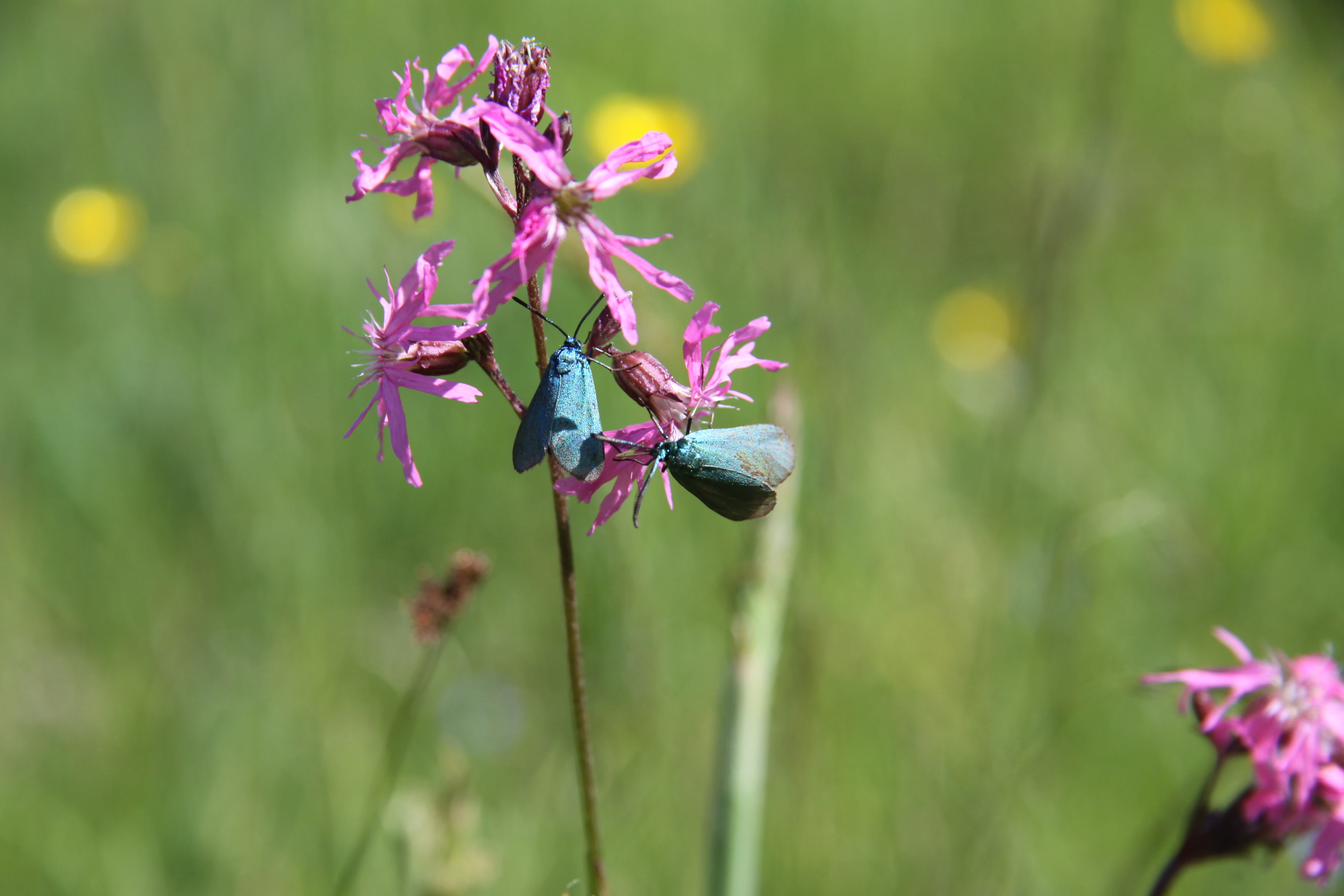
A close up view of two small blue-green moths resting on a pink ragged robin flower against a blurred green meadow background.
Two green forester moths resting on a ragged robin flower in Smyslov natural monument.

Smyslov ecosystems, habitats, and plant life

Ecologically, Smyslov is valuable because it preserves a transition-rich, micro-mosaic of two closely linked habitat types: open stony pastures with juniper on the upper and drier parts, and calcareous-influenced wet meadows in the lower, damper areas. The two habitats interlock across a very short distance, which greatly increases the ecological complexity of the site for its size.

The vegetation structure is shaped by long-established traditional use. Juniper stands on the drier, grazed patches, while the wetter ground supports a varied community of sedges, cotton grasses and flowering herbs, including several species more typical of larger, intact wet meadow complexes. This habitat mosaic is included within the broader ecological character of the Blatná countryside, whose landscape identity is partly built on these exact combinations.
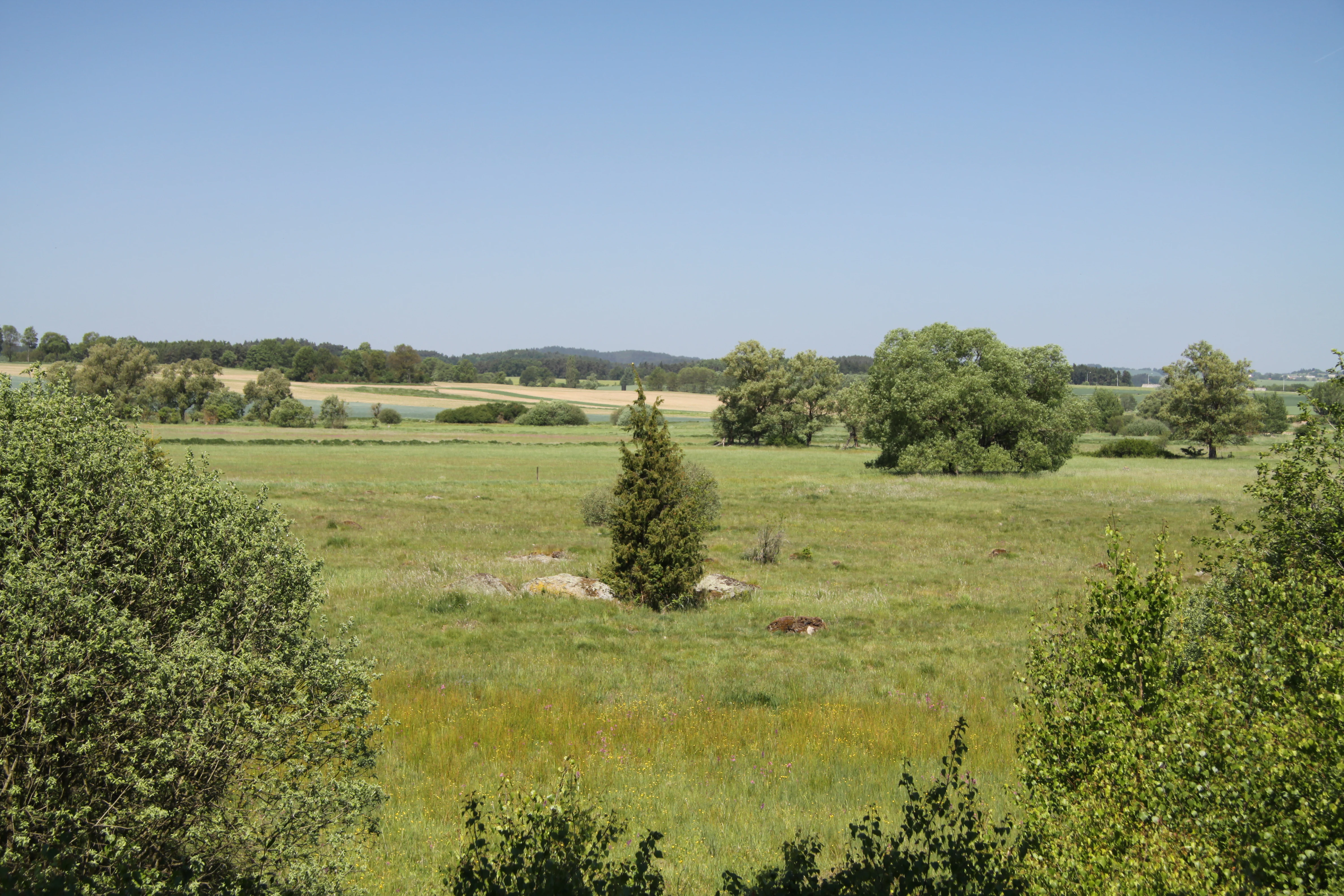
A wide landscape view of a rural, open meadow surrounded by trees under a clear blue sky, featuring scattered small bushes and a hint of a bouldered area.
A view of the open wet meadows and pastures of Smyslov natural monument.

Smyslov wildlife and species highlights

Smyslov's fauna is less individually documented than its flora, but the site's rich meadow structure provides feeding and shelter for a typical range of South Bohemian meadow invertebrates, including pollinators associated with orchids and other meadow flowers. The presence of flowering wild plants supports bees, butterflies and other flower-visiting insects, while the juniper shrubs offer cover for small passerine birds typical of open countryside with scattered shrubs.

The combination of pasture, juniper and wet meadow, even across a few hectares, provides a particularly diverse insect habitat, which in turn underpins the broader food web of the surrounding agricultural landscape.
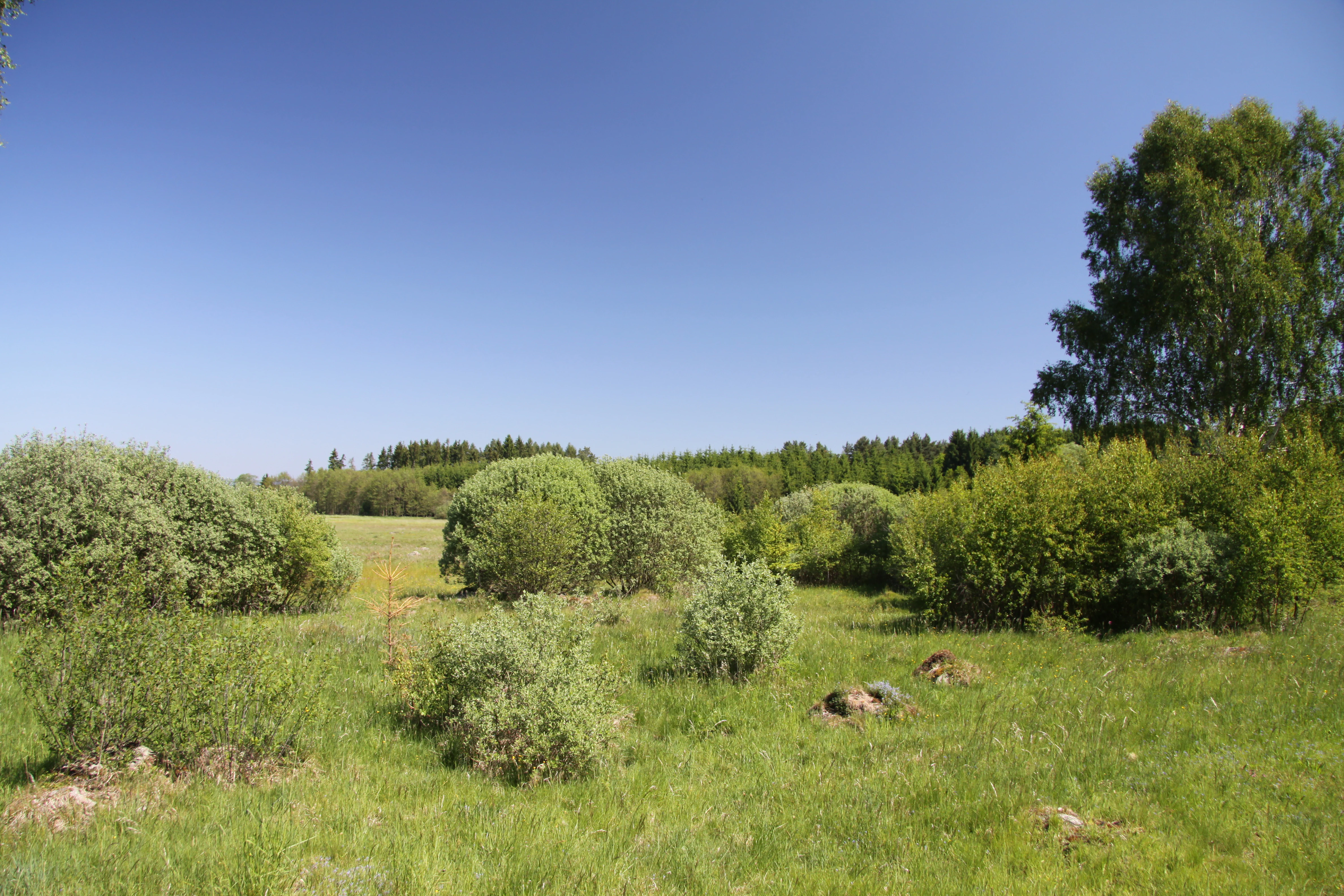
A wide, eye level shot of a green, grassy meadow with scattered shrubs and small rocks, under a clear blue sky, with a line of trees in the background.
A sunny view of the wet meadows and shrubby pastures at the Smyslov natural monument.

Smyslov conservation status and protection priorities

From a conservation perspective, Smyslov's importance lies in its role as a small but representative refuge for a specific habitat mosaic that has declined across much of central Bohemia. The joint survival of juniper pastures and species-rich wet meadows on a single site is ecologically significant because once these habitats are separated or converted, they rarely re-form. Smyslov therefore acts as a local anchor for habitat-connected conservation in the Blatná region.

Its formal IUCN Category IV designation emphasizes that the site's biodiversity values require ongoing, area-based management, most likely including continued low-intensity grazing or appropriate meadow management, in order to prevent the juniper stands from being shaded out and to keep the wet meadows open and flower-rich.

Smyslov cultural meaning and human context

Smyslov belongs to a broader category of Czech protected areas whose cultural significance is inseparable from their ecological value. The juniper pastures and hay meadows of the Blatná countryside are the product of centuries of small-scale, traditional rural land use; open grazed turf, scattered junipers and carefully managed hay cutting together shaped the very landscape mosaic the monument was established to protect.

The site therefore also represents a piece of intangible rural heritage: a working agricultural landscape whose structure, maintained over generations, coincidentally produced habitats of high biodiversity value.

Top sights and standout views in Smyslov

Among the standout qualities of Smyslov, the most distinctive is the tight coexistence of juniper-rich stony pasture and species-rich wet meadow on a single, compact site, an unusual and ecologically valuable combination.

The botanical richness is also notable: a relatively short walk can reveal juniper, broad-leaved marsh orchids, marsh grass of Parnassus, narrow-leaved cotton grass, rosemary-leaved willow and several characteristic sedges, offering an exceptionally concentrated cross-section of South Bohemian meadow flora.

Best time to visit Smyslov

The most rewarding period to experience Smyslov is late spring through mid-summer, when the wet meadows come into flower and the orchids of the genus Dactylorhiza are in bloom. At this time, the contrast between the drier juniper pastures and the colorful damp meadows is at its most visible, and the insect life dependent on these flowers is most active. Late spring and early summer also provide the clearest views of the site's full habitat mosaic, before vegetation becomes dense and tall.

Monthly climate preview

Examine long-term representative temperature and precipitation averages for Smyslov

Smyslov Climate Normals and Average Annual Weather Patterns

Long-term data records trace measured temperature ranges and monthly precipitation cycles across Smyslov at a representative elevation of 526 meters. Detailed monthly comparisons provide broader context on temperature swings and precipitation distribution throughout the year.
Annual mean8 °C
-3 °C19 °C
Jan-3°
Feb-2°
Mar
Apr
May12°
Jun16°
Jul19°
Aug18°
Sep13°
Oct
Nov
Dec-2°
Warmest month
July

18.5 °C

Coolest month
January

-2.8 °C

Wettest month
June

2.9 mm/day

Driest month
February

1.4 mm/day

Park location guide

Geography guide, regional context, and park location map for Smyslov

Smyslov park geography, regions, and map view in Czechia

Understand where Smyslov sits in Czechia through a broader geographic reading of the surrounding landscape, nearby location context, and its mapped position within the national park landscape.

How Smyslov fits into Czechia

Czech Republic is a landlocked Central European country with a population of approximately 10.9 million people. The nation was established as an independent state on January 1, 1993, following the dissolution of Czechoslovakia. Its capital and largest city is Prague, with other major urban centers including Brno, Ostrava, Plzeň, and Liberec.

Wider geography shaping Smyslov in Czechia

The Czech Republic is a landlocked country in Central Europe. It is bordered by Germany to the west, Austria to the south, Poland to the northeast, and Slovakia to the southeast. The landscape is predominantly hilly, with the territory covering 78,871 square kilometers.

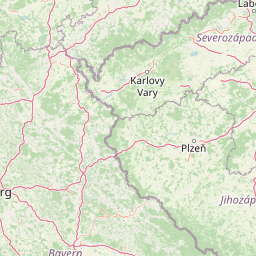
Map view of Smyslov

Use this park location map to pinpoint Smyslov in Czechia, understand its exact geographic position, and read its mapped placement within the surrounding landscape more clearly.

Pigeon | © OpenStreetMap contributors

Location context for Smyslov

Jihočeský kraj

Explore visual records of juniper pastures, damp meadows, and rocky terrain across the protected landscape.

Smyslov Photos and Landscape Scenery: Visualizing Protected Habitats

Visual documentation of Smyslov reveals the subtle mosaic of boulder-strewn pastures and moisture-retaining wet meadows defining the traditional Blatná countryside. Examining detailed imagery clarifies the compact ecological transitions and diverse botanical habitats preserved within the South Bohemian natural monument.

A wide view of a yellow wildflower meadow in Smyslov with scattered birch trees under a clear blue sky.

A close up view of a vivid purple broad leaved marsh orchid growing amidst tall green grass and scattered yellow wildflowers in a meadow under a clear blue sky.

A close up view of two small blue-green moths resting on a pink ragged robin flower against a blurred green meadow background.

A wide landscape view of a rural, open meadow surrounded by trees under a clear blue sky, featuring scattered small bushes and a hint of a bouldered area.

A wide, eye level shot of a green, grassy meadow with scattered shrubs and small rocks, under a clear blue sky, with a line of trees in the background.

Park atlas

Discover related reserves and surrounding regional landscapes

Explore Protected Areas and Parks Near Smyslov

Compare Smyslov with nearby protected areas to examine regional ecological patterns and traditional rural habitats. Neighboring nature reserves offer valuable context for understanding the wider pastoral terrain of South Bohemia.
A horizontal watercolor illustration depicting soft, rolling hills in shades of green, yellow, and light pink with small clusters of trees.
Nature reservePlzeňský kraj
About 15 km away#1 closest

Southwest

Prácheň Nature Reserve: Protected Broadleaf Woodlands and Historic Castle Remains

An atlas view of Bohemian forest geography and heritage landscapes

Prácheň Nature Reserve protects a compact block of warm-loving deciduous woodland set atop a hilltop in the Plzeňský kraj region. The area integrates significant natural habitats with cultural heritage, encompassing an early medieval hillfort and castle ruins. This unique blend of forest ecology and Bohemian historical geography offers a distinct perspective on protected areas within the southwestern Czech landscape.

Area
0.283 km²
Established
1953
IUCN
IV
Relief
Upland
A pale, soft watercolor painting of a rolling, grassy meadow landscape with a prominent green mushroom in the foreground and sparse, leafless trees.
Natural monumentJihočeský kraj
About 16 km away#2 closest

East

Malý Kosatín: Protected Botanical Landscapes in the South Bohemian Region of Czechia

A rare fen-meadow sanctuary in the Písek District

Located in the heart of the Czech countryside, Malý Kosatín is a natural monument distinguished by its intense botanical density and traditional meadow management. The site serves as a crucial habitat for threatened orchids and sedge communities, providing a focused view of the ecological character that defines the upland terrain surrounding the Písek District.

Area
0.01 km²
Established
1986
IUCN
IV
Relief
Upland
A watercolor painting of soft green rolling hills and small clusters of pine trees against a light sunset sky.
Natural monumentJihočeský kraj
About 17 km away#3 closest

Southeast

Ryšovy Natural Monument and Botanical Protected Area in Jihočeský kraj

Exploring limestone woodland terrain and rare floral habitats

Ryšovy is a notable natural monument in the Czech Republic, defined by its characteristic limestone bedrock and the resulting diverse herb layer. This protected area creates a significant botanical stronghold within the wider landscape of the Jihočeský kraj, featuring a mosaic of woodland patches and sun-exposed clearings that support protected orchids and other rare thermophilous plant species.

Area
0.35 km²
Established
1990
IUCN
IV
Relief
Upland
A wide watercolor illustration showing a pale landscape with a stream, rocky banks, distant hills, and pink and green grass in the foreground.
Natural monumentJihočeský kraj
About 18 km away#4 closest

Southeast

Michovka Natural Monument: Protected Limestone Landscapes in the South Bohemian Region

A diverse protected area in the Písek District of the Czech Republic.

Located on the outskirts of Brloh u Drhovle, Michovka encompasses a distinctive mix of fishponds, limestone-rich rocky slopes, and rare short-sedge vegetation. This compact protected area provides a vital habitat for endangered wildlife and represents an important segment of the South Bohemian natural terrain.

Area
0.025 km²
Established
1985
IUCN
IV
Relief
Lowland
Natural monumentPlzeňský kraj
About 21 km away#5 closest

West

Velký kámen Natural Monument: Protected Siliceous Outcrops and Regional Geography

Geological landscape within the Plánický hřeben area of Plzeňský kraj.

Velký kámen serves as a notable protected landmark featuring an elongated siliceous rock formation and remnants of natural beech forest. Its location on the V Kopaninách hillside makes it a key feature of the broader regional geography, while its status as both a natural monument and an Eneolithic archaeological site provides a layered perspective on the Bohemian landscape.

Area
0.012 km²
IUCN
IV
Relief
Upland
Scope
Terrestrial
A horizontal watercolor painting showing rolling green hills, scattered trees, and soft mountain silhouettes in the distance against a white background.
Protected landscapePlzeňský kraj
About 22 km away#6 closest

Northwest

Přírodní park Buková hora, Chýlava: Geographic Atlas and Protected Landscape Overview

Forested uplands and industrial heritage in western Bohemia.

Focusing on the 28 square kilometer expanse of Přírodní park Buková hora, Chýlava, this overview details the park's acidophilous oak forests, sedimentary bedrock, and inclusion of the Chejlava National Nature Reserve. Understand the site's role as a protected upland framed by the Úslava watershed and historic mining settlements in the Plzeňský kraj region.

Area
28 km²
Established
1983
Relief
Upland
Climate
Temperate
A horizontal watercolor painting showing rolling green hills and distant purple ridges against a white background.
Protected landscapeKlatovy District
About 23 km away#7 closest

Southwest

Přírodní park Buděticko: Protected Landscape and Geographic Atlas of Klatovy District

Orchid-rich meadows and riparian terrain in the Bohemian foothills

Přírodní park Buděticko serves as a vital protected landscape in the Klatovy District, characterized by the transition between the Šumava foothills and broader upland plains. This area supports a mosaic of orchid-rich limestone meadows and riparian habitats along the Otava River. Discover the park's geological character and its integration of natural biodiversity with the cultural heritage of southwestern Bohemia.

Area
44 km²
Established
1994
Relief
Upland
Climate
Temperate
Natural monumentJihočeský kraj
About 24 km away#8 closest

East

V Obouch Natural Monument: Geographic Profile of the Lomnice River Valley

Protected riparian corridors and riverine terrain in Jihočeský kraj

Explore the unique geomorphology of V Obouch, a protected river segment in the Czech Republic. This site provides a detailed cross-section of alder floodplain forests, boulder rapids, and canyon-like terrain that defines the ecological character of the South Bohemian river network.

Area
0.051 km²
Established
1986
IUCN
IV
Relief
Upland

Common questions about visiting, size, designation, and location context for Smyslov

Smyslov FAQs for park facts, access, geography, and protected area context

Find quick answers about Smyslov, including protected-area facts, park geography, trail and visitor context, and how the park fits into its surrounding country and regional landscape.
MoriAtlas Explorer

Continue Your Protected Areas Search Across the Global Atlas

Deepen your exploration by continuing the structured search for national parks and protected areas worldwide. Utilize the comprehensive filtering capabilities to compare different conservation landscapes and refine your understanding of global park geography. Discover more about the distribution and characteristics of protected natural areas.

Global natural geography