Mori Atlas logo
Natural monumentSojčí rokle

Examining the humid microclimatic conditions and distinct geological features of this sandstone ravine.

Sojčí rokle Natural Monument: A Protected Sandstone Gorge and Forest Landscape in Ústecký kraj

Sojčí rokle is a protected natural monument located within the Ústecký kraj region of northern Czechia. This narrow, humid sandstone gorge provides a sheltered habitat for rare flora, including distinct fern communities, amidst a backdrop of oak-hornbeam and scree forests. As part of the wider Labské pískovce Protected Landscape Area, the site offers significant insight into the specialized geological and botanical mosaics characteristic of the broader Bohemian Switzerland sandstone landscape.

sandstone gorgerare fern habitatoak-hornbeam forestscree forestbotanical natural monumentBohemian Switzerland

Sojčí rokle

Natural monument

Park overview

Structured park overview, official facts, and landscape profile for Sojčí rokle

Sojčí rokle park facts, protected area profile, and essential visitor context

Review the core facts for Sojčí rokle, including designation, size, terrain, visitor scale, habitats, and operating context in one park-focused overview.

About Sojčí rokle

Sojčí rokle is a small protected natural area in northern Bohemia, focused on a single sandstone gorge and its surrounding forest vegetation. Although it occupies only a few hectares, the site has been formally protected because the combination of rock shelter, moisture retention, and forest canopy creates conditions favorable for plants that are uncommon in central European landscapes.

The protected area lies within the administrative territory of the Bohemian Switzerland National Park, and it is positioned inside the larger Labské pískovce Protected Landscape Area, a region recognized for the exceptional sandstone formations of the Elbe Sandstone Mountains. Within this broader setting, Sojčí rokle contributes a botanically specialized element to a landscape otherwise known for its dramatic rock cities, deep valleys, and forested plateaus.

The gorge itself follows an unnamed right-bank tributary of the Kamenice River, one of the major waterways of the region. The cool, shaded, and moisture-retaining microclimate inside this narrow valley is what allows Trichomanes speciosum, sometimes referred to as a filmy fern, to persist far from the warmer and wetter Atlantic and Mediterranean environments where it is more commonly found.

In addition to the rare fern, the site preserves near-natural oak-hornbeam and scree-forest communities, which represent some of the most ecologically valuable woodland types in sandstone regions. These forests are considered close to their natural composition, which is itself a meaningful conservation attribute in a European landscape otherwise heavily shaped by forestry and settlement history.

Quick facts and research context for Sojčí rokle

Sojčí rokle was officially declared a natural monument on 15 September 2016, with the declaration issued through the Czech Agency for Nature Conservation and Landscape Protection (AOPK ČR), giving it protected status under Czech law as a habitat-focused conservation area.

The site lies in the Ústecký Region (Ústecký kraj), Děčín District, near the village of Janská, between Janská and Filipov, and is embedded within the Labské pískovce Protected Landscape Area and the broader Bohemian Switzerland National Park administrative territory.

Protection and recognition

Documented protection scope and international recognition records for Sojčí Rokle

Sojčí Rokle Protection Status and Terrestrial Conservation Data

Sojčí Rokle maintains a defined terrestrial protection scope within the regional conservation network. Structured facts outline the documented designation status and administrative framework associated with the protected landscape.

Protection details

Protection scope
Terrestrial
Transboundary protection
No
Park context

Deeper park guide and search-rich context for Sojčí rokle

Sojčí rokle history, landscape, wildlife, and travel context

Explore Sojčí rokle through its history, landscape character, ecosystems, wildlife, conservation priorities, cultural context, and seasonal travel timing in a structured park guide built for atlas discovery and search intent.

Why Sojčí rokle stands out

Sojčí rokle is primarily known for hosting Trichomanes speciosum, a rare fern species that depends on the consistently humid, sheltered conditions of a sandstone gorge. This combination of a specific geological landform and a botanically significant species gives the protected area a tightly defined but ecologically meaningful identity. The site is also appreciated as part of the sandstone landscape mosaic of Bohemian Switzerland, where deeply cut rock formations, scree slopes, and mixed deciduous forest communities together produce the conditions that allow such a specialized fern to survive at this latitude.
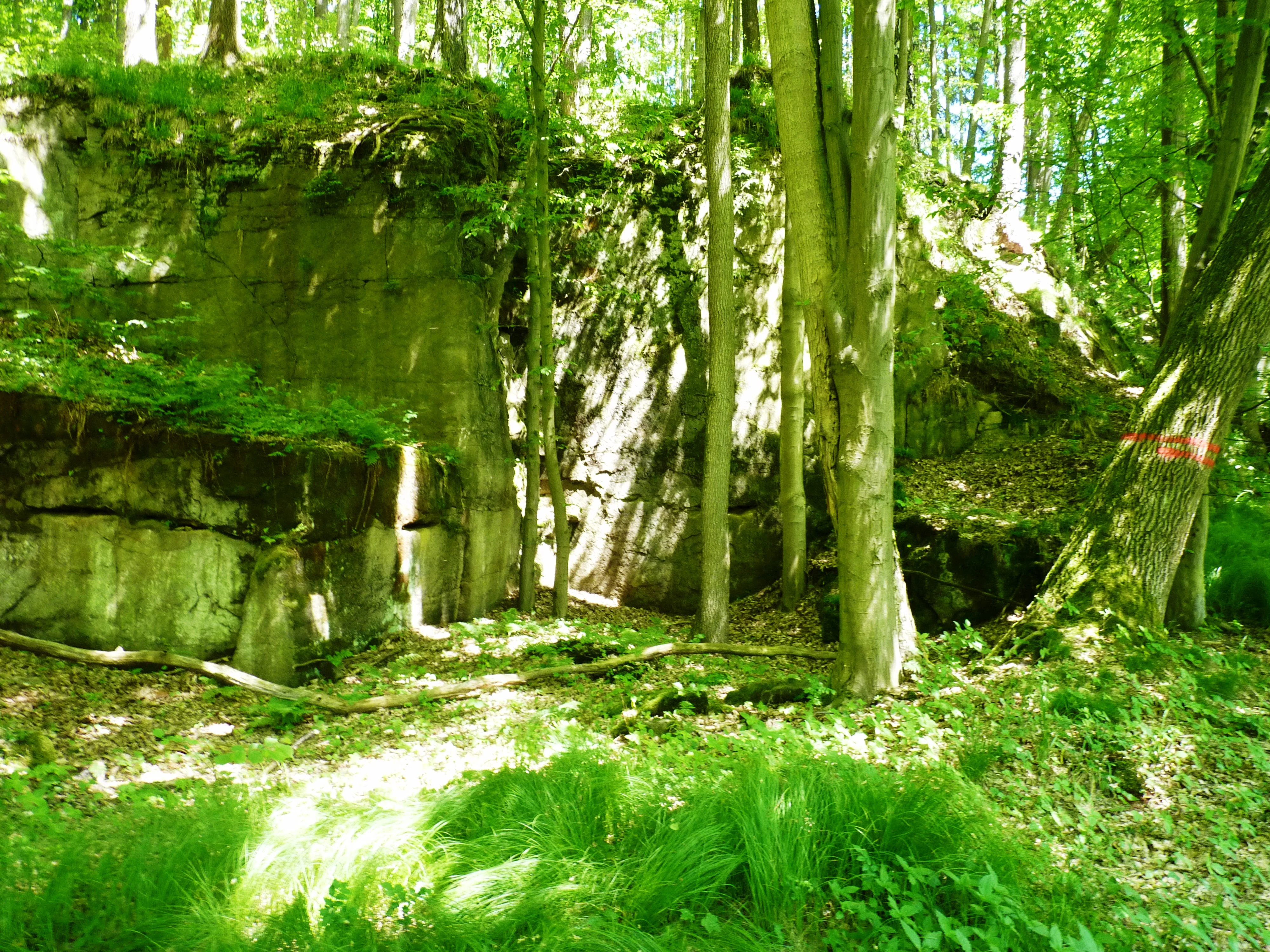
A forest scene featuring a large sandstone rock face surrounded by green trees and undergrowth, with dappled sunlight filtering through the canopy.
A view of the sandstone gorge and forest at Sojčí rokle natural monument.

Sojčí rokle history and protected-area timeline

Sojčí rokle was declared a protected natural area on 15 September 2016, through a process led by the Czech Agency for Nature Conservation and Landscape Protection (Agentura ochrany přírody a krajiny ČR). The declaration reflects a long-running national effort in the Czech Republic to formalize the protection of small, ecologically distinctive sites that would not qualify for the larger national park or protected landscape area categories but still carry significant botanical or geological value.

The designation placed the gorge and its surrounding forests into the national register of small protected areas (přírodní památky), a category reserved for sites of focused scientific, ecological, or aesthetic importance. The decision was closely linked to the broader conservation framework already established around the Bohemian Switzerland National Park and the Labské pískovce Protected Landscape Area, both of which recognize the ecological importance of the sandstone landscape.

Sojčí rokle landscape and geographic character

The landscape of Sojčí rokle is defined by a narrow sandstone gorge cut into the rocks of the Elbe Sandstone Mountains, one of the characteristic geological features of northern Bohemia. The gorge walls and overhanging rocks create a heavily shaded, sheltered corridor that captures and retains moisture, producing the persistently humid microclimate that gives the site its biological importance.

Above and around the gorge, the terrain includes typical sandstone landforms of the region: rock outcrops, scree slopes, and forested slopes that blend into the broader mosaic of the Labské pískovce Protected Landscape Area. The valley follows an unnamed right-bank tributary of the Kamenice River, and its location between the villages of Janská and Filipov places it in a landscape where dramatic sandstone scenery and deciduous forest alternate across short distances.

The combination of a deeply incised valley, exposed sandstone walls, and forested slopes marks Sojčí rokle as a compact but visually distinctive example of the rock-gorge landscapes that recur across the Bohemian Switzerland region.

Sojčí rokle ecosystems, habitats, and plant life

Ecologically, Sojčí rokle is defined by the unusual convergence of sandstone geology, sheltered topography, and humid forest microclimate. Together these factors support a vegetation composition that is more reminiscent of warmer, wetter climates than of typical central European forests.

The dominant woodland types here are near-natural oak-hornbeam forests and scree forests, both of which are recognized as ecologically valuable because they retain much of their natural species structure. Oak-hornbeam forests combine oak and hornbeam with a diverse understory, while scree forests occupy the unstable slopes and rubble deposits below the rock faces, often developing a distinctive mix of shade-tolerant trees, shrubs, and ground vegetation.

The fern-rich humid microclimate of the gorge adds another layer of ecological distinctiveness to the site. The persistent moisture, temperature stability, and shade collectively form a small-scale refugium for plants whose broader distribution is associated with Atlantic and sub-Mediterranean climates.

Sojčí rokle wildlife and species highlights

The most prominent wildlife-related feature of Sojčí rokle is its botanical rather than faunal character. The site is best understood as a refuge for Trichomanes speciosum, a rare fern whose presence is the principal reason for its protected status.

Nevertheless, the near-natural oak-hornbeam and scree-forest habitats of the gorge also provide living conditions for the broader forest fauna of Bohemian Switzerland. These mixed deciduous woodlands typically support woodland bird communities, small mammals, and invertebrates associated with mature broadleaf forests, mossy rocks, and shaded streams. The cool, humid conditions maintained by the gorge walls are also favorable for bryophytes, lichens, and moisture-dependent invertebrates, contributing to the overall biological richness of the site.

Sojčí rokle conservation status and protection priorities

The conservation significance of Sojčí rokle is anchored in three layers of protection: its own natural monument status, its inclusion in the Labské pískovce Protected Landscape Area, and its location within the administrative territory of the Bohemian Switzerland National Park. This layered protection connects the small site to a much larger regional conservation strategy for the sandstone landscapes of northern Bohemia.

The core conservation value of the site lies in its role as a habitat for Trichomanes speciosum, a species whose ecological requirements are not easily met elsewhere in central Europe. Protecting the gorge and its forests preserves the microclimate, rock formations, and near-natural woodland that together sustain this species, while also maintaining a representative example of oak-hornbeam and scree forest communities in their natural state.

Because the site is small, conservation management focuses narrowly on preserving the integrity of the gorge and avoiding disturbance to the habitats it shelters, rather than on managing a large landscape mosaic. In this sense, Sojčí rokle illustrates how very compact protected areas can carry disproportionate ecological importance when they preserve specific microclimatic or biological conditions.

Top sights and standout views in Sojčí rokle

Sojčí rokle offers a rare combination of a small protected area with a tightly focused ecological identity. The presence of Trichomanes speciosum, a fern more commonly associated with Atlantic and Mediterranean climates, makes the gorge botanically distinctive within central Europe.

The site also adds ecological depth to the broader Bohemian Switzerland and Labské pískovce landscape, contributing a humid, forest-anchored contrast to the region's more famous open sandstone rock formations. Its triple protection as a natural monument, a part of a protected landscape area, and a site within the national park underscores how even very small protected areas can carry meaningful conservation weight in a strong regional network.

Best time to visit Sojčí rokle

Because Sojčí rokle is valued primarily for its microclimate and forest communities rather than its seasonal scenery, it is most rewarding to visit during mild weather, when the sandstone gorge retains the cool, damp conditions that define its character. Late spring and early summer tend to be favorable periods, when the deciduous forest canopy is fully developed and the gorge interior feels especially cool and shaded.

Late summer and autumn visits also work well for those interested in broader Bohemian Switzerland scenery, because cooler temperatures and forest colors complement the rugged sandstone topography. Winter visits can offer a quieter experience, though snow and ice may make the rocky approach to the gorge more demanding. Visitors interested primarily in the rare fern or in viewing the forest communities at their most active should plan their trip for the warmer half of the year.
Monthly climate preview

Measured monthly weather patterns and long term climate records for Sojčí rokle

Sojčí rokle Climate Normals: Long Term Temperature and Precipitation Rhythm

Representative coordinate sampling from NASA POWER reveals the multi year temperature and precipitation normals recorded across Sojčí rokle. Examining the complete twelve month profile provides deeper insight into measured baseline climatology and historical atmospheric patterns.
Annual mean8 °C
-2 °C19 °C
Jan-2°
Feb-1°
Mar
Apr
May13°
Jun17°
Jul19°
Aug19°
Sep14°
Oct
Nov
Dec-1°
Warmest month
July

19 °C

Coolest month
January

-2.2 °C

Wettest month
July

2.9 mm/day

Driest month
April

1.3 mm/day

Park location guide

Geography guide, regional context, and park location map for Sojčí rokle

Sojčí rokle park geography, regions, and map view in Czechia

Understand where Sojčí rokle sits in Czechia through a broader geographic reading of the surrounding landscape, nearby location context, and its mapped position within the national park landscape.

How Sojčí rokle fits into Czechia

Czech Republic is a landlocked Central European country with a population of approximately 10.9 million people. The nation was established as an independent state on January 1, 1993, following the dissolution of Czechoslovakia. Its capital and largest city is Prague, with other major urban centers including Brno, Ostrava, Plzeň, and Liberec.

Wider geography shaping Sojčí rokle in Czechia

The Czech Republic is a landlocked country in Central Europe. It is bordered by Germany to the west, Austria to the south, Poland to the northeast, and Slovakia to the southeast. The landscape is predominantly hilly, with the territory covering 78,871 square kilometers.

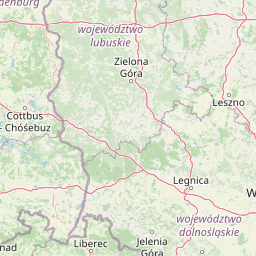
Map view of Sojčí rokle

Use this park location map to pinpoint Sojčí rokle in Czechia, understand its exact geographic position, and read its mapped placement within the surrounding landscape more clearly.

Pigeon | © OpenStreetMap contributors

Location context for Sojčí rokle

Ústecký kraj

Visual exploration of sandstone gorge terrain and rare fern habitats

Sojčí rokle Photos and Landscape Scenery in Bohemian Switzerland

Visual documentation captures the rugged sandstone rock formations, shaded gorges, and forested slopes that define the protected landscape character of Sojčí rokle. Examining these detailed field photographs helps researchers and visitors understand the humid microclimatic conditions and specialized habitats preserved within northern Bohemia.

A forest scene featuring a large sandstone rock face surrounded by green trees and undergrowth, with dappled sunlight filtering through the canopy.

Park atlas

Compare adjacent sandstone gorges and regional conservation landscapes

Explore Protected Areas and Parks Near Sojčí Rokle

Browse nearby protected natural areas and national parks surrounding Sojčí rokle to examine related sandstone terrain and forest ecosystems. Continuing the geographical comparison reveals broader regional conservation patterns across northern Bohemia.
Watercolor illustration of rolling green hills, forests, and distant mountains
National parkCzechia
About 2.2 km away#1 closest

West

Bohemian Switzerland National Park: Czech Sandstone Protected Landscape and Map Exploration

Discover its unique terrain and protected area geography.

Bohemian Switzerland National Park is a protected area in the Czech Republic known for its exceptional sandstone geology. This national park showcases a dramatic landscape of towering rock formations, deep gorges, and striking canyons, forming a significant part of the Elbe Sandstone Mountains. Through MoriAtlas, users can explore its mapped protected boundaries, understand its regional geographic context, and appreciate its unique natural heritage.

Area
79 km²
Established
2000
IUCN
II
Relief
Mixed relief
Natural monumentÚstecký kraj
About 3.7 km away#2 closest

Northwest

Meandry Chřibské Kamenice: Geography of a Bohemian Natural Monument

Protected river meanders and sandstone valley terrain in northern Bohemia

Meandry Chřibské Kamenice serves as a vital protected area in the Czech Republic, specifically preserving the natural river dynamics of the Chřibská Kamenice stream. Its narrow floodplain, characterized by evolving meanders, riparian woodland, and marshy habitats, offers a focused look at how watercourses shape the sandstone landscapes of the Ústecký kraj region.

Area
0.085 km²
Established
1996
IUCN
III
Relief
Lowland
Watercolor painting showing a landscape with green hills, trees, and a river winding through the scene
National parkGermany
About 9.8 km away#3 closest

Northwest

Saxon Switzerland National Park: Protected Area Geography and Map Exploration

Discover its mapped boundaries and regional landscape context.

Saxon Switzerland National Park, a protected national park in Germany, offers a distinct focus for geographic and atlas-based discovery. This page details the park's specific protected landscape, its mapped boundaries, and its contribution to the regional geography. MoriAtlas allows for in-depth exploration of such natural areas, providing essential context for understanding their place within broader natural systems and mapped terrains.

Area
93.5 km²
Established
1990
IUCN
II
Visitors
1.7M annual
Nature reserveLiberec Region
About 13 km away#4 closest

Southeast

Manušické rybníky Nature Reserve and Protected Wetland Landscape in Liberec Region

Historic fishpond mosaic and critical amphibian refuge

Manušické rybníky is a well-documented nature monument in the Czech Republic featuring a chain of seven fishponds established in 1575. The site preserves vital lowland peatland fragments and pine-oak woodlands, serving as a significant ecological node for wetland flora and amphibians within the broader landscape of the Liberec Region.

Area
0.143 km²
Established
2012
IUCN
IV
Relief
Upland
Nature reserveSachsen
About 19 km away#5 closest

North

Gimpelfang Nature Reserve: Mapped Forest Ecosystems and Protected Terrain in Sachsen

Ancient deciduous stands and brook-valley landscapes.

Gimpelfang is a ten-hectare nature reserve in the Saxon Switzerland district, notable for its mature broadleaf forest that escaped historical spruce planting. The site offers a window into regional ecology with its diverse brook-side ash and alder habitats and strictly protected total-reserve core, providing a dense, research-focused look at native woodland conservation in the German landscape.

Area
0.103 km²
Established
1961
IUCN
IV
Natural monumentÚstí nad Labem Region
About 20 km away#6 closest

North

Vlčice Natural Monument: Protected Acidophilic Beech Forest in the Ústí nad Labem Region

Mapped upland terrain and old-growth forest conservation

Vlčice represents a highly preserved fragment of old acidophilic beech forest in the northern Czech Republic. Characterized by its granodiorite geology and rolling upland terrain, the site provides a sanctuary for specialized forest species and serves as an important study area for natural woodland development within the broader Ústí nad Labem Region.

Area
0.273 km²
Established
2022
IUCN
IV
Relief
Upland
Nature reserveLiberec Region
About 21 km away#7 closest

South

Ronov Nature Reserve: Protected Volcanic Geography and Scree Forest Ecosystems in Liberec Region

Volcanic landmark with basalt talus slopes and historic ruins

Ronov rises as a distinctively shaped basalt cone from the rolling terrain of the northern Czech Republic. This nature reserve offers significant insight into the geological and botanical character of the Ralská pahorkatina, featuring extensive stone seas and rare plant habitats situated around ancient castle remains.

Area
0.09 km²
Established
1995
IUCN
IV
Relief
Mountain
Nature reserveÚstecký kraj
About 26 km away#8 closest

West

Rájecká rašeliniště Nature Reserve: Protected Peatland and Sandstone Geography in Ústecký kraj

Geographic atlas and protected area landscape summary

Rájecká rašeliniště serves as a critical study in landscape ecology, featuring rare peat-forming vegetation located within the high-relief sandstone formations of the Ústecký kraj. This protected nature reserve provides a unique look at how specialized bog communities thrive despite the porous, water-draining characteristics of the local sandstone terrain, highlighting the site's importance within the Czech conservation landscape.

Area
0.017 km²
Established
2004
IUCN
IV
Water
Major water bodies

Common questions about visiting, size, designation, and location context for Sojčí rokle

Sojčí rokle FAQs for park facts, access, geography, and protected area context

Find quick answers about Sojčí rokle, including protected-area facts, park geography, trail and visitor context, and how the park fits into its surrounding country and regional landscape.
MoriAtlas Explorer

Continue Your Protected Areas Search Across the Global Atlas

Deepen your exploration by continuing the structured search for national parks and protected areas worldwide. Utilize the comprehensive filtering capabilities to compare different conservation landscapes and refine your understanding of global park geography. Discover more about the distribution and characteristics of protected natural areas.

Global natural geography