Why Świętokrzyski National Park stands out
Świętokrzyski National Park is best known for its ancient mountain forests, particularly mixed fir-beech woodland and the rare Polish larch stands on Chełmowa Góra, and for the dramatic gołoborza, expansive periglacial scree and boulder fields that crown the highest ridges. The park's tree record is notable for a roughly 270-year-old silver fir reaching 51 meters in height, considered the tallest conifer in Poland. It is equally recognized for the cultural weight of Łysa Góra, crowned by the remains of a 12th-century Benedictine abbey and long linked in Slavic tradition with sacred pre-Christian sites. Few Polish national parks combine such compact mountain terrain, old-growth forest, and layered religious heritage in one place.
Świętokrzyski National Park history and protected-area timeline
The protection of the Holy Cross Mountains began before the park itself existed. In 1920 the region's first nature reserve was established on Chełmowa Góra. Just four years later, additional reserves were created on the range's two highest peaks, Łysica and Łysa Góra. A further reserve called Mokry Bór, covering about 38 hectares, was established shortly before the park's formal creation, and the Czarny Las area in the Czarna Woda valley was also brought into the early protection network.
Świętokrzyski National Park was officially created on 1 May 1950, making it the third national park in Poland after Pieniński and Białowieski. At its founding, it absorbed the earlier reserves and designated them as strict protection areas. The new park was initially named after the writer Stefan Żeromski, whose connection to the region was significant in his life and writing, and the name Park Narodowy im. Stefana Żeromskiego in the Holy Cross Mountains was used for many years.
In 1996 the park was enlarged to include the Klonowskie Range, with management reorganized into nine protective districts. Later, in 2002, one of these districts, Psary, was closed as a budget-saving measure, and its territory was redistributed among neighboring units. Additional adjustments continued: in 1996 new enclaves such as Las Serwis and Skarpa Zapusty were added, and in 2021 a forest enclave near Grzegorzowice was incorporated.
The most contested recent change came in December 2021, when the Council of Ministers issued a regulation that removed a roughly 1.35-hectare enclave on Łysa Góra from the park to support the land needs of the Missionary Oblates of Mary Immaculate, who operate the abbey there. The decision was criticized by scientific bodies including the Polish Academy of Sciences, the park's own scientific council, and the State Council for Nature Conservation, and was later sharply questioned by the Supreme Audit Office in a 2022 report. In 2025 the abbey area was returned to park administration, ending that episode of boundary revision.
Świętokrzyski National Park landscape and geographic character
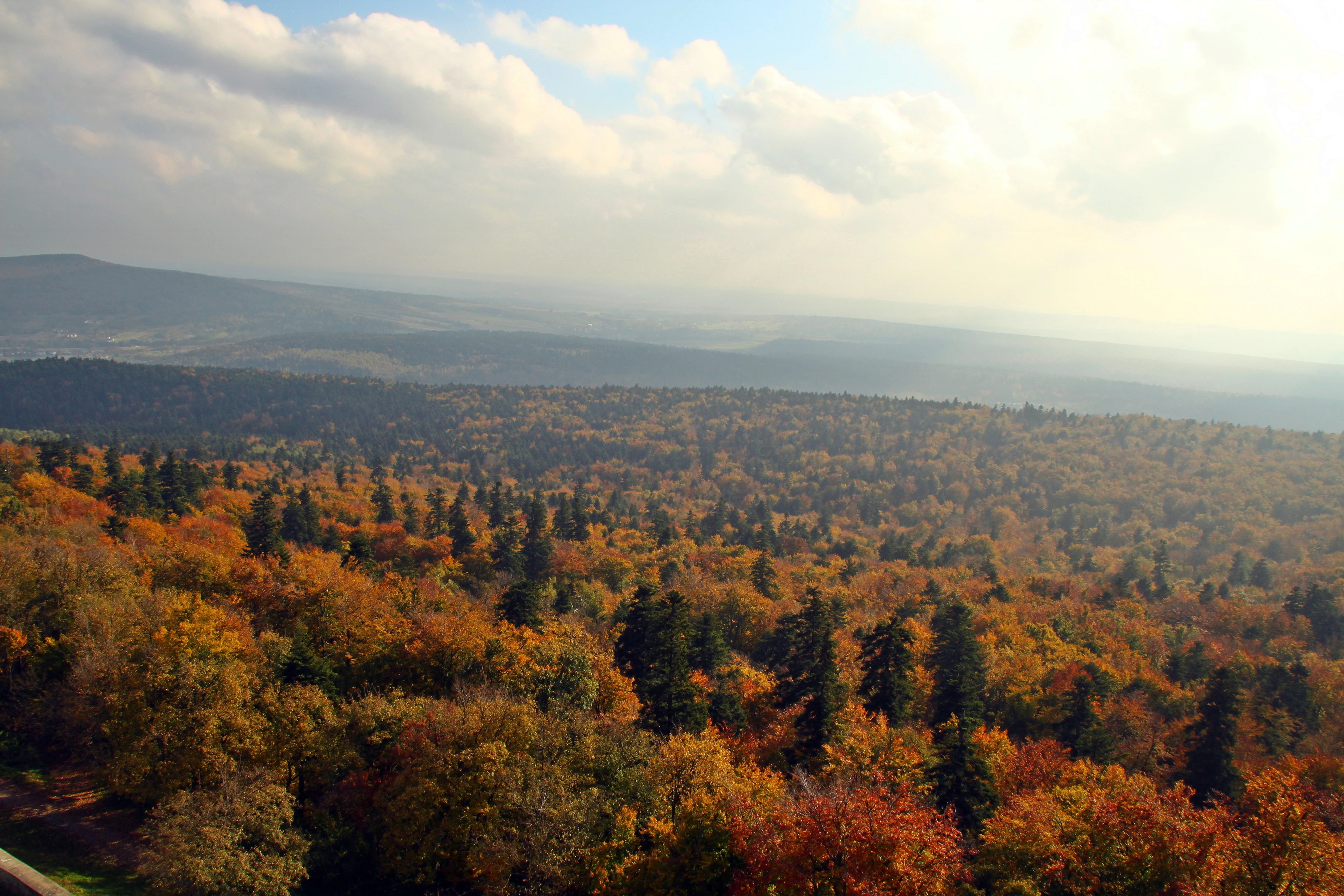
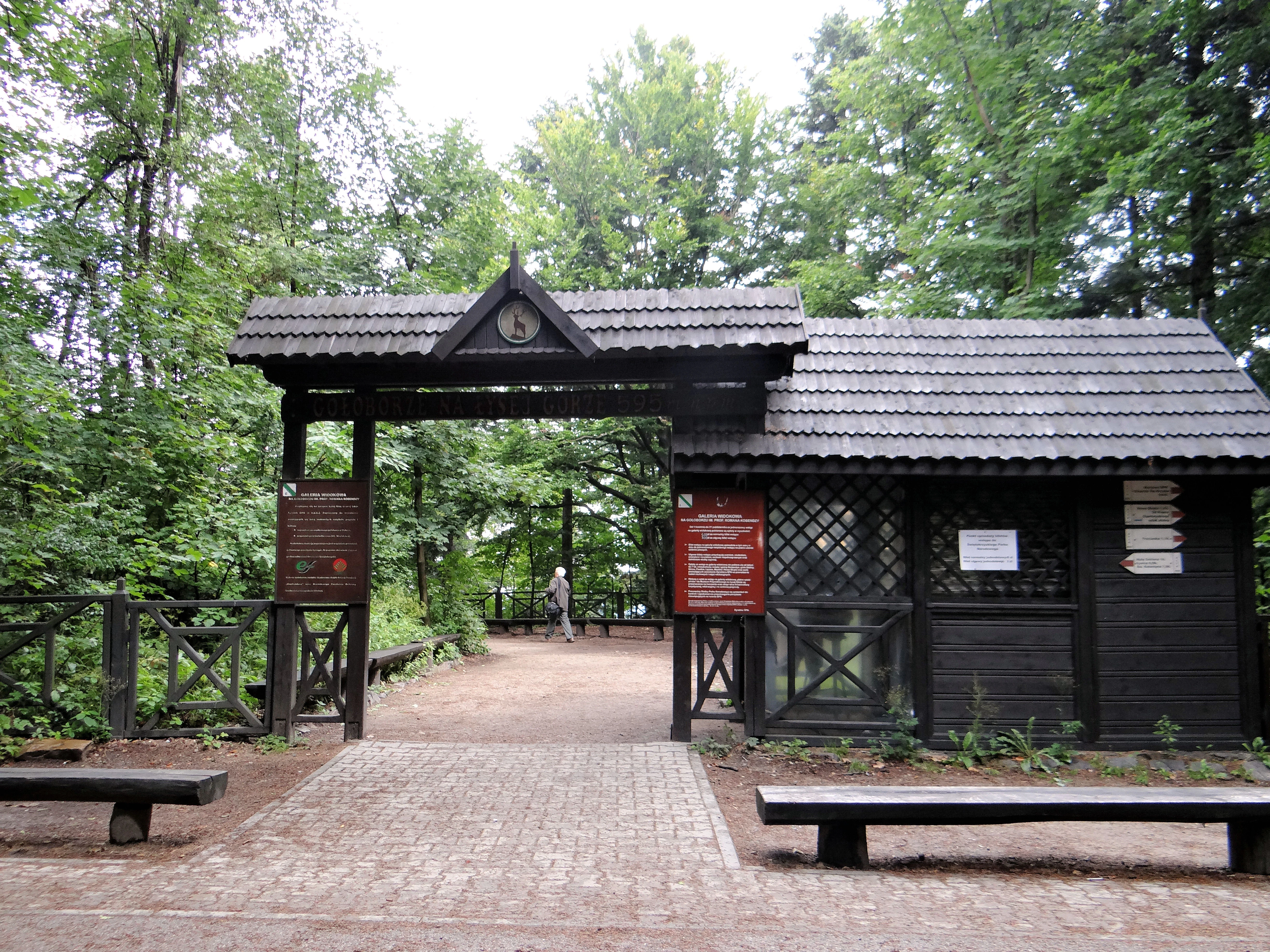
The landscape of Świętokrzyski National Park is shaped by an ancient mountain range that, despite modest heights, carries strong visual relief. The highest peaks, Łysica at 614 meters and Łysa Góra at 595 meters, form the spine of the Łysogóry range and give the park its characteristic skyline. These are not jagged, dramatic summits, but rounded forest-clad ridges, with their rockier character revealed only at the crests.
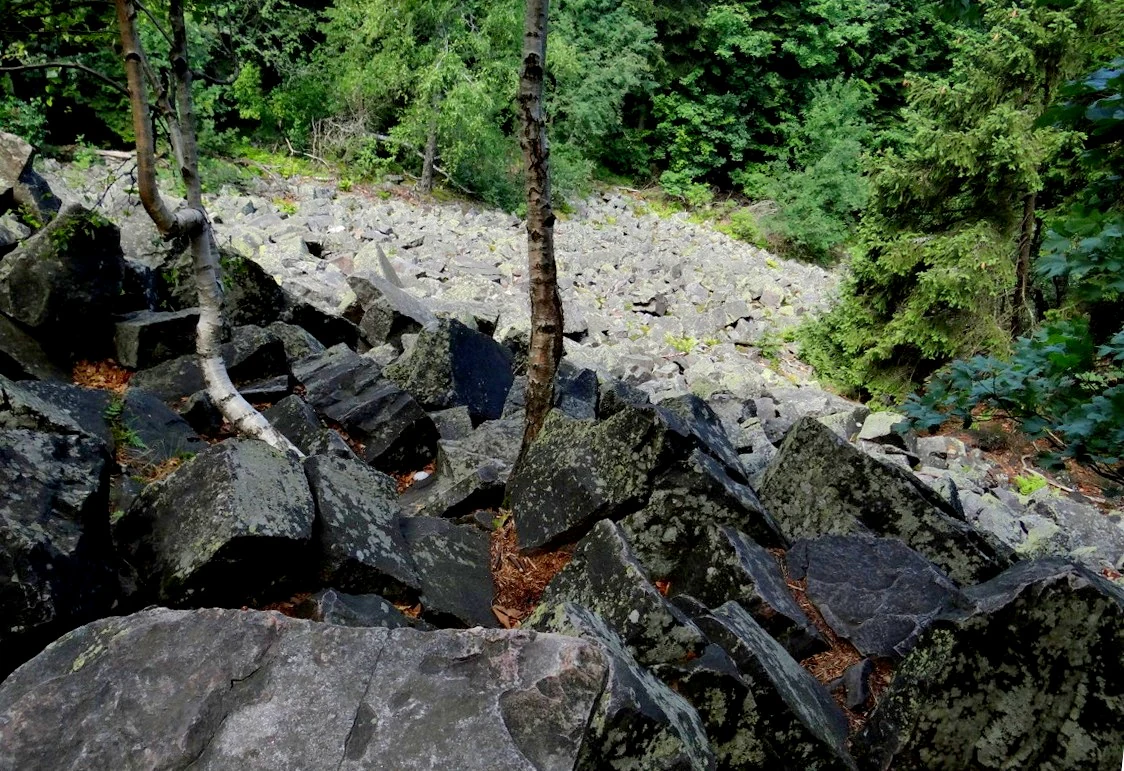
The most striking geological features of the park are the gołoborza, extensive sheets of quartzite and sandstone rubble covering parts of the mountain tops. The largest gołoborze, on Łysa Góra, covers around 3.84 hectares, with additional fields on Łysica. These boulder formations originated under periglacial climatic conditions through repeated freeze-thaw action that fragmented the parent rock. Today they create a near-alpine terrain of loose stone, slow to be recolonized by vegetation, and they give the highest parts of the park a distinctive austere character that contrasts sharply with the closed forest on the slopes.
Below the ridges the terrain descends into long valleys, including the Wilkowska and Dębniańska valleys, which frame the main range and provide gentle, ecologically rich transitions between the upland forests and surrounding lowlands. Streams and small forest ravines shape the microtopography, while in the Klonowskie Range the topography is somewhat softer, with broader forested hills including Psarska Góra and Miejska Góra. Together, these elements create a compact but varied mountain landscape that feels more remote and wild than its modest elevations might suggest.
Świętokrzyski National Park ecosystems, habitats, and plant life
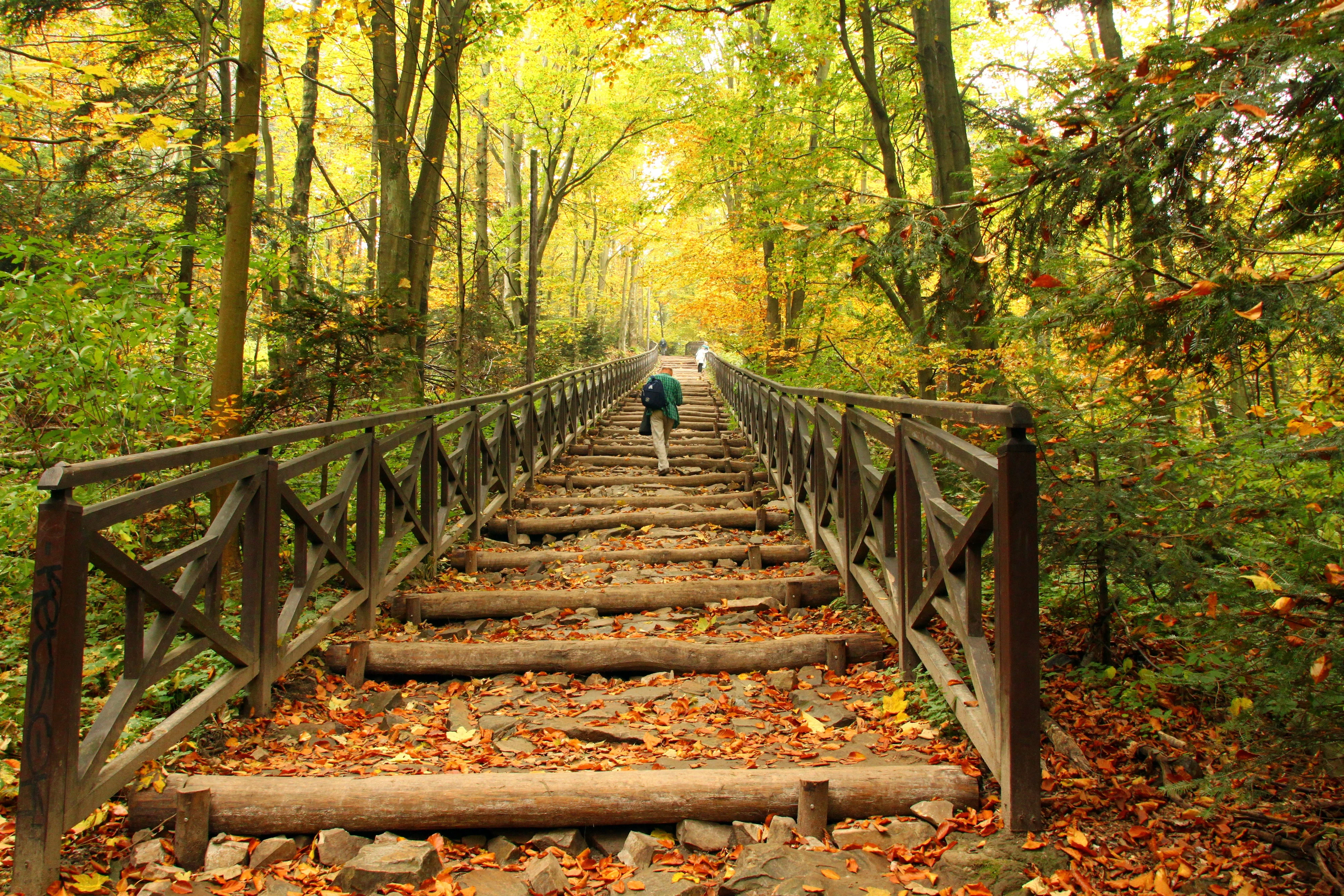
Forest is the overwhelming ecological identity of Świętokrzyski National Park. Officially, woodlands cover about 95 percent of the park's area, leaving very little open ground aside from the rocky crests, the gołoborza, and small clearings near historic sites. Two forest types dominate: Carpathian-type beech forests and upland mixed fir forests, with multi-species oak-hornbeam forests also contributing substantial area. The forest communities are notable for their high degree of naturalness and continue to function well under passive protection without active management interventions.
The dominant trees are European beech and silver fir, with admixtures of larch, Scots pine, and Norway spruce. Among conifers, fir is particularly significant: most of the fir stands in the park are between 80 and 120 years old, and one exceptional silver fir, estimated at 270 years old and reaching 51 meters in height, is regarded as the tallest conifer in Poland. The Chełmowa Góra area, a separate enclave within the park, is notable for its stands of Polish larch, a relict subspecies of European larch, with individual trees over 250 years old.
Plant diversity extends well beyond the canopy. Around 1,015 vascular plant species have been recorded in the park and its buffer zone, including 128 species found only in the park itself. The flora includes rare species such as the ribbed spleenwort, the Baltic parsley, bent grass, and narrow-leaved gentian. Understorey and ground flora are rich, with characteristic species such as common hazel, warty spindle, male fern, wood anemone, yellow archangel, and wood sorrel. A unique botanical feature of the park is the Świętokrzyskie rowan association, a local plant community centered on common rowan, common polypody, and stinking cranesbill. Bryophytes, algae, and lichens are also well represented, with hundreds of species recorded in each group.
Świętokrzyski National Park wildlife and species highlights
Wildlife in Świętokrzyski National Park reflects its character as an extensive, well-preserved forest habitat. Among mammals, the most visible species are roe deer, red deer, and wild boar, which together define the ungulate community of the park. Smaller predators such as pine marten, along with small mammals like the bank vole and the wood mouse, occupy more concealed niches in the woodland.
The park's amphibian and reptile fauna is moderate but ecologically meaningful. Fourteen amphibian species have been recorded, including the alpine newt, common frog, and common toad, while six reptile species include common lizards and slow worms. The invertebrate fauna is particularly rich. Surveys have identified over 3,000 insect species, including close to 1,500 beetle species and nearly 1,000 butterfly and moth species. Among these, butterflies and beetles protected under Annex II of the European Union Habitats Directive, such as the marsh fritillary, the scarce copper, the cardinal click beetle, and the wrinkled bark beetle, are specifically associated with the Natura 2000 site Łysogóry within the park.
Birdlife is one of the park's richest wildlife assets, with 150 species recorded, of which 118 are breeding species. Common forest birds such as the great spotted woodpecker, Eurasian nuthatch, common chaffinch, Eurasian wren, common buzzard, and tawny owl are typical residents. The dense, mature forest structure supports these species and provides important breeding habitat across the park's full elevational range.
Świętokrzyski National Park conservation status and protection priorities
The conservation value of Świętokrzyski National Park centers on the unusually high naturalness of its forest ecosystems. Beech, fir-beech, and mixed fir forests cover the great majority of the park, and many stands function effectively as old-growth forests under passive protection with minimal active management. This makes the park an important reference area for lowland and upland forest conservation in central Poland.
Significant parts of the park fall under strict protection, while other areas are managed as active or landscape protection zones. The park lies partly within the Natura 2000 site Łysogóry, designated under the European Union Habitats Directive, which adds a European layer of protection for specific habitat types and species such as Annex II butterflies and beetles. The Chełmowa Góra enclave is particularly important for the conservation of Polish larch, a relict subspecies with very limited range.
The park's conservation history has not been without friction. Periodic changes to its boundaries, including the incorporation of new enclaves in 1996 and 2021 and a controversial 2021 removal of a small parcel on Łysa Góra, have shown the competing pressures of religious land use, regional development, and ecological integrity. The return of the abbey area to park administration in 2025 reaffirmed the importance of keeping ecologically and culturally significant land within formal protection.
Świętokrzyski National Park cultural meaning and human context
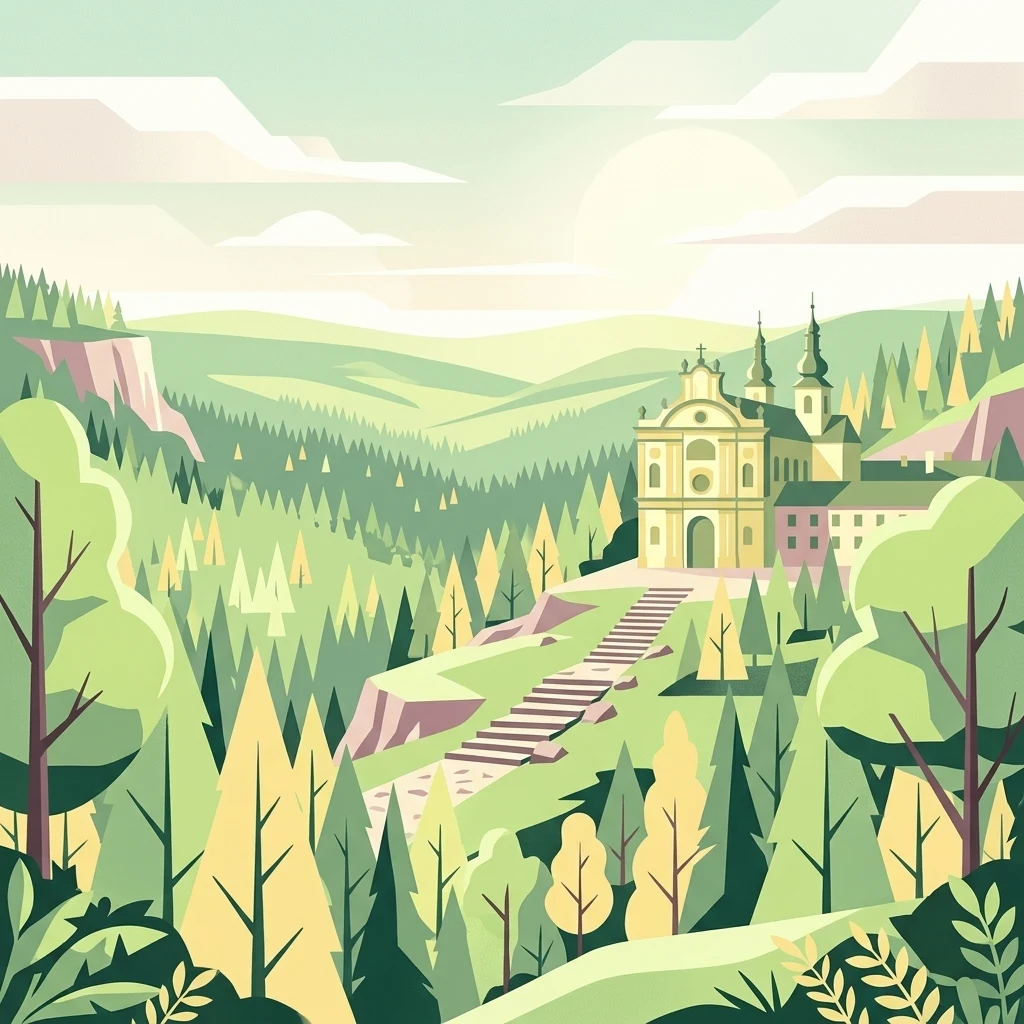
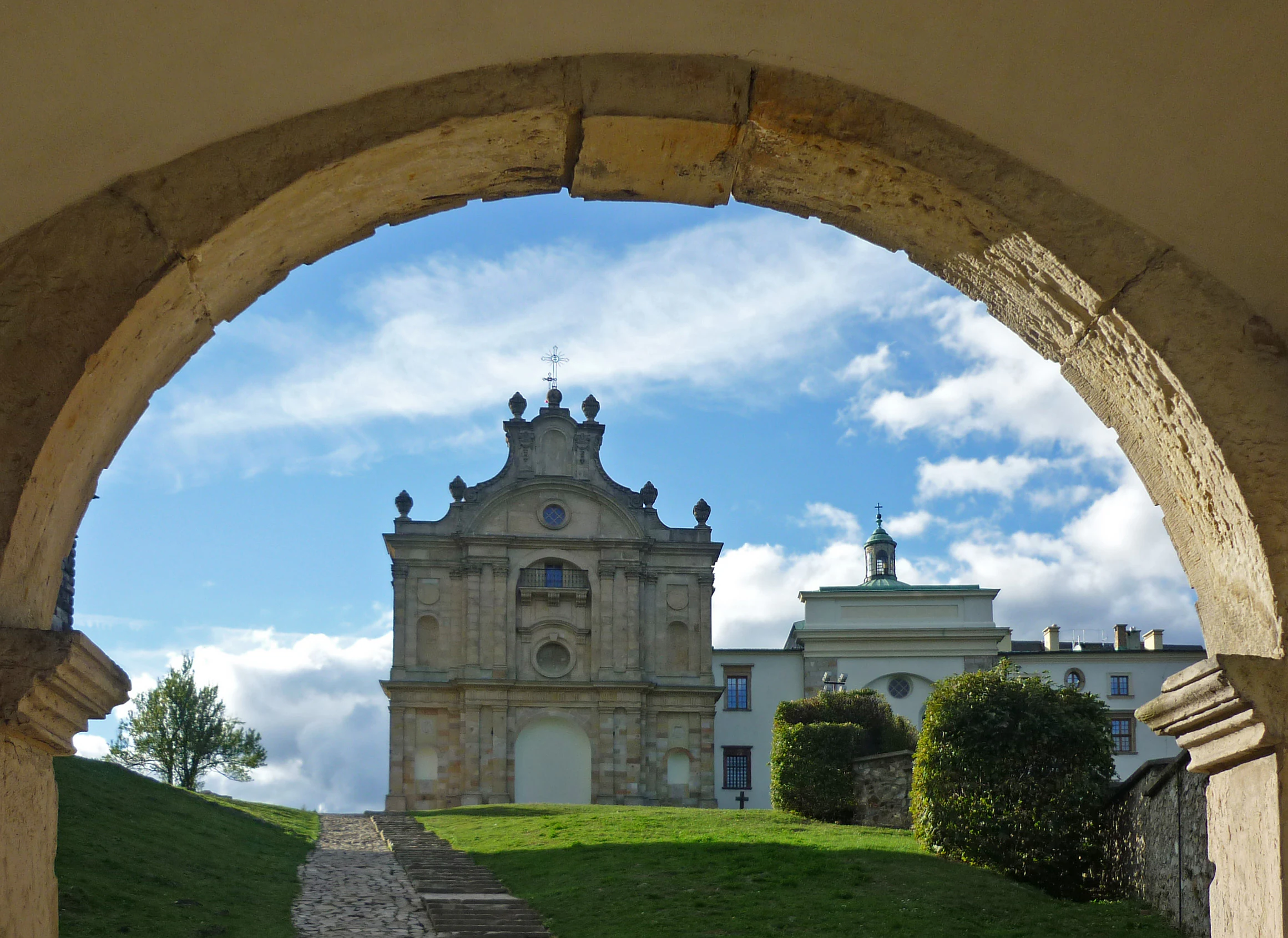
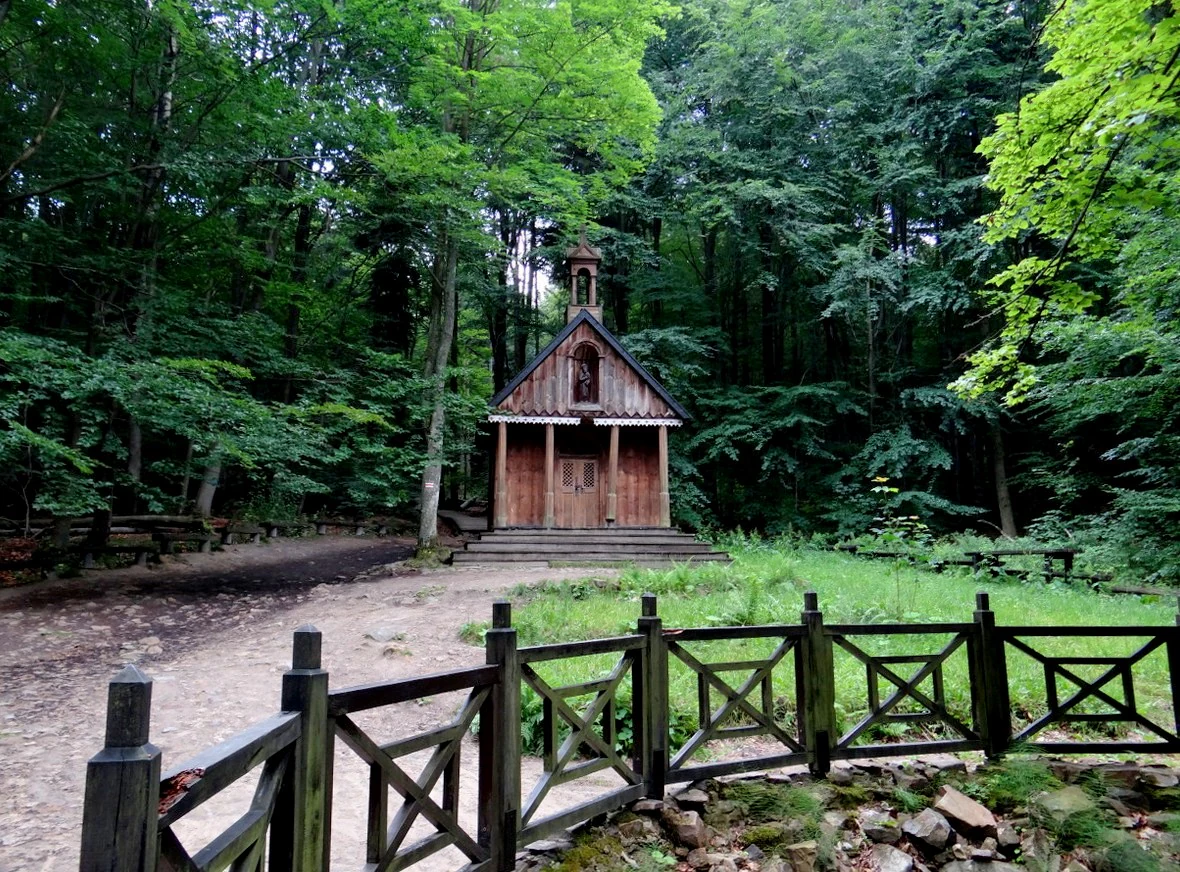
Świętokrzyski National Park carries one of the most layered cultural histories of any protected area in Poland. Łysa Góra, known in religious tradition as Święty Krzyż, has been a sacred site for centuries. A Benedictine monastery was founded there in the 12th century, and its ruins and successor religious complex remain an important pilgrimage destination today. The summit's importance predates Christianity, and the mountain is associated with pre-Christian Slavic deities; legends connect it with the worship of gods venerated in open-air sanctuaries, making it a touchstone in the reconstruction of early Slavic religious life.
The park also has deep literary associations. For much of its history it carried the name Park Narodowy im. Stefana Żeromskiego in the Holy Cross Mountains, honoring the writer Stefan Żeromski, whose novels and stories drew heavily on the region's landscapes and social history. Surrounding villages such as Nowa Słupia and Święta Katarzyna blend religious tradition with regional folk culture, providing access points for visitors and serving as the cultural buffer around the park's protected interior. Together, the religious, literary, and folk dimensions make the park as much a cultural landscape as a natural one.
Top sights and standout views in Świętokrzyski National Park
Świętokrzyski National Park is unusual in offering the compact combination of an ancient mountain range, near-natural forest, dramatic periglacial boulder fields, and a centuries-old religious heritage site. Its most celebrated points include the gołoborza on Łysa Góra and Łysica, the exceptionally tall 270-year-old silver fir, and the historic abbey complex on the summit of Łysa Góra. The park's silver fir and beech forests, together with the rare Polish larch stands on Chełmowa Góra, place it among Poland's leading forest conservation sites. The Łysogóry Natura 2000 designation adds a European layer to its ecological significance, while the surrounding villages connect the protected core to a broader regional culture of pilgrimage and rural life.
Best time to visit Świętokrzyski National Park
Świętokrzyski National Park is best experienced in late spring and early autumn, when forest paths are usually accessible, the beech and fir canopy has warmed into full leaf or turned to autumn color, and the boulder fields on Łysa Góra and Łysica are most photogenic in clear, dry weather. Summer brings intensely shaded forest interiors and warm conditions for hiking up to the gołoborza, although weekends and pilgrimage dates can make the summit of Łysa Góra busier. Winter visits are possible but require caution on icy sections near the exposed rocky crests and along trails crossing the gołoborza. The park's mid-elevation forests soften extremes of weather, meaning shoulder seasons typically retain good hiking conditions.