
Mori Atlas logo
Nature reserveSzczecyn

Examining the ecological boundaries and habitat structure of eastern Poland lowland woodlands.

Szczecyn Nature Reserve and Protected Forest Landscapes in Lubelskie Voivodeship, Poland

Szczecyn comprises four distinct forest enclaves nestled within the transition zone between the Wzniesienia Urzędowskie hills and the Równina Biłgorajska plains. This protected area represents a critical stronghold for rare Tilio-Carpinetum oak-hornbeam communities and thermophilic oak woodlands. By integrating the Doły Szczeckie and Marynopole nature reserves, the site maintains a vital mosaic of old-growth deciduous habitats, supporting rare species such as the hermit beetle across the Lubelskie and Podkarpackie border region.

Natura 2000special area of conservationdeciduous forestoak-hornbeam woodlandthermophilic oak foresthabitat protection

Szczecyn

Nature reserve

Park overview

Structured park overview, official facts, and landscape profile for Szczecyn Natura 2000 Site

Szczecyn Natura 2000 Site park facts, protected area profile, and essential visitor context

Review the core facts for Szczecyn Natura 2000 Site, including designation, size, terrain, visitor scale, habitats, and operating context in one park-focused overview.

About Szczecyn Natura 2000 Site

Szczecyn is a Polish Natura 2000 site dedicated to the protection of habitat types and species listed under the European Union's Habitats Directive. Designated in 2011 under the code PLH060083, it functions as a special area of conservation (specjalny obszar ochrony siedlisk), a status that carries binding long-term obligations to maintain favorable conservation status for the habitats and species for which the site was proposed.

Geographically, the area sits along the boundary between two Polish voivodeships, with its center of gravity extending east and southeast of the village of Gościeradów. The forest complex covers around 933 hectares, organized across four separate woodland enclaves that together represent the surviving fragments of a once more continuous forest landscape in the Wzniesienia Urzędowskie and the eastern edge of the Równina Biłgorajska.

Ecologically, Szczecyn is defined by mature deciduous woodland. The most important habitats are oak-hornbeam forests of the Tilio-Carpinetum type and thermophilic oak woodland, both of which belong to Annex I of the Habitats Directive. These habitats support a rich understory of regionally rare herbaceous plants, while old veteran trees provide breeding habitat for saproxylic invertebrates of high conservation value, including the hermit beetle. Nearly 39 percent of the site is already protected through two nature reserves, Doły Szczeckie and Marynopole, giving the area a layered framework of national and European protection.

Quick facts and research context for Szczecyn Natura 2000 Site

Szczecyn is a Polish Natura 2000 habitat site with the official code PLH060083, designated as a special area of conservation under the EU Habitats Directive in 2011. It covers approximately 932.52 hectares across four separate forest patches in eastern Poland, straddling the Lubelskie and Podkarpackie voivodeships.

The site is geologically set within the Wzniesienia Urzędowskie hills and the adjacent Równina Biłgorajska plain, and includes two nature reserves, Doły Szczeckie and Marynopole, that together make up nearly 39 percent of the protected area. Its ecological significance centers on oak-hornbeam woodland, thermophilic oak forest, and the presence of priority fauna such as the hermit beetle.

Protection and recognition

Documented terrestrial protection scope and Natura 2000 recognition framework

Szczecyn Protection Status and Official International Recognition Data

Szczecyn maintains documented terrestrial protection status alongside verified Natura 2000 recognition records. Structured conservation facts outline the official designation framework and management scope associated with this protected landscape.

International recognition

Protection details

Protection scope
Terrestrial
Transboundary protection
No
Park context

Deeper park guide and search-rich context for Szczecyn Natura 2000 Site

Szczecyn Natura 2000 Site history, landscape, wildlife, and travel context

Explore Szczecyn Natura 2000 Site through its history, landscape character, ecosystems, wildlife, conservation priorities, cultural context, and seasonal travel timing in a structured park guide built for atlas discovery and search intent.

Why Szczecyn Natura 2000 Site stands out

Szczecyn is best known for its populations of rare deciduous forest habitat types, in particular oak-hornbeam woodland (Tilio-Carpinetum grąd) and warm-loving oak forest (ciepłolubna dąbrowa), habitats that are increasingly scarce in the Polish lowlands. The site is also recognized for the presence of the hermit beetle (Osmoderma eremita), a priority Annex II species of the EU Habitats Directive, whose old-growth deciduous forest requirements are closely tied to the large veteran oaks in the area. Together with the two nature reserves that occupy a substantial share of the site, these features make Szczecyn a notable reference point for lowland deciduous forest conservation in eastern Poland.

Szczecyn Natura 2000 Site history and protected-area timeline

Szczecyn was formally designated as a Natura 2000 site of Community importance in 2011, joining the European Union's network of protected areas developed under the Habitats Directive. Its selection reflects a long history of recognizing the ecological value of the surviving deciduous forest fragments in this part of eastern Poland.

Two nature reserves, Doły Szczeckie and Marynopole, predate the Natura 2000 designation and already protected nearly 39 percent of the area. These reserves served as core refuges for old-growth deciduous stands and were important reference points when the broader four-enclave complex around Gościeradów and Zaklików was later evaluated for European network membership.

The combined documentation of the site was published in 2012 in the regional Natura 2000 inventory for Podkarpacie, where Szczecyn was treated as one of the notable habitat sites of the region.

Szczecyn Natura 2000 Site landscape and geographic character

The landscape of Szczecyn is shaped by the gentle relief of the Wzniesienia Urzędowskie, a system of low hills in the Lubelskie-Podkarpackie border region, and the adjoining flatter terrain of the Równina Biłgorajska. The site is not a dramatic mountain or coastal landscape; rather, it sits within a transition zone between hilly upland and lowland plain, where elevations vary modestly and the terrain is dissected by shallow valleys and broader woodland benches.

The four forest enclaves that make up the site are scattered across this mosaic, surrounded by agricultural land and rural settlements. The result is a patchy but ecologically significant landscape, where forest fragments large enough to sustain interior woodland species alternate with open farmland and small village clearings. Within the enclaves themselves, the terrain is gently rolling, with mature deciduous canopy over locally varied microtopography shaped by older forest management and natural erosion patterns.

Szczecyn Natura 2000 Site ecosystems, habitats, and plant life

Ecologically, Szczecyn is a lowland deciduous forest site whose identity rests on two Annex I habitat types: oak-hornbeam woodland (Tilio-Carpinetum grąd) and thermophilic oak woodland (ciepłolubna dąbrowa). Both are community-priority habitats of the type that have become increasingly fragmented across the Polish countryside, and the persistence of sizeable, well-structured examples here is the principal reason the site was included in the Natura 2000 network.

The oak-hornbeam stands harbor a notably diverse herb layer, with regional rarities that include the East-Carpathian pea (Lathyrus laevigatus), bastard balm (Melittis melissophyllum), European bugbane (Cimicifuga europaea), upright clematis (Clematis recta), large yellow foxglove (Digitalis grandiflora), and the red helleborine orchid (Cephalanthera rubra). The warmer, drier oak woodland habitats, in contrast, support light-demanding species adapted to sun-exposed, often sandy or rocky soils typical of the thermophilic dąbrowa.

Mature and veteran trees throughout both habitat types provide the structural continuity needed by old-forest dependent species, especially saproxylic invertebrates that depend on dead and decaying wood over long timescales.

Szczecyn Natura 2000 Site wildlife and species highlights

Wildlife interest at Szczecyn is heavily tied to the invertebrate fauna of old deciduous woodland, rather than to large mammals or charismatic megafauna. The site's most notable species is the hermit beetle (Osmoderma eremita), a beetle listed under Annex II of the EU Habitats Directive that inhabits hollow veteran broadleaves, especially oaks. Its presence is widely used as a quality indicator for old-growth deciduous forest sites in Europe.

Beyond the hermit beetle, the combination of mature oak-hornbeam and thermophilic oak woodland supports a wider community of saproxylic beetles and other woodland invertebrates that depend on veteran trees, fallen deadwood, and the species-rich understory. The site's two nature reserves preserve the oldest and most continuous of these woodland stands and are therefore likely the most important areas for invertebrate conservation within the four-enclave complex.

Szczecyn Natura 2000 Site conservation status and protection priorities

From a conservation standpoint, Szczecyn is significant because it protects two habitat types of the EU Habitats Directive in a region where such woodland has been heavily reduced by centuries of agricultural expansion. The dual designation as a special area of conservation obliges Poland to maintain these habitats in favorable condition, and the inclusion of nearly 39 percent of the area within two nature reserves provides a strong pre-existing national layer of protection.

The site is primarily a habitat-conservation area rather than a species recovery site, but the recorded presence of the hermit beetle adds a strong species-focused dimension. The continued survival of the site's rare plant species depends on preserving canopy structure, allowing natural regeneration of native deciduous species, retaining deadwood, and avoiding overgrazing or soil disturbance in the most sensitive enclaves.

Top sights and standout views in Szczecyn Natura 2000 Site

Szczecyn's standout features include the Tilio-Carpinetum oak-hornbeam and thermophilic oak woodland habitats, the documented population of the hermit beetle, and the presence of the Doły Szczeckie and Marynopole nature reserves that protect the core of the forest complex.

The combination of a four-enclave forest structure spanning two voivodeships, the significant old-growth component within the reserves, and the rare herbaceous flora of the grąd communities together make Szczecyn a textbook example of lowland deciduous forest protection under the Natura 2000 framework in eastern Poland.

Monthly climate preview

Long-term representative averages for monthly temperature and precipitation distribution

Szczecyn Climate Normals and Annual Temperature Rhythm

Representative coordinate records show average temperatures ranging from negative winter minimums to warm summer maximums alongside measured monthly precipitation. Exploring the full twelve-month profile reveals detailed historical climate patterns across the protected landscape.
Annual mean8 °C
-4 °C20 °C
Jan-4°
Feb-2°
Mar
Apr
May14°
Jun18°
Jul20°
Aug20°
Sep14°
Oct
Nov
Dec-2°
Warmest month
July

20.3 °C

Coolest month
January

-3.8 °C

Wettest month
July

2.7 mm/day

Driest month
January

1.2 mm/day

Park location guide

Geography guide, regional context, and park location map for Szczecyn Natura 2000 Site

Szczecyn Natura 2000 Site park geography, regions, and map view in Poland

Understand where Szczecyn Natura 2000 Site sits in Poland through a broader geographic reading of the surrounding landscape, nearby location context, and its mapped position within the national park landscape.

How Szczecyn Natura 2000 Site fits into Poland

Poland, officially the Republic of Poland, is a Central European country spanning from the Baltic Sea in the north to the Carpathian Mountains in the south. It borders Germany, Czech Republic, Slovakia, Ukraine, Belarus, Lithuania, and Kaliningrad Oblast. The country has a temperate climate, diverse landscapes, and is known for its rich history, cultural heritage, and strong economic position within the EU.

Wider geography shaping Szczecyn Natura 2000 Site in Poland

Poland occupies 312,696 km2 in Central Europe, extending from the Baltic Sea coast in the north to the Sudetes and Carpathian Mountains in the south. It borders Germany to the west, Czech Republic and Slovakia to the south, Ukraine and Belarus to the east, and Lithuania and Kaliningrad Oblast to the northeast. The landscape includes lowland plains, uplands, and mountain ranges.

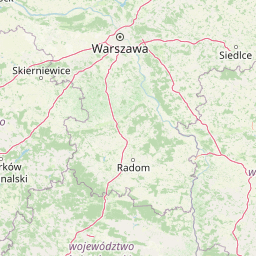
Map view of Szczecyn Natura 2000 Site

Use this park location map to pinpoint Szczecyn Natura 2000 Site in Poland, understand its exact geographic position, and read its mapped placement within the surrounding landscape more clearly.

Pigeon | © OpenStreetMap contributors

Location context for Szczecyn Natura 2000 Site

Lubelskie VoivodeshipPodkarpackie Voivodeship
Park atlas

Compare regional forest reserves and nearby protected natural areas

Explore Parks Near Szczecyn and Surrounding Protected Landscapes

Browsing other protected areas near Szczecyn reveals broader woodland ecosystems and regional habitat networks across the eastern Polish border. Comparing these adjacent forest enclaves provides deeper context for lowland conservation and woodland preservation in the surrounding region.
Nature reserveLublin Voivodeship
Mapped location lies within the park boundary#1 closest

Northwest

Rezerwat przyrody Doły Szczeckie: Upland Forest and Karst Landscape Geography in Lublin Voivodeship

A protected nature reserve featuring distinct ravine systems and ancient beech stands

Rezerwat przyrody Doły Szczeckie is defined by its dissected, scenic karst terrain featuring a network of dry valleys and deep gorges. Located in the Lublin Voivodeship, this nature reserve protects significant stands of European beech and hornbeam that anchor the region's broader broadleaf forest identity. Use this data to understand the elevation shifts and boundaries that shape this distinct patch of protected Polish landscape.

Area
2.036 km²
Established
1997
Relief
Upland
Scope
Terrestrial
Nature reserveLublin Voivodeship
Mapped location lies within the park boundary#2 closest

North

Rezerwat przyrody Marynopole: Mapping the Upland Forest Landscapes of Lublin Voivodeship

Protected silver fir and oak stands in the Wzniesienia Urzędowskie hills

Rezerwat przyrody Marynopole acts as a critical conservation site for silver fir and mature oak forest within the Lublin Voivodeship of southeastern Poland. This nature reserve offers deep insight into upland ecology, protecting old-growth stands that thrive across the rolling, loamy terrain of the Wzniesienia Urzędowskie mesoregion.

Area
1.57 km²
Established
1976
Relief
Upland
Scope
Terrestrial
Protected areaPoland
2.8 km away#3 closest

Southeast

Uroczyska Lasów Janowskich: Protected Forest and Wetland Geography in Eastern Poland

Mapping the extensive Natura 2000 lowland forest and peatland complexes

Spanning the Biłgoraj Plain and San River valley, Uroczyska Lasów Janowskich is a notable lowland forest complex in Poland. Its terrain integrates mature oak-hornbeam woods with diverse peatland systems, offering a clear look at how layered conservation strategies protect rare European habitats within a single continuous geographic block.

Area
345.443 km²
Established
2009
Relief
Lowland
Climate
Temperate
Protected landscapeTarnobrzeska Dolina Wisły
19 km away#4 closest

Southwest

Tarnobrzeska Dolina Wisły Protected Landscape: Mapped Riverine Geography and Habitat Corridor

A sprawling Vistula valley floodplain site in southeastern Poland.

The Tarnobrzeska Dolina Wisły protected area encompasses a 4,060-hectare corridor of rare lowland habitats. This map-focused site highlights an ecologically active river system composed of riparian forests, shifting banks, and extensive wetlands that define the regional geography of the middle Vistula basin.

Area
40.597 km²
Established
2011
Scope
Terrestrial
Water
Major water bodies
Protected landscapeLubelskie Voivodeship
About 25 km away#5 closest

North

Wrzelowiecki Park Krajobrazowy: Geographic Atlas and Protected Landscape Overview

Mapped upland terrain and Vistula valley geomorphology

Analyze the landform composition of Wrzelowiecki Park Krajobrazowy through its loess ravines, Cretaceous fossil exposures, and wetland river systems. This protected landscape preserves the regional integrity of the Wzniesienia Urzędowskie, offering a structured look at the interplay between highland forests and historic Polish river valley settlements.

Area
49.89 km²
Established
1990
Relief
Upland
Climate
Temperate
Nature reserveŚwiętokrzyskie Voivodeship
About 39 km away#6 closest

Northwest

Rezerwat przyrody Modrzewie: Protected Oak-Lime and Polish Larch Forest Reserve

Forest landscape discovery in the Świętokrzyskie region of Poland.

Located in the Kamienna Valley, Rezerwat przyrody Modrzewie acts as a vital protected area for mature, near-primary oak-lime forest. This nature reserve provides essential botanical context for the Polish larch, embedding a rich woodland fragment within the wider geographical tapestry of the Świętokrzyskie Voivodeship.

Area
0.047 km²
Established
1971
Relief
Lowland
Climate
Temperate
Nature reserveLublin Voivodeship
About 40 km away#7 closest

Southeast

Kacze Błota Nature Reserve: Mapping the Protected Peatland Landscapes of Lublin Voivodeship

A study of high bogs and sandy dune forest terrain.

Kacze Błota is a protected nature reserve in Poland known for its sequence of transition mires and boggy coniferous woods. Positioned on the northern slopes of the Roztocze region, this site preserves unique plant species within its waterlogged depressions and acid-soil sandy ridges. The area remains a crucial example of historical landscape preservation in the Lublin Voivodeship, bridging the gap between upland forests and lowland river basins.

Area
1.679 km²
Established
1988
Relief
Lowland
Climate
Temperate
Nature reserveświętokrzyskie
40 km away#8 closest

Southwest

Ostoja Żyznów Protected Landscape: Loess Ravines and River Valleys of Świętokrzyskie

A dense mosaic of xerothermic grasslands and mixed forest ecosystems

Ostoja Żyznów protects a compact yet ecologically rich region characterized by deep loess gullies and the meandering paths of the Koprzywianka and Kacanka rivers. The area creates a striking transitional landscape, shifting from flat agricultural plateaus to steep, forest-covered ravines and cliff-like river walls. This site offers significant value for understanding regional biodiversity, featuring a rare combination of warm-dry grasslands and moisture-dependent peatland habitats in the heart of Poland.

Area
44.8 km²
Established
2011
Relief
Mixed relief
Climate
Temperate

Common questions about visiting, size, designation, and location context for Szczecyn Natura 2000 Site

Szczecyn Natura 2000 Site FAQs for park facts, access, geography, and protected area context

Find quick answers about Szczecyn Natura 2000 Site, including protected-area facts, park geography, trail and visitor context, and how the park fits into its surrounding country and regional landscape.
MoriAtlas Explorer

Continue Your Protected Areas Search Across the Global Atlas

Deepen your exploration by continuing the structured search for national parks and protected areas worldwide. Utilize the comprehensive filtering capabilities to compare different conservation landscapes and refine your understanding of global park geography. Discover more about the distribution and characteristics of protected natural areas.

Global natural geography