
Mori Atlas logo
Wildlife reserveTalle Valley Wildlife Sanctuary

A vertical transition of subtropical and temperate forests in the Subansiri region

Talle Valley Wildlife Sanctuary: Mapping the Biodiversity of the Eastern Himalayas

Talle Valley Wildlife Sanctuary serves as a critical protected landscape within the Subansiri basin of Arunachal Pradesh. This reserve preserves a dramatic altitudinal gradient, rising from warm subtropical broadleaf forests to cool conifer stands. The protected area acts as a primary example of Himalayan biodiversity transitions, sheltering diverse mammal populations and rare plant taxa within its rugged, high-elevation terrain.

wildlife sanctuaryArunachal Pradesheastern Himalayassubtropical broadleaf foresttemperate broadleaf forestconifer forest

Talle Valley Wildlife Sanctuary

Wildlife reserve

Park overview

Structured park overview, official facts, and landscape profile for Talle Valley Wildlife Sanctuary

Talle Valley Wildlife Sanctuary park facts, protected area profile, and essential visitor context

Review the core facts for Talle Valley Wildlife Sanctuary, including designation, size, terrain, visitor scale, habitats, and operating context in one park-focused overview.

About Talle Valley Wildlife Sanctuary

Talle Valley Wildlife Sanctuary is a state-managed wildlife sanctuary in the Lower Subansiri district of Arunachal Pradesh, in the far northeastern corner of India. The reserve sits within the Subansiri river basin and forms part of the wider green corridor that links the eastern Himalayan foothills to deeper Indo-Burmese forest systems. Its protected status, established in 1995, places it within the network of Arunachal Pradesh sanctuaries that aim to conserve the state's extraordinary forest biodiversity while allowing regulated, community-sensitive use.

The defining physical feature of the sanctuary is its steep altitudinal gradient spanning roughly 1,200 to 3,000 meters. Within this range, vegetation transitions from subtropical broadleaf forests in the lower elevations to temperate broadleaf and mixed forests at the middle elevations, with conifer-dominated stands appearing at higher altitudes. The terrain is shaped by swiftly flowing streams and the Subansiri drainage, with hill ridges and valleys producing a mosaic of microhabitats that change over short horizontal distances. This vertical structure, rather than any single species, is what gives the sanctuary its distinctive ecological character.

Floristically the reserve is exceptional for a state-level sanctuary at this elevation. Around sixteen endangered plant species are documented, including taxa from Panax, Schisandra, Acer, Lilium, Berberis, and Cotoneaster, alongside orchids and other rare understory plants. Such an assemblage reflects the sanctuary's location at a transitional latitude where eastern Himalayan and Indo-Burmese floras meet. For botanists and forest ecologists, this makes the park a useful reference site for understanding how these two floras blend across the Himalayan landscape.

For visitors and researchers, the sanctuary offers a relatively undisturbed eastern Himalayan forest experience, with a strong mix of charismatic mammals and forest birds, a documented spring bird community of around 130 species, and a high density of rare plants. Although infrastructure in and around the reserve is limited, the area is regularly cited in ornithological and biodiversity surveys as an important site for hornbills, raptors, mixed-species foraging flocks in the broadleaf canopy, and mammals such as the clouded leopard. In short, the sanctuary stands out as a structurally and biologically rich forest reserve where elevation, geology, and biogeography converge to produce unusually dense biodiversity.

Quick facts and research context for Talle Valley Wildlife Sanctuary

Talle Valley Wildlife Sanctuary is located in the Lower Subansiri district of Arunachal Pradesh, northeastern India, and is administered as a state-level protected area with IUCN Category IV (habitat and species management area) status. It was formally established in 1995 and spans about 337 square kilometers, making it one of the larger wildlife sanctuaries in the state. The sanctuary lies within a steep altitudinal gradient between approximately 1,200 and 3,000 meters, a range that allows successive vegetation belts of subtropical broadleaf forest, temperate broadleaf forest, and conifer forest to occur within the same reserve.

Protection and recognition

Explore terrestrial protection metrics and recognized conservation frameworks

Talle Valley Wildlife Sanctuary Protection Status and Designation Records

Talle Valley Wildlife Sanctuary maintains documented terrestrial protection status alongside verified management scope and boundary parameters. Official designation records detail international recognition sources and administrative frameworks established for the protected landscape.

Protection details

Protection scope
Terrestrial
Transboundary protection
No
Park context

Deeper park guide and search-rich context for Talle Valley Wildlife Sanctuary

Talle Valley Wildlife Sanctuary history, landscape, wildlife, and travel context

Explore Talle Valley Wildlife Sanctuary through its history, landscape character, ecosystems, wildlife, conservation priorities, cultural context, and seasonal travel timing in a structured park guide built for atlas discovery and search intent.

Why Talle Valley Wildlife Sanctuary stands out

Talle Valley Wildlife Sanctuary is best known for the altitudinal layering of subtropical and temperate forests within a single protected boundary, which gives the reserve a particularly rich mix of mammals, birds, and rare plants. Among mammals, its population of clouded leopard and the presence of large squirrels, muntjacs, and civets reflect the quality of the broadleaf canopy. Birdwatchers value the reserve for hornbill flocks, raptors such as the black eagle, and a long list of forest interior songbirds recorded in surveys, including fulvettas, minivets, flycatchers, and sunbirds. The sanctuary is also recognized for harboring around sixteen endangered plant species, several of which come from genera typical of the eastern Himalayan flora such as Acer, Berberis, Lilium, Panax, and Schisandra, alongside orchids and other rare taxa. Together these qualities make Talle Valley a notable example of a mid-elevation eastern Himalayan biodiversity refuge.

Talle Valley Wildlife Sanctuary history and protected-area timeline

Talle Valley Wildlife Sanctuary was formally established in 1995 as a protected wildlife area under the forests and wildlife administration of Arunachal Pradesh. Its designation reflected the growing recognition in the late twentieth century of the need to secure the eastern Himalayan forest landscapes of the state, particularly the altitudinal transition zones that hold both subtropical and temperate biodiversity.

By being placed under IUCN Category IV as a habitat and species management area, the sanctuary was framed as a reserve where active management of habitats and selected species is central, rather than a strict wilderness preserve. Following its creation, it has figured primarily in scientific and conservation reports rather than in high-volume tourism, and its history is largely that of a state sanctuary accumulating biological inventories and management plans over time. The fact that its flora includes sixteen species considered endangered suggests that the reserve was also valued at the time of its establishment for safeguarding rare plant communities that had not been adequately represented in the existing network of protected areas.

Talle Valley Wildlife Sanctuary landscape and geographic character

The landscape of Talle Valley Wildlife Sanctuary is fundamentally a landscape of vertical change. The reserve occupies rugged hill terrain in the Lower Subansiri area, with elevation stepping up from around 1,200 meters to approximately 3,000 meters within the sanctuary's boundary. This is enough vertical range to drive a full sequence of vegetation belts within a relatively small horizontal area, and to give streams, ridgelines, and valley bottoms very different microclimates over short distances.

Lower elevations support subtropical broadleaf forests with tall-canopy species and dense understory layers, while the middle elevations are characterized by temperate broadleaf forests where oaks, laurels, and other mesic trees become prominent. Higher still, conifer-dominated stands appear, with a more open canopy, a different understory composition, and a climate that is markedly cooler and moister. The interaction of slope, aspect, water availability, and elevation produces a mosaic of forest patches across the landscape rather than uniform stands.

Hydrographically, the sanctuary sits within the drainage of the Subansiri system, and small streams fed by forest catchments shape the valley bottom. The terrain is dissected by these watercourses, producing a network of ravines and steeper slopes that are difficult to access and that help buffer the interior of the reserve against disturbance. From a scenic standpoint, the park is best characterized by its tall, multi-layered forest cover, its quiet valleys, and the perspective of forest horizons shifting from warm lowland green to cooler highland green as elevation increases.

Talle Valley Wildlife Sanctuary ecosystems, habitats, and plant life

Ecologically, Talle Valley Wildlife Sanctuary represents a textbook example of an eastern Himalayan altitudinal gradient protected area. The reserve's vegetation is layered by elevation: warm, humid subtropical broadleaf forest at lower levels, temperate broadleaf and mixed forest in the mid-elevations, and conifer-dominated forest higher up. Each band supports different sets of associated species, and the boundaries between them are not sharp; instead they intergrade, producing transitional forest types that are themselves important habitats.

The sanctuary is particularly significant as a refuge for rare plant taxa. Approximately sixteen endangered plant species have been documented, including representatives from Panax sikkimensis and Schisandra among the climbing plants and shrubs, Acer hookeri and Acer oblongum among the trees, Lilium grandiflora among the showy herbaceous species, Berberis and Cotoneaster among the shrubs, and several orchid and fern groups such as Angiopteris evecta and Cyathea spinulosa. The presence of these species together indicates both good forest cover and a long history of relatively undisturbed habitat.

The forests support a wide range of ecological processes typical of eastern Himalayan broadleaf and mixed forest systems, including seed dispersal by hornbills and squirrels, predation by cats and raptors, and seasonal flowering cycles that drive insect bursts and, in turn, the activity of insectivorous birds and bats. Together, these features give the sanctuary a layered, dynamic ecological profile rather than a static protected landscape.

Talle Valley Wildlife Sanctuary wildlife and species highlights

The wildlife community of Talle Valley Wildlife Sanctuary is structured around its broadleaf and mixed forest cover. Among mammals, the reserve is notable for the clouded leopard, a forest-dependent cat that requires large tracts of intact canopy and is considered a strong indicator of habitat quality. The canopy also supports the Malayan giant squirrel, one of the largest tree squirrels in Asia, which depends on mature tall forest. At ground and understory levels, northern red muntjac and Asian palm civet add to the mammal diversity, demonstrating that multiple vertical layers of the forest are occupied by distinct mammal species.

The sanctuary's avifauna is rich. A biodiversity survey conducted in spring 2015 documented about 130 bird species in the reserve. Among raptors, the black eagle, a forest interior hunter associated with tall broadleaf forests, has been recorded. Mix-species flocks in the broadleaf canopy include species such as the golden-breasted fulvetta, scarlet minivet, and various small flycatchers, while specialized species such as the collared owlet and Mrs. Gould's sunbird contribute to the diversity of niche roles. Hornbills, although not individually listed in the survey fragment provided, are widely associated with Arunachal Pradesh forests of this kind and form part of the reserve's broader bird identity.

Taken together, the mammal and bird records indicate a forest ecosystem with healthy populations of frugivores, insectivores, and predators across several strata. The presence of threatened or regionally significant species such as the clouded leopard, alongside a high count of forest birds, places the sanctuary among the more biologically substantial wildlife areas of Arunachal Pradesh at mid-elevations.

Talle Valley Wildlife Sanctuary conservation status and protection priorities

From a conservation perspective, Talle Valley Wildlife Sanctuary matters primarily because it protects a representative slice of eastern Himalayan forest along a substantial altitudinal gradient. Elevational gradient reserves of this kind are particularly valuable because each band of vegetation supports different species, and a single protected area can therefore conserve a much larger portion of regional biodiversity than its horizontal extent alone would suggest. By covering forest from around 1,200 to 3,000 meters, Talle Valley captures both subtropical and temperate forest systems within one boundary.

The reserve also serves as a refuge for rare plants. Approximately sixteen endangered plant species are known from the sanctuary, spanning several plant families and ecological roles, from canopy trees and shrubs to herbs, ferns, and orchids. Protecting these species in situ, within continuous forest rather than in small isolated patches, is one of the sanctuary's main contributions to national and regional biodiversity conservation, and it gives the reserve particular relevance for botanical conservation in northeastern India.

The sanctuary is classified as an IUCN Category IV protected area, a category that allows for managed interaction between people and nature. While this implies that active management of habitats and selected species is part of the reserve's mandate, Talle Valley's remote terrain and limited access also help the forest maintain its wild character. Its position within the Subansiri basin further supports landscape connectivity, allowing forest-dependent species to move between the sanctuary and the wider forest matrix of Arunachal Pradesh, which strengthens the long-term resilience of populations within the reserve.

Talle Valley Wildlife Sanctuary cultural meaning and human context

Talle Valley Wildlife Sanctuary lies in a region of Arunachal Pradesh that has long been home to indigenous communities whose livelihoods have been intertwined with forests of this type. Local communities in the Subansiri region have traditionally practiced forms of shifting cultivation, hunting, and forest product use, and the sanctuary's protected status has interacted with these longstanding patterns of land use.

The region's broader cultural identity reflects the ethnic diversity of Arunachal Pradesh, with communities in the Lower Subansiri area having inherited oral traditions, festivals, and customary resource practices that are closely tied to the surrounding forest landscape. While detailed ethnographic information specific to the sanctuary is limited, the park's location amid this cultural geography means that its forests are not simply a biological setting but also part of a living cultural environment recognized and used by neighboring communities.

Top sights and standout views in Talle Valley Wildlife Sanctuary

The sanctuary's main highlight is its altitudinal gradient from warm subtropical broadleaf forest at around 1,200 meters to conifer-dominated forest near 3,000 meters, an unusually rich compositional range for a single reserve. Within this gradient, standout biological features include clouded leopard as a canopy predator, hornbills and other large forest birds, around 130 bird species recorded in a single spring survey, and a documented assemblage of about sixteen endangered plant species spanning conifers, broadleaf trees, shrubs, herbs, ferns, and orchids.

Equally notable is the sanctuary's setting within the Subansiri basin of Arunachal Pradesh, a region recognized for the meeting of eastern Himalayan and Indo-Burmese floras and faunas. This gives the reserve a biogeographic value that goes beyond individual species lists, making it a useful reference site for studying how plant and animal communities transition along Himalayan slopes.

Best time to visit Talle Valley Wildlife Sanctuary

The most rewarding time to experience the forests of Talle Valley Wildlife Sanctuary is generally in the drier, warmer months of late autumn through spring, when access conditions in Arunachal Pradesh hill districts tend to be better and when spring surveys have recorded the reserve's largest number of bird species. In spring, mixed-species flocks and breeding activity build up in the broadleaf canopy, increasing the variety and visibility of forest birds such as minivets, fulvettas, flycatchers, and sunbirds.

Monsoon months bring heavy rainfall to the eastern Himalayas, which can make forest trails slippery, streams fast-flowing, and visibility limited, and they are generally a less suitable time for both wildlife observation and travel within hill districts. Cooler months, while scenic, may restrict sightings of some insectivorous and canopy-active species. As a broad guide, the dry season is the most reliable window for appreciating the sanctuary's combination of forest landscapes, mammals, and rich birdlife, though visitors should expect conditions that are typical of remote eastern Himalayan hill terrain.

Monthly climate preview

Long term representative temperature and precipitation patterns across twelve months

Talle Valley Wildlife Sanctuary Climate and Weather by Month Normals Preview

Talle Valley Wildlife Sanctuary records measured long term temperature variations and monthly precipitation rhythms across a representative coordinate point. Reviewing the complete twelve month climate normal dataset provides structured analytical depth for understanding regional environmental conditions.
Annual mean17 °C
10 °C23 °C
Jan10°
Feb11°
Mar15°
Apr18°
May21°
Jun23°
Jul23°
Aug23°
Sep22°
Oct18°
Nov14°
Dec11°
Warmest month
August

23.1 °C

Coolest month
January

9.6 °C

Wettest month
July

15.5 mm/day

Driest month
December

0.3 mm/day

Park location guide

Geography guide, regional context, and park location map for Talle Valley Wildlife Sanctuary

Talle Valley Wildlife Sanctuary park geography, regions, and map view in India

Understand where Talle Valley Wildlife Sanctuary sits in India through a broader geographic reading of the surrounding landscape, nearby location context, and its mapped position within the national park landscape.

How Talle Valley Wildlife Sanctuary fits into India

India is a South Asian country bordered by the Indian Ocean, Arabian Sea, and Bay of Bengal. It shares land borders with Pakistan, China, Nepal, Bhutan, Bangladesh, and Myanmar. The country has a population of over 1.4 billion people and operates as a federal parliamentary republic with its capital in New Delhi.

Wider geography shaping Talle Valley Wildlife Sanctuary in India

India occupies the Indian subcontinent in South Asia, bordered by the Arabian Sea to the southwest, the Bay of Bengal to the southeast, and the Indian Ocean to the south. It shares land borders with Pakistan to the west, China, Nepal, and Bhutan to the north, and Bangladesh and Myanmar to the east. The territory also includes the Andaman and Nicobar Islands in the Indian Ocean.

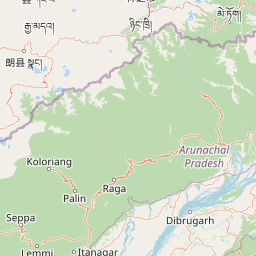
Map view of Talle Valley Wildlife Sanctuary

Use this park location map to pinpoint Talle Valley Wildlife Sanctuary in India, understand its exact geographic position, and read its mapped placement within the surrounding landscape more clearly.

Pigeon | © OpenStreetMap contributors

Location context for Talle Valley Wildlife Sanctuary

Arunachal Pradesh
Park atlas

Explore nearby national parks and connected eastern Himalayan forest reserves

Parks Near Talle Valley Wildlife Sanctuary And Related Protected Areas

Compare Talle Valley Wildlife Sanctuary with other protected areas across the surrounding mountain region to study regional altitudinal gradients and forest ecosystems. Extending the geographic review helps map broader conservation corridors and botanical diversity across the eastern Himalayan terrain.
Wildlife reserveArunachal Pradesh
About 62 km away#1 closest

Southwest

Itanagar Wildlife Sanctuary: Hill Forest Reserve and Protected Landscape in Arunachal Pradesh

Exploring the dense evergreen geography of a key Indian wildlife reserve

Spanning 140 square kilometres, Itanagar Wildlife Sanctuary preserves a vital mosaic of tropical semi-evergreen and wet evergreen forest within the foothills of Arunachal Pradesh. Bounded by the Pachin, Pam, Neorochi, and Chingke streams, this protected area offers a unique juxtaposition of dense hill forest and urban edges, functioning as a significant biodiversity habitat in northeastern India.

Area
140.3 km²
Established
1978
IUCN
IV
Relief
Upland
Wildlife reserveArunachal Pradesh
About 75 km away#2 closest

East

Kane Wildlife Sanctuary: Geography, Forest Mosaics, and Protected Himalayan Terrain

A vital wildlife reserve located in the West Siang district of Arunachal Pradesh.

Kane Wildlife Sanctuary presents a compact yet meaningful protected area defined by its unique transition of tropical evergreen and temperate broadleaf forest types. This Himalayan reserve serves as a critical habitat for large mammals and diverse bird populations, offering a focused look at the varied terrain and regional biodiversity found within the foothills of northeastern India.

Area
31 km²
Established
1991
IUCN
IV
Relief
Upland
Watercolor painting of green hills, fields, and a body of water
National parkAssam
About 98 km away#3 closest

Southwest

Kaziranga National Park National Park: Protected Landscape and Geographic Atlas

Mapped boundaries and regional landscape context for this Assam natural area.

Delve into the detailed geographic profile of Kaziranga National Park, a prominent National Park located in Assam, India. This section focuses on its mapped protected area extent, its unique landscape characteristics within the Brahmaputra valley, and its role as a key natural landmark in northeastern India's atlas. Understand the structured geographic data and protected land identity that makes Kaziranga National Park a distinct entity for exploration.

Area
1,090 km²
Established
1905
IUCN
II
Relief
Lowland
National parkSonitpur
About 125 km away#4 closest

Southwest

Nameri National Park: A Protected Landscape within Sonitpur's Geography

Explore the mapped terrain and national park boundaries.

Nameri National Park represents a significant protected natural area, contributing to the regional geography of Sonitpur, India. This page offers an atlas-oriented perspective, detailing the park's mapped landscape and its designation as a national park. Understand the geographic context and the protected land's specific identity within this mapped region.

Area
200 km²
Established
1978
IUCN
II
Relief
Mountain
Wildlife reserveArunachal Pradesh
About 144 km away#5 closest

West

Sessa Orchid Sanctuary: Himalayan Foothills Wildlife Reserve and Mapped Protected Landscape

High-altitude forest geography in Arunachal Pradesh

Sessa Orchid Sanctuary is a pivotal wildlife reserve spanning the rugged Himalayan foothills of West Kameng, Arunachal Pradesh. Defined by deep gorges and high ridges, the sanctuary protects one of the most significant orchid habitats in India, featuring over 200 distinct species within its closed-canopy monsoon forests. This protected area stands as a central link in the Kameng Protected Area Complex, representing a critical region for scientific research, endemic flora, and continuous forest conservation.

Area
100 km²
Established
1989
IUCN
IV
Relief
Mountain
Wildlife reserveAssam
About 145 km away#6 closest

East

Bherjan-Borajan-Padumoni Wildlife Sanctuary: Regional Geography and Protected Forest Map

A fragmented tropical reserve in the Tinsukia district of Assam.

Delve into the geography of Bherjan-Borajan-Padumoni Wildlife Sanctuary, a reserve spanning three distinct forest blocks. Learn how these managed lands function as a vital arboreal refuge in the broader Brahmaputra valley landscape, offering a detailed look at the protected terrain and habitat structure of this northeastern Indian sanctuary.

Area
7.22 km²
Established
1999
IUCN
IV
Relief
Lowland
Illustration of a landscape with green mountains, a river, bare trees, and a waterfall under a colorful sky
National parkAssam
About 147 km away#7 closest

East

Dibru-Saikhowa National Park: Mapped Protected Landscape and Regional Geography

Explore Assam's protected natural terrain and park boundaries.

Dibru-Saikhowa National Park represents a key protected area, providing valuable insight into the natural geography and landscape context of Assam. As a designated national park, its mapped boundaries and distinct regional setting are crucial for understanding the distribution of conservation lands in northeastern India. Explore the geographic specifics and atlas relevance of Dibru-Saikhowa National Park for a structured view of this protected landscape.

Area
350 km²
Established
1999
IUCN
II
Relief
Lowland
National parkArunachal Pradesh
About 149 km away#8 closest

Northeast

Mouling National Park: Explore Arunachal Pradesh National Park Geography and Protected Landscape

Mapped protected areas and regional geographic context.

Mouling National Park in Arunachal Pradesh offers a unique opportunity to explore the mapped boundaries and geographic characteristics of a significant protected landscape. This page provides structured insights into its role as a national park, detailing its regional setting and contributing to a broader atlas of protected areas. Understand the distinct natural terrain and landscape context that define this protected area within India.

Area
483 km²
Established
1986
IUCN
II
Relief
Mountain

Common questions about visiting, size, designation, and location context for Talle Valley Wildlife Sanctuary

Talle Valley Wildlife Sanctuary FAQs for park facts, access, geography, and protected area context

Find quick answers about Talle Valley Wildlife Sanctuary, including protected-area facts, park geography, trail and visitor context, and how the park fits into its surrounding country and regional landscape.
MoriAtlas Explorer

Continue Your Protected Areas Search Across the Global Atlas

Deepen your exploration by continuing the structured search for national parks and protected areas worldwide. Utilize the comprehensive filtering capabilities to compare different conservation landscapes and refine your understanding of global park geography. Discover more about the distribution and characteristics of protected natural areas.

Global natural geography