Why Theodore Roosevelt National Park stands out
Theodore Roosevelt National Park is most distinctive for its dramatic badlands topography, which creates one of the most visually striking landscapes in the northern Great Plains. The park preserves the very terrain where Theodore Roosevelt experienced what he called the "perfect freedom" of Western ranch life after his personal tragedy in 1884, and his subsequent transformation from a grieving young man into one of America's most influential conservation presidents. The park is also notable for its herd of approximately 350 plains bison, which were reintroduced beginning in 1956 and now roam the prairie alongside wild mustang horses, creating authentic Great Plains wildlife viewing opportunities. The park's designation as wilderness, protecting over 29,000 acres of the wildest terrain, further distinguishes it as a place where the historical ranching landscape and natural ecological processes remain largely unaltered.
Theodore Roosevelt National Park history and protected-area timeline
Theodore Roosevelt's connection to this landscape began in September 1883 when he traveled to the North Dakota badlands to hunt bison, an experience that immediately captivated him with what he described as the "perfect freedom" of Western life. Within months of losing both his wife and mother on the same day in February 1884, Roosevelt returned to the badlands seeking solitude and healing, establishing the Elkhorn Ranch 35 miles north of Medora while maintaining his investment in the Maltese Cross Ranch south of town. His experiences ranching in the harsh Dakota winters, losing his cattle to starvation in the brutal winter of 1886-1887, and chronicling his Western adventures in published works like "Ranch Life and the Hunting Trail" fundamentally shaped his worldview. After leaving the badlands, Roosevelt carried these lessons into his presidency, establishing national forests, creating wildlife refuges, and signing into law the landmark 1906 Antiquities Act. Following his death in 1919, advocates began working to preserve the badlands as a memorial to his formative years, eventually succeeding in establishing the South Unit as Theodore Roosevelt National Memorial Park in 1947, the only National Memorial Park ever created, with the North Unit added the following year. The park achieved its current designation as Theodore Roosevelt National Park in 1978, coinciding with the establishment of the Theodore Roosevelt Wilderness covering over 29,000 acres.
Theodore Roosevelt National Park landscape and geographic character
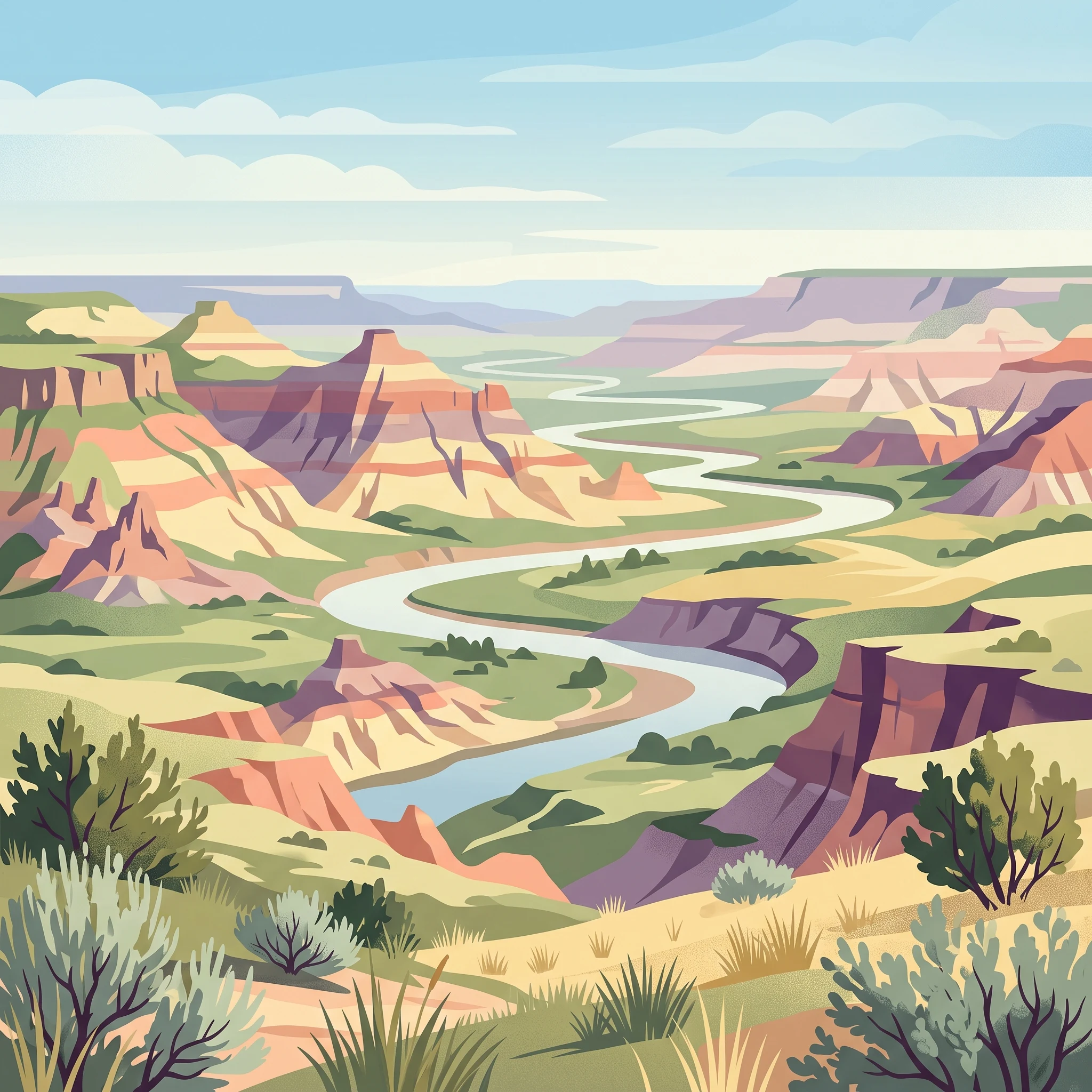
The badlands of Theodore Roosevelt National Park represent a striking geological landscape created by the erosional power of the Little Missouri River cutting through relatively flat sedimentary terrain over thousands of years. The resulting terrain features steep-walled canyons,tes and buttes, colorful rock layers ranging from tan and red to gray and white, and an overall appearance of raw, eroded beauty that changes character dramatically with the light of day. The Little Missouri River, which flows through all three park units, serves as the primary erosional force that carved this dramatic topography, creating a ribbon of green riparian corridor through the otherwise arid grassland landscape. Between the river corridors and the rugged badlands, the park encompasses a variety of terrain including rolling prairie, isolated rock outcrops, and the distinctive cannonball concretions found in the North Unit. The landscape shifts considerably with the seasons, from the green explosion of early summer wildflowers to the brown dormant grass of late summer through winter, when snow often accents the sharp terrain in dramatic contrast. The park sits at elevations between approximately 2,000 and 2,400 feet, with the visitor centers positioned in USDA hardiness zones 3b and 4a, reflecting the continental climate extremes.
Theodore Roosevelt National Park ecosystems, habitats, and plant life
The park's ecological character reflects the mixed grass prairie biome of the northern Great Plains, characterized by wheatgrass and needlegrass vegetation communities adapted to the semi-arid climate and seasonal temperature extremes. Along the Little Missouri River floodplain, the vegetation shifts to floodplain forests with cottonwood and willow species creating a distinct riparian habitat that provides crucial water and shelter in an otherwise dry landscape. The entire park is surrounded by a fence designed to contain the bison and horse herds while preventing commercial livestock from entering, though other wildlife can pass through designated openings. The prairie dog colonies scattered throughout the park represent a keystone species whose burrowing and foraging activities mix soils, promote plant diversity, and create habitat for numerous other species. The seasonal cycle dramatically transforms the visual character of the landscape, with early summer bringing an explosion of green growth and hundreds of flowering plant species, while late summer through winter presents a predominantly brown palette dominated by dormant grass that Theodore Roosevelt himself described as an "abode of iron desolation."
Theodore Roosevelt National Park wildlife and species highlights
The wildlife population of Theodore Roosevelt National Park represents a remarkable restoration of Great Plains fauna that once dominated this landscape in vast numbers. The park's bison herd, now numbering approximately 350 animals in the South Unit and around 20 in the North Unit, represents the successful outcome of reintroduction efforts beginning in 1956, with animals also shared with Native American tribes to support genetic diversity in tribal herds. Wild mustang horses, descendants of animals that eluded capture in a 1954 roundup, roam the park as a living reminder of the historic ranching era and have been recognized since 1970 as part of the park's cultural landscape. The elk population, also reintroduced to the park, finds refuge within the protected boundaries from external hunting pressure, though management removes animals periodically to prevent overpopulation and resource damage. Pronghorn, bighorn sheep, white-tailed deer, mule deer, coyotes, cougars, and badgers round out the mammalian community, while over 186 bird species have been documented including golden eagles, sharp-tailed grouse, wild turkeys, bald eagles, falcons, and hawks. The prairie dogs remain a particularly important species both ecologically and historically, serving as prey for numerous predators and creating through their burrowing activities the soil conditions that support diverse native plant communities.
Theodore Roosevelt National Park conservation status and protection priorities
Theodore Roosevelt National Park holds significant conservation importance as a preserve of both the historical Roosevelt conservation legacy and the ecological values of the northern Great Plains badlands. The designation of nearly 30,000 acres as Theodore Roosevelt Wilderness in 1978 ensures that the wildest sections of the park remain protected from development, maintaining the character that Roosevelt himself came to treasure during his ranching years. The bison conservation program represents an ongoing collaboration between the National Park Service and Native American tribes, part of the broader federal Bison Conservation Initiative launched in 2020 with goals including genetic conservation, ecological restoration, and cultural restoration. The park's management of wild horses, bison, and elk populations demonstrates adaptive ecosystem management, using research partnerships and innovative techniques including contraceptives and genetics studies to maintain herd health while preserving the historical landscape. The entire park serves as a refuge for wildlife species that have declined across much of their historical range, with the protected boundaries providing crucial habitat in a region increasingly affected by energy development and agricultural conversion on surrounding lands.
Theodore Roosevelt National Park cultural meaning and human context
The park's cultural significance extends beyond its natural values to encompass the story of Theodore Roosevelt's personal transformation and the broader history of the American West during the late 19th century. Roosevelt arrived in the badlands as a grieving young man seeking escape from the profound tragedy of losing both his mother and wife on the same day, and the landscape and ranching life provided the healing and purpose that would define his subsequent career. His experiences hunting, ranching, and writing about Western life during his years in North Dakota directly influenced the conservation policies he would later champion as President, making this landscape a birthplace of American environmental stewardship. The nearby town of Medora, with its wooden sidewalks, historic ice cream parlors, and nightly Medora Musical performances during summer months, provides a living connection to the Old West tourism tradition that developed alongside the park. The preservation of the Elkhorn Ranch site, despite its remote location and ongoing threats from adjacent oil development, maintains a tangible link to the place where Roosevelt spent some of his most formative years.
Top sights and standout views in Theodore Roosevelt National Park
The park offers visitors multiple distinct experiences across its three units, from the accessible and heavily visited South Unit with its visitor center, Maltese Cross Cabin museum, and scenic drives to the more remote North Unit and the truly backcountry Elkhorn Ranch site. Wildlife viewing opportunities, particularly the chance to see bison and wild horses against the dramatic badlands backdrop, represent some of the most sought-after experiences in the park. The Maah Daah Hey Trail provides the premier backcountry hiking and equestrian opportunity, connecting all three units through 130 miles of remote terrain. The seasonal transformation of the landscape, particularly the dramatic shift from summer green to winter brown and the stark beauty of snow-covered badlands, offers visitors distinctly different experiences depending on when they visit. The dark night skies of the badlands, far from significant light pollution, provide exceptional stargazing and occasional aurora borealis displays.
Best time to visit Theodore Roosevelt National Park
The park offers distinct experiences across all four seasons, each with its own character and appeal. Early summer, typically late May through mid-June, brings the landscape to life with green grass, wildflowers blooming across the prairie, and newborn wildlife including bison calves and foals from the wild horse herds. Summer visitors can also experience the Medora Musical and other programming in the town of Medora, though this is also the busiest season. Fall offers a quieter experience with cooler temperatures and the golden colors of autumn grass, while winter transforms the park into a starkly beautiful landscape that Roosevelt himself described as an "abode of iron desolation," with snow accentuating the already dramatic badlands terrain. The shoulder seasons of spring and fall generally offer the best combination of comfortable weather and smaller crowds, though all seasons have their own distinct appeal for visitors seeking different experiences of the badlands.