Why Wascana Lake Migratory Bird Sanctuary stands out
The sanctuary is best known for providing a protected migratory bird habitat inside the urban limits of Regina. Its diverse waterbird community, including breeding Canada Geese, ducks, grebes, terns, herons, and swans, draws attention well beyond its modest footprint. The combination of a regulated reservoir, riparian habitat, and protected wetland margins makes it one of the more accessible bird sanctuaries in the Canadian prairies.
Wascana Lake Migratory Bird Sanctuary history and protected-area timeline
The Wascana Lake Migratory Bird Sanctuary was formally established on 12 July 1956, placing the lake and its surrounding wetlands under federal migratory bird protection. Its creation reflected early Canadian efforts to protect key wetland habitats for migratory waterfowl across the prairies, even where those habitats were located close to growing urban centers.
Over the decades, the sanctuary has remained within the administrative framework of the Canadian Wildlife Service. While its immediate surroundings have continued to develop as part of the Wascana Centre, the protected status of the lake and adjoining wetland habitats has ensured that its ecological function as a refuge for migratory birds has been maintained into the present day.
Wascana Lake Migratory Bird Sanctuary landscape and geographic character
The sanctuary's physical setting is defined by Wascana Lake, an artificial reservoir that was created by damming Wascana Creek. The lake forms a broad open-water surface framed by gently sloping banks and managed parkland. Along the shoreline, areas of natural wetland vegetation, including cattails, reeds, and shrubs, support nesting and feeding habitat for waterbirds.
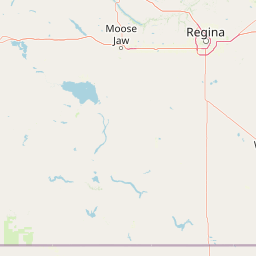
The broader landscape belongs to the Saskatchewan prairie parkland transition, where flat to gently undulating terrain meets pockets of aspen woodland and riparian vegetation along watercourses. Within the city of Regina, this natural pattern is interwoven with formal park landscapes, walking paths, and institutional grounds that together make up the Wascana Centre. The result is a landscape in which ecological habitat and urban parkland coexist.
Wascana Lake Migratory Bird Sanctuary ecosystems, habitats, and plant life
Ecologically, the sanctuary is dominated by wetland and aquatic habitats centered on the reservoir and its shoreline margins. Open water, mudflats, emergent vegetation, and riparian shrub communities all contribute to the habitat mosaic that supports migratory birds. The mixture of still water and vegetated edge habitat is particularly valuable for waterfowl, grebes, and marsh-nesting species.
The surrounding parkland adds secondary habitat diversity, including grassland patches, ornamental tree plantings used by songbirds, and wooded corridors along Wascana Creek. Together, these features create an unusually varied habitat complex for an urban environment, helping to sustain both breeding populations and seasonal migrants passing through the region.
Wascana Lake Migratory Bird Sanctuary wildlife and species highlights
The sanctuary is recognized for hosting more than 115 bird species, making it one of the more bird-diverse protected sites in Saskatchewan. Canada Geese are especially prominent, with more than 200 individuals breeding in the park each year. Other regular breeding ducks include Mallard, Northern Pintail, and Blue-winged Teal.
The waterbird community extends to grebes such as Pied-billed, Horned, and Eared Grebes, along with Common Loon during migration. Terns, including Common and Black Terns, use the lake, as do herons such as Great Blue Heron and Black-crowned Night-Heron. Wading birds like Black-necked Stilt and various shorebirds add to seasonal diversity. Marshes are home to Sora and Marsh Wren, while open-country and wetland-edge species include Red-winged Blackbird, Yellow-headed Blackbird, and Purple Martin. Swans, notably Tundra Swan, also pass through or use the area during migration.
Wascana Lake Migratory Bird Sanctuary conservation status and protection priorities
As a federally designated Migratory Bird Sanctuary, the area is protected specifically for the conservation of migratory birds, their nests, and their eggs. Its designation under the Canadian Wildlife Service reflects its role as a long-standing refuge within an otherwise heavily developed prairie landscape.
The sanctuary's conservation value lies in its combination of protected status and habitat quality. By maintaining a protected buffer of wetland habitat around Wascana Lake, the sanctuary helps sustain breeding waterfowl populations and supports migratory species that depend on stopover habitat in the southern Saskatchewan plains. Its location within an urban park system also gives it significant educational and outreach value, connecting city dwellers directly with migratory bird conservation.
Wascana Lake Migratory Bird Sanctuary cultural meaning and human context
The sanctuary sits at the cultural and civic center of Regina, surrounded by landmarks such as the Royal Saskatchewan Museum, the University of Regina, and provincial government buildings. This positioning ties the site's natural heritage directly to the institutional and cultural identity of Saskatchewan's capital.
Wascana Lake and its parklands have long been an important gathering place for residents of Regina, and the sanctuary's protected status reinforces the lake's role as both a recreational and a symbolically meaningful feature of the city. The area represents a deliberate effort to preserve a piece of prairie wetland heritage within the heart of a growing prairie capital.
Top sights and standout views in Wascana Lake Migratory Bird Sanctuary
Highlights of the Wascana Lake Migratory Bird Sanctuary include its long-standing federal protection since 1956, its compact but rich wetland habitat, and the unusually high bird species diversity supported within an urban setting. The sanctuary is a key breeding and stopover site for Canada Geese and many duck species, and it offers one of the most accessible migratory bird experiences in Saskatchewan.
Best time to visit Wascana Lake Migratory Bird Sanctuary
Spring and early summer are typically the most rewarding times for observing bird activity at the sanctuary, as breeding waterfowl settle on the lake and migrant species pass through. Spring migration brings a wide variety of waterfowl, shorebirds, and songbirds. Fall migration also produces good viewing opportunities, especially for waterfowl and raptors. Winter can be quieter, although hardy species may still be present around open water where the lake remains unfrozen.