Mori Atlas logo
Nature reserveWidnica

A concentrated botanical enclave within the agricultural geography of Lesser Poland Voivodeship

Widnica Nature Reserve and the Protected Xerothermic Grassland Landscapes of the Miechów Upland

Widnica Nature Reserve represents a critical, compact protected area situated on the calcareous slopes of the Miechów Upland. This site serves as a vital refuge for xerothermic Festuco-Brometea grassland communities, preserving rare floral diversity within a broader working rural landscape. As part of the Miechów Upland Protected Landscape Area, the reserve functions as a key component of the regional conservation network in southern Poland.

Natura 2000xerothermic grasslandFestuco-Brometeacalcareous grasslandhabitat protectionMałopolska

Widnica

Nature reserve

Park overview

Structured park overview, official facts, and landscape profile for Widnica

Widnica park facts, protected area profile, and essential visitor context

Review the core facts for Widnica, including designation, size, terrain, visitor scale, habitats, and operating context in one park-focused overview.

About Widnica

Widnica is a tiny but ecologically targeted Natura 2000 site in the Miechów Upland of southern Poland. Although its total area is only around 7.86 hectares, its value lies in the very specific habitat it preserves: naturally dry, sun-warmed, species-rich calcareous grassland of the Festuco-Brometea type, including the more specialised xerothermic swards of the Asplenion septentrionalis; Festucion pallentis alliance. These are habitats that have contracted sharply across the Polish uplands because of agricultural intensification, abandonment followed by scrub overgrowth, and tree planting, so even small surviving patches carry significant conservation weight.

The site sits within Gmina Miechów, in the Małopolska Voivodeship, and is geographically nested inside the broader Miechów Upland Protected Landscape Area, which adds a layer of landscape-scale protection around the core Natura 2000 site. This combination of strict habitat-based protection with surrounding landscape buffering is characteristic of how Poland integrates its Natura 2000 network with its older national system of protected landscape areas.

In ecological terms, Widnica represents a textbook example of a small Natura 2000 site where the focus is squarely on a single priority habitat rather than on landscape scenery or visitor experience. The reserve is essentially a botanical island, a fragment of old dry grassland preserved in a predominantly agricultural part of the Miechów Upland, and its conservation importance is measured in species occurrences and habitat integrity rather than in scale.

Quick facts and research context for Widnica

Widnica is a Polish Natura 2000 habitat protection site (PLH120076), established as a Site of Community Importance in 2011. It occupies roughly 7.86 hectares in the Małopolska Voivodeship, on the Miechów Upland mesoregion, within Gmina Miechów.

The site exists to protect the Festuco-Brometea xerothermic grassland habitat, including warm-loving communities of the Asplenion septentrionalis; Festucion pallentis type. It is embedded within the Miechów Upland Protected Landscape Area and supports a notable concentration of protected and threatened plant species for its very small size.

Protection and recognition

Explore terrestrial protection records, management scope, and Natura 2000 designations for Widnica.

Widnica Protection Status and Official International Recognition Data

Widnica maintains a documented terrestrial protection profile that includes official Natura 2000 designations and boundary source records. Designated conservation frameworks and management scopes provide clear context for analyzing the protected area.

International recognition

Protection details

Protection scope
Terrestrial
Park context

Deeper park guide and search-rich context for Widnica

Widnica history, landscape, wildlife, and travel context

Explore Widnica through its history, landscape character, ecosystems, wildlife, conservation priorities, cultural context, and seasonal travel timing in a structured park guide built for atlas discovery and search intent.

Why Widnica stands out

Widnica is best known as a compact but biologically rich refuge for xerothermic, or dry and heat-loving, calcareous grassland. The site preserves a fragment of the Festuco-Brometea swards that have become increasingly fragmented across the Miechów Upland, including the more specialised warm-exposed Asplenion septentrionalis; Festucion pallentis communities typical of sunny, rocky or skeletal soils. The site is also notable for the diversity of legally protected and threatened plant species packed into its small footprint, including several orchids, Gentiana cruciata, Anemone sylvestris, and Carlina acaulis, which together give the reserve a botanical profile more typical of much larger grassland nature reserves.
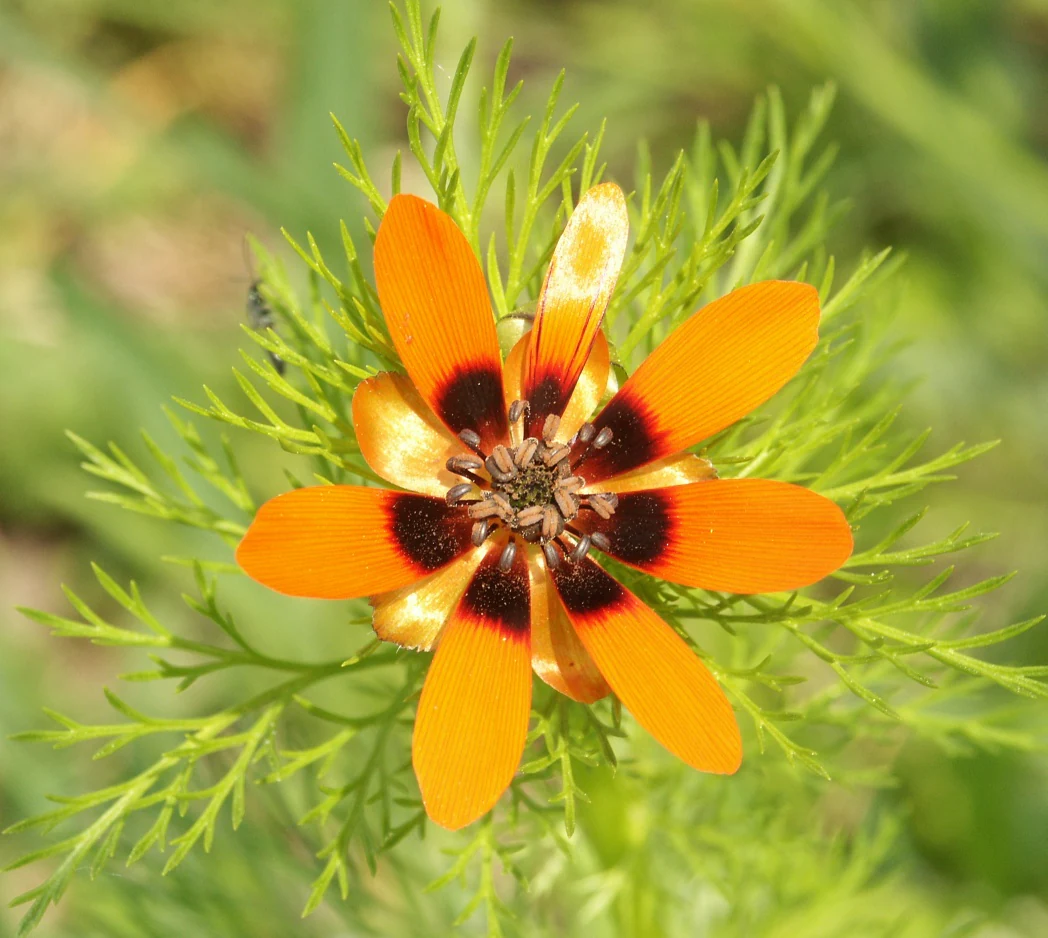
A close-up view of an orange flower with deep red or black centers and delicate fern-like green leaves.
A summer pheasant's eye (Adonis aestivalis) flower in bloom, showcasing its distinctive orange petals with dark centers.

Widnica history and protected-area timeline

Widnica was formally designated as a Site of Community Importance under the European Union Natura 2000 network in 2011, joining a broad wave of Polish habitat-focused designations that responded to the country's obligation to identify and protect priority habitats listed under the EU Habitats Directive.

Its inclusion followed scientific work highlighted in the regional Natura 2000 literature, including the publication "Obszary Natura 2000 w Małopolsce", which specifically identified areas important for protecting xerothermic grasslands across the Miechów Upland region. The site predates its formal Natura 2000 status as a recognised fragment of dry grassland, but gained its modern legal protection framework through this 2011 designation.

Over the longer term, the dry grassland habitat that Widnica protects is the product of traditional low-intensity land use on calcareous soils of the Miechów Upland. Such swards depended historically on grazing and other open-ground management to remain free of scrub, and the site's protection reflects a wider recognition that active management or at least protection from conversion is needed to prevent these habitats from disappearing under modern land-use pressures.

Widnica landscape and geographic character

The physical landscape of Widnica is shaped by the rolling upland character of the Wyżyna Miechowskiej, the Miechów Upland, a mesoregion of gently undulating calcareous terrain typical of the northern edge of the Małopolska uplands. Elevations in this part of Poland are modest, and the terrain is defined more by soils and exposure than by dramatic relief.

At the scale of the site itself, the landscape is essentially open, dry grassland on shallow, often skeletal soils over calcareous substrates. These conditions favour the xerothermic vegetation for which the site is protected, producing warm, sun-exposed swards on slopes or plateaus where moisture drains quickly and where summer temperatures can be high. The result is a steppe-like, herb-rich ground layer rather than the more mesic meadows found across much of lowland Poland.

The wider setting reflects the agricultural character of the Miechów Upland, with the small reserve sitting as a botanical enclave within a working landscape of fields, small villages, and connecting rural roads. The village of Widnica lies just to the north, and the surrounding landscape transitions between cultivated land, scattered woodland patches, and the broader open structure of the Miechów Upland Protected Landscape Area.

Widnica ecosystems, habitats, and plant life

Ecologically, Widnica is a near-textbook example of a Polonian xerothermic grassland community. The vegetation conforms to the Festuco-Brometea class, which throughout Central Europe characterises dry, base-rich grasslands maintained historically by grazing. Within that broader framework, the site includes fragments of the more thermophilic Asplenion septentrionalis; Festucion pallentis alliance, a vegetation type tied to particularly warm, sun-exposed, often rocky situations.

These grassland communities are structurally herb-rich and relatively open, with a mixture of grasses and forbs adapted to drought, shallow soils, and high summer temperatures. They exclude most higher shrubs and trees, and many of the constituent species have strong affinities with continental and sub-Mediterranean floras rather than with the more mesic forests and meadows elsewhere in the Miechów Upland.

Because the habitat is so spatially restricted, almost every metre of the site carries ecological value. The combination of dry calcareous substrate, open microclimate, and continuity of low-intensity land use has allowed a remarkably species-rich plant assemblage to survive in such a tiny area, and the site's nature value is essentially inseparable from its botanical composition rather than from any broader forest, wetland, or aquatic system.

Widnica wildlife and species highlights

Widnica's wildlife interest is overwhelmingly botanical rather than faunal. The site does not protect any major mammal, bird, or reptile populations highlighted in official descriptions; instead, its species richness sits in the vascular plant and orchid communities of the xerothermic grassland.

That said, such dry, open, flower-rich grasslands in the Miechów Upland typically support associated insect assemblages, including pollinator groups such as wild bees, butterflies, and other invertebrates that depend on the abundance of flowering forbs. These insects are an important, if less formally highlighted, component of the site's ecological fabric and contribute to the functioning of the grassland habitat itself.

Larger fauna typical of the surrounding Miechów Upland agricultural landscape, such as common farmland birds and small mammals, may use the reserve as part of their wider range, but the Natura 2000 designation for this site is not structured around any specific faunal species listed under the EU Habitats Directive.

Widnica conservation status and protection priorities

The conservation importance of Widnica rests on the fact that xerothermic grasslands of the Festuco-Brometea type, and especially the more thermophilic Asplenion septentrionalis; Festucion pallentis communities, are among the most threatened habitat types across Central Europe. They have declined sharply due to agricultural intensification, the use of fertilisers and herbicides on former grassland, abandonment leading to scrub and forest encroachment, and afforestation of dry upland sites. Even very small surviving fragments like Widnica therefore carry disproportionate conservation value at the national and EU level.

The site gained formal recognition through its 2011 designation as a Site of Community Importance (SCI), now functioning as a Special Area of Conservation candidate under the Natura 2000 framework. This brings it under the EU Habitats Directive regime, requiring maintenance or restoration of the grassland habitat to a favourable conservation status and offering a level of legal protection that complements its location within the Miechów Upland Protected Landscape Area.

Effective long-term conservation at Widnica depends on preserving open conditions, which in practice usually means continued low-intensity grazing, mowing, or other management that prevents trees and shrubs from taking over. Without such management, the very small site could be rapidly lost to succession, given the relatively nutrient-poor calcareous soils that initially favoured the xerothermic flora but are equally amenable to colonisation by shrubs once disturbance ceases.

Widnica cultural meaning and human context

The cultural context of Widnica is closely tied to the long agricultural history of the Miechów Upland. The xerothermic grasslands that the site protects are semi-natural habitats shaped over centuries by traditional low-intensity land use, especially grazing by sheep and cattle on dry, shallow-soil slopes that were unsuitable for arable farming.

The region around Gmina Miechów has long been a predominantly rural, agricultural area, with small villages such as Widnica itself forming part of a dispersed settlement pattern typical of the Polish uplands. The persistence of dry grassland fragments in such a landscape is essentially a legacy of past farming systems, and the modern Natura 2000 designation can be read as an effort to preserve a biologically distinctive, habitat-level outcome of that older cultural landscape.

There are no recorded significant built-heritage features within the site itself, and the cultural framing of Widnica is best understood through the broader pattern of traditional land use in the Miechów Upland rather than through any specific local monuments or traditions associated with the reserve.

Top sights and standout views in Widnica

Widnica's strongest point of distinction is the concentration of Festuco-Brometea xerothermic grassland, including the rarer Asplenion septentrionalis; Festucion pallentis thermophilic swards, within a footprint of just a few hectares.

Equally notable is the site's species list: in spite of its tiny size, it supports a remarkable range of protected and threatened plants, from orchids such as Orchis militaris, Platanthera bifolia, and Epipactis helleborine to charismatic forbs including Gentiana cruciata, Anemone sylvestris, Carlina acaulis, and the rare Adonis aestivalis and Anagallis foemina.

Its position inside the Miechów Upland Protected Landscape Area, combined with its formal Natura 2000 Site of Community Importance status, gives it a layered protection profile that is more typical of much larger reserves, demonstrating how small habitat-specific sites can punch well above their weight when integrated into regional conservation networks.

Best time to visit Widnica

Widnica is a habitat conservation site rather than a developed visitor destination, and the most meaningful seasonal context relates to when its grassland flora is most visible. Late spring and early summer, roughly May through July, are typically the period when xerothermic grasslands of the Festuco-Brometea type reach their peak flowering, with many of the protected species, including orchids and Anemone sylvestris, easiest to observe during this window.

Later in summer the same swards often take on a drier, more golden character as grasses dominate and many forbs set seed, while autumn brings a quieter phase before the vegetation dies back for winter. For any informal botanical visit, mild, settled weather in late spring or early summer is most rewarding, but the site's conservation value is not season-dependent; what matters is that the grassland remains open and undisturbed year-round.
Monthly climate preview

Track monthly temperature ranges and precipitation trends across the representative terrain

Widnica Climate Normals and Long-Term Temperature Patterns

Widnica exhibits a measured annual temperature range from sub-zero winter minimums to warm summer maximums alongside consistent monthly precipitation. Reviewing the complete twelve-month climatology dataset reveals deeper long-term weather patterns and detailed monthly variations.
Annual mean8 °C
-4 °C19 °C
Jan-4°
Feb-2°
Mar
Apr
May13°
Jun17°
Jul19°
Aug19°
Sep14°
Oct
Nov
Dec-2°
Warmest month
July

19.3 °C

Coolest month
January

-3.8 °C

Wettest month
July

3 mm/day

Driest month
December

1.4 mm/day

Park location guide

Geography guide, regional context, and park location map for Widnica

Widnica park geography, regions, and map view in Poland

Understand where Widnica sits in Poland through a broader geographic reading of the surrounding landscape, nearby location context, and its mapped position within the national park landscape.

How Widnica fits into Poland

Poland, officially the Republic of Poland, is a Central European country spanning from the Baltic Sea in the north to the Carpathian Mountains in the south. It borders Germany, Czech Republic, Slovakia, Ukraine, Belarus, Lithuania, and Kaliningrad Oblast. The country has a temperate climate, diverse landscapes, and is known for its rich history, cultural heritage, and strong economic position within the EU.

Wider geography shaping Widnica in Poland

Poland occupies 312,696 km2 in Central Europe, extending from the Baltic Sea coast in the north to the Sudetes and Carpathian Mountains in the south. It borders Germany to the west, Czech Republic and Slovakia to the south, Ukraine and Belarus to the east, and Lithuania and Kaliningrad Oblast to the northeast. The landscape includes lowland plains, uplands, and mountain ranges.

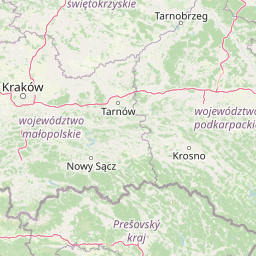
Map view of Widnica

Use this park location map to pinpoint Widnica in Poland, understand its exact geographic position, and read its mapped placement within the surrounding landscape more clearly.

Pigeon | © OpenStreetMap contributors

Location context for Widnica

Lesser Poland Voivodeship
Recorded earthquake history

Explore the Recorded Earthquake History for the Widnica Nature Reserve

Access the historical seismic catalogue for the Widnica nature reserve. This collection provides transparent, data-driven insights into recorded earthquake events and epicentre locations near the site, assisting in the study of regional seismic history through documented records.

Widnica Earthquake History

Catalogued events

9 events

Strongest magnitude

Magnitude 4

Most recent event

Nov 21, 1999

This history includes earthquakes recorded inside the park or within 50 km of its borders

Explore the terrain, sun-exposed swards, and upland habitat character of southern Poland.

Widnica Photos and Landscape Scenery: Visualizing Protected Calcareous Grasslands

Photographic records reveal the distinct dry grassland terrain and rare botanical assemblies that define this protected upland environment. Visual documentation helps researchers and observers examine the rolling calcareous topography and specialized plant habitats of the Małopolska region.

A close-up view of an orange flower with deep red or black centers and delicate fern-like green leaves.

Park atlas

Discover connected grassland reserves across the rolling Miechów Upland terrain

Explore Parks Near Widnica and Related Protected Landscapes in the Region

Compare Widnica with other protected natural areas sharing similar calcareous grassland habitats and regional ecology. Extending the geographic review across nearby reserves reveals broader patterns of upland conservation in southern Poland.
Nature reserveLesser Poland Voivodeship
0.9 km away#1 closest

Northwest

Pstroszyce Nature Reserve: Mapped Protected Landscapes in the Lesser Poland Voivodeship

Botanical refuge featuring xerothermic grassland and oak-hornbeam forest mosaics.

Located in the Miechów Upland, Pstroszyce is a specialized nature reserve that protects rare plant species within a compact, limestone-based geography. The site serves as a vital anchor for steppe-type vegetation and woodland patches in southern Poland, offering clear insight into the complex conservation efforts and habitat diversity found across the Natura 2000 network.

Area
0.194 km²
Established
2011
Relief
Upland
Scope
Terrestrial
Nature reserveLesser Poland Voivodeship
6.3 km away#2 closest

Northwest

Uniejów Parcele Nature Reserve: Geographic Insights and Protected Landscape Boundaries

A rare habitat mosaic within the Miechów Upland of Lesser Poland

Explore the geographic identity of Uniejów Parcele, a protected nature reserve in Poland. This site offers a rare convergence of xerothermic grassland and oak-hornbeam forest habitats, representing a critical ecological fragment within the undulating terrain of the Miechów Upland and the wider Lesser Poland Voivodeship.

Area
0.037 km²
Established
2011
Relief
Upland
Scope
Terrestrial
Nature reserveLesser Poland Voivodeship
6.8 km away#3 closest

South

Poradów Nature Reserve: Protected Landscape and Xerothermic Habitats in Lesser Poland

A refined look at limestone upland geography and habitat boundaries

Located in the Miechów Upland, Poradów serves as an important nature reserve for documenting dry calcareous grasslands and deciduous woodlands. This site provides a focused look at the intersection of protected botanical species and undulating upland terrain in southern Poland.

Area
0.113 km²
Established
2011
Relief
Upland
Scope
Terrestrial
Nature reserveLesser Poland Voivodeship
9 km away#4 closest

South

Sławice Duchowne Nature Reserve: Protected Botanical Landscapes in the Miechów Upland

A vital sanctuary for rare steppe-like dry grassland plant communities

Situated in the Lesser Poland Voivodeship, Sławice Duchowne is a specialized nature reserve dedicated to the conservation of Inuletum ensifoliae, a rare xerothermic grassland habitat. This protected area offers insights into the unique botanical heritage of the Miechów Upland, sheltering legally protected wildflowers and relict plant species that define this important European dry-grassland ecosystem.

Area
0.044 km²
Established
2011
Relief
Upland
Climate
Temperate
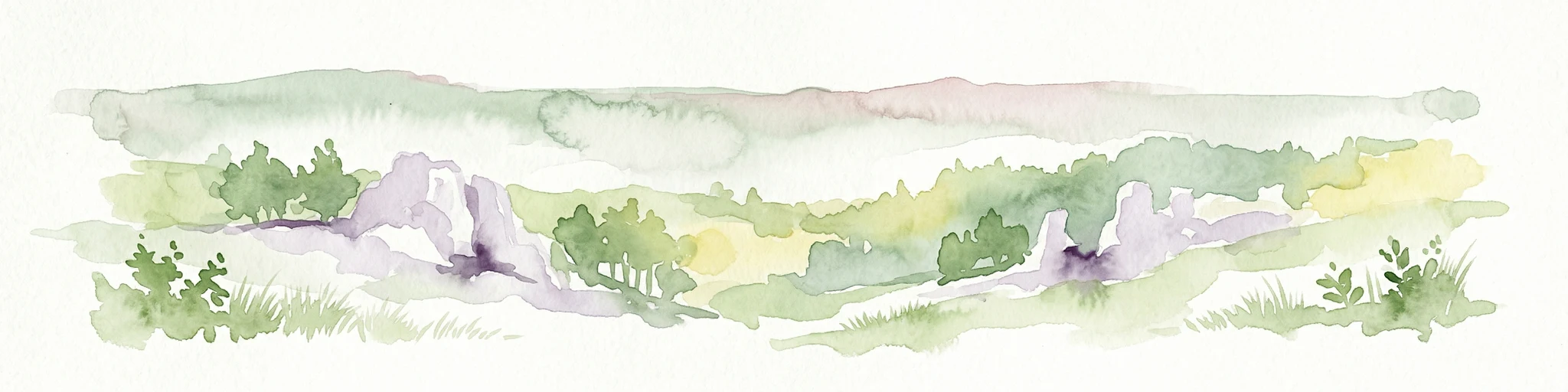
Watercolor illustration showing green hills, scattered trees, and a light sky background
National parkLesser Poland Voivodeship
22 km away#5 closest

Southwest

Ojców National Park: Karst Geography and Protected Landscape Atlas Entry

Explore the mapped terrain and unique geology of this national park.

Ojców National Park, situated in Lesser Poland Voivodeship, offers a concentrated display of dramatic karst topography. This protected national park is renowned for its towering limestone cliffs, intricate ravines, and over 400 caves, showcasing a unique Jurassic geology. As a vital protected area, its mapped boundaries encompass distinctive rock formations like Hercules' Club and the historic Trail of the Eagles' Nests, providing rich context for landscape discovery and atlas exploration.

Area
21.46 km²
Established
1956
IUCN
II
Relief
Upland
Watercolor painting of limestone rock formations surrounded by trees and green hills, rendered in a soft, panoramic landscape style.
National parkLesser Poland Voivodeship
22 km away#6 closest

Southwest

Ojcowski Park Narodowy: A Geographic Guide to Poland's Compact Protected Landscape

Jurassic limestone formations and karst valleys in Lesser Poland

Ojcowski Park Narodowy occupies a unique place in the national park system of Poland, defined by its small footprint and high concentration of Jurassic geological features. The terrain includes vertical cliffs, ancient river valleys, and significant cave systems that provide critical habitats for bat populations. Use this mapping resource to understand the park's structural complexity, from its dry ravines to the historic cultural sites integrated into the limestone bedrock.

Area
21.46 km²
Established
1956
Visitors
400K annual
Relief
Upland
Nature reserveSilesian Voivodeship
23 km away#7 closest

West

Ostoja Środkowojurajska Nature Reserve: Protected Area Geography and Habitat Mapping

Regional karst terrain and protected beech forest mosaic

Analyze the geographic structure of Ostoja Środkowojurajska, a vital Natura 2000 site in the Silesian Voivodeship. This protected area features a unique concentration of inland dunes, rocky limestone outcrops, and multiple forest types. Explore the site to understand its role in regional conservation and its varied, karst-influenced physical geography.

Area
57.676 km²
Established
2009
Relief
Upland
Climate
Temperate
Nature reserveŚwiętokrzyskie Voivodeship
25 km away#8 closest

East

Ostoja Kozubowska Nature Reserve: Geographic Atlas and Protected Habitat Overview

Mapping the ecological landscape of the Świętokrzyskie region

Ostoja Kozubowska stands as a critical protected landscape in Poland, home to seven distinct European habitat types including peri-Pannonic scrub and xerothermic grasslands. Centered on the Chroberskie Forest, this area showcases the intersection of dry, sun-exposed slopes and rich riparian vegetation within the Nida basin. Access this detailed geographic profile to trace the boundaries and habitat distribution defining this essential nature reserve.

Area
41.815 km²
Scope
Terrestrial

Common questions about visiting, size, designation, and location context for Widnica

Widnica FAQs for park facts, access, geography, and protected area context

Find quick answers about Widnica, including protected-area facts, park geography, trail and visitor context, and how the park fits into its surrounding country and regional landscape.
MoriAtlas Explorer

Continue Your Protected Areas Search Across the Global Atlas

Deepen your exploration by continuing the structured search for national parks and protected areas worldwide. Utilize the comprehensive filtering capabilities to compare different conservation landscapes and refine your understanding of global park geography. Discover more about the distribution and characteristics of protected natural areas.

Global natural geography