Mori Atlas logo
Nature reserveXinjiang West Tianshan National Nature Reserve

A humid mountain refuge showcasing ancient spruce forests and relict Tertiary woodlands within Gongliu County.

Xinjiang West Tianshan National Nature Reserve: Geographic Map and Protected Landscape Analysis

Situated in the western Tianshan Mountains of Xinjiang, this protected nature reserve forms a critical ecological node across the mountainous terrain of Gongliu County. The area spans dramatic vertical gradients, from dense Schrenk's spruce forests on north-facing slopes to high alpine meadows and glaciated summits. It serves as an essential biodiversity sanctuary for species like snow leopards and Siberian ibex, while preserving rare relict fruit tree groves that date back to the Tertiary period.

mountain forestspruce forestSchrenk sprucerelict treeswild applewild apricot

Xinjiang West Tianshan National Nature Reserve

Nature reserve

Park overview

Structured park overview, official facts, and landscape profile for Xinjiang West Tianshan National Nature Reserve

Xinjiang West Tianshan National Nature Reserve park facts, protected area profile, and essential visitor context

Review the core facts for Xinjiang West Tianshan National Nature Reserve, including designation, size, terrain, visitor scale, habitats, and operating context in one park-focused overview.

About Xinjiang West Tianshan National Nature Reserve

Xinjiang West Tianshan National Nature Reserve represents one of the core forest conservation units within the Tianshan mountain chain, the longest east-to-west mountain system in Central Asia. Set in the Chapke Valley of the western central Tianshan, the reserve occupies a position where three side ranges intersect, creating a sheltered, comparatively moist environment that contrasts sharply with the surrounding arid steppes and deserts of Xinjiang.

The reserve's defining characteristic is its mountain forest landscape, dominated by Schrenk's spruce and its Tianshan variety across elevations between roughly 1500 and 2800 meters. On lower slopes and in valley bottoms, the spruce forest gives way to mixed coniferous and broadleaf woodlands, while on drier lower elevations one finds the unusual relict communities of wild apple and wild apricot. Higher still, subalpine meadows and coniferous shrub transitions lead toward alpine pastures, rocky crests, and glaciers.

Ecologically, the reserve stands out because of its climatic setting. Its location at the eastern end of the open Ili Valley allows moisture-bearing air from the Atlantic and the Caspian Sea to penetrate inland, while the encircling peaks of the Narat range and surrounding ranges trap this moisture and shield the area from dry southern Xinjiang air masses and Siberian winter extremes. The result is significantly higher precipitation than the surrounding region, allowing forests rather than steppes to dominate the local vegetation.

The reserve also serves as a crucial wildlife corridor. Its altitudinal range supports species as diverse as green toads and Asian tree frogs at low elevations, Siberian ibex and argali on rocky upper slopes, brown bears and red deer in the middle forest belt, and snow leopards in the highest, least-disturbed terrain. Resident and breeding birds constitute the largest portion of the terrestrial vertebrate fauna, with passerines and raptors particularly well represented.

Beyond conservation, the reserve has national-level significance because part of it, including the famous Kuerdening area, belongs to the broader Xinjiang Tianshan World Heritage Site. This linkage gives the reserve an international profile alongside its core domestic role of preserving spruce genetic resources, relict tree populations, and functioning mountain forest ecosystems.

Quick facts and research context for Xinjiang West Tianshan National Nature Reserve

Xinjiang West Tianshan National Nature Reserve lies in Gongliu County, Ili Kazakh Autonomous Prefecture, in northwestern Xinjiang, western China. It belongs to China's national system of forest ecosystem reserves and was elevated from a provincial reserve to a national reserve in the early 2000s.

The reserve occupies the Chapke Valley of the western central Tianshan, with elevations ranging from foothill zones below 800 meters to peaks above 4000 meters, many of which are glaciated. Approximately 31,217 hectares are formally protected, divided into core, scientific, and buffer zones.

Its primary charge is the conservation of Schrenk's spruce and its Tianshan variety, together with rare Tertiary relict broadleaf forests of wild apple, apricot, and walnut. The reserve is widely regarded as one of the most ecologically significant temperate mountain forest areas in arid Central Asia.

Protection and recognition

Documented terrestrial protection scope, designation year, and management records.

Xinjiang West Tianshan National Nature Reserve Protection Status and Designation History

Xinjiang West Tianshan National Nature Reserve maintains a documented terrestrial protection status established in two thousand four. Structured designation records outline the historical management scope and official administrative framework for the protected area.

Protection details

Protection scope
Terrestrial
Designated year
2004
Transboundary protection
No
Core area
129.56 km²
Buffer area
92.03 km²
Park context

Deeper park guide and search-rich context for Xinjiang West Tianshan National Nature Reserve

Xinjiang West Tianshan National Nature Reserve history, landscape, wildlife, and travel context

Explore Xinjiang West Tianshan National Nature Reserve through its history, landscape character, ecosystems, wildlife, conservation priorities, cultural context, and seasonal travel timing in a structured park guide built for atlas discovery and search intent.

Why Xinjiang West Tianshan National Nature Reserve stands out

The reserve is especially known for its extensive forests of Schrenk's spruce (Picea schrenkiana var. tianschanica), which form some of the densest and oldest pure spruce stands in the Tianshan system. Per-hectare timber volumes are remarkably high in undisturbed stands, and these forests anchor the identity of the entire protected area. Equally distinctive is the reserve's collection of Tertiary relict deciduous trees, including wild apple, wild apricot, and wild walnut groves at the lower elevations. These species survived through major Quaternary glaciations and give the reserve an unusual botanical character for an arid mountainous region. The combination of moist spruce forest, relict fruit tree groves, subalpine meadows, and rugged peaks has also made the area a refuge for high-profile wildlife such as snow leopards, brown bears, Siberian ibex, argali, and golden eagles, reinforcing the reserve's reputation as a key biodiversity anchor of the western Tianshan.

Xinjiang West Tianshan National Nature Reserve history and protected-area timeline

The roots of the reserve go back to the early 1980s, when the Kuerdening forest management area of the Gongliu Forest Farm was recognized for its ecological value. In 1983, the Gongliu Snow Mountain Spruce Nature Reserve was formally established as a provincial-level reserve under the Xinjiang Uyghur Autonomous Region, making it one of the earliest formal protections of Schrenk's spruce habitat in the region.

The reserve's status grew steadily over the following decades. In the early 2000s, it was elevated to a national-level nature reserve, reflecting both its expanding conservation mandate and the increasing scientific recognition of the western Tianshan's importance to regional biodiversity. It is administratively classified as a forest ecosystem reserve and is managed by the West Tianshan National Nature Reserve Administration, which falls under the Xinjiang Western Tianshan State Forest Bureau.

Since 2000, the administration has invested in developing infrastructure within the reserve, including inspection stations, guard posts, watchtowers, hydrological and meteorological stations, and a wildlife rescue center. Forest roads and fire break trails have been built, flood control dikes repaired, and a system of boundary, zone, and restriction signage installed. Completion of the West Tianshan Forest Ecosystem National Observation and Research Station in 2015 marked a new institutional phase, allowing long-term monitoring of hydrology, soils, climate, and biota. Infrared camera monitoring has documented snow leopards, Siberian ibex, brown bears, and red deer, among other species, signaling the reserve's transition into a modern, science-driven conservation area.

Xinjiang West Tianshan National Nature Reserve landscape and geographic character

The reserve occupies a dramatic section of the central Tianshan's western ranges, defined by intersecting mountain ridges and an east-trending valley floor. The valley is framed on three sides by peaks rising between roughly 3000 and 3700 meters, which then give way at the higher elevations to an alpine zone of permanent ice and snow above about 3600 meters. Glaciers and snowfields on these high peaks feed the rivers that drain the reserve.

The lowest elevations sit below 800 meters, and the altitudinal span of more than 3200 meters creates a sharply layered landscape. Steep north-facing and semi-shaded slopes host dense spruce forest, while sunnier slopes carry juniper shrublands, dry deciduous shrubs, and steppe vegetation. In the wider western opening of the valley, the terrain eases and the landscape gradually transitions toward the broader Ili Valley plains.

Glacially carved valleys, snowmelt streams, and deep river gorges shape much of the reserve's hydrological landscape. The principal river is the Greater Jilgelang River, which collects meltwater from the surrounding peaks and drains westward into the Ili system via the Tekes River. This river-based terrain, combined with the conifer clad slopes and the open alpine zone above the tree line, gives the reserve the layered character typical of major central Asian mountain ranges.

Xinjiang West Tianshan National Nature Reserve ecosystems, habitats, and plant life

The reserve's ecological identity is defined primarily by its unusual richness for an arid setting. The flora belongs to the central Asian mountain system, with strong central Asian, Mediterranean, and Holarctic elements, while European and Siberian influences are also detectable. This mixture reflects the reserve's position as a transitional zone where moisture-bearing western air masses meet the high Asian continental interior.

Altitudinal zonation is clearly expressed in the vegetation. The lower foothills are characterized by shrubs tolerant of drier conditions and by relict stands of wild apple and apricot. The mid-elevations, between roughly 1100 and 1700 meters, host mixed broadleaf and spruce forests, including wild walnut communities on some sites. The central forest belt, from about 1500 to 2800 meters, is the domain of Schrenk's spruce, both in pure stands and in mixture with European aspen, Tianshan birch, and rowan. Above the closed spruce forest, juniper shrublands occupy dry, sunny slopes, while subalpine and alpine meadows fringe the highest elevations.

Because of its high humidity and intact forest cover, the reserve also supports a rich fungal community, including wood-decay fungi such as Phellinus igniarius, Fomitopsis pinicola, Heterobasidion annosum, and various bracket fungi associated with spruce, birch, apple, and apricot. Mosses and lichens cover spruce bark and fallen logs throughout the closed forest zone. The overall combination of relict Tertiary broadleaf species, Pleistocene-surviving spruce, juniper-dominated subalpine shrublands, and meadow communities makes the reserve an important reservoir of temperate mountain forest biodiversity in arid central Asia.

Xinjiang West Tianshan National Nature Reserve wildlife and species highlights

The reserve's vertebrate fauna broadly follows a Paleartic pattern, with a mix of central Asian and Siberian species. Among mammals, rodents form the most diverse group, but the reserve's most conspicuous large mammals include wild boar, Siberian ibex, mountain hare, gray marmot, and Eurasian red squirrel. Predators and large ungulates of conservation interest, such as brown bear, snow leopard, red fox, argali, and Tian Shan wapiti, also occur.

Birds are the richest component of the terrestrial vertebrate fauna, with both resident and summer-breeding species dominant and winter visitors comparatively limited. Common residents and breeders include purple-winged starlings, rose-colored starlings, jackdaws, stonechats, red-throated thrushes, white wagtails, tree sparrows, barn swallows, and small-billed crows. Other notable species recorded in the reserve include mallards, European rollers, Xinjiang robins, golden eagles, white-shouldered eagles, Himalayan snowcocks, and Tian Shan tits.

The reserve also supports amphibians such as green toads and Chinese forest frogs, reptiles such as agile lizards and steppe vipers, and a wide variety of forest-floor invertebrates. Insects include moisture-loving groups such as slugs, snails, leaf beetles, and sawflies, reflecting the reserve's relatively humid microclimate. Several insect species, including the woodwasp Urocerus gigas, are notable for their impact on spruce trees and are part of ongoing monitoring and forest health research.

Xinjiang West Tianshan National Nature Reserve conservation status and protection priorities

The reserve's conservation value lies in its preservation of one of the largest continuous spruce forest ecosystems in the central Tianshan, along with rare Tertiary relict tree populations that have disappeared across much of their former range. More than ten plant species in the reserve are listed under China's national key protected wild plants list, including wild apple, wild apricot, Xinjiang asafoetida, soft arnebia, and snow lotus, marking the area as a nationally significant botanical reservoir.

In terms of wildlife, five species are protected at the national Class I level, including black stork, golden eagle, white-shouldered eagle, snow leopard, and Siberian ibex. Nineteen species are listed at the national Class II level, including brown bear, argali, and Tian Shan wapiti, while additional regional and autonomous region-level protections cover several other species. The reserve thus operates as a multi-tier refuge for the high biodiversity of the western Tianshan.

Conservation management is supported by long-term ecological monitoring through the West Tianshan Forest Ecosystem National Observation and Research Station, established in 2015. Camera traps have confirmed the continued presence of snow leopards and other large mammals, and investments in fire prevention, patrol infrastructure, and hydrological and meteorological stations have strengthened the reserve's operational capacity. Despite these efforts, signs of decline in spruce regeneration have been noted, underlining that the reserve remains an active site for ecological research and adaptive management rather than a purely static protection zone.

Xinjiang West Tianshan National Nature Reserve cultural meaning and human context

The reserve sits within a region historically shaped by Kazakh, Uyghur, and other Turkic pastoral cultures of the Ili Valley, where transhumance between mountain pastures and lowland steppes has long been part of the local economy. The Kuerdening area within the reserve is closely associated with traditional Kazakh livestock grazing practices on summer alpine meadows, and the wider landscape carries strong regional significance as a homeland valley in Kazakh cultural memory.

While the reserve itself is a strictly protected natural area with limited human activity, its surrounding valleys host communities whose livelihood patterns, seasonal movements, and place names are interwoven with the same mountains, rivers, and spruce forests now under formal protection. This relationship between human presence and the mountain landscape gives the region a layered cultural backdrop, even where direct traditional use within reserve boundaries is restricted.

Top sights and standout views in Xinjiang West Tianshan National Nature Reserve

The reserve's standout features include its vast old-growth spruce forests on the moist north-facing slopes, where high per-hectare wood volumes and extensive closed canopy make the area one of the most ecologically intact in the Tianshan. Equally notable are the surviving relict groves of wild apple, wild apricot, and wild walnut, which connect the present landscape to Tertiary forests that once stretched much further across central Asia.

The reserve also stands out for its wide altitudinal range, from foothill valleys to glaciated summits above 4000 meters, supporting a clear sequence of forest, subalpine, and alpine habitats within a single protected unit. Major species such as snow leopard, brown bear, golden eagle, and Siberian ibex give the area flagship conservation status, and inclusion of the Kuerdening area within the Xinjiang Tianshan World Heritage Site places the reserve on an international conservation stage.

Best time to visit Xinjiang West Tianshan National Nature Reserve

The reserve's strongly seasonal mountain climate favors distinct periods for different interests. Late spring and early summer bring fresh greenery to the lower slopes and the blooming of meadow and shrub species, while the wild apple and apricot zones reach their most expressive seasonal appearance in this period.

Mid to late summer is generally the most accessible and comfortable window, when roads, trails, and higher elevations are free of heavy snow, alpine meadows are in flower, and large mammal activity is relatively high. Winters are cold and snowy, with strong cold-air pooling under inversion layers inside the valley; this limits access but gives the spruce forest a deeply quiet, snow-covered character of interest for hardy winter visitors focused on landscape and solitude rather than active exploration.
Monthly climate preview

Long-term representative temperature and precipitation patterns across twelve monthly periods

Xinjiang West Tianshan National Nature Reserve Climate Normals and Weather by Month

Representative coordinate measurements reveal marked annual shifts in average temperature and monthly precipitation across Xinjiang West Tianshan National Nature Reserve. Examining the full twelve-month climate normals provides deeper insight into measured baseline conditions at high elevation.
Annual mean0 °C
-13 °C11 °C
Jan-13°
Feb-10°
Mar-5°
Apr
May
Jun
Jul11°
Aug10°
Sep
Oct
Nov-6°
Dec-11°
Warmest month
July

11.2 °C

Coolest month
January

-12.9 °C

Wettest month
June

2.1 mm/day

Driest month
January

0.2 mm/day

Park location guide

Geography guide, regional context, and park location map for Xinjiang West Tianshan National Nature Reserve

Xinjiang West Tianshan National Nature Reserve park geography, regions, and map view in China

Understand where Xinjiang West Tianshan National Nature Reserve sits in China through a broader geographic reading of the surrounding landscape, nearby location context, and its mapped position within the national park landscape.

How Xinjiang West Tianshan National Nature Reserve fits into China

China is a unitary communist state in East Asia, governed by the Chinese Communist Party. The country's capital is Beijing, while Shanghai is the largest city by urban population. China has 33 province-level divisions including provinces, autonomous regions, municipalities, and special administrative regions. The nation has a long history spanning thousands of years, with achievements including the invention of gunpowder, paper, printing, and the compass.

Wider geography shaping Xinjiang West Tianshan National Nature Reserve in China

China is located in East Asia, bordering fourteen countries: Russia, North Korea, Vietnam, Laos, Myanmar, India, Bhutan, Nepal, Pakistan, Afghanistan, Tajikistan, Kyrgyzstan, Kazakhstan, and Mongolia. The country spans diverse terrain including deserts, mountains, plateaus, and river valleys. Major river systems include the Yellow River and Yangtze River. The coastline stretches along the East China Sea, South China Sea, and Yellow Sea.

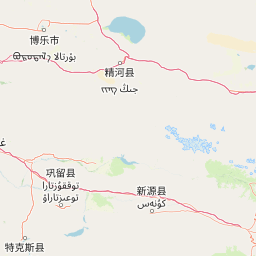
Map view of Xinjiang West Tianshan National Nature Reserve

Use this park location map to pinpoint Xinjiang West Tianshan National Nature Reserve in China, understand its exact geographic position, and read its mapped placement within the surrounding landscape more clearly.

Pigeon | © OpenStreetMap contributors

Location context for Xinjiang West Tianshan National Nature Reserve

Gongliu CountyXinjiangXinyuan County
Park atlas

Compare regional mountain geography and connected forest landscapes across the western Tianshan range.

Parks Near Xinjiang West Tianshan National Nature Reserve and Surrounding Protected Areas

Browsing nearby protected areas allows visitors to compare the dense spruce forests and alpine valleys of Xinjiang West Tianshan National Nature Reserve with adjacent mountain ecosystems. Extending the geographic scope reveals broader regional patterns in Central Asian conservation terrain and forest distribution.
Nature reserveXinjiang
About 112 km away#1 closest

Northwest

新疆伊犁小叶白蜡国家级自然保护区: Regional Protected Landscape and Tianshan Mountain Geography

Conservation focus on rare riparian ash forest ecosystems in Xinjiang

Spanning the alluvial floodplains of the Kashi and Ili Rivers, this nature reserve is a scientific stronghold for the narrow-leaved ash. The protected area showcases multi-generational forest structures and diverse ancient plant lineages, shaped by a sheltered Tianshan valley microclimate that remains unusually humid for the arid landscapes of inland Xinjiang.

Area
91.03 km²
Established
1983
Relief
Mixed relief
Climate
Temperate
Nature reserveXinjiang Uyghur Autonomous Region
About 173 km away#2 closest

Northwest

新疆霍城四爪陆龟国家级自然保护区: Mapped Landscape and Tianshan Foothills Geography

Nature reserve boundaries within the Xinjiang Uyghur Autonomous Region

Located in the Xinjiang Uyghur Autonomous Region, the 新疆霍城四爪陆龟国家级自然保护区 represents a unique loess hill ecosystem. This atlas profile details the protected boundaries, erosion-carved terrain, and the semi-arid sagebrush steppe habitat essential for the four-clawed tortoise population, providing deep geographic context for this national nature reserve.

Area
350 km²
Established
1983
Relief
Upland
Climate
Arid
Nature reserveXinjiang
About 195 km away#3 closest

North

新疆甘家湖梭梭林国家级自然保护区: Arid Ecosystems and Protected Haloxylon Woodland Mapping

Examining desert terrain and dune geomorphology in northwestern Xinjiang

Explore the structured geography of the Xinjiang Ganjiahu Haloxylon National Nature Reserve, which guards an expansive and ecologically critical saxaul woodland corridor. This protected area stands as a representative example of temperate desert systems in the Ebinur Basin, offering insight into wind-shaped dune landscapes, saline-alkali soil patterns, and the historic riverbeds that once connected Tien Shan meltwater to the regional basin floor.

Area
546.67 km²
Established
1983
Relief
Lowland
Climate
Arid
Nature reserveXinjiang
About 245 km away#4 closest

Southwest

新疆托木尔峰国家级自然保护区: Protected Glacial Wilderness and Mountain Geography

Tian Shan mountain reserve featuring extensive valley glacier systems and vertical ecosystem transitions.

Centering on the Tomur and Hantengri peaks, this nature reserve forms the largest glacial concentration in the Tian Shan range. The landscape is defined by its extreme topographic relief, massive dendritic glaciers, and a complete altitudinal sequence of ecosystems. This overview provides a structured look at the reserve's unique mountain geography, from its glacial moraines and high-altitude wildlife habitats to the alluvial fans bordering the Tarim Basin.

Area
3,804.8 km²
Established
1980
Relief
Mountain
Climate
Temperate
State or regional parkKyrgyzstan
About 273 km away#5 closest

West

Khan-Tengri State Nature Park: Kyrgyzstan State or Regional Park Atlas Exploration

Explore protected landscapes and geographic context.

Khan-Tengri State Nature Park is a designated protected area in Kyrgyzstan, offering unique insights into the region's mountainous geography. This page serves as a detailed atlas entry, highlighting the park's protected landscape characteristics, its mapped boundaries, and its place within the broader natural terrain of Central Asia. Understand the geographic identity of this state or regional park and its contribution to conservation landscapes.

Area
2,758 km²
Established
2016
Relief
Mountain
Access
Remote access
Nature reserveXinjiang Uyghur Autonomous Region
About 278 km away#6 closest

Southeast

新疆塔里木胡杨国家级自然保护区: Geographic Overview of the Tarim River Riparian Forests

Protecting desert poplar ecosystems and wetland corridors in Xinjiang.

The Xinjiang Tarim Populus Diversifolia National Nature Reserve serves as a critical conservation anchor for the Tarim River basin. This protected area features a unique mosaic of Populus euphratica forests, tamarisk shrublands, and desert wetlands. Stretching across Yuli and Luntai counties, the reserve protects the ecological transition from riparian water channels to the arid sands of the Taklamakan Desert, supporting diverse desert-adapted flora and fauna.

Area
3,954.2 km²
Established
1983
Relief
Lowland
Climate
Arid
Nature reserveXinjiang
About 278 km away#7 closest

Northwest

Xinjiang Wenquan Xinjiang Salamander National Nature Reserve Protected Landscape and Atlas Geography

A vital montane spring and alpine grassland protected area in the Western Tianshan.

The Xinjiang Wenquan Xinjiang Salamander National Nature Reserve serves as a dedicated refuge for relict amphibian populations within the Tianshan mountain system. Its small footprint concentrates on preserving the integrity of cold-water spring brooks and snowmelt-driven seepage zones that form the backbone of this regional ecosystem. The reserve provides a clear example of targeted habitat management within the diverse topography of northwestern China.

Area
6.95 km²
Established
1997
Relief
Mountain
Climate
Arid
Watercolor painting of a river landscape with green mountains, grasses, and a stream
National parkAlmaty Region
About 293 km away#8 closest

West

Charyn National Park: Protected Landscape Atlas and Mapped Terrain in Almaty Region

Explore its dramatic canyons and ancient Sogdian ash groves.

Charyn National Park offers a compelling exploration of Central Asia's dramatic natural heritage, centered around its spectacular canyon system. This protected area, situated in Kazakhstan's Almaty Region, features towering red rock walls and unique geological formations carved by the Charyn River. The park is also notable for preserving one of the world's northernmost stands of ancient Sogdian ash trees, a vital link to prehistoric ecosystems. Users can discover the park's mapped boundaries, diverse terrain, and distinct landscape features, making it a key destination for geographic and atlas-based discovery.

Area
1,250 km²
Established
2004
IUCN
II
Relief
Mountain

Common questions about visiting, size, designation, and location context for Xinjiang West Tianshan National Nature Reserve

Xinjiang West Tianshan National Nature Reserve FAQs for park facts, access, geography, and protected area context

Find quick answers about Xinjiang West Tianshan National Nature Reserve, including protected-area facts, park geography, trail and visitor context, and how the park fits into its surrounding country and regional landscape.
MoriAtlas Explorer

Continue Your Protected Areas Search Across the Global Atlas

Deepen your exploration by continuing the structured search for national parks and protected areas worldwide. Utilize the comprehensive filtering capabilities to compare different conservation landscapes and refine your understanding of global park geography. Discover more about the distribution and characteristics of protected natural areas.

Global natural geography